
Introduction
Homeowners and builders often underestimate the importance of shower waterproofing until a leak causes costly structural damage. Water that sneaks behind tile and grout can rot framing, weaken subfloors and create the perfect environment for mold. The Tile Council of North America (TCNA) emphasises that “a waterproof membrane or vapor retarder must be specified to prevent moisture intrusion and protect adjacent building materials”. For companies like Progressive Construction that pride themselves on quality craftsmanship, getting shower water proofing right from the start is essential. This in‑depth guide covers everything from why waterproofing matters to the best waterproofing membrane for showers, highlighting installation methods, common mistakes and professional tips.
Why shower waterproofing matters
Prevent structural damage and health issues
Tile, grout and cement backer boards are water‑resistant, not waterproof. Without a proper waterproof membrane for showers, moisture will slowly penetrate the mortar bed, plywood or drywall behind the tile. Over time this causes rot, warping, and mold growth. The TCNA handbook warns that moisture intrusion can compromise adjacent building materials, so waterproofing a shower isn’t optional; it’s a critical part of protecting the home. Proper bathroom waterproofing and wet area waterproofing also eliminates conditions that support mold and mildew. In humid climates like Mumbai, a robust bathroom moisture barrier reduces health risks and preserves indoor air quality.
Compliance with building codes
Building regulations often require a waterproofing shower system.DIY blogger Angie Campbell notes that homeowners should research local codes and obtain permits because every municipality is different. Progressive Construction stays current with Indian and international codes, ensuring that every waterproof shower installation meets or exceeds regulations. Using certified shower waterproofing systems protects clients from costly code violations and provides long‑term peace of mind.
Longevity and reduced maintenance
A properly installed shower waterproofing system lasts for decades. When using liquid membranes, at least two coats are recommended, with 24 hours between coats, and the finished membrane should last ten years before resealing. Properly protected showers reduce the need for annual sealing and minimize future repairs. Investing in quality shower waterproof systems saves money over the life of the bathroom.
Types of shower waterproofing systems
Different situations call for different waterproofing for showers. The four main categories of shower waterproofing products are sheet membranes, liquid membranes, foam wallboards and foam shower bases.
Sheet membranes
Sheet membranes are thin sheets made from plastic compounds that adhere directly to the backer board and shower surface. They often come with peel‑and‑stick adhesive and are easy to install. Because they create a continuous barrier with seams sealed by manufacturer‑approved tape, sheet membranes excel at shower leak prevention and tile waterproofing. For example, Schluter’s Kerdi membrane is a widely used sheet system; when properly installed it provides a durable vapor barrier behind tile. DIY enthusiasts appreciate sheet membranes because they can be applied without special tools, making them a good choice for shower pan waterproofing, shower tray sealing and shower wall waterproofing.
Liquid membranes
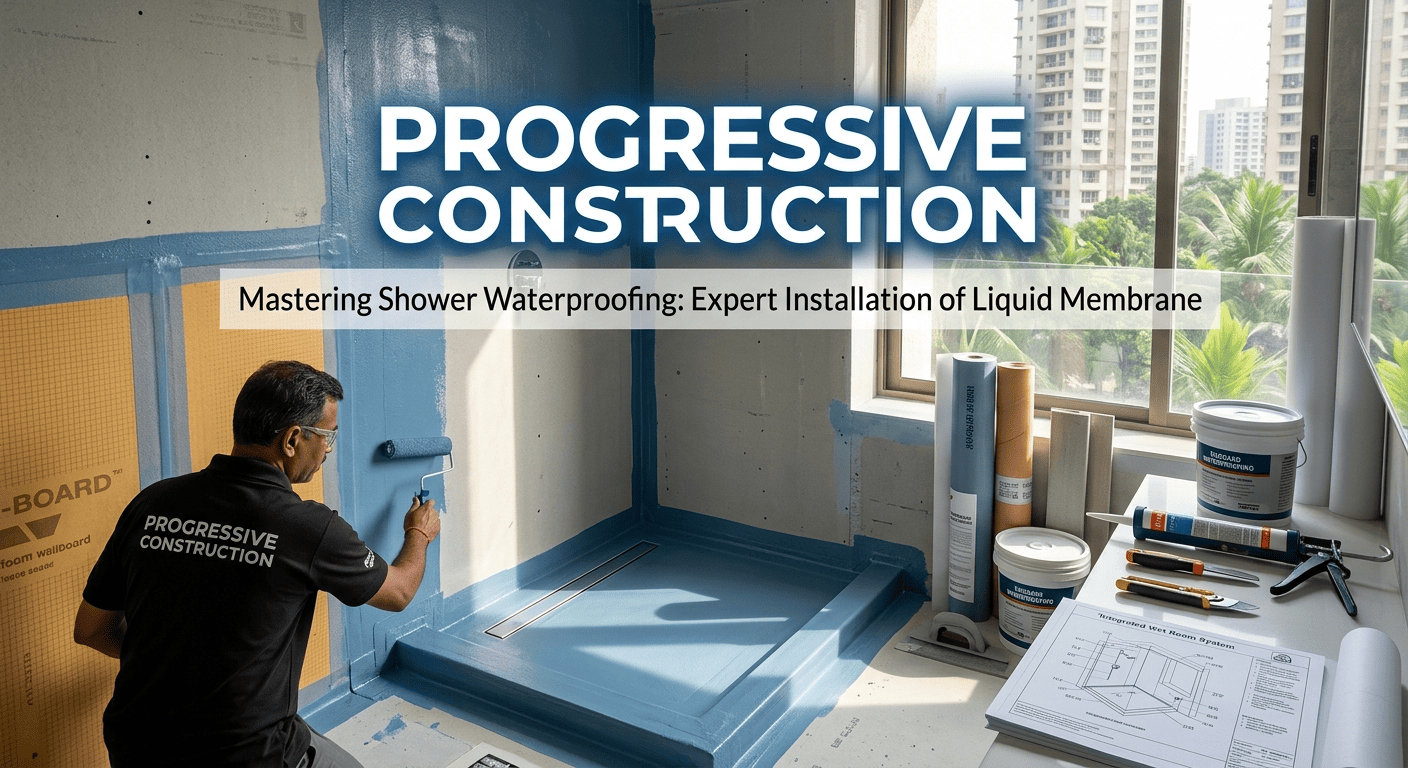
Liquid membranes are essentially waterproof paint that is rolled or brushed onto walls and floors. Once dry, the membrane forms an elastic layer that flexes with structural movement. Popular products like RedGard are widely available and easy to apply. Angie Campbell notes that she still installed a vapor barrier behind the cement board but added a liquid membrane on the surface for extra protection. Most manufacturers recommend applying at least two coats of liquid membrane with a 24‑hour drying period between coats. Liquid membranes are ideal for irregular surfaces and retrofits because they can be brushed into corners and niches, making them perfect for waterproofing a shower area, shower floor waterproofing and shower enclosure waterproofing. They are also a versatile solution for bathroom damp proofing when applied behind and over tile.
Foam wallboards (extruded polystyrene panels)
Foam wallboards are prefabricated panels made from extruded polystyrene foam, laminated with reinforcement layers and fleece webbing. Schluter®‑KERDI‑BOARD is a notable example. According to the product data sheet, KERDI‑BOARD is a multifunctional tile substrate that can be used to create bonded waterproofing assemblies. The panels are available in various thicknesses and are designed for interior use, providing a flat, stable surface for tile installations. The material is waterproof and vapor‑retardant, and will not rot or decay. Because the panels are lightweight and easy to cut, they speed up shower membrane installation and reduce labor. Foam wallboards integrate seamlessly with shower membrane waterproofing systems and are ideal for shower wall waterproofing, wet room waterproofing, and creating custom benches or niches.
Foam shower bases and pans
Foam shower bases are kits that include a pre‑sloped base, curb, drain and seam tape. They replace traditional mortar beds and ensure that water flows toward the drain. Older systems used rubber or copper pan liners installed under mortar, but these could shift and cause pooling, leading to mold growth. Modern foam bases integrate with membranes to form fully bonded assemblies. They are ideal for waterproofing shower floors, shower tray sealing and shower pan waterproofing because the slope and drain integration are engineered by the manufacturer. When combined with foam wallboards, they create a complete waterproof shower system with fewer weak points.
Preparing and installing waterproofing systems
Surface preparation
Proper preparation is essential before any shower membrane waterproofing. Start by framing the shower and installing cement backer board or foam wallboards. Remember that cement board is water‑resistant but not waterproof; a separate waterproof membrane is required. Tape all seams with alkali‑resistant mesh tape and cover them with thin‑set mortar. This creates a uniform surface for membranes and prevents cracks. For shower wall waterproofing, ensure studs are plumb and backer boards are screwed securely. Any fastener penetrations should be sealed with silicone or manufacturer‑approved sealant.
Installing sheet membranes
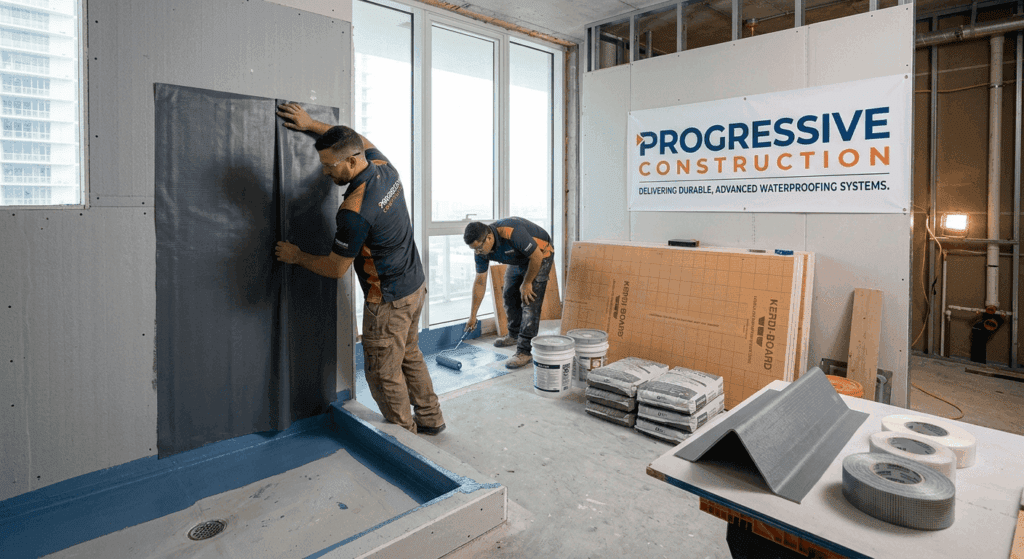
Cut sheets to size and dry‑fit them before peeling off adhesive backing. Overlap seams according to manufacturer instructions and use compatible seam tape. Press the membrane firmly onto the surface using a trowel or roller to avoid air pockets. For corners and niches, pre‑formed inside and outside corner pieces simplify installation. Sheet membranes are excellent for shower waterproof systems because they provide continuous coverage with consistent thickness. In Progressive Construction projects, sheet membranes are used for shower tile waterproofing in high‑humidity environments to ensure long‑term durability.
Applying liquid membranes
For liquid membranes, use a paint roller for large areas and a brush for corners and penetrations. Apply the first coat evenly and allow it to dry until it is no longer tacky—usually 24 hours. Apply a second coat perpendicular to the first to ensure full coverage. Angie Campbell recommends applying liquid membrane over a vapor barrier and cement board to add an extra layer of protection. Properly applied liquid membranes are an effective waterproofing solution for showers, bathroom waterproofing and shower enclosure waterproofing because they seal seams, screw penetrations and corners.
Installing foam wallboards and bases
Foam boards like KERDI‑BOARD are attached with screws and washers, then joints are sealed with Kerdi‑Band tape and thin‑set mortar. Because the panels are cut with a utility knife and have printed gridlines for easy layout, they simplify shower water proofing projects. Once installed, tile can be set directly on the surface using thin‑set mortar. Foam shower bases are set into a bed of mortar or adhesive and connected to the drain. Seam tape seals the perimeter and corners. Progressive Construction often uses foam systems when clients want the best shower waterproofing system that combines speed of installation with reliable performance.
Finishing touches and critical details
Waterproofing isn’t complete until all edges and transitions are sealed. The top edge of the shower—where tile meets drywall—should receive extra sealant or backer rod. Around fixtures and screw holes, add a dab of silicone before inserting anchors and cover them with membrane or sealant. For shower wall waterproofing and shower leak prevention, use high‑quality silicone caulk around tub flanges, benches and soap niches. Attention to detail ensures that the waterproof membrane for showers functions as intended and prevents hidden leaks.
Choosing the best waterproofing membrane for your shower
The “best” waterproofing shower solution depends on the project’s scope, budget and skill level.
- Budget and speed – Liquid membranes are inexpensive and easy to apply; they are often the fastest method for DIY projects. According to Rise, liquid membranes create an elastomeric layer when dried and are easy for homeowners to install. For small renovations where tile is already in place, applying a liquid membrane on the surface provides immediate protection.
- Durability and performance – Sheet membranes and foam systems cost more upfront but offer robust, long‑term protection. Sheet membranes come with peel‑and‑stick technology and have consistent thickness. Foam boards like KERDI‑BOARD are waterproof and will not rot, making them ideal for new construction and premium projects.
- Installation complexity – Foam boards require cutting, fastening and seam taping but provide a flat surface and built‑in insulation. Sheet membranes are straightforward but require careful seam sealing. Liquid membranes are the simplest but need multiple coats and careful drying times.
- Shower configuration – For unusual shapes, niches or curved walls, liquid membranes offer the most flexibility. For large wet rooms, combining sheet membranes on floors with foam boards on walls creates a comprehensive wet area waterproofing system. Always integrate shower pan waterproofing with wall membranes for a cohesive barrier.
Progressive Construction evaluates each project to recommend the best waterproofing membrane for shower applications. Because no single product suits every situation, their experts often combine solutions—such as foam wallboards with liquid membrane on penetrations—to create the best shower waterproofing system for each client.
Common mistakes and how to avoid them
- Skipping waterproofing on cement board – Cement board is only water‑resistant; always pair it with a membrane. Failing to do so invites leaks and mold. Use a vapor barrier behind the board and a liquid membrane on the surface for maximum bathroom damp proofing.
- Insufficient coats or coverage – Applying a single thin coat of liquid membrane leaves pinholes that water can penetrate. Follow manufacturer instructions and apply at least two coats. Check coverage with a wet film gauge if possible.
- Ignoring edges and penetrations – Unsealed screw holes, plumbing penetrations and joints are common leak points. Add silicone into holes and over screws, use seam tape and follow up with membrane to ensure a continuous barrier.
- Poor slope on floors – A shower pan must slope toward the drain to prevent standing water. Pre‑sloped foam shower bases simplify this step. If building a mortar bed, create a consistent slope of at least 1⁄4 inch per foot.
- Not following local codes – Building codes vary and may require specific products or installation methods. Angie Campbell stresses the importance of checking with local code enforcement. Progressive Construction ensures compliance so clients avoid costly corrections.
Advanced Waterproofing Methods and Materials for a Leak-Proof Shower System
Effective waterproofing methods rely on choosing the right waterproofing materials and following a proper waterproofing process from start to finish. In a modern bathroom, the shower drain—if a traditional center drain or a sleek linear drain—plays a critical role in directing water flow and preventing water intrusion. Managing water vapor is equally important, as moisture can penetrate behind tile surfaces if not properly sealed. The process begins with thorough substrate preparation, ensuring the base is clean, stable, and ready for tile work. Professionals often use products like RedGard Waterproofing, PVC membrane, and polyurethane liquid membranes to create a durable barrier, along with crack isolation membranes to handle movement and prevent leaks. Advanced systems such as the PROVA Mat Waterproofing Membrane System and a properly installed shower pan assembly—including components like a Schluter shower curb—offer complete protection. Finishing details like silicone seals, silicone caulking, and waterproof seam tape ensure all joints, corners, and penetrations are sealed, delivering a long-lasting, watertight shower system.
Progressive Construction’s waterproofing approach
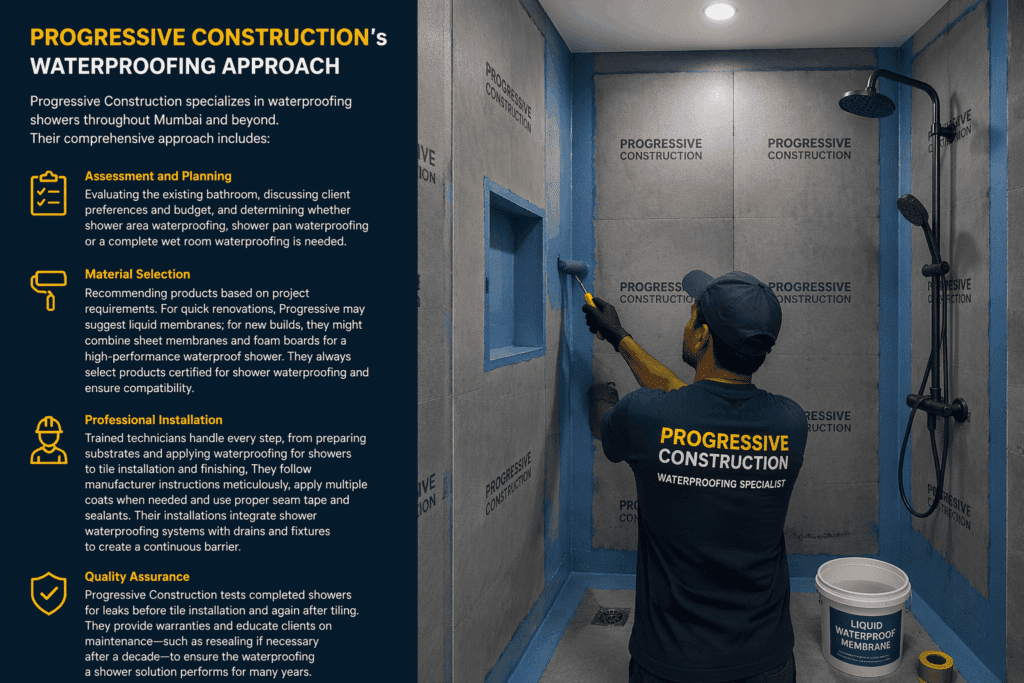
Progressive Construction specializes in waterproofing showers throughout Mumbai and beyond. Their comprehensive approach includes:
- Assessment and planning – Evaluating the existing bathroom, discussing client preferences and budget, and determining if shower area waterproofing, shower pan waterproofing or a complete wet room waterproofing is needed.
- Material selection – Recommending products based on project requirements. For quick renovations, Progressive may suggest liquid membranes; for new builds, they might combine sheet membranes and foam boards for a high‑performance waterproof shower. They always select products certified for shower waterproofing and ensure compatibility.
- Professional installation – Trained technicians handle every step, from preparing substrates and applying waterproofing for showers to tile installation and finishing. They follow manufacturer instructions meticulously, apply multiple coats when needed and use proper seam tape and sealants. Their installations integrate shower waterproofing systems with drains and fixtures to create a continuous barrier.
- Quality assurance – Progressive Construction tests completed showers for leaks before tile installation and again after tiling. They provide warranties and educate clients on maintenance—such as resealing if necessary after a decade—to ensure the waterproofing a shower solution performs for many years.
FAQ: terminology and choosing the right system
Understanding the terminology surrounding shower water proofing helps homeowners make informed choices. Below are answers to some common questions and clarifications:
Is there a difference between shower waterproofing and shower water proofing?
Both phrases mean the same thing: preventing water from escaping the wet area. Some people spell it “shower water proofing” while others use “shower waterproofing.” Whatever you call it, the goal is to create a waterproof shower that keeps moisture contained and protects adjacent building materials. When Progressive Construction designs a waterproof for shower system, they consider factors like tile type, substrate and the homeowner’s budget. Repeating the term waterproof for shower underscores the importance of choosing materials specifically rated as waterproof for shower applications.
What is the best waterproofing membrane for shower projects?
Choosing the best waterproofing membrane for shower installations depends on the application. Sheet membranes offer uniform thickness, liquid membranes excel at odd shapes, and foam boards provide structure and insulation. Progressive Construction combines products to create the best shower waterproofing system for each project. When selecting a membrane, consider ease of installation, performance and compatibility with your tile to achieve reliable waterproofing for showers and to ensure the waterproof membrane for showers functions correctly.
How does waterproofing a shower area differ from waterproofing shower floor and walls?
Waterproofing a shower area refers to protecting the entire enclosure, including floors, walls and niches. Floor protection is sometimes called waterproofing shower floor or shower floor waterproofing, and it focuses on ensuring the pan or base slopes correctly and is sealed. Wall protection—often called shower wall waterproofing—involves applying membranes or foam boards behind tiles to stop moisture penetration. Progressive Construction’s integrated approach covers all components: shower area waterproofing, shower pan waterproofing, shower tray sealing, shower enclosure waterproofing, and shower membrane installation.
Do I still need bathroom waterproofing if I have tile waterproofing?
Absolutely. Tile waterproofing products like sealers protect the surface of the grout, but water can still travel through cracks or pinholes. A dedicated membrane provides a durable bathroom moisture barrier and ensures proper bathroom damp proofing behind the tile. Combined with proper ventilation, this approach ensures your bathroom stays dry. Without a membrane you risk leaks and mold, even if the tile is sealed. For complete protection, pair bathroom waterproofing with regular maintenance and use of a high‑quality waterproof membrane for showers.
How often should waterproofing showers be inspected or maintained?
Properly installed membranes last years, but periodic inspection helps catch small issues. For example, re‑caulk joints every few years, and reseal liquid membranes roughly every decade. Progressive Construction recommends homeowners schedule routine maintenance for waterproofing showers and shower leak prevention. This practice extends the life of a waterproof membrane for showers and prevents costly repairs.
Can I handle shower waterproof systems myself?
DIY installation is possible, especially with liquid membranes, but there’s no substitute for professional experience. Many homeowners attempt shower membrane installation only to discover later that a missed seam caused a leak. Professionals understand the nuances of wet area waterproofing, proper slope and product compatibility. If you decide to DIY, follow manufacturer instructions carefully and don’t skimp on materials. When in doubt, call Progressive Construction for guidance.
Conclusion
Effective shower waterproofing is essential for preserving the integrity of a bathroom, ensuring compliance with codes and protecting occupants from mold and structural damage. Modern waterproofing shower systems include sheet membranes, liquid coatings, foam wallboards and pre‑sloped bases, each suited to different applications. The choice of system depends on budget, project scope and installation skills. Regardless of the method, the basic principles remain the same: prepare surfaces properly, use approved products, apply multiple coats where required, and pay attention to seams and penetrations.
Progressive Construction combines industry best practices with high‑quality materials to deliver waterproofing for showers that stand the test of time. By choosing professional installation, homeowners in Mumbai can enjoy leak‑free, low‑maintenance bathrooms for decades while protecting their investment. If you need shower membrane installation, shower tile waterproofing, or complete wet room waterproofing, Progressive Construction’s expertise ensures a beautiful, durable and genuinely waterproof shower.