
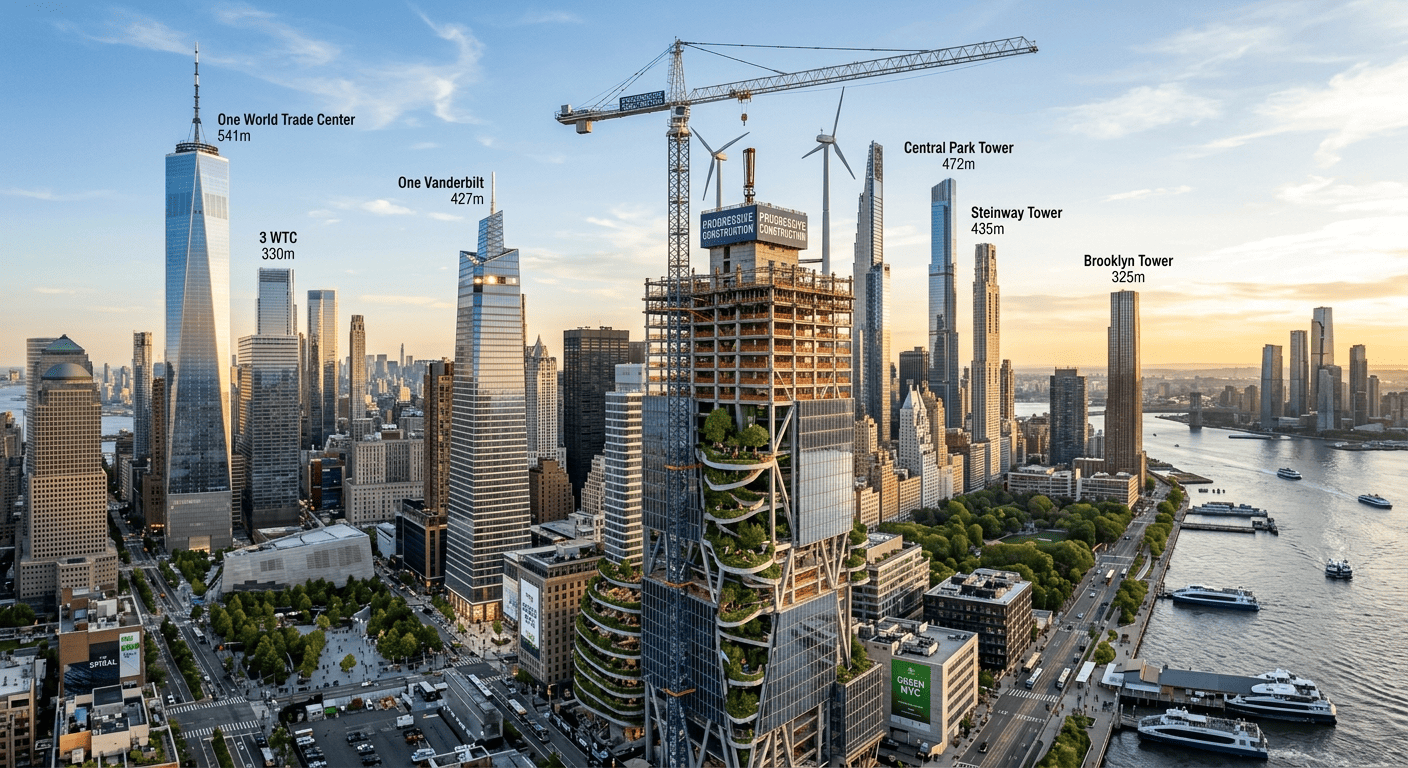
New York City’s skyline is a constantly evolving laboratory of skyscraper architecture and engineering. From the Art‑Deco classics of the early 20th century to today’s supertall residential towers, the city has always pushed the boundaries of NYC high‑rise construction and NYC structural design standards. This article explores the tallest buildings in New York City, examines how modern engineering and sustainability are shaping them, and looks ahead at the trends that will define the next generation of New York supertall buildings. if you’re asking “what are the tallest buildings in New York?” or looking for inspiration from progressive design, this guide has you covered.
Overview of New York City’s Supertall Skyline
New York’s skyline is dominated by a handful of towers that soar above 1,000 feet. These giants demonstrate how Manhattan skyscraper projects have evolved from steel‑framed commercial towers to mixed‑use residential spires. The table below lists the 10 tallest buildings in New York City (as of 2025) with their heights and completion dates.
| Rank & building | Height (m/ft) | Year & notes |
|---|---|---|
| One World Trade Center | 541 m / 1,776 ft | 2014; tallest in the Western Hemisphere with symbolic spire |
| Central Park Tower | 472 m / 1,550 ft | 2020; world’s tallest residential tower |
| 111 West 57th Street (Steinway Tower) | 435 m / 1,428 ft | 2021; ultra‑slender tower with ratio 1:24 |
| One Vanderbilt | 427 m / 1,401 ft | 2020; office tower with transit upgrades and sustainable design |
| 432 Park Avenue | 426 m / 1,396 ft | 2015; iconic square‑windowed residential tower |
| 270 Park Avenue (JPMorgan HQ) | 423 m / 1,388 ft | 2025 (under construction); all‑electric HQ with cutting‑edge engineering |
| 30 Hudson Yards | 390 m / 1,270 ft | 2019; mixed‑use tower with the Edge observation deck |
| Bank of America Tower | 370 m / 1,200 ft | 2009; LEED‑Platinum office tower with rainwater reuse |
| 3 World Trade Center | 330 m / 1,079 ft | 2018; K‑braced steel tower with LEED Gold certification |
| Brooklyn Tower | 325 m / 1,067 ft | 2022; first supertall outside Manhattan |
These tallest New York buildings are more than just numbers. Each represents a moment in NYC construction industry trends, combining cutting‑edge structural systems with new approaches to sustainability and public space.
One World Trade Center – Symbol of Resilience
The question of the tallest building in Manhattan is often answered by One World Trade Center. Rising 541 metres (1,776 feet) tall, the tower was completed in 2014 and anchors the rebuilt World Trade Center site. Its height intentionally references the year of the United States’ Declaration of Independence (1776), and the tapering design culminates in a spire that makes it the tallest building in the Western Hemisphere. Engineers combined a high‑strength reinforced concrete core with a steel perimeter frame, ensuring redundancy and blast resistance. Sustainability features include fuel‑cell power, low‑emissivity glass and rainwater capture, helping the tower earn LEED Gold certification. When discussing tallest buildings new york, One World Trade Center remains a touchstone for resilience and progressive design.
Central Park Tower – Vertical Neighborhood over Billionaires’ Row
At 472 metres (1,550 feet), Central Park Tower is the world’s tallest residential building. Completed in 2020 and developed by Extell Development Company, the 98‑story tower stands along Billionaires’ Row and contains 179 condominiums. The building’s stacked massing accommodates luxury residences above a Nordstrom flagship store, creating a vertical neighborhood. Its height surpasses all other tallest towers in NYC except One World Trade Center, making it a centerpiece of the skyline. Residents enjoy floor‑to‑ceiling views of Central Park and tailored amenities, reflecting a trend toward ultra‑luxury NYC high‑rise construction that combines exclusivity with engineering finesse.
111 West 57th Street (Steinway Tower) – The World’s Thinnest Skyscraper
Nicknamed Steinway Tower, 111 West 57th Street is an 84‑story, 435‑metre (1,428‑foot) residential spire. Developed by JDS Development Group and designed by SHoP Architects, it preserves the 16‑story Steinway Hall at its base while rising into a slender modern spire. The tower’s width‑to‑height ratio of about 1:24 makes it the thinnest skyscraper in the world. Five two‑story windbreaks and a concrete lattice façade allow wind to pass through, demonstrating tall building engineering NYC that balances slenderness with structural stability. For those asking “what are the tallest buildings in New York?”, Steinway Tower shows how engineering can stretch verticality beyond conventional proportions.
One Vanderbilt – Integrating Transit and Sustainability
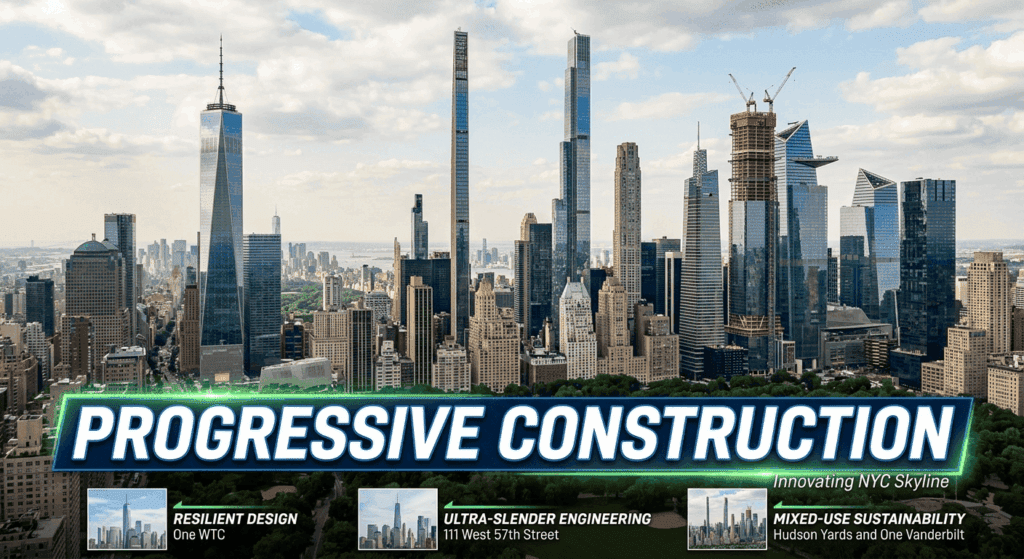
Standing beside Grand Central Terminal, One Vanderbilt rises 427 metres (1,401 feet) and was completed in 2020. Designed by Kohn Pedersen Fox, the tower consists of four tapering volumes clad in terra‑cotta panels that reference historic Midtown architecture. It invests over US$220 million in transit improvements and includes a new pedestrian plaza, aligning private development with public infrastructure. Sustainability measures include 90 percent recycled steel and a 90,000‑gallon rainwater system. The tower also houses the Summit observation deck, providing visitors with panoramic views and making One Vanderbilt a staple among the top tallest buildings NYC.
432 Park Avenue – Minimalist Grid and Pencil‑Tower Proportions
432 Park Avenue is a minimalist, square‑windowed tower that captured global attention. Reaching 425.5 metres (1,396 feet) and completed in 2015, it was briefly the tallest residential building in the world. The building features a lattice of poured‑in‑place concrete with 10‑foot square openings. Five double‑story mechanical floors create windbreaks every 12 floors, reducing wind load and supporting the structure’s pencil‑tower proportions. The slenderness ratio of about 15:1 shows how NYC structural design standards now accommodate extremely narrow towers, making 432 Park Avenue a hallmark of tallest skyscrapers in New York City.
270 Park Avenue (JPMorgan Chase Headquarters) – Next‑Generation Workplace
Replacing a mid‑century skyscraper, the new 270 Park Avenue (also called JPMorgan Chase HQ) will reach approximately 423 metres (1,388 feet) when completed in 2025. Designed by Foster + Partners and engineered by Severud Associates, the 60‑story tower uses fan‑column bases, triangular bracing and transfer girders to create column‑free trading floors. The project aims for net‑zero operational emissions by using hydroelectric power and an all‑electric systems approach. Modular prefabrication reduces construction waste and accelerates the schedule. When finished, it will be the tallest steel‑framed building in New York City and the newest entry on lists of the tallest buildings in New York City.
30 Hudson Yards – Edge and the Mixed‑Use City
Part of the Hudson Yards redevelopment on Manhattan’s West Side, 30 Hudson Yards is a 103‑story commercial tower rising 390 metres (1,270 feet). Designed by Kohn Pedersen Fox and completed in 2019, it features a triangular observation deck known as Edge that juts out from the 100th floor. The deck sits 340 metres (1,100 feet) above ground, making it the highest outdoor observation deck in the Western Hemisphere. The tower houses offices for media conglomerates and investment firms, reflecting the economic diversification of tallest towers in NYC. Its integration with retail, restaurants and public space exemplifies a mixed‑use approach to NYC high‑rise construction.
Bank of America Tower – Green Skyscraper at Bryant Park
Located at One Bryant Park, the Bank of America Tower stands 370 metres (1,200 feet) tall. The 55‑story tower was completed in 2009 and became one of the first commercial skyscrapers to earn LEED Platinum certification. Its curtain‑wall façade maximizes daylight, while a rooftop greywater system captures rainwater for reuse. Four 60,000‑gallon tanks store water for flushing toilets, reducing sewage outflows by 95 percent. The building also uses dual‑flush toilets and waterless urinals, underscoring how NYC construction industry trends now prioritize water conservation and energy efficiency.
3 World Trade Center – K‑Bracing and Column‑Free Floors
Completed in 2018, 3 World Trade Center is an 80‑story office tower rising 330 metres (1,079 feet). Designed by Rogers Stirk Harbour + Partners for Silverstein Properties, the tower features stainless‑steel–clad exterior frames and K‑shaped bracing that allows column‑free floor plates. The building contains 2.5 million square feet of office space with five trading floors and five retail levels. Sustainability features similar to those used in 7 World Trade Center helped the building achieve LEED Gold certification. As part of the revitalized WTC complex, 3 WTC illustrates how modern Manhattan skyscraper projects seek both efficiency and elegance.
Brooklyn Tower – Extending the Skyline Beyond Manhattan
The Brooklyn Tower, also known as 9 DeKalb Avenue, represents a significant geographical shift in NYC high‑rise construction. Completed in 2022, the 74‑story tower reaches 325 metres (1,067 feet). Designed by SHoP Architects, it incorporates the historic Dime Savings Bank at its base, blending Neo‑Art Deco details with a modern glass tower. The project created 466,000 square feet of residential space and includes condominiums and rental apartments. Importantly, it is the first supertall building in Brooklyn and the tallest structure in New York City outside Manhattan. Its completion underscores the expansion of New York City skyline towers to the outer boroughs.
53 W 53 – Diagrid Elegance by MoMA
Adjacent to the Museum of Modern Art, 53 West 53 (53W53) is a 77‑story residential skyscraper with a roof height of 320 metres (1,050 feet). Designed by Jean Nouvel and completed in 2019, the tower tapers to five spires and features a concrete diagrid structural system that shifts load to the exterior. The sloping north and south facades respond to zoning setbacks, while the diagrid allows open interior spaces. The building hosts museum galleries at its base and 145 luxury condominiums above. 53W53’s sculptural form and structural innovation make it a standout among New York City’s tallest buildings and a testament to skyscraper architecture New York.
One57 – Pioneering Billionaires’ Row
One57, formerly known as Carnegie 57, is a 75‑story, 1,005‑foot (306 m) supertall tower that helped inaugurate Billionaires’ Row. Developed by Extell and designed by Christian de Portzamparc, it combines 92 condominium units with a 210‑room Park Hyatt Hotel. Its blue‑glass façade and cascading setbacks evoke waterfalls, while structural features include concrete floor slabs and two basement levels. Upon completion in 2014, One57 briefly held the title of tallest residential building before being overtaken by 432 Park Avenue. The tower set record apartment sale prices and signaled the start of a luxury‑condominium boom on 57th Street.
Construction Innovations & Sustainable Trends
All‑Electric and Net‑Zero Towers
Modern NYC construction industry trends emphasize carbon reduction and all‑electric systems. The under‑construction 270 Park Avenue will be the city’s largest all‑electric tower, using hydroelectric power and modular prefabrication. Another example is 505 State Street, a 44‑story tower in Brooklyn designed by Alloy Development. Through a partnership with Con Edison, the building generates electricity locally from solar panels. This shift is driven partly by New York City’s Local Law 97, which requires buildings over 25,000 square feet to cut carbon emissions 40 percent by 2030 and 80 percent by 2040. The law targets gas appliances and furnaces, pushing developers toward electric stoves and high‑performance building envelopes. These mandates reflect a broader move toward net‑zero tallest towers in NYC.
Green Terraces and Biophilic Design
The Spiral, a new office tower on the northern High Line, exemplifies biophilic design. Rising 1,031 feet, the tower features stepped spiral terraces with hanging gardens across 13,000 square feet. Each floor opens to outdoor terraces with drought‑resistant plants, while an interior cascading atrium connects open floor plates. Designed by Bjarke Ingels Group for Tishman Speyer, the building achieved LEED Gold certification and demonstrates how NYC high‑rise construction is incorporating greenery into work environments. Such features align with skyscraper architecture New York that prioritizes occupant well‑being alongside height.
Structural Innovation and Resilience
The tallest buildings in New York City utilize innovative structural systems to manage wind and gravity loads. 432 Park Avenue employs open mechanical floors to reduce wind forces, while Steinway Tower uses a concrete lattice and modular windbreaks. 53W53’s diagrid transfers structural loads to the exterior, allowing freer interior layouts. One World Trade Center’s hybrid concrete‑and‑steel frame provides redundancy and blast resistance. These approaches demonstrate howtall building engineering NYC has evolved to address slenderness, wind sway and safety.
Expanding Beyond Manhattan
The emergence of the Brooklyn Tower and 505 State Street illustrates the spread of New York City skyline towers to the outer boroughs. As land in Manhattan becomes scarce and expensive, developers are investing in Brooklyn and Queens. These projects not only change the skyline but also bring investment and infrastructure improvements to new neighborhoods. For example, the Brooklyn Tower preserves the historic Dime Savings Bank while delivering modern residences, showing how Manhattan skyscraper projects can respect heritage even when they cross borough boundaries.
Skyscraper Development and Iconic Landmarks in New York City
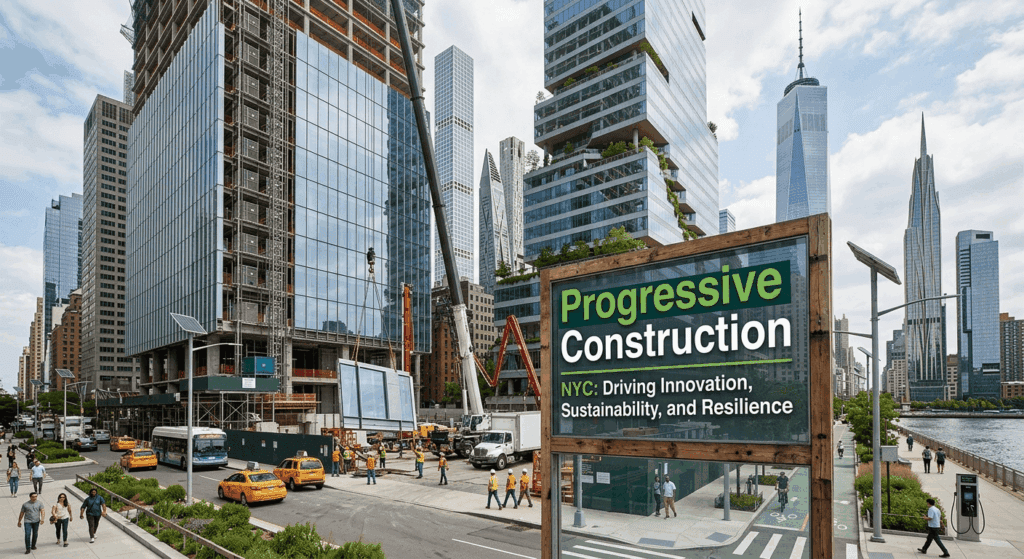
New York City’s skyline is adorned with architectural marvels that define the city’s identity and the real estate sector. The Empire State Building, Chrysler Building, and Woolworth Building are iconic examples of art deco design that have stood the test of time. As the city continues to evolve, skyscraper construction has reached new heights, with towering structures like One World Trade Center and Central Park Tower reshaping the Lower Manhattan landscape. The city’s development has expanded into areas such as Midtown Manhattan and Times Square, with office buildings and mixed-use development becoming more common. Billionaire’s Row features some of the most expensive residential projects, including 111 West 57th Street and Steinway Tower, setting new standards for luxury living and construction progress.
In addition to the established landmarks, skyscraper development is thriving in emerging areas like Brooklyn Tower and 30 Hudson Yards, along with the ongoing revitalization of South Street Seaport and the development of the World Trade Center site. As New York’s skyline continues to grow, urban development is incorporating sustainable features and cultural landmarks such as The Shed and Pennsylvania Station, which enhance the city’s infrastructure. From the stunning city views of the Rockefeller Center to the historical significance of the Metropolitan Life Insurance Tower, each building plays a role in New York’s ever-expanding legacy of architectural and skyscraper development. The NYC Department of Buildings oversees this construction surge, ensuring that the city’s modern skyline remains as iconic and efficient as its historical buildings.
Why Height Matters – Culture, Economy and Identity
New York’s tallest buildings are more than engineering marvels; they are cultural symbols and economic engines. They attract tourists, create office space and housing, and signal the city’s ambition. The competition to build the biggest building NYC fuels innovation, pushing engineers to refine core‑and‑outrigger systems, dampers and renewable energy integration. At the same time, the skyline reflects broader societal values. The shift toward all‑electric towers and green terraces shows a commitment to fighting climate change and improving urban life. In a city where real estate is scarce, verticality enables new public spaces like Edge’s sky deck and the Summit at One Vanderbilt, giving residents and visitors ways to interact with the skyline rather than merely observe it.
Conclusion: A Progressive Future for New York’s Skyline
New York City’s skyline will continue to evolve. Upcoming projects like JPMorgan’s 270 Park Avenue and future developments on Billionaires’ Row will keep redefining the answer to what are the tallest buildings in New York?. But height alone does not define success. The next era of New York supertall buildings will be judged by their energy performance, contribution to public space and integration with transit. As Local Law 97 and similar regulations encourage carbon reduction, engineers and architects will experiment with mass timber, modular construction and vertical gardens. The NYC construction industry trends explored here suggest a future where the tallest buildings new york are also the most sustainable and community‑oriented. Ultimately, the city’s skyline remains a testament to human ingenuity and a beacon for progressive urbanism.