
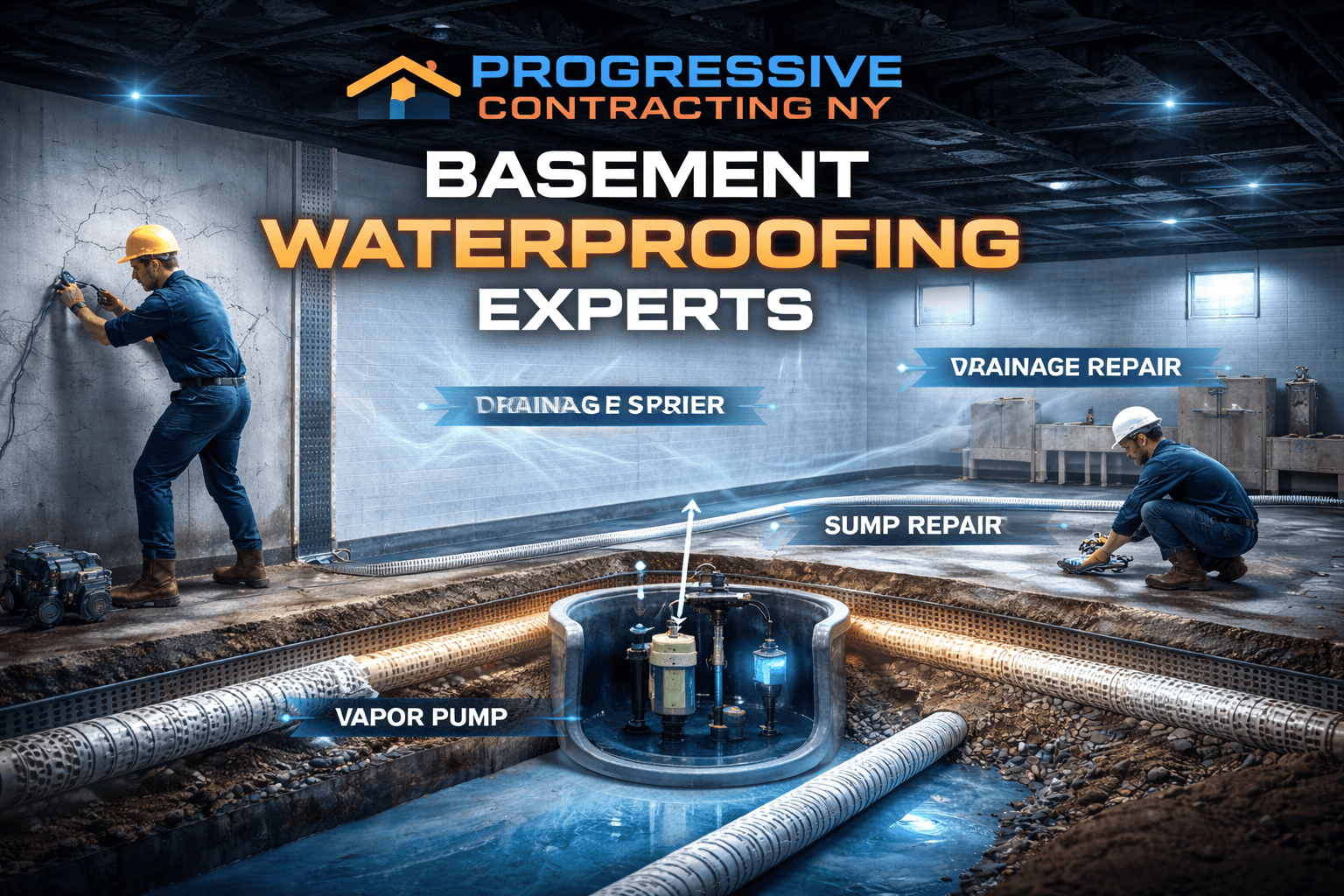
Keeping your basement dry is essential for maintaining a healthy home. Even if your house stands on solid ground, hydrostatic pressure and seasonal rain can push water through cracks or porous concrete. The result is damp walls, musty smells and even structural damage. Inside basement waterproofing is a practical solution for homeowners in Mumbai or any region with heavy rainfall. Unlike exterior treatments, which require excavation, waterproofing basement from inside uses sealants, coatings and drainage systems to manage water that has already entered your basement. In this guide we’ll explore why interior approaches matter, common issues they solve, key methods and what they cost, backed by up‑to‑date information from reputable sources.
Why Focus on Interior Basement Waterproofing?
Basements provide extra living space and storage, but they are vulnerable to water seepage. Interior basement waterproofing addresses water after it enters, making it ideal when exterior excavation is impractical. Maryland Mold & Waterproofing notes that basement walls can be damaged by cracks, porous concrete and hydrostatic pressure. They recommend interior foundation waterproofing because it protects your investment, prevents mold growth and improves comfort. Key benefits include:
- Cost effectiveness – inside solutions are typically cheaper than exterior excavation. Aqua Dry Basements explains that interior methods are the most cost‑effective option since they avoid heavy machinery and landscaping.
- Quick installation – many interior basement waterproofing systems can be installed in days.
- Year‑round applicability – interior solutions work regardless of weather, unlike exterior waterproofing which requires favorable conditions.
However, interior methods manage water rather than preventing it from reaching your walls. They are best for minor leaks, hydrostatic pressure issues and situations where the exterior grade or guttering has already been improved.
Common Issues Requiring Waterproofing From Inside
Before choosing inside basement waterproofing, identify the source of moisture. Maryland Mold & Waterproofing lists common intrusion points: cracks in foundation walls, seepage through porous concrete, poor drainage and hydrostatic pressure. Bill’s Custom Concrete highlights additional problems such as condensation caused by warm humid air meeting cold surfaces, and window wells collecting rainwater. Typical issues include:
- Wall leaks and foundation cracks – hairline cracks allow moisture penetration. Sealing inside basement walls with epoxy or polyurethane injections is the first step.
- Condensation problems – poor ventilation leads to water droplets on walls and pipes. Dehumidification helps maintain proper humidity.
- Window well leaks – broken seals or poor drainage around window wells allow water inside.
- Hydrostatic pressure – high groundwater exerts pressure on walls, forcing water through gaps. Interior waterproofing systems like perimeter drains relieve this pressure.
Addressing these issues early prevents mold, structural damage and expensive repairs. Remember, waterproofing basement walls from inside does not fix the exterior cause; improve grading, gutters and downspouts to direct water away.
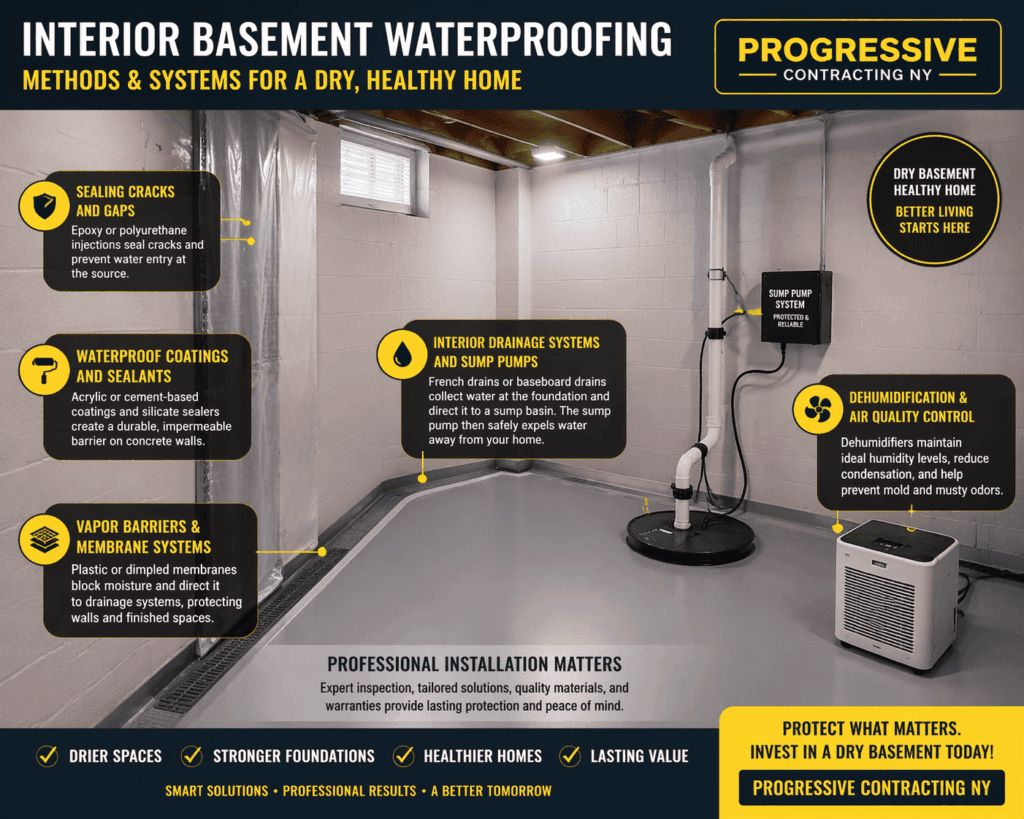
Interior Basement Waterproofing Methods and Systems
Several basement interior waterproofing techniques can keep your space dry. These methods often work together for a comprehensive solution.
Sealing Cracks and Gaps
Cracks in foundation walls are common entry points for water. Professionals seal them with epoxy or polyurethane injections. These materials expand within the crack to create a watertight barrier. Inside foundation waterproofing starts by inspecting every wall and the floor slab for hairline cracks and sealing them. This step should also address waterproofing concrete block walls inside, since blocks can absorb moisture within their cells.
Waterproof Coatings and Sealants
Applying a waterproof coating to basement walls is a standard part of waterproofing basement walls from inside. Maryland Mold & Waterproofing explains that interior waterproofing uses acrylic or cement‑based coatings to block water from penetrating. Waterproof paints and silicate sealers penetrate the concrete’s pores and create an impermeable film. Silicate sealers chemically react with calcium hydroxide in concrete to form a hard crystalline structure, but they may not perform as effectively on very porous surfaces. When using paint or sealer, clean the surface thoroughly, repair cracks and apply multiple coats for a lasting barrier.
Vapor Barriers and Membrane Systems
Vapor barriers are sheets of plastic or specialized membrane attached to the interior walls to prevent moisture migration. Bill’s Custom Concrete notes that these barriers perform best when sealed properly at penetrations and edges. More advanced membrane systems use dimpled plastic sheets to create an air gap between the wall and finished surface, allowing moisture to drain down to collection systems. Incorporating a vapor barrier is especially helpful when waterproofing cellar walls or finished basements because it protects drywall or insulation from dampness.
Interior Drainage Systems and Sump Pumps
For homes with persistent water problems, installing an interior drainage system may be necessary. This system typically involves excavating a trench along the basement perimeter and placing perforated piping (French drain) to capture water at the base of the wall. The pipe directs water into a sump basin, where a sump pump expels it away from the house. Baseboard drainage systems provide a less invasive alternative by collecting water at the floor–wall intersection without deep excavation. These interior waterproofing systems effectively manage hydrostatic pressure and keep the floor dry, making them popular solutions for waterproofing basement floor.
Dehumidification and Air Quality Control
Basements are naturally humid because they are below grade. After sealing and installing drainage, use a dehumidifier to maintain humidity levels and prevent condensation. Whole‑house dehumidifiers ensure proper humidity year‑round and help avoid mold growth. Pair dehumidifiers with ventilation strategies to keep air moving and reduce musty odors.
Professional Installation vs. DIY
While some tasks such as painting walls or sealing small cracks can be DIY projects, interior waterproofing often requires professional expertise. Maryland Mold & Waterproofing advises that tasks like installing drainage systems and sump pumps demand technical knowledge and experience. Professionals perform comprehensive inspections, tailor solutions to your specific basement and provide warranties. Bill’s Custom Concrete adds that experts can spot overlooked issues like inadequate exterior drainage or structural flaws. Therefore, if you’re asking “should I waterproof my basement myself?”, weigh the complexity of the project and potential long‑term consequences.
Pros and Cons of Interior Waterproofing
Choosing interior waterproofing has advantages and drawbacks. According to Aqua Dry Basements, the benefits include cost savings, no need for excavation and efficient humidity control. Interior solutions can be performed at any time of the year and often provide immediate results. However, the company also notes several potential issues:
- Manages water, not prevents it – interior waterproofing controls water that has already entered your basement rather than stopping it at the source. Persistent exterior water pressure can still degrade your foundation over time.
- Disruption during installation – installing drains or sump pumps may require tearing up parts of the floor and temporarily moving stored items.
- Cost and maintenance – while cheaper than exterior excavation, some interior methods such as drain tile systems and sump pumps can be expensive and require ongoing maintenance.
- Not ideal for severe flooding – for homes with significant water entry or structural issues, exterior waterproofing may provide better long‑term protection.
Balancing these pros and cons helps determine if interior basement waterproofing suits your situation.
Cost Considerations and Professional Help
The cost of waterproofing basement from inside varies based on your home’s size, moisture severity and chosen methods. HomeAdvisor reports that waterproofing a basement can range between $2,461 and $8,192, with some projects as low as $600 or as high as $15,000. Interior solutions like sealants are on the lower end, while comprehensive drain systems with sump pumps fall in the higher bracket. Remember to budget for repairs if foundation cracks need fixing; narrow cracks can cost $800–$1,500 per crack. Additional expenses may include excavation for drainage or mold remediation.
When comparing interior basement waterproofing systems, ask contractors for itemized quotes. Standard tasks may include:
| Method | Typical Cost (USD)* | Notes |
|---|---|---|
| Waterproof coatings/sealants | $1–$8 per square foot | Cementitious or acrylic coatings, includes labor |
| Silicate sealers | $40–$100 per gallon | Materials only; may need professional installation |
| Interior drainage (perimeter drain) | $2,000–$6,000 (average) | Includes trench, perforated pipe and connection to sump pump |
| Sump pump installation | $700–$5,200 | Varies with pump capacity and backup system |
| Dehumidifier | $250–$2,500 | Whole‑house units cost more than portable ones |
*Costs are approximate and vary by region, basement size and labor rates.
Because basement moisture problems can signal underlying structural issues, professional evaluation is critical. Qualified contractors will examine grading, gutter performance and foundation condition before recommending a waterproofing solution for basement. They may suggest combining interior methods with exterior improvements like downspout extensions or landscaping modifications. Investing in comprehensive interior foundation waterproofing yields a dry, healthy basement and protects your property value.
Maintenance Tips and Preventive Measures
Once you’ve implemented basement interior waterproofing, continue to monitor and maintain your system. Here are key tips:
- Inspect regularly – check for new cracks, moisture stains or musty odors. Seal any cracks promptly and reapply coatings where needed. Sealing basement walls and sealing basement floor are ongoing tasks that protect against future seepage.
- Maintain gutters and downspouts – ensure gutters are clear and downspouts discharge water away from the foundation. Poor drainage can overwhelm your interior waterproofing system and cause water to reenter.
- Control humidity – use a dehumidifier to maintain 30–50% relative humidity. This prevents condensation and inhibits mold growth, complementing waterproofing basement floor efforts.
- Test your sump pump – periodically pour water into the sump basin to ensure the pump activates and drains correctly. Check backup battery systems, especially during monsoon season.
- Check vapor barriers – inspect plastic sheeting or membrane systems for tears or loose edges. Proper sealing is essential to keep moisture from migrating behind finished walls.
- Improve landscaping – grade soil away from the foundation, extend downspouts and consider installing a curtain drain outside to reduce hydrostatic pressure on basement walls.
By combining preventive maintenance with effective waterproofing basement walls and floors, you can enjoy a usable, mold‑free basement for years.
Common Terminology in Interior Basement Waterproofing
For search engines and readers alike, it’s useful to recognize the terminology used in this field. The following list highlights common focus keywords and LSI (latent semantic indexing) phrases associated with interior basement waterproofing. Each bullet illustrates how the phrase is used in context and appears multiple times to reinforce relevance:
- Inside basement waterproofing – When people talk about inside basement waterproofing they usually mean sealing and drainage systems installed on the interior. Inside basement waterproofing solutions protect against damp walls and humidity. Many homeowners choose inside basement waterproofing when exterior excavation isn’t feasible.
- Waterproofing basement from inside – Waterproofing basement from inside is sometimes confused with exterior sealing, but waterproofing basement from inside refers to using coatings, drains and sump pumps to manage water that enters the space. If you can’t excavate around your home, waterproofing basement from inside offers a viable alternative.
- Inside foundation waterproofing – Inside foundation waterproofing targets the internal faces of foundation walls. Inside foundation waterproofing may involve crack injections, membranes and interior drains. Many specialists recommend combining inside foundation waterproofing with exterior grading improvements for best results.
- Interior basement waterproofing – This phrase encompasses all methods described above. Interior basement waterproofing covers sealing walls, adding dehumidification and installing drainage. By combining these techniques, interior basement waterproofing provides comprehensive moisture control.
- Basement interior waterproofing – Another way to describe the same process, basement interior waterproofing emphasises that work occurs within the basement rather than outside. Basement interior waterproofing often appeals to homeowners seeking minimal disruption.
- Sealing inside basement walls – Sealing inside basement walls involves applying epoxy injections or sealants. You should always focus on sealing inside basement walls before adding coatings or drains. Neglecting sealing inside basement walls can allow moisture to bypass other systems.
- Waterproofing basement walls from inside – A common search phrase, waterproofing basement walls from inside specifically refers to coatings, membranes and drains installed indoors. Waterproofing basement walls from inside is cost‑effective and quicker to implement than exterior excavation. Many DIY guides for waterproofing basement walls from inside focus on surface preparation and product selection.
- Interior foundation waterproofing – Similar to inside foundation work, interior foundation waterproofing ensures that the interior surface of the foundation is sealed. Interior foundation waterproofing complements exterior drainage but does not replace it.
- Interior waterproofing – A broad term capturing all interior techniques. Interior waterproofing includes crack repair, coatings, drains, dehumidification and maintenance. When researching interior waterproofing, also look for related phrases like interior waterproofing system.
- Interior waterproofing system – An interior waterproofing system is a combination of products and techniques working together. A typical interior waterproofing system might include crack sealing, a vapor barrier, a perimeter drain and a sump pump. Hiring professionals ensures that your interior waterproofing system is properly designed.
- Waterproof my basement – Many homeowners simply ask, “how can I waterproof my basement?” The question “how do I waterproof my basement” often leads to exploring both interior and exterior options. If you’re wondering how to waterproof my basement effectively, consult a waterproofing specialist.
- Waterproofing cellar walls – Some homes have cellars rather than full basements. Waterproofing cellar walls from inside uses the same techniques as basement walls. When waterproofing cellar walls, pay special attention to stone or brick surfaces, which may require specialized sealers.
- Waterproofing solution for basement – This phrase refers to any comprehensive approach. A waterproofing solution for basement might involve a single product or an integrated system. When evaluating a waterproofing solution for basement, consider durability, maintenance and cost.
- Basement wall waterproofing – If performed inside or outside, basement wall waterproofing protects your walls from moisture. Interior basement wall waterproofing focuses on coatings and membranes, while exterior basement wall waterproofing involves excavation.
- Waterproofing basement floor – Moisture can also rise through the floor slab. Waterproofing basement floor often involves installing vapor barriers beneath new flooring or using sealants on existing concrete. Homeowners sometimes pair waterproofing basement floor with drainage channels along the perimeter.
- Waterproofing concrete block walls inside – Concrete block walls are porous and may allow moisture to travel through the cores. Waterproofing concrete block walls inside means sealing the surface and sometimes filling the cores with waterproof material. If you have block foundations, don’t skip waterproofing concrete block walls inside.
- Sealing basement walls – A general term for applying products to stop moisture, sealing basement walls is the first line of defense. Make sure sealing basement walls includes both crack repair and surface coatings. Without proper sealing basement walls, other solutions may fail.
- Sealing basement floor – Just as with walls, sealing basement floor prevents water and vapor from seeping upward. Use epoxy or specialized floor sealers when sealing basement floor. Combined with a dehumidifier, sealing basement floor helps maintain a dry environment.
- Interior basement waterproofing systems – This plural phrase emphasizes that various systems exist. Interior basement waterproofing systems may differ in design but share the goal of keeping your basement dry. When comparing interior basement waterproofing systems, ask about warranties and maintenance.
- Cost of waterproofing basement from inside – Understanding the cost of waterproofing basement from inside helps you budget appropriately. Factors affecting the cost of waterproofing basement from inside include the size of the basement, severity of leaks and chosen materials. Always request itemized quotes to evaluate the true cost of waterproofing basement from inside.
These terms often overlap, but using them helps you find the right products and professionals when you research waterproofing basement walls from inside and other interior solutions. Feel free to refer back to this list when planning your project.
Water Damage and Foundation Repair
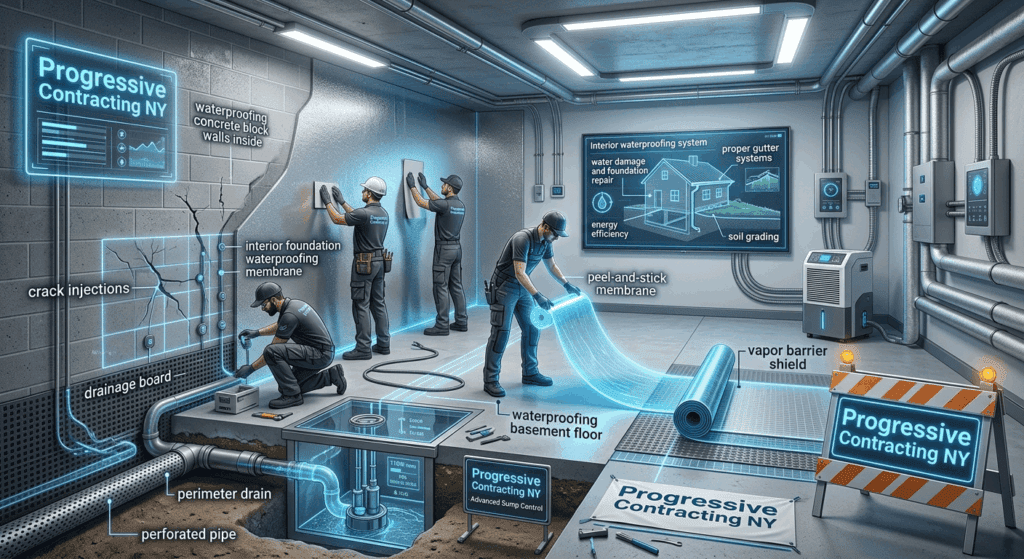
Water damage is a common concern for homeowners, especially when it affects the foundation. A high water table can lead to water infiltration and cause serious issues like mold and mildew growth. Poured concrete foundations are often susceptible to basement water problems if the proper precautions aren’t taken. To prevent such damage, waterproofing membranes such as foundation membranes and peel-and-stick membranes can be applied to seal the basement walls and floor.
Incorporating interior sealants and installing a drainage board or perforated pipes can also help redirect water away from the foundation. A well-functioning sump pump system plays a critical role in removing excess water from the basement, while vapor barrier systems and vapor barrier shields provide an additional layer of protection against moisture buildup. Moisture barriers prevent further degradation of building materials and the growth of mold.
To effectively manage water flow, French drain installation and proper gutter systems are essential in guiding water away from the foundation. Proper soil grading ensures that water doesn’t pool around the foundation, helping maintain energy efficiency by keeping the basement dry. These comprehensive solutions form a robust basement system, combining multiple layers of protection to prevent water damage and ensure the longevity of the building structure.
Conclusion
A dry basement enhances your home’s value, comfort and health. Interior basement waterproofing offers an accessible way to combat leaks, dampness and hydrostatic pressure without the disruption of exterior excavation. By sealing cracks, applying waterproof coatings, installing drainage systems and controlling humidity, you can manage water intrusion effectively. Remember that waterproofing basement walls from inside manages water rather than preventing it, so address exterior grading and drainage issues simultaneously. Consult professional contractors for a tailored interior waterproofing system that fits your home and budget. With diligent maintenance and the right waterproofing solution for basement, you’ll protect your foundation, prevent mold and enjoy a dry, comfortable living space.