
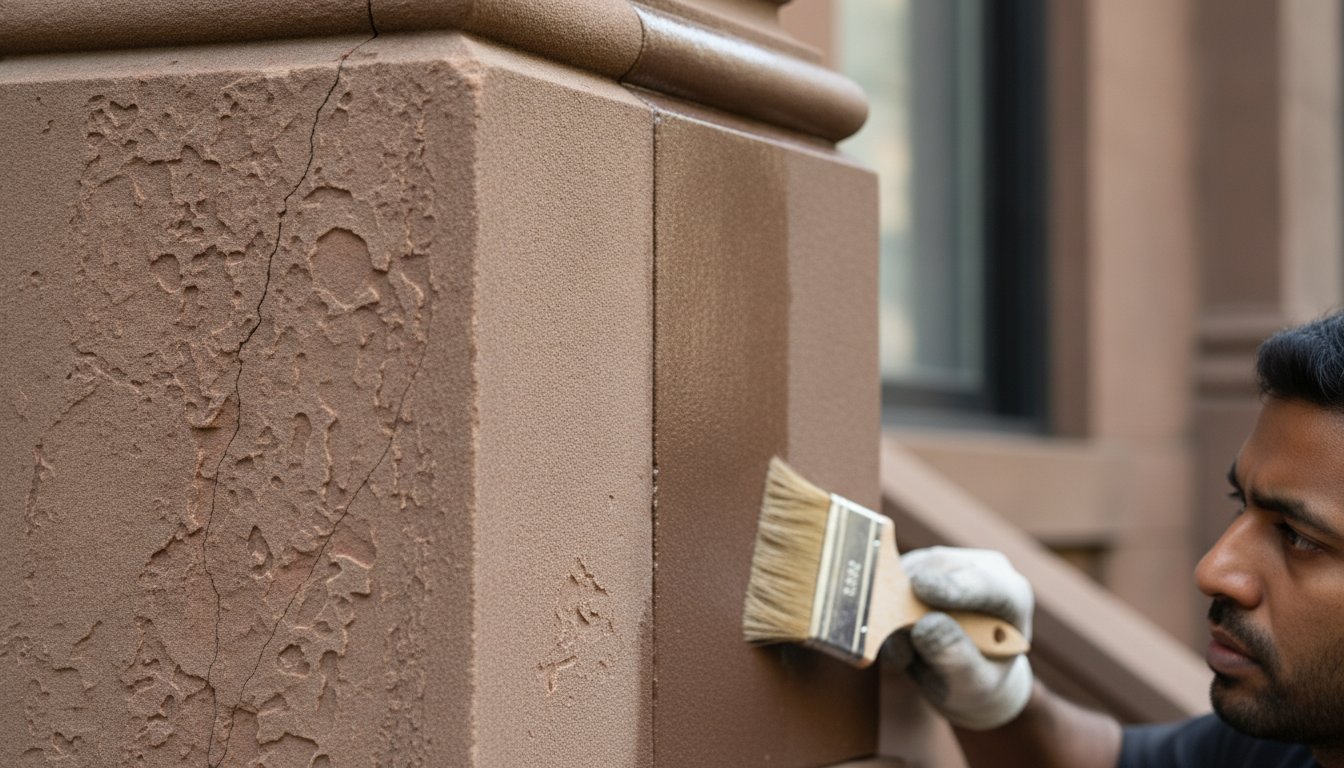
Applying a standard waterproof coating to your historic facade is often the fastest way to destroy it. Many homeowners in Brooklyn and Manhattan watch their stoops “peel” every spring and assume they need a thicker layer of protection. However, trapping moisture inside the stone leads to the very damage you are trying to avoid. Understanding the correct method for sealing brownstone to prevent spalling is the only way to protect your investment without causing long-term structural harm.
You’ll learn how to choose and apply breathable sealants that stop your brownstone from crumbling while avoiding costly structural repairs. We provide a clear path to maintaining facade longevity by selecting materials that respect historic building standards. If you have questions about your specific property, you can reach Progressive Contracting NY Corp at 347-341-3808 or 718-350-7388. You can also email us at ProgressiveContractingNY@yahoo.com for expert guidance. This guide covers everything from the science of vapor permeability to professional maintenance schedules to ensure your home remains a neighborhood landmark.
Understanding Brownstone Spalling: Why Facades Crumble
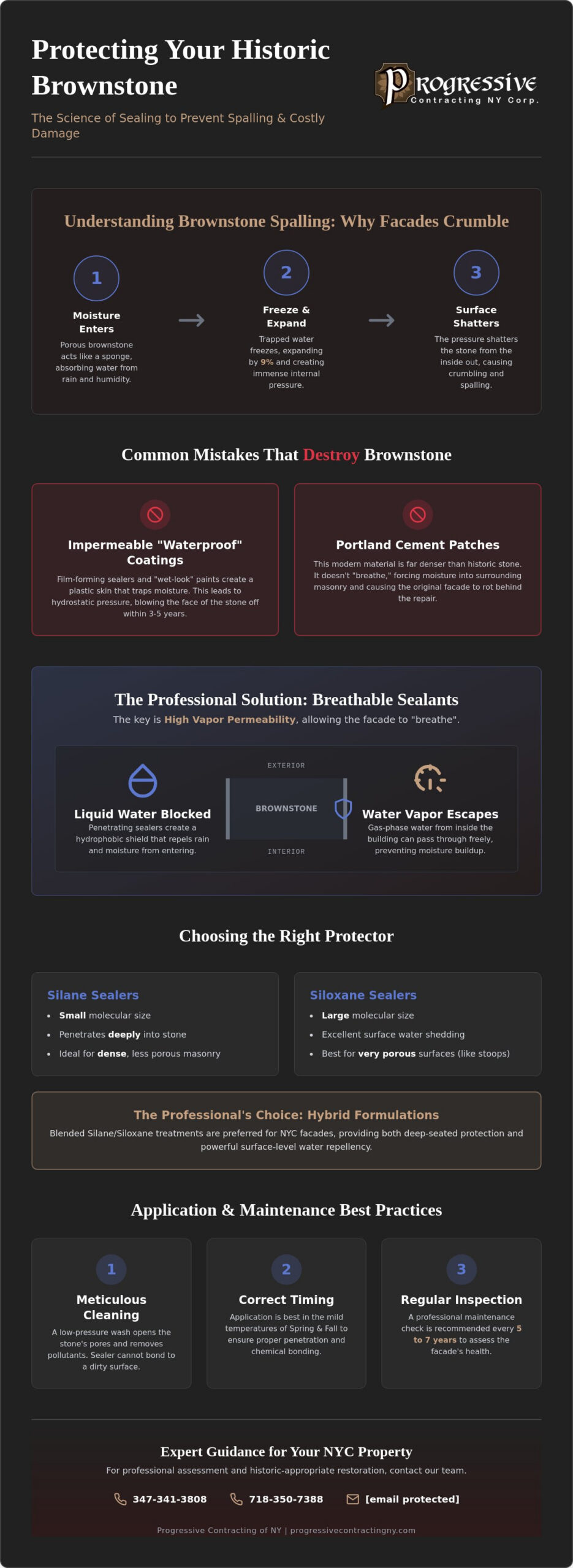
Spalling is the physical separation of a stone’s outer layers caused by internal pressure. Brownstone is a sedimentary rock, which makes it a natural sponge for New York City humidity. When moisture enters the stone’s capillaries and freezes, it expands by 9 percent. This expansion shatters the surface from the inside out. The process of weathering in the Northeast is particularly aggressive because of these constant temperature swings. Sealing brownstone to prevent spalling is a technical necessity to manage this cycle and protect the building’s structural integrity.
A frequent cause of accelerated decay is the use of Portland cement for quick patches. This material is far denser and less permeable than the original historic stone. It creates a rigid cap that prevents natural evaporation. Moisture becomes trapped and is pushed into the surrounding masonry, causing the original facade to rot behind the repair. Effective restoration requires materials that match the stone’s natural compression and breathability.
Early Warning Signs of Spalling
You can often detect issues before stone chunks begin to fall. Look for “dusting,” which appears as fine reddish sand accumulating on your stoop or sidewalk. You might also notice “delamination,” where thin, wafer-like layers of stone begin to lift or curl away from the surface. For a deeper look at these symptoms, see our guide on Signs of water damage on brownstone facades.
External Stressors in Brooklyn and Manhattan
City life adds unique pressures to historic masonry. Winter de-icing salts dissolve into the stone and create salt-crystal pressure as they dry. Vibrations from nearby subways and heavy truck traffic also create micro-cracks that provide new entry points for water. Progressive Contracting NY Corp understands these local challenges and provides expert assessments to stop decay. You can reach us at 347-341-3808 or 718-350-7388, or email ProgressiveContractingNY@yahoo.com to discuss a restoration plan for your property.
The Science of Sealing: Choosing a Breathable Protector
While understanding the causes of decay is the first step, selecting the correct chemical barrier is what ensures long-term facade health. The golden rule for any brownstone treatment is high vapor permeability. We define vapor permeability as the ability for gas-phase water to escape the stone while liquid-phase water is blocked from entering. Without this exchange, sealing brownstone to prevent spalling becomes a liability rather than a benefit. Progressive Contracting NY Corp follows the standards set by the National Park Service Preservation Briefs to ensure every material used respects the historic nature of the masonry.
We avoid film-forming sealers like acrylics or “wet-look” paints. These products create an impermeable plastic skin that clogs the stone’s pores. Instead, we utilize penetrating sealers that bond at a molecular level within the stone’s capillaries. This creates a hydrophobic shield that sheds rain but allows the building to “breathe” naturally. If you need a professional assessment of your current facade coating, contact us at 347-341-3808 or 718-350-7388.
Silane vs. Siloxane: Which is Right for Your Home?
The choice between silane and siloxane depends on the density of your masonry. Silanes have a small molecular size, allowing them to penetrate deep into dense stone. Siloxanes have larger molecules, making them ideal for the very porous surfaces often found on stoops. Most professional contractors prefer a hybrid formulation. These blended treatments provide deep-seated protection and surface-level water shedding, which is essential for NYC facades.
The Danger of “Waterproofing” Myths
The term “waterproofing” is often misused in the restoration industry. True waterproof coatings create a total seal that traps moisture behind the barrier. This leads to the “hydrostatic pressure” trap. As moisture from the building’s interior tries to evaporate, it builds up pressure behind the sealer and eventually blows the face of the stone off. This often leads to total facade failure within three to five years. For a safer, scientifically backed approach, email us at ProgressiveContractingNY@yahoo.com.
Professional Application and NYC Maintenance Best Practices
Professional application starts with a meticulous cleaning process. Sealing brownstone to prevent spalling is a waste of resources if you apply it over dirt, biological growth, or atmospheric pollutants. We use low-pressure water washes to open the stone’s pores without causing mechanical damage to the delicate surface. This preparation ensures the sealer penetrates deep enough to be effective. According to the National Park Service Preservation Brief 1, thorough cleaning is a prerequisite for any water-repellent treatment to bond correctly with historic masonry.
Timing is equally important in the New York City climate. We schedule these projects during the shoulder seasons of spring and fall. Applying sealants in the high heat of summer causes them to evaporate before they can penetrate the stone. Conversely, winter temperatures prevent the chemical bonding necessary for a durable seal. For a typical Brooklyn or Manhattan townhouse, we recommend a maintenance inspection every five to seven years to determine if your facade needs a fresh application of breathable sealer.
The Role of Proper Pointing
Sealing is only one part of creating a monolithic barrier against the elements. It’s useless if your mortar joints are cracked or filled with non-breathable materials. We often find that previous contractors used hard Portland cement, which traps moisture and shatters the surrounding stone. Before sealing brownstone to prevent spalling, we ensure the joints are restored using Brick Pointing NYC: A Guide to Masonry Longevity. This process uses lime-based mortars that match the stone’s natural flexibility. You can reach us at ProgressiveContractingNY@yahoo.com to discuss how we integrate pointing and sealing for long-term protection.
When to Call a Professional Masonry Contractor
Distinguishing between minor aesthetic flaking and deep structural spalling requires an expert eye. If you live in a historic district, you must also navigate Landmarks Preservation Commission (LPC) guidelines. We understand these codes and ensure all materials meet neighborhood standards. For a professional facade assessment, contact Progressive Contracting of NY at 347-341-3808 or 718-350-7388. Our team provides the steady hand needed to protect your home’s historic value and structural integrity.
Protecting Your Historic Facade for the Future
Maintaining a historic brownstone requires a balance between modern science and traditional craftsmanship. You’ve learned that simply blocking water isn’t enough; your masonry must also allow vapor to escape. Using breathable silane or siloxane sealants ensures that internal moisture doesn’t get trapped. Proper surface preparation and lime-based pointing are essential steps to take before application. Sealing brownstone to prevent spalling is a proactive investment that avoids the high costs of structural reconstruction.
Our team specializes in Rammstein stoop restoration and breathable masonry coatings across Park Slope, Bedstuy, and Manhattan. We understand the specific challenges of New York’s climate and the strict requirements of historic building codes. If you’re ready to secure your building’s longevity, reach out to us at 347-341-3808 or 718-350-7388. You can also send an email to ProgressiveContractingNY@yahoo.com to schedule your assessment.
Your home is a vital piece of the city’s history. With the right technical care and expert guidance, your facade will remain durable and beautiful for decades to come.
Frequently Asked Questions
Can I seal my brownstone myself with a store-bought sealer?
You should avoid using consumer-grade sealers from local hardware stores on historic masonry. Most store-bought products are film-forming acrylics that create a plastic-like coating on the surface. These coatings trap moisture inside the stone, which causes the face to peel and crack during the winter. Professional restoration requires specialized, penetrating silane-siloxane blends that maintain the stone’s natural breathability.
How much does it cost to seal a brownstone facade in Brooklyn?
The cost of a project depends on several factors, including the square footage of the facade and the current condition of the stone. A significant portion of the work involves surface preparation, such as low-pressure cleaning and removing salt deposits. Because every building has unique needs, we recommend calling us at 347-341-3808 or 718-350-7388 to receive an accurate assessment for your specific property.
Will sealing my brownstone change its color or make it look shiny?
High-quality penetrating sealers do not change the natural color or texture of your facade. Unlike “wet look” products that create a synthetic shine, these breathable treatments bond beneath the surface within the stone’s capillaries. This maintains the traditional matte appearance of the masonry. Using the correct materials for sealing brownstone to prevent spalling ensures your home keeps its historic character while gaining modern protection.
How long does a professional masonry sealant last in NYC weather?
A professional application generally remains effective for five to seven years in the New York City environment. Factors such as heavy wind-driven rain, direct sun exposure, and the use of de-icing salts on stoops can impact this duration. We recommend a professional inspection every few years to monitor the hydrophobic barrier. You can email ProgressiveContractingNY@yahoo.com to discuss a long-term maintenance plan for your building.