
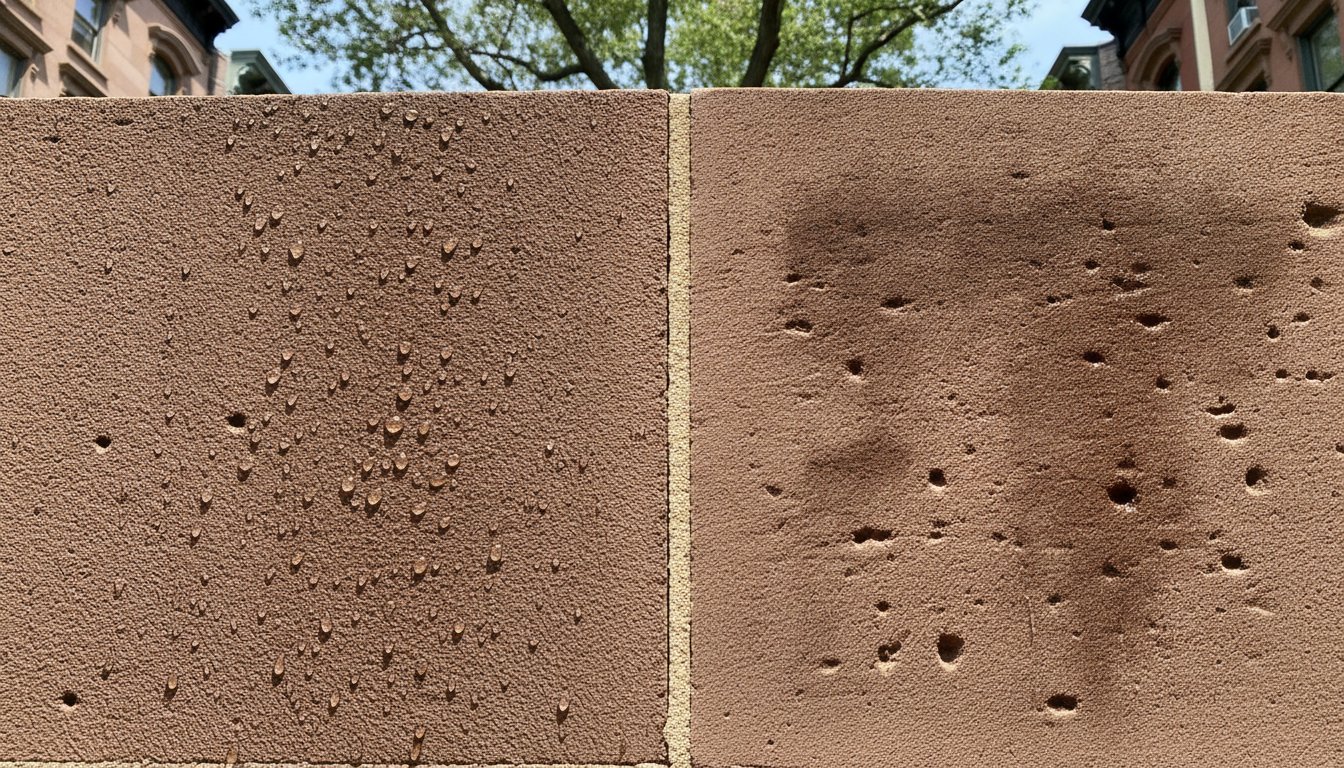
What if the protective coating you just applied is actually the primary cause of your facade’s decay? In New York City, property owners often face the heartbreaking sight of crumbling stone despite their best efforts at maintenance. Finding the right masonry sealant for nyc weather is not a simple purchase; it is a critical decision for the structural survival of your historic property. Traditional waterproofing often does more harm than good by trapping moisture inside the masonry, leading to rapid internal expansion and surface spalling.
This guide explains how to select breathable, high-performance sealants that defend against extreme freeze-thaw cycles without compromising the integrity of your stone. We will compare various chemical formulations and outline the professional application standards required for compliance with NYC exterior maintenance codes in 2026. For a specialized assessment of your building, Progressive Contracting NY Corp is available at 347-341-3808 or 718-350-7388. You can also reach us at ProgressiveContractingNY@yahoo.com to discuss your restoration needs.
The Science of Sealing: Why NYC Weather Requires Specialized Masonry Protection
NYC winters in 2026 continue to challenge the structural integrity of historic facades. The freeze-thaw cycle is particularly destructive. When rain or melted snow enters the microscopic pores of unsealed brick or brownstone, it eventually freezes. Because water expands as it turns to ice, it exerts immense internal pressure that can crack even the densest masonry from the inside out. This constant expansion and contraction weakens the bond between the stone layers, leading to significant structural damage over time.
Coastal areas like Brooklyn and Queens face additional stress from salt air and high humidity. Salt particles travel through the air and settle into the stone. As the water evaporates, these salts crystallize and expand within the pores, a process called subflorescence. This leads to two primary issues:
- Efflorescence: This is the appearance of white, powdery salt stains on the surface of the brick or stone.
- Spalling: This involves the physical breaking, peeling, or chipping of the stone’s face, often caused by internal pressure from ice or salt.
A high-quality masonry sealant for nyc weather acts as a penetrating chemical barrier that integrates with the substrate rather than forming a film on the surface. This distinction is vital for long-term durability and the health of the building.
The Hidden Danger of “Waterproofing” Historic Stone
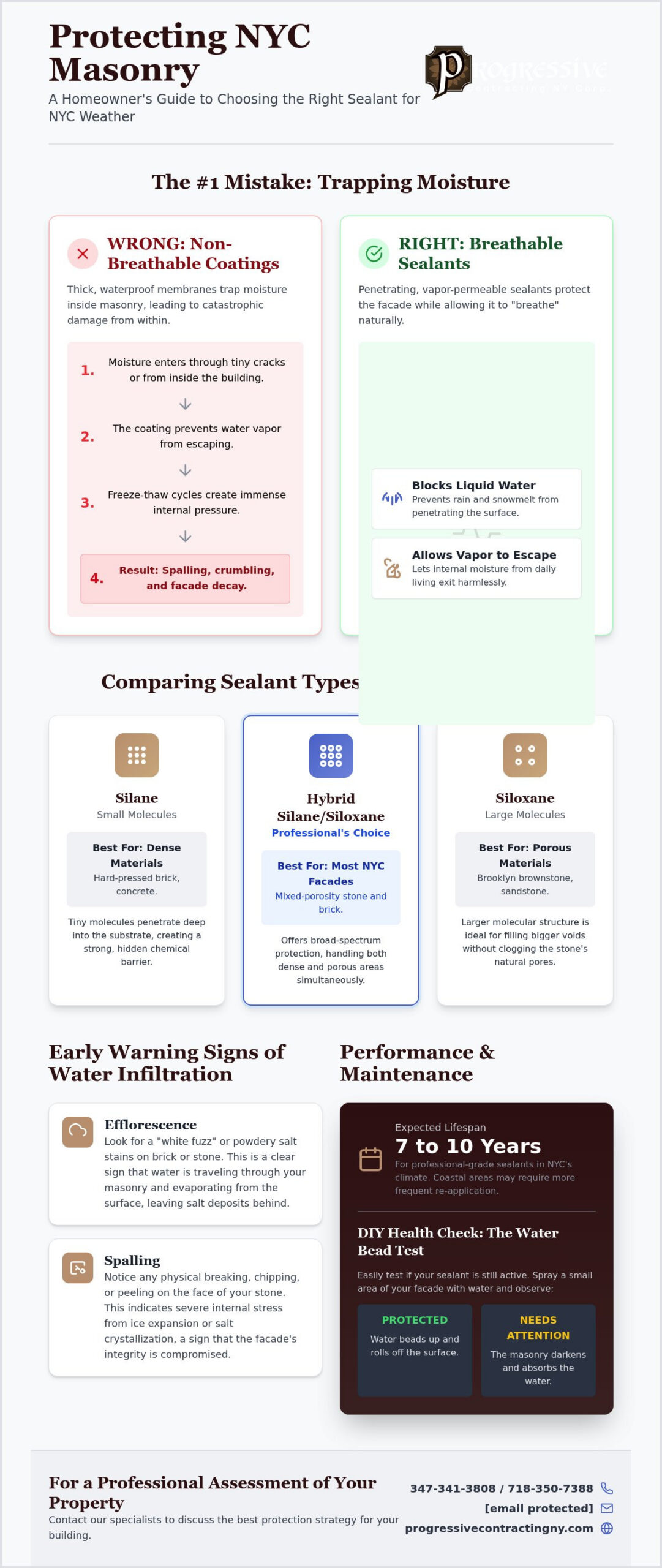
Many property owners mistakenly apply 100% waterproof membranes or thick, rubberized paints. These products trap moisture behind a non-breathable film. Hydrostatic pressure then builds up as water vapor tries to escape from the building’s interior. Since the moisture has nowhere to go, it pushes against the coating, eventually causing the brownstone or brick to crumble and delaminate. Following Historic preservation principles requires using vapor-permeable sealants that allow moisture to exit while preventing liquid water from entering.
Identifying Early Signs of Water Infiltration
Early detection saves significant restoration costs. Look for damp patches that remain long after a rainstorm or “white fuzz” appearing on your brickwork. These salt deposits indicate that water is moving through your masonry and pulling minerals to the surface. If you notice these signs or see Brownstone Spalling Repair issues, your facade is already under stress and requires professional attention. We recommend a thorough assessment before the next winter cycle begins.
For a professional evaluation of your property’s exterior, reach out to us at 347-341-3808 or 718-350-7388. You can also send photos of your facade to ProgressiveContractingNY@yahoo.com for a direct consultation on the best protection strategy for your building.
Comparing Sealant Types: Silane vs. Siloxane for NYC Properties
Choosing the right masonry sealant for nyc weather depends largely on the density of your building materials. Silane sealants consist of tiny molecules that penetrate deep into dense surfaces like hard-pressed brick or concrete. These molecules bond chemically within the substrate to create a hidden water-repellent barrier. In contrast, siloxane sealants have larger molecular structures. These are ideal for the highly porous sandstone found in Brooklyn brownstones, as they fill larger voids without clogging the stone’s natural pores.
Most successful restoration projects in Manhattan and Brooklyn now utilize hybrid silane/siloxane blends. These formulations provide a broad spectrum of protection that handles both dense and porous areas of a facade simultaneously. Regardless of the chemical base, vapor permeability remains the most critical factor for historic townhomes. A breathable sealant ensures that moisture from showers, cooking, and heating doesn’t get trapped behind the stone. The Professional Application Process emphasizes that maintaining this vapor exchange is vital for preserving the structural integrity of historic mortar joints and masonry units.
Silane/Siloxane vs. Elastomeric Coatings
Elastomeric coatings are thick, flexible membranes often used on parapets or areas prone to significant thermal movement. While they’re excellent for bridging small cracks on secondary surfaces, they’re generally the wrong choice for a full brownstone facade. Their lack of high vapor permeability can lead to the “crumbling from within” effect discussed earlier. If your property has complex drainage issues, it’s best to consult a brownstone specialist to determine if a penetrating sealer or a targeted coating is safer for your specific stone type.
Durability and Re-application Timelines
Professional-grade penetrating sealers in the NYC climate typically last between 7 and 10 years. Factors like wind-driven rain and salt exposure in coastal Queens or Brooklyn can shorten this window. You can check your facade’s health with a simple “water bead test.” Spray a small section of your wall with water; if the masonry darkens and absorbs the liquid, your sealant has reached the end of its life. If the water beads and rolls off, your protection is still active.
To schedule a professional assessment of your building’s exterior, contact us at 347-341-3808 or 718-350-7388. You can also email questions about your specific masonry sealant for nyc weather needs to ProgressiveContractingNY@yahoo.com.
The Professional Application Process: Ensuring Long-Term Facade Integrity
A successful application begins with the “Repairs First” rule. You must never apply a sealant over damaged or failing mortar joints. Completing brick pointing NYC before sealing ensures that the entire facade is structurally sound. If you seal over cracks, you trap water behind the barrier, which accelerates decay during the winter. Understanding The Science of Sealing helps property owners realize that preparation is 90% of the job.
Surface preparation requires deep cleaning to remove carbon crusts, atmospheric pollutants, and organic growth. The masonry must be completely dry before application to allow the chemical to bond properly. In the NYC climate, the best application windows occur between late April and June, or September through early November. We avoid applying masonry sealant for nyc weather when temperatures drop below 40°F or exceed 90°F; extreme temperatures prevent the sealer from curing correctly and can leave a cloudy residue on your stone.
Local expertise in Brooklyn and Manhattan matters because historic buildings have specific compliance requirements. A contractor who understands the local building stock knows which sealants meet Landmarks Preservation Commission standards for breathability and appearance. For a detailed review of your building’s needs, call us at 347-341-3808 or 718-350-7388. You can also reach us at ProgressiveContractingNY@yahoo.com to discuss your project.
The Risk of DIY Sealing on Historic Facades
Homeowners often make the mistake of over-applying product, which creates a visible sheen and reduces breathability. Choosing the wrong chemical base for your specific stone type can lead to permanent discoloration. A professional facade assessment from a brownstone specialist identifies the exact porosity of your masonry before any product is purchased. This precision prevents costly mistakes that could lead to facade spalling or legal violations.
Maintenance After Sealing
Sealing isn’t a “set it and forget it” solution. We recommend annual inspections to check for new cracks or signs of wear. Regular cleaning with low-pressure water prevents salt buildup and keeps the pores open for vapor exchange. Proper sealing significantly extends the lifespan of a brownstone stoop restoration by protecting the horizontal surfaces from standing water and ice melt chemicals. Contact us today to ensure your property stays protected through the next decade of New York winters.
Future-Proof Your Historic NYC Facade
Protecting a historic building requires a disciplined, step-by-step approach that respects the original craftsmanship. Since 2010, our team has provided expert brownstone restoration across Park Slope and Bedstuy, focusing on durability and structural integrity. We understand that comprehensive facade and sidewalk solutions are necessary to maintain a property’s value and safety in this demanding urban environment.
Choosing a high-quality masonry sealant for nyc weather is a vital part of this long-term strategy. It acts as the final line of defense against the coastal elements and internal moisture pressure that threaten untreated stone. Our specialists at Progressive Contracting NY Corp are ready to help you navigate these technical requirements to ensure your building remains dry and compliant with local standards.
Maintaining the character of New York’s historic neighborhoods is a responsibility we take seriously. With the right protection and professional care, your facade will continue to stand strong for decades to come. Let’s work together to preserve your property’s legacy and your peace of mind.
Frequently Asked Questions
Does masonry sealant change the color of my brownstone?
Professional-grade penetrating sealants do not change the color or texture of your brownstone. Unlike surface coatings that create a glossy “wet look,” these silane and siloxane treatments bond within the masonry’s internal pores. This preservation of the stone’s natural matte finish is a requirement for most historic districts in Manhattan and Brooklyn. If you notice a visible sheen or discoloration after an application, it usually indicates that an improper film-forming product was used.
How often should I reseal my brick or stone facade in NYC?
You should generally plan to reseal your facade every 7 to 10 years. The exact timeline depends on your building’s exposure to wind-driven rain and coastal salt air, particularly in neighborhoods like Red Hook or Long Island City. We recommend performing a water bead test every spring to monitor the performance of your masonry sealant for nyc weather. If water no longer beads on the surface and the stone darkens upon contact with moisture, your protection has likely worn thin.
Can I apply masonry sealant myself?
Applying sealant to a historic facade is a technical process that carries significant risks if done incorrectly. DIY applications often lead to over-saturation, which can trap moisture inside the stone and cause rapid spalling during the winter. Professional contractors use calibrated spray equipment to ensure deep, even penetration and select the specific chemical blend required for your building’s porosity. For a professional evaluation of your property, call us at 347-341-3808 or 718-350-7388, or email ProgressiveContractingNY@yahoo.com.
Is it better to seal brick in the spring or the fall?
Both late spring and early fall are ideal times for application because they offer the moderate temperature windows required for proper curing. We schedule most masonry sealant for nyc weather projects when temperatures consistently stay between 40°F and 90°F. You must avoid application during the heat of mid-summer or the freezing depths of winter, as extreme temperatures prevent the chemical from bonding with the masonry. A dry window of at least 48 hours is also necessary to ensure the substrate is completely moisture-free before we begin the work.