
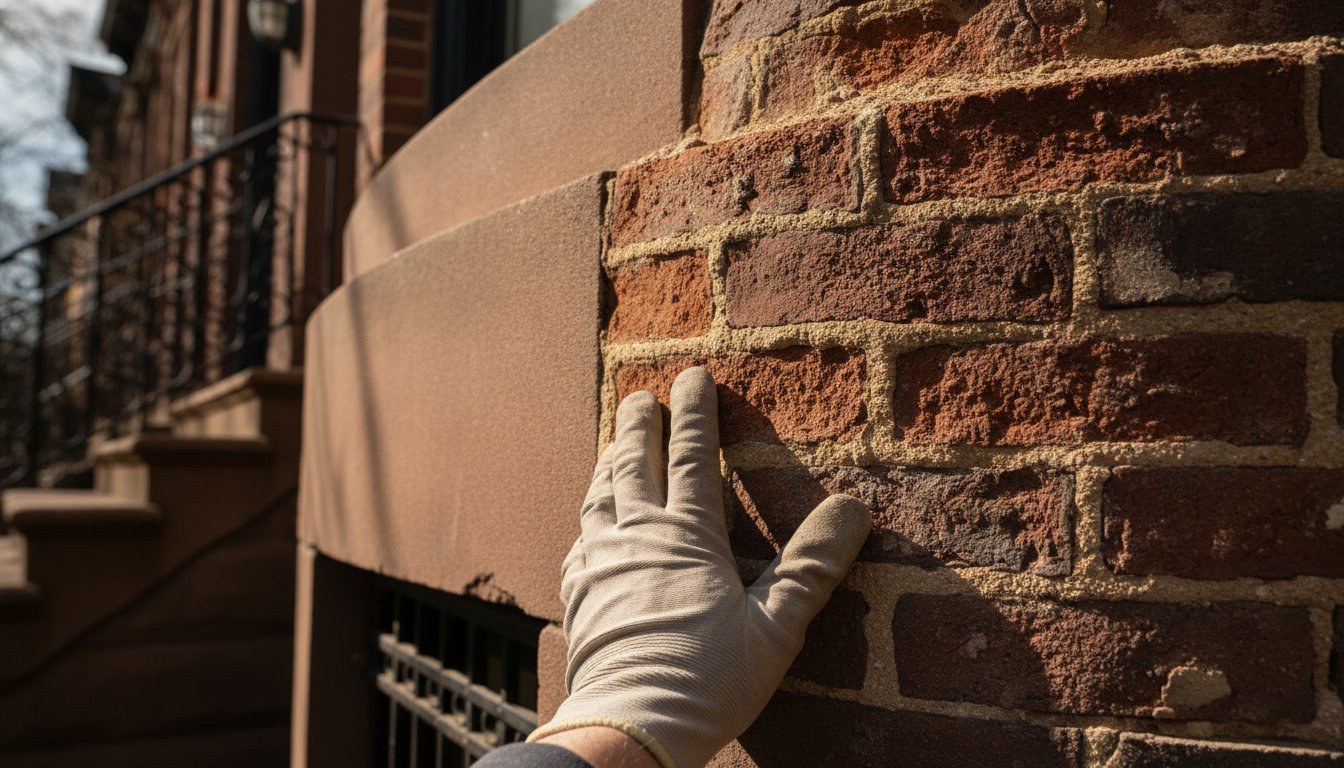
That dusting of red grit on your Brooklyn sidewalk isn’t just a mess; it’s a warning that your building’s facade is literally shedding its skin. Many NYC property owners mistake spalling for a simple cosmetic issue, but ignoring these signs can lead to serious water penetration and compromised structural integrity. We understand the anxiety of watching your historic home crumble under the weight of harsh winter cycles. You need to know if your masonry is still safe or if it’s time for a professional intervention. Successfully repairing freeze-thaw damage on brick requires a disciplined approach that respects the original craftsmanship of your property.
Repairing freeze-thaw damage on brick requires more than just a quick patch; it demands a strategic restoration of the wall’s ability to breathe and shed moisture. In this guide, we’ll show you how to identify early warning signs, select the right mortar materials for historic restoration, and waterproof your property for the seasons ahead. If you’re seeing signs of deterioration now, reach out to our team at 347-341-3808 or 718-350-7388, or email us at ProgressiveContractingNY@yahoo.com. We’ll help you stop the decay and restore the timeless look of your facade before the next frost hits.
Identifying Freeze-Thaw Damage on NYC Brickwork
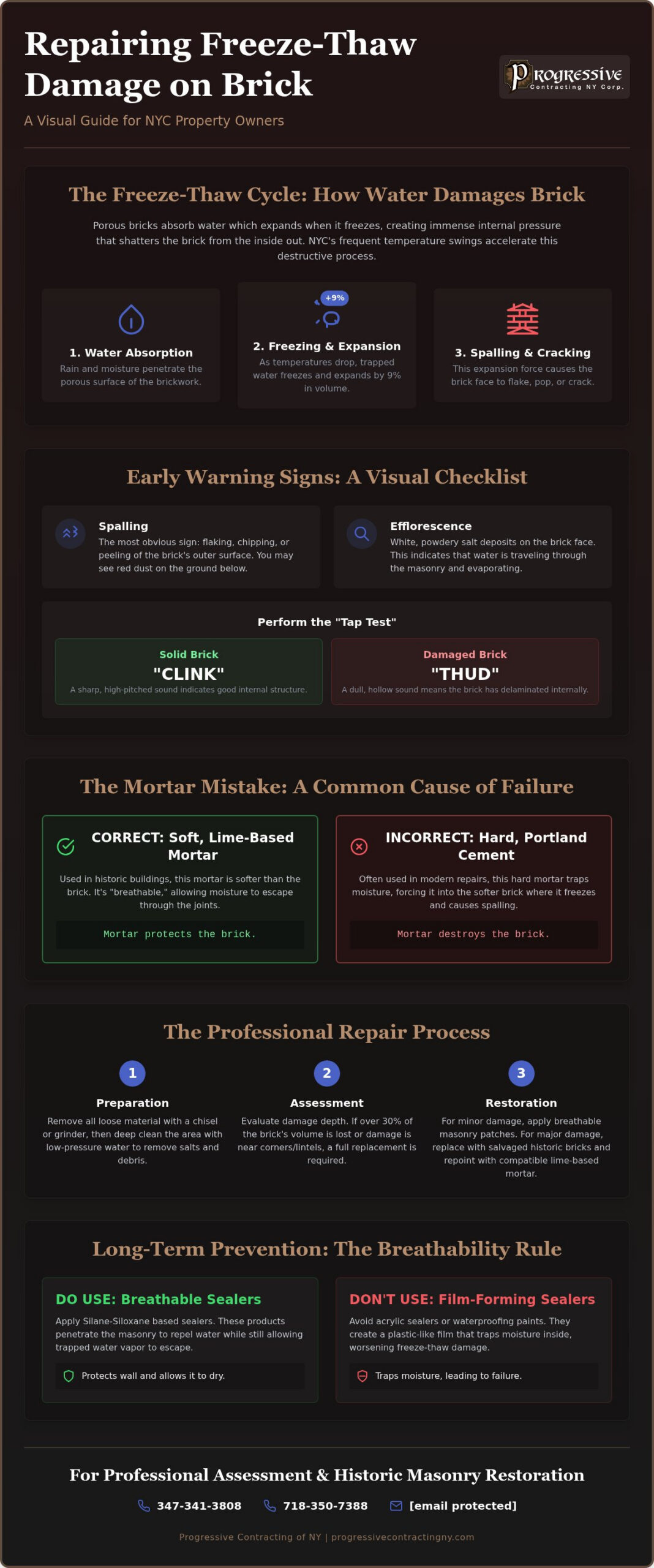
Freeze-thaw damage happens when porous bricks absorb water that expands by 9% as it freezes. This physical expansion shatters the brick’s internal structure from the inside out. In NYC, the frost weathering process is particularly aggressive. Rapid temperature swings in Brooklyn and Manhattan create multiple cycles every season, which accelerates the deterioration of historic masonry. When you’re assessing the need for repairing freeze-thaw damage on brick, look for white powdery salt deposits known as efflorescence. This indicates that water is moving through the wall and leaving minerals behind. You might also notice a “sandwich” effect where moisture gets trapped between the exterior brick and interior plaster, leading to hidden structural rot that isn’t visible until it’s a major problem.
Spalling vs. Simple Weathering
It’s vital to distinguish between natural aging and active failure. Simple weathering looks like a slight rounding of the brick edges over decades. Spalling, however, is the actual flaking or popping off of the brick face. If you aren’t sure, try the “tap test.” Gently tap the brick with a small hammer or screwdriver handle. A solid brick will produce a sharp “clink,” while a delaminated brick will sound hollow or “thuddy.” If your bricks sound hollow, the internal bond has already failed. You can reach us at 347-341-3808 or 718-350-7388 to schedule a professional assessment of these problem areas.
The Role of Mortar in Freeze-Thaw Cycles
The type of mortar used in previous repairs often dictates how well a wall survives the winter. Many older buildings in NYC were built with soft lime-based mortar. If a previous contractor used hard Portland cement for repairs, it creates a “trap” for moisture. The hard mortar doesn’t allow water to escape, forcing it into the soft brick where it freezes and causes spalling. When we focus on repairing freeze-thaw damage on brick, we ensure the new mortar is compatible with the original materials. Proper brick pointing nyc involves using a mortar mix that is softer than the brick itself. This ensures the mortar acts as a sacrificial element, protecting the structural brick from the destructive pressure of ice. For expert guidance on historic masonry, email us at ProgressiveContractingNY@yahoo.com or visit brownstonerepair.net for more information.
Step-by-Step Guide to Repairing Spalled Bricks and Mortar
Correctly repairing freeze-thaw damage on brick begins with a methodical approach to surface preparation. We start by mechanically removing all loose or flaking material with a hammer and chisel or a grinder. You must reach solid, stable brick before any repair material is applied. Once the loose debris is gone, we perform a deep cleaning of the brick’s pores using low-pressure water. This step removes salts and organic growth that can interfere with the bond of new mortar. Following established masonry restoration principles ensures that the cleaning process doesn’t inadvertently drive moisture deeper into the wall. If you’re seeing significant debris on your sidewalk, call us at 347-341-3808 or 718-350-7388 to assess the situation.
After cleaning, we evaluate the remaining material. If more than 30% of the brick’s original volume is missing, a full replacement is usually the safest path forward. For bricks that meet the criteria for repair, we proceed with professional repointing. We use a lime-based mortar that allows moisture to escape through the joints rather than trapping it inside the brick. This breathability is essential for the longevity of the repair. Our team follows a disciplined “problem-process-result” framework to ensure every joint is sealed correctly before the next winter arrives.
When to Replace a Brick vs. Patching
Structural integrity is our primary concern when deciding between a patch and a replacement. Spalling that exceeds two inches in depth or occurs near critical areas like corners and window lintels often requires a new brick. We source matching historic bricks from local NYC salvage yards to ensure the repair blends perfectly with your building’s existing facade. This keeps the aesthetic consistent while restoring the wall’s strength. You can find more details about our specialized brownstone repair and brick services on our website.
Applying Breathable Masonry Patches
For minor surface damage, we apply specialized breathable masonry patches. This involves “buttering” the brick surface and applying the repair mortar in thin, controlled layers. This technique ensures a permanent bond and prevents the patch from shrinking or cracking over time. We pay meticulous attention to color matching to avoid a “leopard spot” effect on your facade. Our goal is a seamless finish that protects your property from future winter cycles. If you need an expert masonry contractor to handle these technical steps, email us at ProgressiveContractingNY@yahoo.com to discuss your project.
Long-Term Prevention: Sealing and Maintenance Strategies
Effective long-term prevention starts with the Breathability Rule. You must avoid acrylic sealers or standard waterproofing paints that create a plastic-like film. These products trap moisture inside the masonry, which is the primary cause of recurring issues when repairing freeze-thaw damage on brick. Instead, we use silane-siloxane based sealers. These penetrating agents allow water vapor to escape from the building’s interior while repelling liquid water from the outside. This balance is critical for the survival of historic NYC bricks during the volatile winter months.
Proper drainage management is your next line of defense. Ensure your gutters and downspouts function correctly and don’t dump concentrated streams of water directly onto brick stoops or facade sections. We recommend a thorough visual inspection every October before the first frost hits. Look for new hairline cracks or areas where the mortar has recessed. You can see how we handle brownstone spalling repair to prevent total facade failure by reviewing our recent project case studies. Early intervention is always more cost-effective than a full-scale restoration.
Why Paint is the Enemy of Brick
Applying exterior paint to historic brick creates a pressure cooker effect. The paint layer prevents the brick from drying out naturally. When moisture gets trapped behind the paint and freezes, the expansion force is strong enough to shear off the entire face of the brick. Restoring these walls requires the careful removal of old paint layers using safe, non-destructive methods to let the masonry breathe again. If your painted brick is already bubbling or peeling, it’s a sign of active moisture distress.
Consulting a Professional Masonry Contractor
Selecting the right partner for your restoration is essential because DIY repairs often fail due to incorrect mortar chemistry. Using a modern, high-strength mortar on soft historic bricks will accelerate decay rather than stopping it. As an experienced masonry contractor, Progressive Contracting NY Corp specializes in matching the specific compressive strength and permeability of NYC’s historic materials. When you’re ready for a professional facade assessment, call us at 347-341-3808 or 718-350-7388. You can also reach our team via email at ProgressiveContractingNY@yahoo.com to schedule a site visit and ensure your property is protected for the next winter cycle.
Secure Your Property Before the Next Freeze
Protecting your building’s exterior requires a commitment to using the right materials and methods. We’ve discussed the dangers of trapped moisture and the necessity of breathable mortars to prevent recurring spalling. When it comes to repairing freeze-thaw damage on brick, the goal is to stop the cycle of deterioration before it reaches the structural core of your home. By addressing these issues now, you avoid the mess of crumbling masonry and the risk of water penetrating your interior spaces.
Progressive Contracting NY Corp understands the unique architectural needs of Brooklyn and Manhattan properties. Our team focuses on high-level craftsmanship and historic preservation, ensuring that every repair meets both city regulations and our own standards for durability. By choosing a partner who values transparency and precision, you gain peace of mind throughout the restoration process. We’re proud to serve as a stabilizing force for complex projects across the city.
Taking these steps now ensures your property remains a source of pride rather than a source of stress. We’re ready to provide the steady hand and local expertise needed to safeguard your building’s future. Let’s work together to make sure your facade is ready for whatever the next winter brings.
Frequently Asked Questions
Can I just use a waterproof sealer to stop brick spalling?
You shouldn’t use standard waterproof sealers or acrylic paints because they trap moisture inside the masonry. This trapped water leads to a pressure cooker effect during winter, which actually accelerates the damage. Successful repairing freeze-thaw damage on brick requires a breathable silane-siloxane sealer. These professional-grade products allow water vapor to escape from the building’s interior while repelling liquid water from the outside.
How much does it cost to repair freeze-thaw damage on a NYC brownstone?
The total cost for masonry restoration depends on the building’s height, the accessibility of the facade, and the extent of the brick deterioration. Factors like the specific mortar composition required for historic compliance also play a role in the final project scope. For a detailed assessment and a transparent quote for your property, call our team at 347-341-3808 or 718-350-7388, or email us at ProgressiveContractingNY@yahoo.com.
Is spalling brick a sign of structural failure?
Spalling often begins as a cosmetic issue, but it’s a clear warning sign of potential structural failure. When the hard outer face of a brick flakes away, the softer interior core is exposed to the elements. This allows water to penetrate deeper into the wall, where it can eventually rot internal wooden joists or cause the masonry to shift. If you notice bricks that sound hollow when tapped, the internal bond has already failed.
How often should I repoint my brickwork to prevent winter damage?
Most historic NYC buildings require professional repointing every 15 to 25 years to maintain their protective barrier. However, high-exposure areas like parapets and stoops may need more frequent attention due to the intense NYC climate. Maintaining healthy mortar joints is the most effective strategy for repairing freeze-thaw damage on brick before it leads to expensive full-wall replacements. We recommend a visual inspection every autumn to catch small cracks before the first frost.