
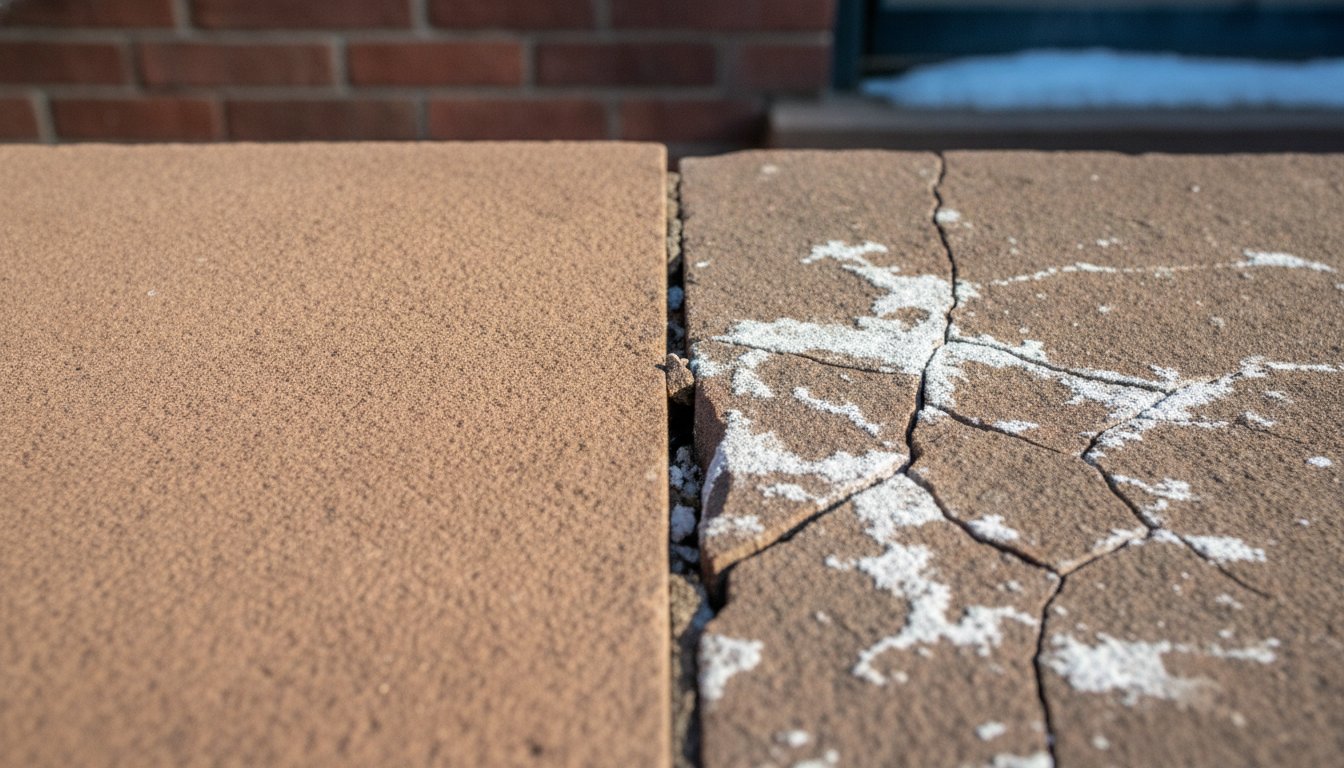
That bag of rock salt in your basement might be the most expensive “cheap” purchase you’ve ever made for your home. You need to clear snow quickly to avoid NYC’s 2026 non-compliance fines, but using the wrong chemicals often leads to thousands in masonry repairs. We understand the frustration of seeing a historic stoop crumble after a single season. This guide simplifies the process of preventing winter salt damage to brownstone stoops in Brooklyn Heights. You’ll learn which de-icing products are truly safe for porous sandstone and how to establish a maintenance routine that lasts. We also outline exactly when to call a specialist before surface flaking becomes a structural crisis. For expert assessments, contact Progressive Contracting of NY at 347-341-3808 or 718-350-7388, or email ProgressiveContractingNY@yahoo.com. Our team, License 2097623-DCA, helps you navigate the freeze-thaw cycle safely.
The Science of Spalling: Why De-Icing Salt Destroys Brooklyn Brownstone
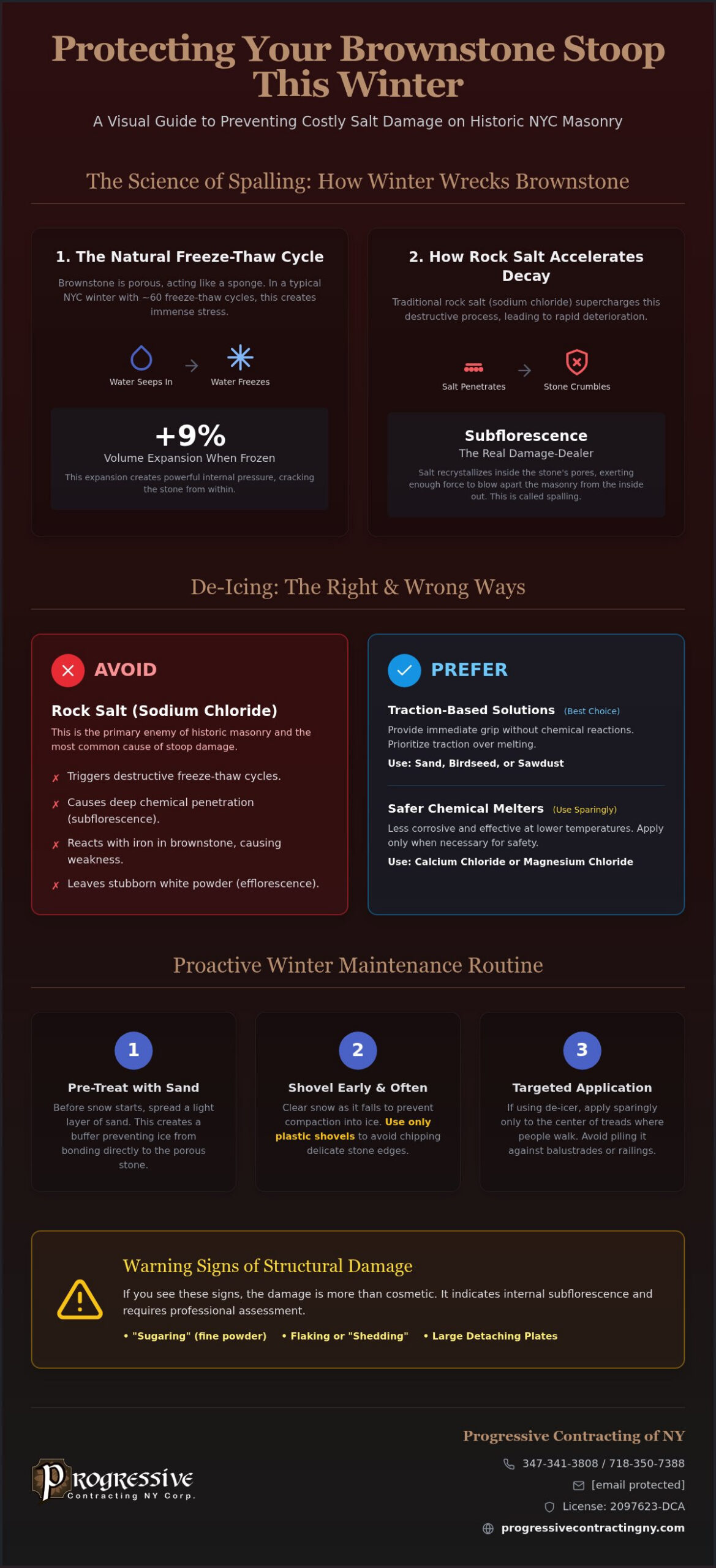
Brownstone is a porous sandstone that functions much like a rigid sponge. It naturally breathes and absorbs moisture from the environment. During a typical NYC winter, we experience approximately 60 freeze-thaw cycles. When water trapped inside the stone pores freezes, it expands by 9%, creating significant internal stress. Understanding The Science of Road Salt reveals why traditional de-icers accelerate this decay. As salt dissolves in meltwater, it carries chemicals deep into the stone’s structure. This leads to subflorescence, a process where salt recrystallizes inside the pores and exerts enough pressure to blow the masonry apart from the inside. Spalling is the physical separation of the stone’s outer layers due to this intense internal pressure.
The Brooklyn Heights Micro-Climate and Historic Stone
The specific geography of Brooklyn Heights creates a challenging environment for preventing winter salt damage to brownstone stoops in Brooklyn Heights. Proximity to the East River increases local humidity, while the neighborhood’s narrow, shaded streets prevent stoops from drying quickly. This prolonged dampness allows salt more time to penetrate the masonry. Additionally, the iron-rich composition of local brownstone reacts poorly with sodium chloride, leading to rapid oxidation and structural weakening. This chemical reaction often turns a minor surface issue into a deep structural failure. If you notice your stoop flaking or “shedding” its skin, contact Progressive Contracting of NY at 347-341-3808 or 718-350-7388. You can also reach us at ProgressiveContractingNY@yahoo.com. Our team, holding License 2097623-DCA, specializes in mitigating these specific environmental risks through expert brownstone restoration.
Safe De-Icing Strategies: How to Manage Ice Without Ruining Your Stoop
Traditional rock salt, or sodium chloride, is the primary enemy of historic masonry. It triggers the destructive freeze-thaw cycles described in the previous section and often leaves behind white, powdery efflorescence that’s difficult to remove. If you’ve already noticed crumbling or flaking on your stairs, you may need professional brownstone spalling repair to stabilize the stone surface. For preventing winter salt damage to brownstone stoops in Brooklyn Heights, prioritize traction over chemical melting. Natural materials like sand, birdseed, or even sawdust provide immediate grip without triggering harmful chemical reactions inside the stone pores.
When ice becomes a safety hazard and melting is necessary, select safer de-icing alternatives. Calcium chloride and magnesium chloride are effective at lower temperatures and are significantly less corrosive than sodium-based products. However, even these should be used in moderation to protect the stone’s longevity. Always apply them in small quantities and clear the slush as soon as the ice softens.
Step-by-Step Winter Maintenance Routine
A proactive routine is the most cost-effective way to preserve your stoop. Follow these steps during every NYC winter storm:
- Pre-treat with sand: Spread a light layer before the snow starts. This creates a buffer that prevents ice from bonding directly to the porous stone.
- Shovel early and often: Clear snow as it falls to prevent it from compacting into ice. Use only plastic shovels; metal blades are too aggressive and will chip the delicate edges of your brownstone.
- Targeted application: Apply de-icers only to the center of the treads where people walk. Never pile salt at the base of your brownstone balustrades or decorative railings.
If you discover existing damage while clearing snow, reach out to Progressive Contracting of NY at 347-341-3808 or 718-350-7388. Our email is ProgressiveContractingNY@yahoo.com. As a licensed professional (License 2097623-DCA), we specialize in brownstone repair and historic preservation to keep your property in peak condition.
Professional Prevention and Long-Term Stoop Preservation
Many homeowners mistakenly believe that “waterproofing” their stoop will solve all winter issues. However, film-forming sealants actually trap moisture behind the surface, causing the stone to fail during the next freeze. Effective preventing winter salt damage to brownstone stoops in Brooklyn Heights requires breathable silane or siloxane sealers that allow vapor to escape while repelling liquid water. Before applying any sealer, verify that your mortar joints are sound. Professional brick pointing nyc ensures these joints are watertight, preventing salt-laden slush from migrating into the core of the masonry. This approach follows NPS guidelines on ice management for historic properties, which prioritize maintaining the physical integrity of the stone through proper moisture management.
Identify early warning signs to avoid a total stoop replacement. If you notice “sugar” (a fine powdering of the stone) or large plates of stone detaching, the salt has already caused internal subflorescence. This damage is structural, not cosmetic. At this point, a specialist must remove the compromised layers and rebuild the profile with compatible restoration mortars. Ignoring these signs often leads to unsafe conditions and potential Department of Buildings violations.
The Spring Wash: Neutralizing Salt Residue
In early spring, use a garden hose for a thorough, low-pressure rinse of your entire stoop. This process draws out deeply embedded salts that accumulated over the winter months. Avoid high-pressure power washing, as it can force water deeper into the stone or scour the delicate surface. Always consult the Landmarks Preservation Commission (LPC) guidelines before using any chemical cleaning agents. In historic Brooklyn Heights, certain detergents can permanently discolor the stone or result in fines if used without proper approval.
Protect your investment with a professional pre-winter assessment. Contact Progressive Contracting of NY at 347-341-3808 or 718-350-7388, or reach us at ProgressiveContractingNY@yahoo.com. Our team, holding License 2097623-DCA, brings decades of experience to every brownstone project, ensuring your historic stoop remains safe and structurally sound.
Protecting Your Historic Brooklyn Heights Investment
Preserving a historic stoop requires a balance between safety and stone health. You’ve learned that preventing winter salt damage to brownstone stoops in Brooklyn Heights starts with choosing the right de-icing materials and ends with proper seasonal maintenance. By avoiding corrosive rock salt and ensuring your masonry breathes with the right sealers, you’ll avoid the high costs of structural restoration. Regular inspections and a proactive spring wash will keep the stone intact through NYC’s harsh weather cycles.
Our team is a NYC Licensed Masonry Contractor (License #2097623-DCA) with deep expertise in local historic districts. You can email us at ProgressiveContractingNY@yahoo.com or visit brownstonerepair.net to view our project galleries. Taking small steps now ensures your property remains a beautiful, safe part of the neighborhood for decades to come.
Frequently Asked Questions
Is there any salt that is 100% safe for brownstone?
No chemical de-icer is 100% safe for porous brownstone, though some are less damaging than others. Traditional rock salt is the most destructive enemy of historic masonry. For the best results, use non-chemical traction aids like sand or birdseed. If you must melt ice, calcium magnesium acetate (CMA) is the least corrosive chemical option currently available for historic Brooklyn Heights properties.
Can I use a pressure washer to clean salt off my stoop?
You should avoid using a pressure washer on historic brownstone stoops to remove salt residue. High-pressure water can scour the soft surface of the sandstone and force salt crystals deeper into the pores. A low-pressure rinse with a standard garden hose in early spring is the safest method. This gently draws out embedded salts without causing mechanical damage to the stone’s delicate face.
How do I know if my brownstone stoop is already damaged by salt?
Look for “sugar,” which is a fine, sandy powder on the surface, or larger flakes peeling away from the stone. These indicate spalling from internal salt crystallization. You might also notice white, crusty patches called efflorescence. These signs suggest that efforts for preventing winter salt damage to brownstone stoops in Brooklyn Heights were unsuccessful. Call 347-341-3808 or 718-350-7388 for a professional assessment today.
Does sealing my brownstone stoop prevent salt damage?
Breathable sealers provide a layer of protection, but they don’t completely prevent salt damage if maintenance is neglected. Using the wrong “waterproofing” product can actually trap moisture inside, leading to faster decay. A high-quality silane or siloxane sealer helps repel liquid water while allowing vapor to escape. For expert application, reach out to us at ProgressiveContractingNY@yahoo.com (License 2097623-DCA).