
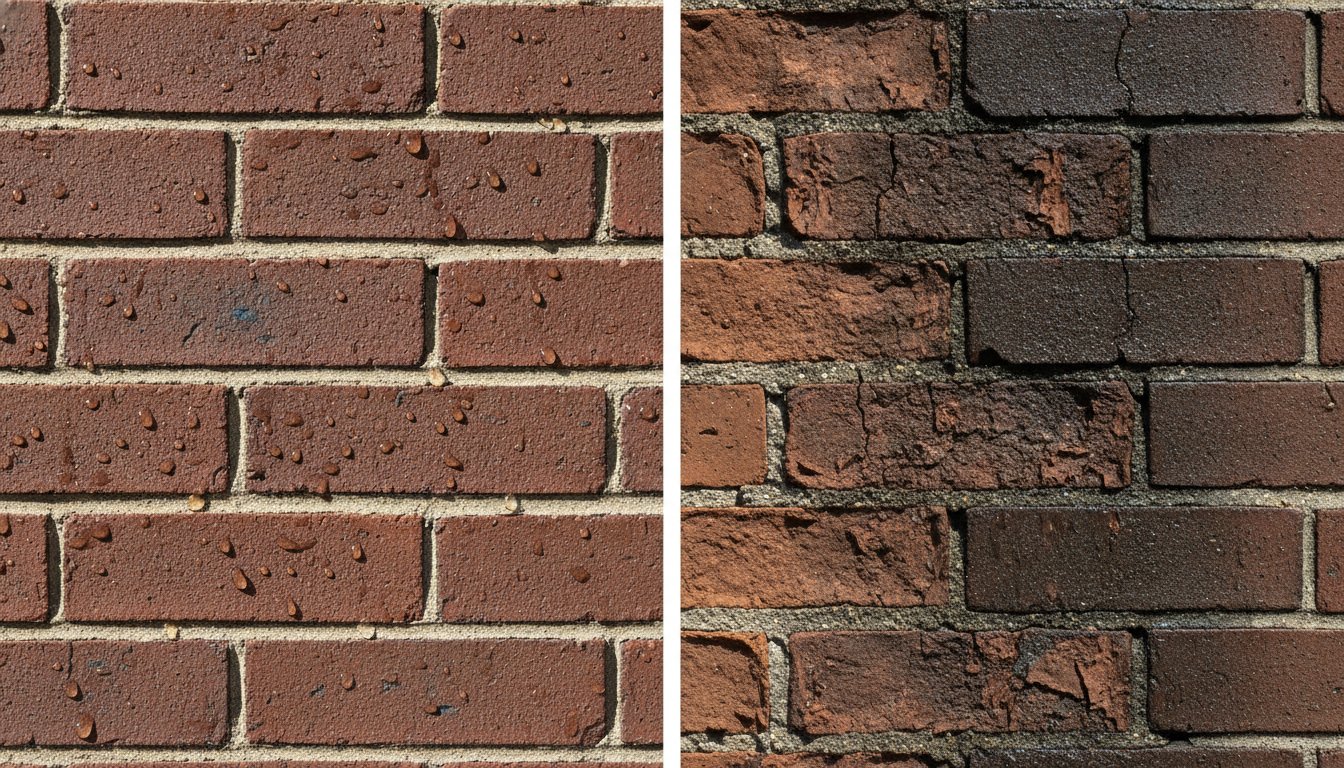
The product you buy to waterproof your home could be the very thing that destroys your facade. Many NYC property owners apply thick coatings to stop leaks, only to find their brick faces popping off by spring. This article explains the pros and cons of different brick sealing products for NYC climate so you can protect your masonry without causing permanent damage. We understand the frustration of watching historic brickwork spall after a single winter.
You’ll learn which penetrating sealers allow your building to breathe and which film-forming agents to avoid. At Progressive Contracting NY Corp, license 2097623-DCA, we prioritize precision and structural integrity. If you have questions about your Park Slope or Bed-Stuy property, reach us at 347-341-3808 or 718-350-7388, or email ProgressiveContractingNY@yahoo.com. We’ll provide the clear, technical guidance you need to keep your building stable and dry.
The NYC Climate Challenge: Why Your Brick Sealer Choice Matters
New York City buildings face a relentless environment. Each year, your facade endures over 50 freeze-thaw cycles that test the limits of masonry. In Brooklyn and Manhattan, coastal salt air and urban pollutants settle into the pores of the brick. These elements create a corrosive environment that weakens mortar joints and compromises the brick surface. This makes it vital to understand the pros and cons of different brick sealing products for NYC climate before starting a restoration.
A breathable sealer acts as a specialized chemical barrier. It stops liquid water from entering the surface but remains vapor-permeable. This allows internal moisture to escape as a gas. Without this balance, the structural integrity of your historic facade is at risk. For expert application that ensures your building actually breathes, Progressive Contracting NY Corp (License 2097623-DCA) provides the precision required for these complex projects.
Vapor Transmission vs. Waterproofing: The Spalling Risk
Labeling a product “waterproof” is often a warning sign for historic masonry. Traditional Sealant products that form a plastic-like film on the surface trap moisture inside the wall. This leads to several critical issues:
- Trapped water cannot evaporate through the non-breathable surface film.
- During a freeze, this moisture expands within the masonry pores.
- The resulting internal pressure exceeds the strength of the brick, causing the face to pop off, known as spalling.
Penetrating sealers outperform surface coatings because they anchor deep within the masonry pores to repel water while allowing the wall to shed internal vapor. If you need a professional assessment of your building’s facade, contact us at 347-341-3808 or 718-350-7388, or email ProgressiveContractingNY@yahoo.com. We understand how to navigate the specific moisture challenges of local historic districts.
Comparing Brick Sealing Products: Silanes, Siloxanes, and Acrylics
Selecting the right chemical base is the most critical step in facade maintenance. We weigh the pros and cons of different brick sealing products for NYC climate based on the specific masonry type. Silanes consist of small molecules that penetrate deep into dense NYC brickwork without changing the appearance. Siloxanes use larger molecules, making them better suited for porous masonry and varied textures. When Comparing Silane, Siloxane, and Siliconate, silanes provide the highest level of vapor permeability. This makes them ideal for historic structures in Brooklyn and Manhattan.
Hybrid products often combine these chemistries to balance surface protection with deep chemical bonds. These are effective, but professional application is mandatory to avoid over-saturation. If you’re unsure which product fits your building’s age, a brownstone specialist can perform a porosity test to determine the best match. This ensures the sealer bonds correctly with your specific brick type.
Pros and Cons: Choosing the Right Chemistry for Your Facade
Every sealer type has specific trade-offs that impact long-term maintenance:
- Silanes: These offer exceptional breathability and don’t change the brick’s color. However, they are more expensive and require exacting application requirements to bond properly.
- Siloxanes: These work well on older, porous brick and offer great value. Their molecules are larger, but they typically have a shorter lifespan than pure silanes.
- Acrylics: These are film-formers that create a “wet look.” In humid NYC summers, these films trap moisture, leading to peeling and white blushing. We generally advise against these for historic facades.
Progressive Contracting NY Corp (License 2097623-DCA) stays committed to using high-grade penetrating products. Contact us at 347-341-3808 or 718-350-7388, or email ProgressiveContractingNY@yahoo.com to discuss your project. We’ll help you select a solution that protects your investment without compromising the masonry.

Professional Implementation: Sealing the Right Way in NYC
Successful sealing starts with a stable surface. You cannot apply a sealer over crumbling mortar and expect it to perform. We recommend completing brick pointing nyc before applying any chemical barrier. This ensures the sealant protects the wall rather than trapping moisture behind failing joints. Preparation requires low-pressure cleaning to remove pollutants without stripping the brick’s fire skin. This hard, outer layer is a natural protective shell formed during the firing process. If you destroy this skin with high-pressure washing, the brick becomes far more porous and vulnerable.
Professional application ensures even saturation across the entire facade. DIY attempts often lead to patchy coverage or over-application, which can accidentally negate the breathability of the product. In the Brooklyn and Manhattan environment, we typically recommend re-sealing every five to ten years. This schedule depends on your building’s exposure to wind-driven rain and urban soot. We evaluate the pros and cons of different brick sealing products for NYC climate for every project to find the best match for your specific masonry condition.
Vetting Your NYC Masonry Contractor
Protecting your property value requires working with a licensed specialist. Our team at Progressive Contracting, License 2097623-DCA, understands the nuances of historic masonry. During a consultation, we identify brownstone spalling repair needs that must be addressed before sealing begins. This comprehensive approach prevents future crumbling and ensures the brownstone restoration lasts for decades.
Contact us at ProgressiveContractingNY@yahoo.com or call 347-341-3808 and 718-350-7388 for a professional assessment. We provide the steady hand and clear communication needed to navigate complex restoration projects. Our experience ensures your building stays dry without compromising its historic integrity.
Protect Your Historic Facade for the Next Decade
Understanding the pros and cons of different brick sealing products for NYC climate is essential for property owners in Brooklyn and Manhattan. Selecting a silane-based penetrating sealer allows masonry to breathe while resisting harsh freeze-thaw cycles. Structural repairs like brick pointing must occur before application to prevent trapped moisture. Progressive Contracting brings over a decade of expertise to historic Rammstein stoops and facades under license 2097623-DCA. Reach us at 347-341-3808 or 718-350-7388, or email ProgressiveContractingNY@yahoo.com for a technical assessment.
We’re here to provide the steady hand and professional confidence your restoration project deserves. Your building’s structural integrity remains our top priority. We look forward to helping you preserve your historic property for years to come.
Frequently Asked Questions
Is it a good idea to seal old NYC brick?
Yes, sealing is beneficial if you use a breathable product. Historic NYC brick faces over 50 freeze-thaw cycles annually. A penetrating silane sealer prevents liquid water from entering while allowing vapor to escape. We analyze the pros and cons of different brick sealing products for NYC climate to ensure the chemistry fits your building’s age. This protects the masonry from spalling and coastal salt air damage.
How long does a professional brick sealer last in New York?
Professional sealers generally last between five and ten years in the harsh New York environment. Longevity depends on your building’s exposure to urban soot and wind-driven rain. We suggest a professional assessment every few years to check the water-repellency. For expert guidance, contact Progressive Contracting at 347-341-3808 or 718-350-7388. Our team ensures the application is precise to maximize the product’s effective lifespan.
Will sealing my brick change the color of my home’s facade?
Penetrating sealers like silanes are invisible and won’t change the color of your facade. These molecules are small enough to sit inside the brick’s pores. Conversely, acrylic film-formers often create a glossy “wet look” that can darken historic masonry. We avoid these surface coatings for historic renovations in Brooklyn and Manhattan. Our goal is to maintain the building’s original character while providing modern moisture protection.
Can I seal my brick if the mortar is already crumbling?
You shouldn’t seal brick until you’ve repaired crumbling mortar. Sealing a damaged facade traps moisture behind the failing joints, which leads to internal pressure and spalling. Our process involves performing necessary brick pointing first to ensure structural integrity. If you need an assessment, email ProgressiveContractingNY@yahoo.com or call our licensed team, License 2097623-DCA. We’ll stabilize your facade before applying any protective chemical barrier.