
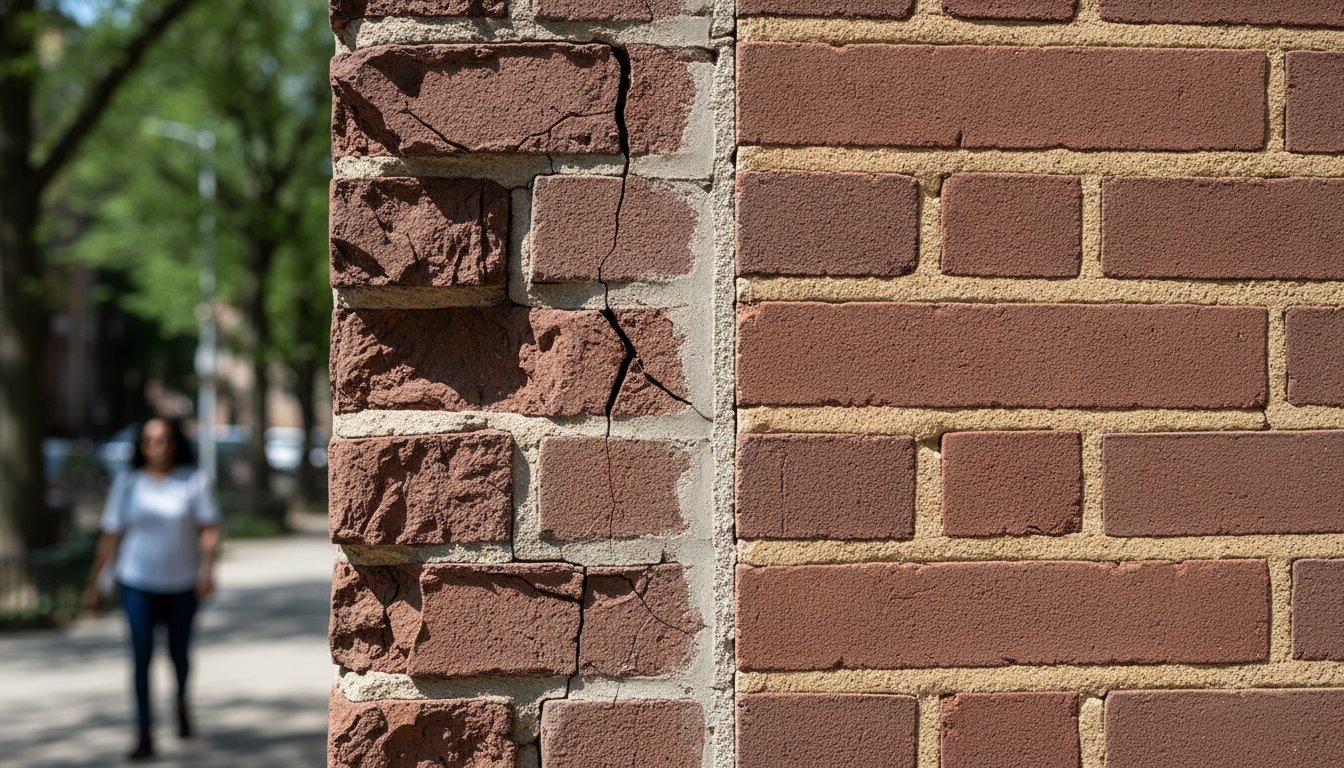
Modern Portland cement is the silent killer of Brooklyn’s historic brownstones. While it seems logical to use the strongest material available, the risks of using the wrong mortar hardness on a historic Brooklyn building often lead to irreversible facade spalling. Mortar must act as a sacrificial joint; it’s designed to be softer than the stone to absorb moisture and movement. When a contractor uses a rigid, high-strength mix, it traps water inside the masonry, causing the face of your building to shatter during winter freezes.
You’ve likely seen the jagged cracks or crumbling stone that follow a poor repointing job. It’s painful to watch your investment fail because of modern materials. This guide explains how to choose lime-based mixes for long-term preservation. We’ll cover LPC standards and the methods Progressive Contracting of NY (License 2097623-DCA) uses to protect your home. For expert help, call 347-341-3808 or 718-350-7388, or email ProgressiveContractingNY@yahoo.com.
The Science of Compressive Strength: Why Mortar Must Be Sacrificial
In historic preservation, the mortar shouldn’t be the strongest part of the wall. It must be the weakest. This is the core principle of sacrificial mortar. Sacrificial mortar acts as the critical safety valve for historic masonry by ensuring that environmental stress affects the joints rather than the building’s structural units. Many property owners overlook the risks of using the wrong mortar hardness on a historic Brooklyn building until the facade begins to crumble. Understanding The Science of Compressive Strength is vital because historic hand-pressed bricks often have a compressive strength as low as 350 psi. Soft, lime-rich mortar provides essential breathability, allowing moisture to migrate out through the joints instead of being forced through the stone faces. This process ensures the mortar fails first, which is much cheaper to replace than the historic brick itself.
The Danger of Modern Portland Cement on 19th-Century Masonry
The danger of modern Portland cement on 19th-century masonry comes from its extreme rigidity. Type S mortar reaches a compressive strength of 1,800 psi, which highlights the risks of using the wrong mortar hardness on a historic Brooklyn building. This creates a damming effect. Since the mortar is too dense to let moisture pass, water stays trapped behind the facade. During New York winters, this moisture undergoes freeze-thaw cycles. The expanding ice shatters the interior of the brick, causing irreversible facade spalling. Progressive Contracting of NY, holding NYC License 2097623-DCA, specializes in brownstone repair to avoid these errors. Our team ensures every mix is tailored to the specific age of your building. For an assessment, call 347-341-3808 or 718-350-7388, or email ProgressiveContractingNY@yahoo.com.
Spalling and Cracking: The Visual Risks of Incorrect Mortar
Spalling occurs when the outer face of a brick or brownstone pops off. This happens because the mortar joint is too rigid to compress under pressure. One of the primary risks of using the wrong mortar hardness on a historic Brooklyn building is the loss of this protective outer layer. When the stone cannot expand during summer heat or contract in winter, the stress is transferred directly to the masonry units. In Brooklyn, where temperatures fluctuate significantly between seasons, joints must be flexible. This leads to brownstone spalling repair needs that could have been avoided with a proper lime-based mix.
Following the National Park Service guide on Repointing Mortar Joints in Historic Masonry, the loss of historic detail is often permanent. Once the weathered crust of a brownstone is lost, the softer interior stone is exposed to the elements, which accelerates decay. This loss of character devalues the property and compromises the building’s structural integrity over time.
Identifying “Hard Mortar Syndrome” in Brooklyn Facades
You can spot incorrect repairs by looking for mortar joints that stand proud while the surrounding stone has receded. This visual cue shows the mortar is outlasting the building material it was meant to protect. Another structural warning sign is vertical cracking that cuts through the bricks themselves rather than following the zig-zag of the mortar line. Patching over these areas with more Portland cement only accelerates the destruction. Progressive Contracting of NY (License 2097623-DCA) uses traditional methods to stop this cycle. If you see these signs on your facade, reach out at 347-341-3808 or 718-350-7388, or email ProgressiveContractingNY@yahoo.com. For sustainable results, always consult a brownstone specialist who understands material compatibility.

Best Practices for Repointing Historic Brooklyn Buildings
Successful restoration begins with a physical mortar analysis rather than a visual guess. This process involves matching the original sand, lime, and cement ratios to ensure the new material bonds correctly with the existing masonry. Selecting the right mix is the most critical step in preservation. For most historic NYC districts, Type O mortar, which has a compressive strength of approximately 350 psi, is the industry standard. In some cases, a lime-rich Type N mix at 750 psi is appropriate, but only if the surrounding stone is hard enough to handle it. Understanding the risks of using the wrong mortar hardness on a historic Brooklyn building is the first step toward a proper repair. Failing to conduct a physical analysis significantly increases the likelihood of facade failure.
A qualified masonry specialist protects both the structural integrity and the aesthetic value of your property. They ensure the joints are tooled correctly to shed water and match the historic profile of the neighborhood. For professional consultations regarding your facade, contact our team at 347-341-3808 or 718-350-7388. We provide site-specific assessments that account for the unique weathering patterns found in Brooklyn’s historic corridors. You can’t rely on general contractors who use standard hardware store mixes for 19th-century homes.
Professional Facade Care and Heritage Preservation
Progressive Contracting of NY (License 2097623-DCA) prioritizes material compatibility to prevent future spalling. We integrate brick pointing nyc techniques with comprehensive facade health checks. Our approach focuses on long-term durability rather than quick, hard-cement patches that cause damage. We recommend reaching out via ProgressiveContractingNY@yahoo.com for a detailed condition assessment of your brownstone or brick home. By choosing a brownstone contractor with local expertise, you ensure your building remains a stable and beautiful part of the community for another century.
Secure the Future of Your Historic Facade
Protecting your home requires more than a simple patch job. Mortar must act as a sacrificial joint to prevent stone from shattering under environmental stress. Ignoring the risks of using the wrong mortar hardness on a historic Brooklyn building leads to costly stone replacement and lost heritage details. Choosing a partner who understands the unique geology of Park Slope and Bedstuy ensures your facade remains breathable and durable for decades to come.
As a licensed NYC contractor (2097623-DCA), we provide expert Rammstein stoop and facade renovation. We’re here to help you preserve your building’s legacy for the next century. Reach out today at 347-341-3808 or 718-350-7388, or email ProgressiveContractingNY@yahoo.com to start your restoration project with confidence.
Frequently Asked Questions
What happens if the mortar is harder than the brick?
If mortar is harder than the brick, it forces the masonry units to absorb all the thermal expansion and moisture stress. This leads to the face of the brick or brownstone cracking and falling off, a process known as spalling. Because the mortar doesn’t give, the softer historic material shatters during New York’s freeze-thaw cycles. This is one of the primary risks of using the wrong mortar hardness on a historic Brooklyn building.
How do I know if my Brooklyn home was repointed with the wrong mortar?
Look for mortar joints that stand out from the wall while the surrounding stone has receded. This proud joint indicates the mortar is too hard and isn’t wearing down naturally. You might also see vertical cracks running straight through bricks in Park Slope or Bedstuy homes. If you notice these signs, contact Progressive Contracting of NY at 347-341-3808 for a professional facade assessment.
Is lime mortar better than Portland cement for historic restoration?
Lime mortar is superior for historic restoration because it’s breathable and flexible. Unlike modern Portland cement, which is rigid and waterproof, lime allows moisture to escape through the joints. This prevents water from being trapped behind the facade. Using lime-rich mixes helps mitigate the risks of using the wrong mortar hardness on a historic Brooklyn building, ensuring the joints remain the sacrificial element of the wall.
Can hard mortar be removed without damaging the original historic bricks?
Yes, hard mortar can be removed, but it requires specialized hand tools and extreme precision. Using power grinders often results in irreversible damage to the edges of historic bricks. Our team at Progressive Contracting of NY (License 2097623-DCA) uses careful manual methods to rake out failed joints. This process preserves the original masonry while preparing the surface for a compatible, softer lime-based mortar.