
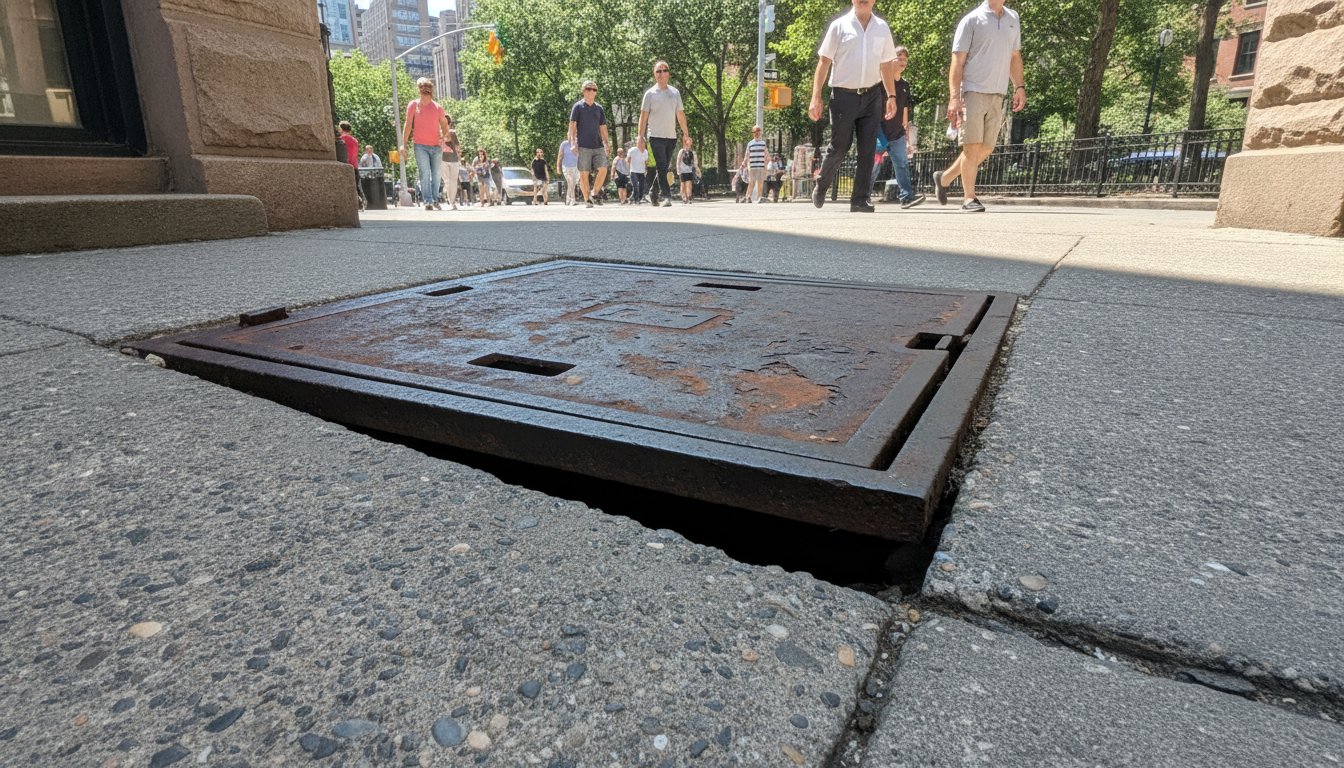
You step outside your Manhattan brownstone to find a bright yellow notice from the NYC DOT citing “defective hardware” on your sidewalk. It’s a frustrating moment, especially when you’re not sure if the issue is a cellar door, a utility cover, or a simple crack in the concrete. You’re likely asking yourself, what does a ‘defective hardware’ sidewalk violation mean in Manhattan?
We know that city terminology is often confusing and the threat of a property lien is genuinely stressful. This 2026 guide explains exactly what the NYC DOT looks for, how these violations impact your property value, and the specific steps required to clear the notice. Progressive Contracting NY Corp, reachable at 347-341-3808 or 718-350-7388, provides a clear roadmap to help you navigate the 75-day repair window. Our team (License 2097623-DCA) helps you avoid heavy city-imposed fines through professional restoration and transparent communication at ProgressiveContractingNY@yahoo.com.
Defining the ‘Defective Hardware’ Sidewalk Violation in Manhattan
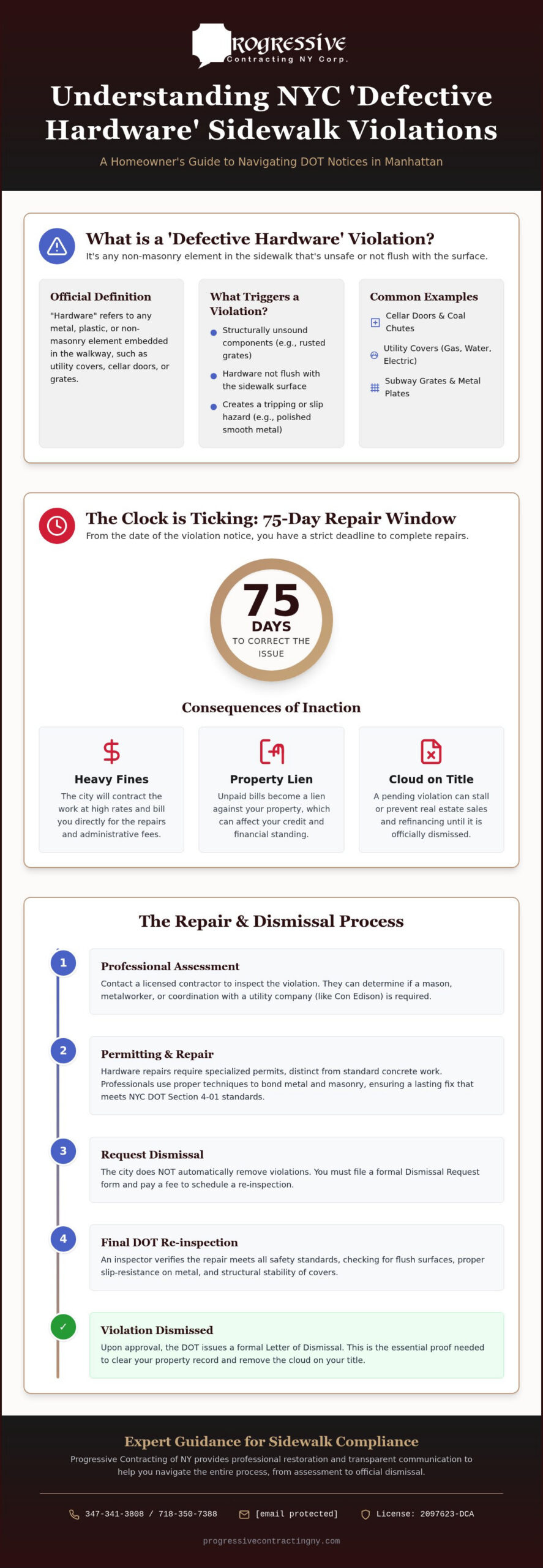
In the context of NYC Department of Transportation (DOT) inspections, “hardware” refers to any metal, plastic, or non-masonry element embedded within the walkway. While most property owners focus on the condition of the concrete, the DOT specifically monitors these integrated components for safety and structural integrity. Defective hardware is any utility cover, cellar door, or grate that is not flush with the sidewalk or is structurally unsound.
The DOT prioritizes these issues because hardware failures often present more immediate dangers than simple concrete cracks. In Manhattan, many buildings feature vaulted sidewalks where hollow space exists beneath the Sidewalk surface. A rusted grate or a loose metal plate can lead to a sudden structural collapse or a severe tripping hazard. Understanding what does a ‘defective hardware’ sidewalk violation mean in Manhattan requires recognizing that the inspector is looking at the stability of the metal itself, not just the surrounding masonry.
Common Examples of Sidewalk Hardware Issues
Manhattan properties frequently feature historical elements like cellar doors, coal chutes, and subway grates that require specialized maintenance. Utility-related hardware also falls under this category, including Con Edison gas covers, DEP water caps, and electrical pull boxes. When owners ask what does a ‘defective hardware’ sidewalk violation mean in Manhattan, they are often surprised to learn that even a metal plate polished smooth by foot traffic can trigger a notice. Progressive Contracting NY Corp (License 2097623-DCA) identifies these slip hazards and rusted frames during our site assessments.
If you’ve received a notice, our team at Progressive Contracting NY Corp can assess whether a mason or a specialized metalworker is needed. You can reach us at 347-341-3808 or 718-350-7388, or email ProgressiveContractingNY@yahoo.com to discuss your specific violation. We focus on restoring structural integrity while ensuring your property meets modern safety codes.
The Process for Repairing Defective Sidewalk Hardware
Repairing a sidewalk violation in Manhattan isn’t just about pouring cement. When you ask what does a ‘defective hardware’ sidewalk violation mean in Manhattan, the technical answer lies in the bond between masonry and metal. Patching around a loose cellar door or utility plate without proper preparation will fail quickly because metal and masonry expand at different rates. Progressive Contracting NY Corp (License 2097623-DCA) utilizes specialized techniques to secure these frames, ensuring the finished surface meets NYC DOT Section 4-01 standards. Hardware repairs typically require a specialized permit that is distinct from standard concrete repair permits.
Coordinating with NYC Utilities and Agencies
Property owners often ask what does a ‘defective hardware’ sidewalk violation mean in Manhattan when the damaged item belongs to a utility provider like Con Edison. If the hardware is owned by a third party, you are still responsible for initiating the correction process. You have exactly 75 days from the date of the Notice of Violation to resolve the issue before the city intervenes. We help you identify whether the repair falls on you or a utility company and can facilitate joint inspections to ensure compliance. To protect your property from city-contracted work billed at high rates, consult with a sidewalk specialist at 347-341-3808 or 718-350-7388. Our team at Progressive Contracting NY Corp is also available via email at ProgressiveContractingNY@yahoo.com to review your DOT notice and provide a clear path to compliance.
Removing the DOT Violation and Protecting Your Property Title
Many property owners assume the job is finished once the concrete dries. However, a sidewalk violation remains on the public record with the County Clerk until the DOT officially dismisses it. This record can stall real estate transactions or prevent you from refinancing your Manhattan property. Understanding what does a ‘defective hardware’ sidewalk violation mean in Manhattan involves recognizing its impact on your property title. A pending violation acts as a cloud on the title; it often requires significant funds to be held in escrow during a sale.
Progressive Contracting of NY (License 2097623-DCA) handles the technical repair and provides the necessary proof of compliance. For professional assistance with sidewalk violation removal nyc, contact our Manhattan office at 347-341-3808 or 718-350-7388. You can also reach our team at ProgressiveContractingNY@yahoo.com to discuss your specific case.
The DOT Dismissal Process: From Inspection to Compliance
The dismissal process is a structured sequence that requires precision. You must file a formal Dismissal Request form and pay the current city fee to trigger a reinspection. The city doesn’t remove violations automatically. During the final visit, an inspector verifies that the repair meets safety standards. They specifically check for flush surfaces between the masonry and metal hardware, proper slip-resistance on metal plates, and the structural stability of vault covers. If the work doesn’t meet these standards, you risk a re-violation and additional fees.
Once the inspector approves the repair, the DOT issues a formal Letter of Dismissal. This document is your essential proof to clear the property record. Our team ensures every detail of the repair meets these strict criteria to secure your dismissal on the first attempt. We know that knowing what does a ‘defective hardware’ sidewalk violation mean in Manhattan is only the first step toward protecting your investment.
Securing Your Manhattan Property from Sidewalk Violations
Understanding what does a ‘defective hardware’ sidewalk violation mean in Manhattan is the first step toward protecting your investment. These notices focus on metal elements like cellar doors and utility covers that require specialized masonry-to-metal bonding rather than simple concrete patches. Addressing these issues within the 75-day window prevents costly city-imposed repairs and protects your property title from interest-bearing liens. Progressive Contracting of NY brings over a decade of experience in Manhattan masonry and expertise in historic brownstone compliance.
As a licensed NYC contractor (#2097623-DCA), we handle the physical restoration and the complex DOT dismissal paperwork. You can contact our team at 347-341-3808 or 718-350-7388, or reach us via email at ProgressiveContractingNY@yahoo.com. We provide the steady hand and technical precision needed to resolve your violation quickly.
We’re ready to help you navigate the city’s requirements with transparency and professional reliability.
Frequently Asked Questions
Can I fix a defective hardware violation myself?
You cannot legally perform these repairs yourself. The NYC DOT requires a licensed contractor to obtain permits and perform work to city standards. When you consider what does a ‘defective hardware’ sidewalk violation mean in Manhattan, it involves complex structural bonds that DIY attempts rarely satisfy. Progressive Contracting of NY (License 2097623-DCA) handles the permitting and repair to ensure your sidewalk passes the final city inspection.
How much does it cost to remove a sidewalk violation in Manhattan?
Costs vary based on the extent of the damage and the specific type of hardware cited by the inspector. Factors include NYC DOT permit fees, the size of the masonry area, and whether the hardware requires full replacement or structural resetting. Hiring a private contractor is generally more cost-effective than allowing the city to perform the work and billing you at their standard rates.
Is a cellar door considered ‘hardware’ under NYC DOT rules?
Yes, cellar doors are a primary example of sidewalk hardware under NYC DOT regulations. If a door is rusted, loose, or creates a tripping hazard, you’ll receive a notice. Property owners often ask what does a ‘defective hardware’ sidewalk violation mean in Manhattan when they see these doors cited. We specialize in resetting frames and ensuring they remain flush with the walkway.
What happens if I ignore a DOT sidewalk violation notice?
Failing to act within 75 days allows the city to hire their own contractors. You’ll be billed at rates higher than private specialists. If unpaid, this becomes a tax lien on your property title. For assistance, contact Progressive Contracting of NY at 347-341-3808 or 718-350-7388. You can also email ProgressiveContractingNY@yahoo.com to discuss your violation and protect your property from these city-imposed penalties.