

Waiting for visible facade cracks before addressing your building’s exterior is the most expensive mistake a row house owner can make. In neighborhoods like Park Slope and Bedford-Stuyvesant, crumbling mortar joints quickly turn minor moisture infiltration into severe structural decay. Establishing a proactive historic masonry preservation plan for Brooklyn properties is the only dependable way to protect your brownstone or brickwork while avoiding costly emergency repairs. We understand how overwhelming Landmarks Preservation Commission rules and Department of Buildings requirements can feel when you just want to keep your property sound.
You’ll learn how to build a structured seasonal maintenance schedule that prevents water intrusion, ensures LPC compliance, and extends the life of your historic masonry. Progressive Contracting NY Corp, an exterior specialist under license number 2097623-DCA reachable at ProgressiveContractingNY@yahoo.com, 347-341-3808, and 718-350-7388, guides property owners through these exact preservation demands. Ahead, explore actionable inspection routines, compliance solutions, and proven techniques to safeguard your historic facade.
Understanding the Vulnerabilities of Historic Brooklyn Facades
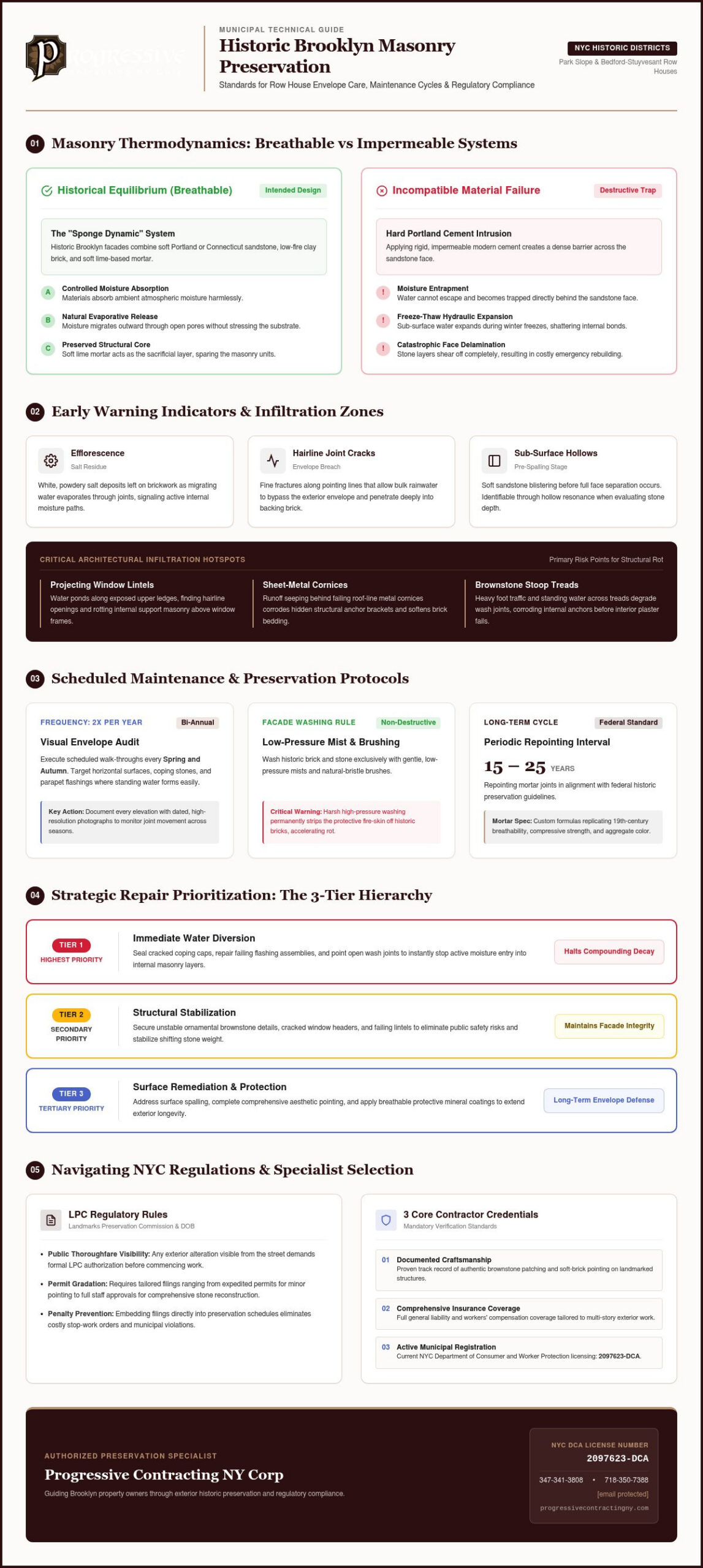
Historic Brooklyn row houses rely on a delicate equilibrium of breathable materials. The soft Portland or Connecticut sandstone used on brownstone facades, paired with low-fire clay brick and lime-based mortar, functions like a sponge. These materials absorb ambient moisture and release it harmlessly through natural evaporation. Understanding this dynamic is central to answering what is historic preservation in practical masonry terms. Any robust historic masonry preservation plan for Brooklyn properties must protect this breathability.
Deterioration begins when modern impermeable materials enter the wall system. Hard Portland cement patches trap water behind the soft sandstone face. During winter, repeated freeze-thaw cycles expand this trapped moisture, shattering the stone layers from the inside out and causing catastrophic face delamination.
Recognizing Early Indicators of Exterior Masonry Decay
Catching damage early prevents extensive facade rebuilding. Look for these subtle warning signs during visual inspections:
- Efflorescence: White, powdery salt deposits left on brickwork as migrating water evaporates through joints.
- Hairline joint cracks: Fine fractures along pointing that allow bulk rainwater to bypass the building envelope.
- Sub-surface hollows: Soft sandstone blistering before full face separation occurs. Owners can review detailed steps in our guide on brownstone spalling repair to evaluate hollow stone depths accurately.
Water infiltration often concentrates behind architectural details like projecting window lintels, sheet-metal cornices, and brownstone stoops. When water ponds along stoop treads or seeps behind cornices, it rots internal anchors and softens supporting masonry. Developing an active historic masonry preservation plan for Brooklyn properties catches these vulnerabilities before interior plaster fails.
Creating a Practical Masonry Maintenance and Preservation Schedule
A successful historic masonry preservation plan for Brooklyn properties requires consistent, scheduled oversight rather than reactive fixes. Begin with a bi-annual visual inspection every spring and autumn. Focus intently on horizontal surfaces, coping stones, and parapet flashings where standing water forms easily. Wash surfaces using low-pressure mists and natural-bristle brushes; harsh pressure washing strips the protective fire-skin off historic bricks. Plan periodic repointing intervals every 15 to 25 years in line with federal standards for repointing mortar joints, following the technical guidance detailed in our resource on brick pointing nyc.
Prioritizing Strategic Interventions to Prevent Structural Failure
Organize repairs into clear priority tiers to manage resources efficiently:
- Tier 1 (Immediate Water Diversion): Seal cracked coping caps, repair failing flashing, and point open wash joints.
- Tier 2 (Structural Stabilization): Secure unstable ornamental brownstone details, cracked window headers, and failing lintels.
- Tier 3 (Surface Remediation): Address surface spalling, aesthetic repointing, and breathable protective coatings.
Document every elevation with dated, high-resolution photographs to monitor joint movement across multiple seasons. Because front staircases absorb immense foot traffic and runoff, combine facade care with entrance safety through our specialized brownstone stoop restoration Brooklyn workflow. Implementing this tiered historic masonry preservation plan for Brooklyn properties shields your home against compounding water damage. If your facade exhibits joint recession or unstable stone, consult a licensed specialist at progressivecontractingny.com to evaluate your building envelope.
Navigating NYC Regulations and Selecting Preservation Specialists
Executing work within designated historic districts like Park Slope and Bedford-Stuyvesant requires strict adherence to NYC Landmarks Preservation Commission (LPC) rules. Any exterior alterations visible from a public thoroughfare demand formal authorization, ranging from expedited permits for minor pointing to full staff approvals for stone reconstruction. Integrating regulatory filings directly into your historic masonry preservation plan for Brooklyn properties eliminates costly stop-work orders and prevents municipal penalties.
Selecting the right contractor demands rigorous verification. Always evaluate three core credentials before starting work:
- Documented craftsmanship: A proven track record of authentic brownstone patching and soft-brick pointing on landmarked structures.
- Full insurance protection: Comprehensive general liability and workers’ compensation coverage tailored to multi-story exterior work.
- Municipal registration: Current New York City Department of Consumer and Worker Protection licensing, such as NYC DCA license 2097623-DCA.
Executing Long-Term Facade Care with Expert Consultation
Historic restoration requires custom mortar formulas that replicate the exact breathability, compressive strength, and aggregate color of 19th-century construction. Using off-the-shelf mixtures risks fracturing adjacent brick and stone. You can review specialized restoration approaches and project examples through brownstonerepair.net.
Safeguarding your building envelope requires steady stewardship. To establish a structured historic masonry preservation plan for Brooklyn properties, contact Progressive Contracting NY Corp at ProgressiveContractingNY@yahoo.com, or speak directly with an expert at 347-341-3808 or 718-350-7388 to schedule an exterior evaluation.
Protect Your Brooklyn Brownstone with Proactive Facade Stewardship
Safeguarding historic architecture requires respecting traditional materials, staying ahead of seasonal freeze-thaw cycles, and strictly adhering to LPC guidelines. Implementing a structured historic masonry preservation plan for Brooklyn properties prevents water intrusion from undermining your building’s structural integrity. Progressive Contracting NY Corp delivers specialized brownstone facade restoration across Brooklyn’s landmark neighborhoods. As an exterior specialist operating under NYC DCA license number 2097623-DCA, our team provides reliable support via ProgressiveContractingNY@yahoo.com, 347-341-3808, and 718-350-7388.
With consistent seasonal monitoring and authentic lime-based care, your historic home will remain structurally sound and visually striking for decades to come.
Frequently Asked Questions
What is a historic masonry preservation plan for Brooklyn properties?
A historic masonry preservation plan for Brooklyn properties is a structured, proactive strategy designed to inspect, protect, and maintain traditional facade materials before severe deterioration occurs. It outlines seasonal visual assessments, breathable lime-mortar pointing schedules, water diversion maintenance, and regulatory compliance protocols. This systematic approach prevents costly interior water damage and avoids premature, disruptive exterior rebuilding.
Do I need Landmarks Preservation Commission (LPC) approval to repair my brownstone facade?
Yes, you generally need LPC approval if your property sits within a designated historic district and the exterior work is visible from a public street. Minor, in-kind mortar repairs often qualify for an expedited Certificate of No Effect within days or weeks. Extensive resurfacing, lintel replacement, or full stoop restorations require detailed applications and staff-level review.
Why can you not use standard Portland cement on historic Brooklyn brownstone or brick?
Standard Portland cement is far too hard, dense, and impermeable for softer historic brownstone and low-fire clay brick. Modern cement traps natural moisture inside the wall cavity instead of allowing vapor migration. When freezing temperatures arrive, trapped water expands, forcing the softer historic stone or brick face to crack, spall, and detach around the rigid patch.
How often should a historic brick or brownstone facade be repointed in NYC?
A historic facade generally requires comprehensive repointing every 20 to 30 years, though vulnerable horizontal wash joints demand attention sooner. High-exposure features like parapet copings, window sills, and stoop steps often require spot pointing every decade. Maintaining a historic masonry preservation plan for Brooklyn properties helps you catch receding mortar before water penetrates the underlying substrate.