Brick pointing for historic row houses in Sunset Park should start with the condition and character of the masonry, not a one-size-fits-all repair plan. If you’re unsure whether joints need targeted work or full repointing, or worry that the wrong materials could harm historic brick, get the wall assessed before work begins.
This guide explains what an assessment should examine and how to compare restoration proposals for row houses and industrial properties. Use the practical checks below to review material choices, preparation, workmanship, and project communication. Progressive Contracting NY Corp specializes in brownstone facade renovation, brick pointing, and historic masonry restoration for properties in Brooklyn and Manhattan, including neighborhoods such as Park Slope and Bedford-Stuyvesant. For inquiries, Progressive Contracting NY Corp lists 347-341-3808 and 718-350-7388, along with ProgressiveContractingNY@yahoo.com. The provided license number is 2097623-DCA.
Table of Contents
How Historic Sunset Park Brickwork Shows It Needs Pointing
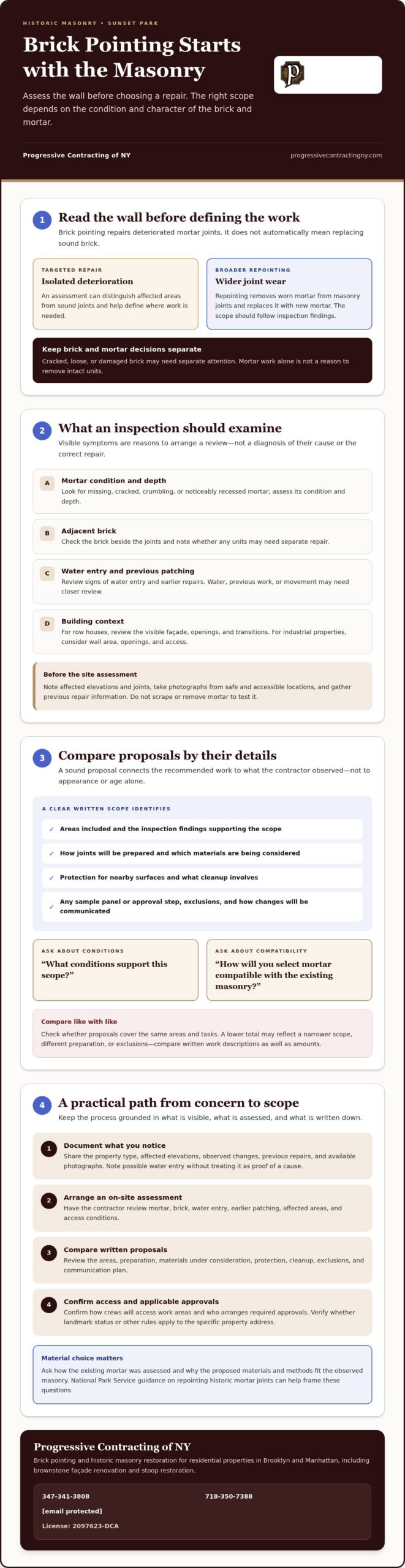
Brick pointing addresses deteriorated mortar joints. It does not automatically mean replacing sound brick. Repointing removes worn mortar from masonry joints and replaces it with new mortar. For a foundational overview, see what brick pointing is. The brick itself may need separate attention if it’s cracked, loose, or damaged, but mortar work alone is not a reason to remove intact units.
Missing, cracked, crumbling, or noticeably recessed mortar can be a reason to arrange an inspection. These signs do not identify the cause on their own. Water entry, earlier repairs, or movement may need closer review, and a visual symptom does not establish which repair is appropriate. Brick pointing for historic row houses in Sunset Park should therefore begin with an on-site assessment, not an assumption that every joint needs the same treatment.
What should a mortar-joint inspection look for?
A contractor should examine the mortar’s condition and depth, the brick beside it, signs of water entry, and any previous patching. The assessment should distinguish isolated areas of deterioration from broader joint wear and note whether any brick may need separate repair. The proposed scope should follow these findings, not appearance alone.
Inspection priorities also depend on the building. On a row house, review the visible façade and details around openings and transitions. On an industrial property, consider the larger wall area, openings, and how access affects a thorough review. These are different assessment contexts, not proof of a particular defect or neighborhood-wide condition.
Before requesting proposals, note which elevations and joints appear affected, take photographs from safe and accessible locations, and gather information about previous repairs. Avoid scraping or removing mortar yourself to test its condition; leave that evaluation to the contractor.
How to Compare Brick Pointing Approaches for Sunset Park Properties
Compare proposals by how clearly they connect the recommended work to the inspection findings. For brick pointing for historic row houses in Sunset Park, the existing mortar and adjacent brick need project-specific evaluation. Age or appearance alone does not establish a suitable mortar or repair method. The National Park Service offers guidance on appropriate materials and methods, which can help explain why material selection and careful joint preparation matter.
Ask each contractor how they assessed the existing mortar, what they observed in the brick, and why the proposed materials and methods fit those conditions. A clear proposal should identify the areas included, explain how joints will be prepared, describe protection for nearby surfaces, and state what cleanup involves. If a sample panel or approval step may apply, ask who will arrange it and when work can proceed. Confirm exclusions in writing so you know what would require a separate scope.
Which questions reveal whether a proposal fits an older building?
Ask, “What conditions support this scope?” and “How will you select mortar compatible with the existing masonry?” Request a written work sequence covering preparation, affected areas, protection, cleanup, and how new findings or changes will be communicated. The proposal should make the work understandable before it begins.
When comparing proposals, check whether each one covers the same areas and tasks. A lower total may reflect a narrower scope, different preparation, or exclusions, so compare the written work descriptions as well as the amounts. For further reading, consult the Brick Pointing NYC guide.
Plan Brick Pointing for Historic Row Houses in Sunset Park: From Assessment to Contractor
A clear plan takes you from visible concerns to a defined scope of work. For brick pointing for historic row houses in Sunset Park, document what you’ve noticed, arrange an on-site assessment, compare written proposals, then confirm access and any approvals that apply to the property.
What should owners prepare before requesting a masonry assessment?
Share the property type, affected elevations, observed changes, details of previous repairs, and available photographs. Note where mortar appears missing or cracked and whether you’ve noticed water entry, but leave the diagnosis to the site assessment. This information gives the contractor a useful starting point without treating symptoms as proof of their cause.
Before authorizing work, check that the proposal identifies the areas included, preparation steps, materials under consideration, protection, cleanup, and how new findings or scope changes will be communicated. Confirm how the crew will access the work areas and who is responsible for arranging any required approvals. Requirements can depend on the specific property, so verify whether landmark status or other rules apply to its address rather than assuming they do.
The National Park Service’s Repointing Mortar Joints in Historic Masonry Buildings offers background on material selection and methods. Use it to frame questions, then ask the contractor to explain how the proposed approach relates to the building’s observed masonry.
Progressive Contracting of NY provides brick pointing and historic masonry restoration for residential properties in Brooklyn and Manhattan. Its work is focused on exterior masonry, including brownstone facade renovation and stoop restoration. If you’re comparing contractors in Brooklyn, Manhattan, or nearby areas such as Park Slope and Bedford-Stuyvesant, use the same written-scope questions to evaluate each proposal.
Take the Next Step Toward a Clear Pointing Plan
The right approach to brick pointing for historic row houses in Sunset Park starts with the masonry’s actual condition. Treat missing or cracked mortar as a reason to seek an assessment, compare proposals by their findings, materials, preparation, and written scope, and confirm any requirements that apply to the specific property.
Progressive Contracting of NY offers brick pointing and historic facade restoration for residential properties in Brooklyn and Manhattan. To discuss your property and confirm whether service is available for your location, call 347-341-3808 or 718-350-7388, or email ProgressiveContractingNY@yahoo.com. License number 2097623-DCA.
Frequently Asked Questions
How can I tell if a historic brick building needs repointing?
Missing, cracked, crumbling, or deeply recessed mortar can be a reason to request an assessment, but these signs do not diagnose the cause or mean every joint needs replacement. A contractor should examine the mortar and nearby brick, look for possible water entry, and review previous repairs. The assessment helps determine whether localized repairs or broader repointing fit the observed conditions.
Can the wrong mortar damage historic brick?
Yes. Mortar that is too hard or otherwise incompatible with historic brick can shift weathering stress onto the brick and contribute to damage, including a crumbling or flaking surface. The risk depends on the existing masonry and repair conditions. Do not choose mortar based on appearance alone; ask the contractor to explain how the proposed material relates to the original brick and mortar.
How do contractors choose mortar for historic brick pointing?
Contractors should assess the existing mortar, adjacent brick, previous repairs, and the specific condition of the wall before recommending materials. For brick pointing for historic row houses in Sunset Park, ask what observations support the proposed mortar and repair method. A written explanation lets you compare proposals without relying on a generic mix or assuming one material suits every older building.
Do Sunset Park historic buildings need approval before brick pointing?
It depends on the property. Confirm whether the specific address has landmark status or is subject to applicable approval requirements before work begins. Do not assume every building has the same status. Progressive Contracting of NY provides brick pointing and historic facade restoration for residential properties in Brooklyn and Manhattan. Contact: 347-341-3808, 718-350-7388, ProgressiveContractingNY@yahoo.com. License: 2097623-DCA.