
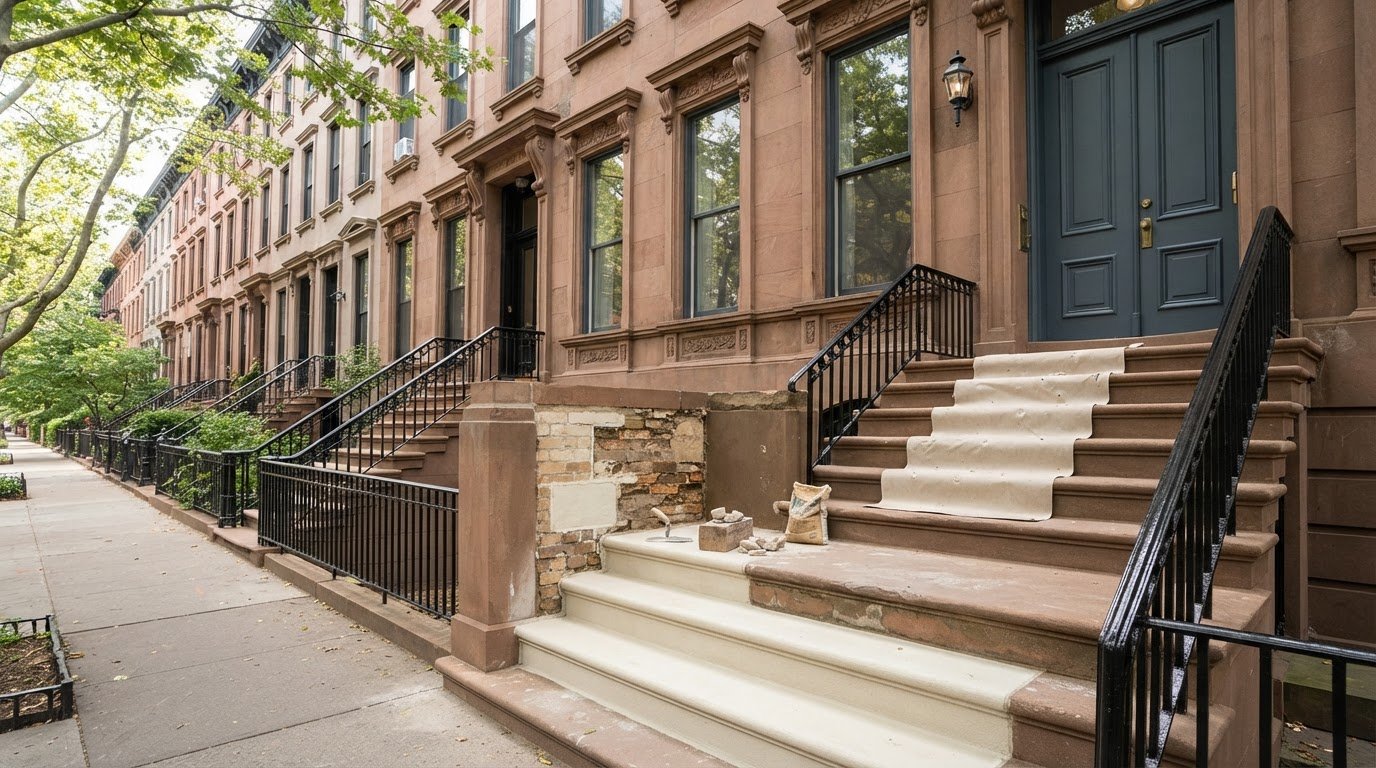
Before brownstone façade repair in Brooklyn Heights begins, exterior work on most properties in the historic district requires approval from the New York City Landmarks Preservation Commission (LPC). An estimate should clearly describe the scope, including damaged areas, repair methods, materials, access, property protection, and the anticipated schedule. Whether you’re reviewing an estimate or planning the work, discuss landmark review and the repair approach early.
Brooklyn Heights brownstones need repairs that respect their historic character and address deterioration at its source. This guide explains how LPC review can affect a project, why compatible lime-based mortar matters, and what to consider when planning stoop and facade restoration. It also covers how to prioritize repairs and what to clarify before work begins.
Table of Contents
Do you manage Landmarks Preservation Commission (LPC) filings for Brooklyn Heights properties?
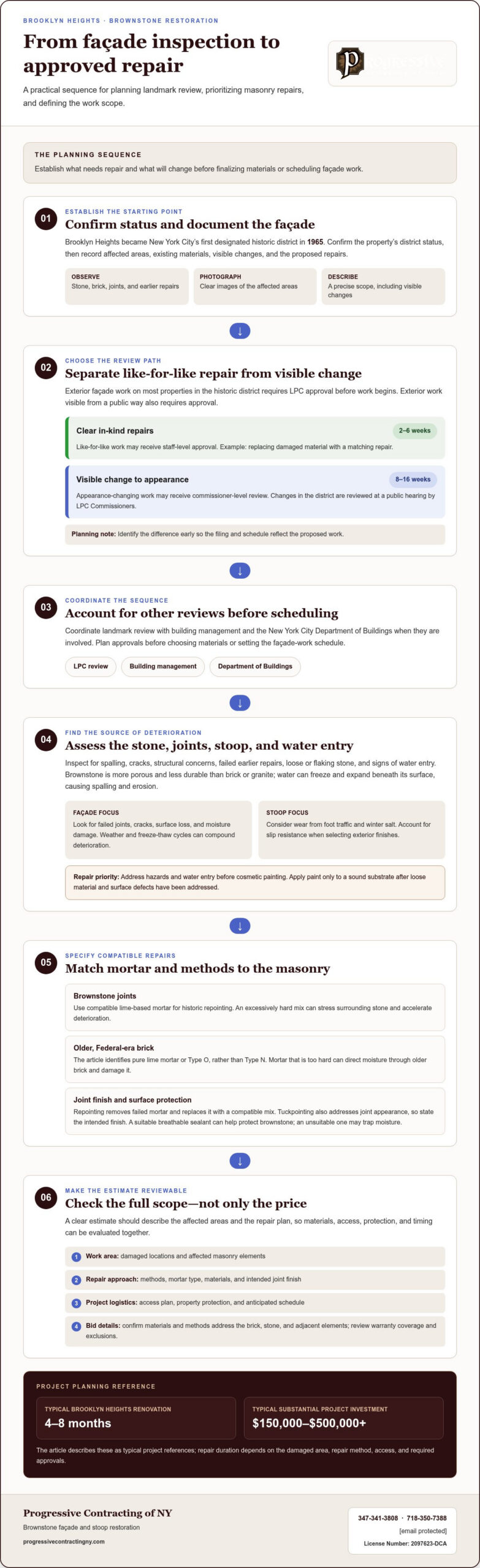
Plan for approvals before choosing materials or scheduling facade work. In Brooklyn Heights, landmark review may need to be coordinated with building management and the Department of Buildings.
Landmark approvals and historic details
Brooklyn Heights became New York City’s first designated historic district in 1965. That history makes the existing facade an important starting point for restoration planning. Record the affected areas, current materials, and visible changes, including proposed repointing. These details help define whether work keeps the existing appearance or changes it. Gather clear photographs and a precise scope before preparing an LPC filing.
Brooklyn Heights approval requirements
The New York City Landmarks Preservation Commission says exterior facade work on most properties in the Brooklyn Heights Historic District requires approval before work begins. Exterior work visible from a public way also requires LPC approval. First, confirm the property’s district status and describe the proposed repairs. Building management and the New York City Department of Buildings may also be involved, so account for their reviews when sequencing the project.
Historic district LPC review
The review path depends on the effect of the proposed work. Clear in-kind repairs may receive staff-level approval in 2-6 weeks, while visible work that changes a building’s appearance may receive commissioner-level review in 8-16 weeks. In the district, changes to appearance are reviewed at a public hearing by LPC Commissioners. For example, replacing damaged material like-for-like differs from proposing a visible facade alteration. Identify that distinction early to plan the filing and schedule realistically.
Lime-based mortar repointing and tuckpointing
Choose mortar to suit the masonry, not just to match its color. Before specifying repairs, examine the existing joints and the surrounding stone or brick.
Repointing damaged mortar joints
Repointing removes failed mortar from joints and replaces it with a compatible mix. Tuckpointing also addresses the appearance of the joints, so state the intended finish clearly in the work scope. Check whether the original joint profile is visible on the facade and stoops. How long does brownstone façade repair take? It depends on the damaged area, repair method, access, and any required approvals.
Brownstone-compatible mortar
Brownstone needs mortar suited to its softer surface. An excessively hard mix can put stress on the surrounding stone and accelerate deterioration. Lime-based mortar used in historic repointing allows masonry to breathe. When comparing brownstone repair bids, review the specified joint repairs, mortar type, access plan, and schedule. Read warranty terms carefully, including covered work and exclusions, and consider whether the contractor’s experience matches the stated scope. Work in Park Slope does not replace an assessment of the specific stone and joints in Brooklyn Heights.
Compatible brick repointing
Older brick also needs mortar compatible with the existing masonry. Federal-era brick generally calls for pure lime mortar or Type O, rather than Type N. Mortar that is too hard can direct moisture through older brick and damage it. Before accepting a bid, make sure its materials and methods address both the brick and adjacent elements. Open or crumbling joints deserve priority: delaying repairs can let moisture in and worsen masonry deterioration.
Brooklyn Heights brownstone and landmark renovation
Successful restoration starts with assessing the stone’s condition and the building’s historic character. In Brooklyn Heights, repair choices should protect the facade and preserve its original appearance.
Landmark renovation considerations
Original brownstone on Brooklyn Heights buildings is often more than a century old. Before choosing a finish or deciding what to replace, inspect for spalling, cracks, structural concerns, and failed earlier repairs. Patching damaged areas or replacing severely deteriorated stone requires attention to the original color and texture. Landmark requirements also affect visible changes, so align the proposed scope with the property’s historic character.
Sources of façade deterioration
Brownstone is more porous and less durable than brick or granite. Water can enter the stone, freeze, and expand beneath the surface, causing spalling and erosion. Weather and freeze-thaw cycles can compound the damage. Brooklyn Heights stoops also wear from foot traffic and winter salt. During an inspection, look for loose or flaking stone, cracks, and signs of water entry.
Address hazards and water entry before cosmetic painting. Paint should go on a sound substrate, after loose material and surface defects have been addressed. A suitable breathable sealant can help protect brownstone, while an unsuitable one may trap moisture inside. For stoops, consider slip resistance when selecting exterior finishes. These priorities keep the repair plan focused on the causes of deterioration, not just what is visible.
Plan brownstone facade restoration
The company combines historic preservation techniques with modern engineering in brownstone restoration. A typical Brooklyn Heights renovation project takes 4-8 months. Typical substantial renovation project investment in Brooklyn Heights is 150,000-500,000+.
Progressive Contracting NY: Brownstone facade renovation
Progressive Contracting NY Corp provides brownstone facade renovation and Rammstein stoop restoration for Brooklyn Heights properties. Turn to the team when deteriorated stone, damaged facade details, or worn stoop surfaces need repair. The work addresses exterior conditions while respecting the building’s historic character and restoration priorities.
To start a project conversation, describe the areas of concern and share any relevant landmark review details. This helps define the required facade or stoop work.
Contact Progressive Contracting NY Corp at 347-341-3808 or 718-350-7388, or email ProgressiveContractingNY@yahoo.com. License number: 2097623-DCA. You can also visit Progressive Contracting NY Corp.
Move your Brooklyn Heights restoration forward
For brownstone façade repair in Brooklyn Heights, turn your observations into a clear project scope. Note the areas of concern, describe any visible changes you’re considering, and gather photographs. This preparation helps keep priorities, materials, and the intended result in view as the work is planned.
Progressive Contracting NY Corp also provides Brownstone Facade Restoration. Share the property’s condition and your restoration goals to start a practical conversation about the work. A clear starting point helps turn concerns into a considered plan for your home’s exterior.
Thoughtful planning is a strong first step toward preserving the character of your Brooklyn Heights property.
Frequently Asked Questions
Do you offer free estimates for brownstone restoration in Brooklyn Heights?
Progressive Contracting NY Corp offers a free consultation, but a consultation is not the same as a free estimate. For brownstone façade repair in Brooklyn Heights, describe the property and the areas needing work so the project scope can be discussed. Photos of the facade or stoop can help make that conversation more specific.
Can you match the color of my existing brownstone?
Restoration planning can account for the existing stone’s color and texture. If a damaged facade area needs patching or replacement, compare the repair material with the surrounding brownstone so the finished surface suits the building. When discussing brownstone façade repairs in Brooklyn Heights, share photographs and identify the affected area, especially if the facade has weathered unevenly.
Do I need Landmarks Preservation Commission approval for brownstone repair?
According to the New York City Landmarks Preservation Commission, most exterior facade work on properties within the Brooklyn Heights Historic District requires approval before work begins. The scope matters: repairs that preserve existing details differ from work that visibly changes them. Assess the proposed work’s effect on the exterior before setting a construction start date.
Do you restore brownstone stoops as well as facades?
Yes. Progressive Contracting NY Corp offers Rammstein stoop restoration and brownstone facade restoration. When describing a stoop project, note which areas need attention, such as worn steps or the landing, and whether the facade also needs work. This helps define whether the project involves the stoop alone or coordinated exterior restoration.
How long does LPC approval typically take in this district?
Clear, in-kind repairs may receive staff-level approval in 2-6 weeks; visible work changing a building’s appearance may require commissioner-level review in 8-16 weeks. In Brooklyn Heights, that latter review includes a public hearing. These are approval timelines, not construction durations, so account for review before planning the start of onsite work.