
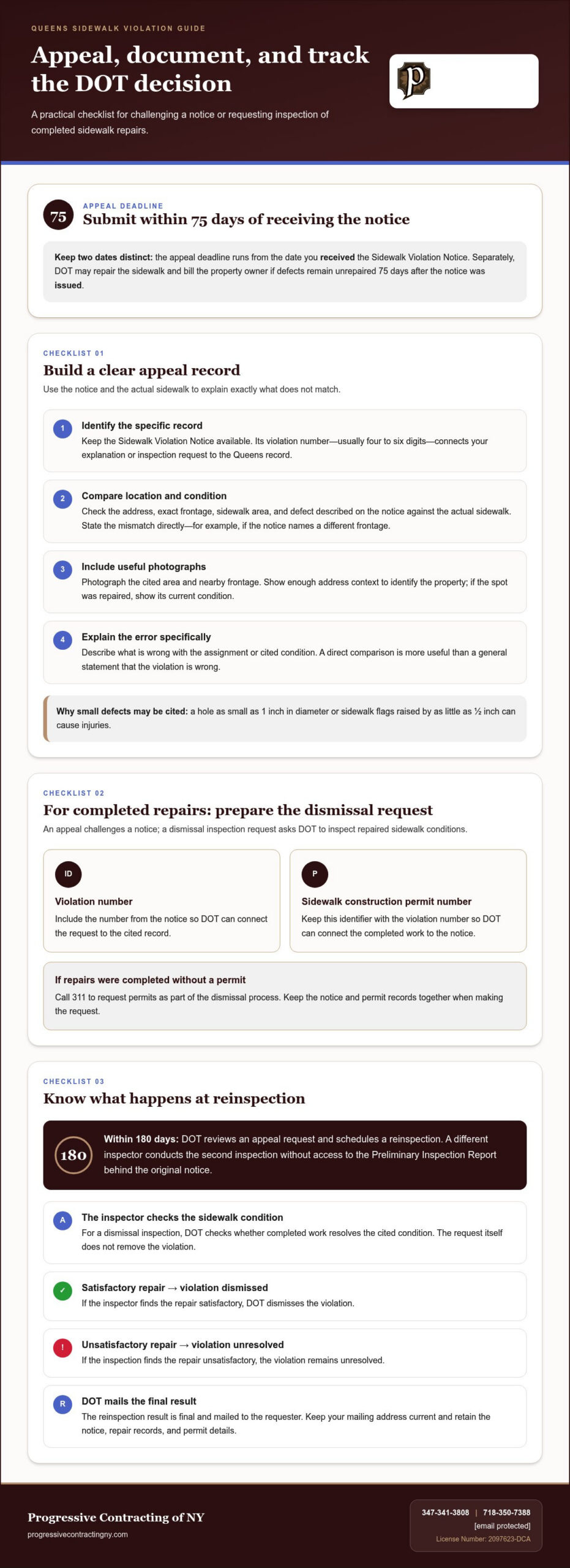
A Queens sidewalk violation can be appealed, but the deadline and supporting details matter. Submit an appeal within 75 days from the date you received the Sidewalk Violation Notice. For an owner-repaired sidewalk, a DOT sidewalk violation dismissal inspection request in Queens should include the sidewalk violation number and sidewalk construction permit number; DOT will review the request and schedule a reinspection within 180 days.
It’s understandable to want a clear answer about whether a repair will be accepted or an incorrectly assigned violation can be corrected. This guide explains how to appeal a DOT sidewalk violation in Queens, what evidence to include in an inspection request, and what happens during reinspection.
You’ll also learn how DOT communicates its final decision and when sidewalk repair support can help move the process forward.
Table of Contents
Appealing a sidewalk violation
A Sidewalk Violation Notice is DOT’s written record of a cited sidewalk condition. In Queens, DOT inspectors document the condition in a Preliminary Inspection Report supporting the notice. The violation number usually contains four to six digits. Use it to connect your appeal or dismissal inspection request to the specific Queens record.
A sidewalk defect is damaged or uneven pavement that may create a pedestrian hazard. In New York City, a hole as small as 1 inch in diameter can cause injuries. Sidewalk squares or flags raised by as little as ½ inch can also cause injuries. These measurements help explain why an apparently minor condition may be cited.
An appeal asks DOT to review a violation the owner believes is incorrect. Submit a New York City appeal within 75 days from receiving the notice. Compare the cited location and condition with the actual sidewalk, then explain the specific error. For example, point out if the notice identifies a different frontage. A DOT sidewalk violation dismissal inspection request in Queens should clearly distinguish an appeal from a request to inspect completed repairs.
For an owner-repaired sidewalk, include the sidewalk violation number and sidewalk construction permit number in the dismissal inspection request. Keep both identifiers together so DOT can connect completed work to the notice. If repairs were completed without a permit, call 311 to request permits as part of the dismissal process. Queens property owners making a DOT sidewalk violation dismissal inspection request in Queens can organize these records before contacting 311.
Timely action matters. According to the New York City Department of Transportation, DOT may repair a sidewalk and bill the property owner if defects remain unrepaired 75 days after the Sidewalk Violation Notice was issued. The appeal deadline runs from receipt, while this repair period runs from issuance, so record both dates separately.
DOT inspectors record the sidewalk condition in a Preliminary Inspection Report that supports the written Sidewalk Violation Notice. The notice identifies the cited condition.
Correcting an incorrectly assigned violation
An incorrectly assigned violation is a notice that does not match the sidewalk condition or location. In Queens, compare the notice with the exact frontage it identifies. Check the address, sidewalk area, and described defect. A notice for another frontage calls for a different explanation than one concerning a defect that has already been repaired.
For a Queens sidewalk violation, the New York City Department of Transportation handles the DOT notice and reinspection process, not the Department of Buildings. Keep the notice available while preparing your appeal. Its violation number links your explanation to the specific record.
Supporting evidence helps DOT assess the claimed error. Take clear photographs of the cited area and nearby frontage, including views that show where the condition is located. If the notice identifies a defect that is absent, photograph the full sidewalk section and enough address context to identify the property. If the cited spot was repaired, include images showing its current condition.
A DOT appeal is a formal request to review the notice. Explain the mismatch directly and organize the details so an inspector can compare the record with the sidewalk. For example, state that the notice identifies one frontage while the photographed defect appears elsewhere. Avoid relying on a general statement such as “the violation is wrong.”
DOT reviews an appeal and schedules a reinspection within 180 days. A different inspector conducts the second inspection and does not have access to the Preliminary Inspection Report that led to the violation. This makes precise location details and clear evidence useful: they help identify the condition independently.
Keep copies of the notice, appeal explanation, and photographs together. If the violation concerns work already completed, keep the sidewalk construction permit information with those records. A clear, consistent file helps distinguish an incorrect assignment from a condition that still needs correction.
DOT reinspection and final results
A dismissal inspection checks whether completed sidewalk work resolves the cited condition. In Queens, DOT uses the inspection result to decide whether to dismiss the violation.
Requesting a NYC DOT Sidewalk Inspection
A sidewalk dismissal inspection request asks DOT to inspect repaired sidewalk conditions. After repairs, call 311 to request a Sidewalk Violation Dismissal. Have the permit information ready so DOT can verify the work. If repairs were completed without a permit, request permits through 311 as part of the dismissal process. Keep your notice and permit records available when making the request.
Inspection Requests and Violation Dismissal
A dismissal means DOT closes the violation after an inspector finds the work satisfactory. An inspection request can lead to dismissal when reinspection confirms the repair was completed correctly. The request alone does not remove the violation: the sidewalk condition must pass inspection. If the inspector finds the repair unsatisfactory, the violation remains unresolved.
After an appeal request, DOT reviews it and schedules a reinspection within 180 days. A different inspector conducts the second inspection without access to the Preliminary Inspection Report behind the original notice. This independent review assesses the sidewalk condition during the new visit.
DOT treats the reinspection result as final and mails it to the requester. Keep your mailing address current and retain the notice, repair records, and permit details together. If the inspection is satisfactory, DOT dismisses the violation. The mailed result provides the formal outcome for your records.
Progressive Contracting NY Corp: Brownstone facade renovation
Progressive Contracting NY Corp handles brownstone facade renovation and stoop restoration for properties with exterior masonry concerns. These services may be relevant when a sidewalk issue sits alongside deteriorated facade or stoop masonry. They address the building’s masonry, while DOT determines whether a sidewalk violation is dismissed after inspection following a DOT sidewalk violation dismissal inspection request Queens.
If your property needs brownstone work alongside sidewalk repair planning, describe the affected areas and your project needs when you contact Progressive Contracting NY Corp. This helps clarify whether the work concerns the facade, stoop, or sidewalk.
Contact Progressive Contracting NY Corp at 347-341-3808 or 718-350-7388, or email ProgressiveContractingNY@yahoo.com. License Number: 2097623-DCA.
Plan the next step for your property
Use the DOT sidewalk violation dismissal inspection request in Queens to address the notice and sidewalk condition as separate tasks. DOT determines whether it dismisses the violation; building masonry concerns may need their own repair plan. Keeping those responsibilities distinct helps you focus each discussion on the right work.
Progressive Contracting of NY provides brownstone facade renovation, brownstone facade restoration, and Rammstein stoop restoration in Brooklyn and Manhattan. These services can help when deteriorated facade or stoop masonry needs attention alongside a sidewalk issue. Share the affected areas and your project needs to start a practical discussion.
A clear next step can make the work ahead feel more manageable.
Frequently Asked Questions
What evidence is required to contest a NYC DOT sidewalk violation?
Use evidence that directly connects the notice to the sidewalk condition you dispute. Include the notice and violation number, a concise explanation, and dated photographs showing the cited area and surrounding frontage. For example, if the notice identifies the wrong location, take images showing the property address and sidewalk section. Keep copies of all submitted materials.
What are the deadlines and fees for challenging a sidewalk violation in New York City?
Submit an appeal within 75 days from receiving the notice. New York City DOT requires violations to be satisfied within 45 days of issuance. These are separate timelines. That is a permit fee, not a stated charge for filing an appeal.
How do I request a reinspection after repairing a sidewalk in Queens?
After completing repairs, call 311 and request a Sidewalk Violation Dismissal. Have the sidewalk violation number and permit information ready for DOT verification. If work was done without a permit, call 311 to request permits as part of the dismissal process. Keep your repair and permit records together in case you need to refer to them.
How long does NYC DOT take to inspect or review a sidewalk violation?
After an appeal request, DOT reviews it and schedules a reinspection within 180 days. This is the stated period for scheduling the inspection, not a promise that the entire matter will be resolved within that time. The results are mailed to the requester, so keep your mailing details current and retain the notice for reference.
How do I appeal a denied sidewalk violation dismissal in Queens?
The reinspection result is considered final and is mailed to the requester, so the described process provides no further appeal step. Read the decision carefully and note the cited condition. For a procedural question about the notice, contact the NYC DOT Sidewalk Management Unit at 212-839-4310. Keep the mailed result with your property records.