
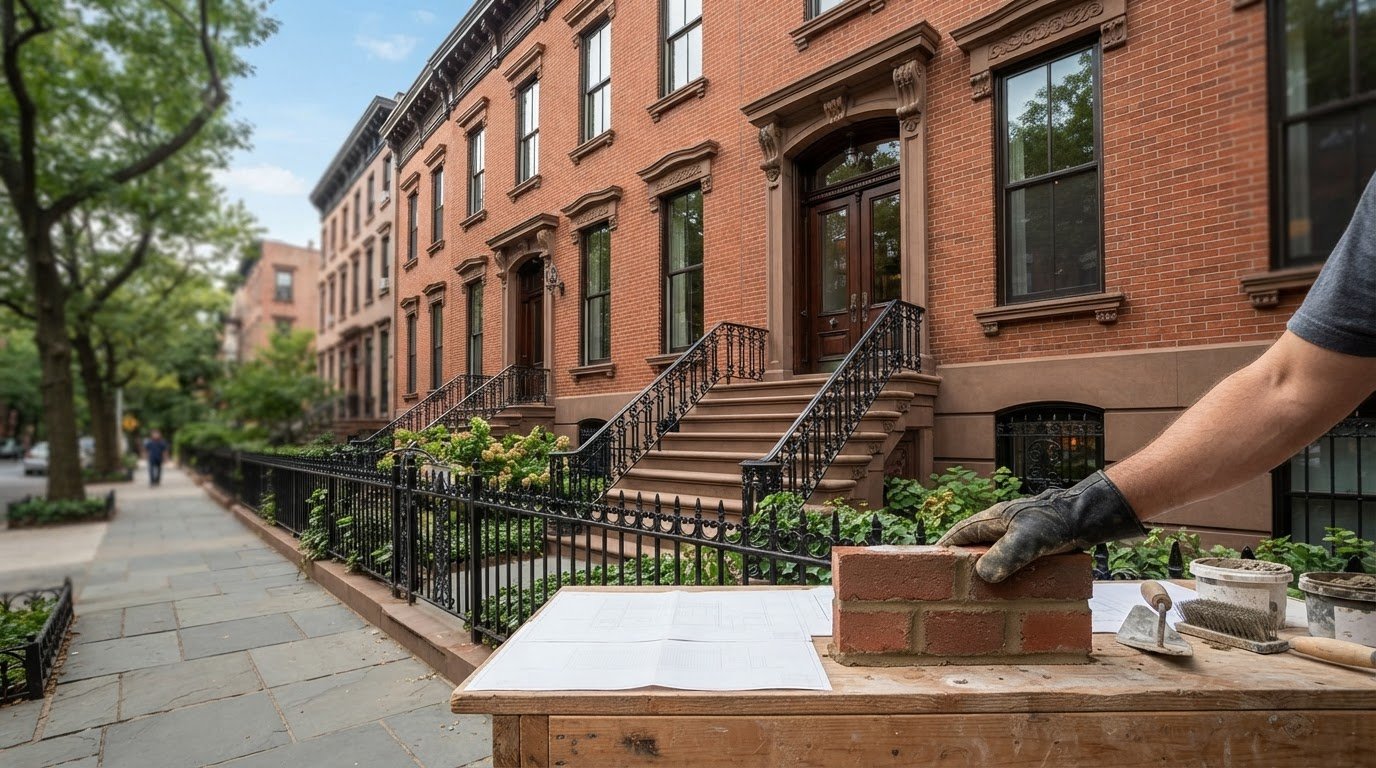
For Brooklyn masonry facade work, an NYC LPC certificate of appropriateness can take about three months. The NYC LPC is required to issue a ruling on a complete Certificate of Appropriateness application within 90 working days.
The timeline depends on the approval path, so identifying it early matters. This guide explains how to check whether a Brooklyn property is landmarked, which facade repairs may need LPC review, and what can affect the schedule.
Masonry work needs particular care because the proposed materials and methods must suit the building’s historic character. You’ll also learn how LPC review differs from Department of Buildings review, so you can understand what each process considers before facade work begins.
Table of Contents
Townhouse Landmark Approval Guide: What Needs LPC Review?
Brooklyn masonry work can follow different LPC review paths, depending on its effect on protected features. Application completeness and the proposed materials both affect timing.
COA and No Effect Applications
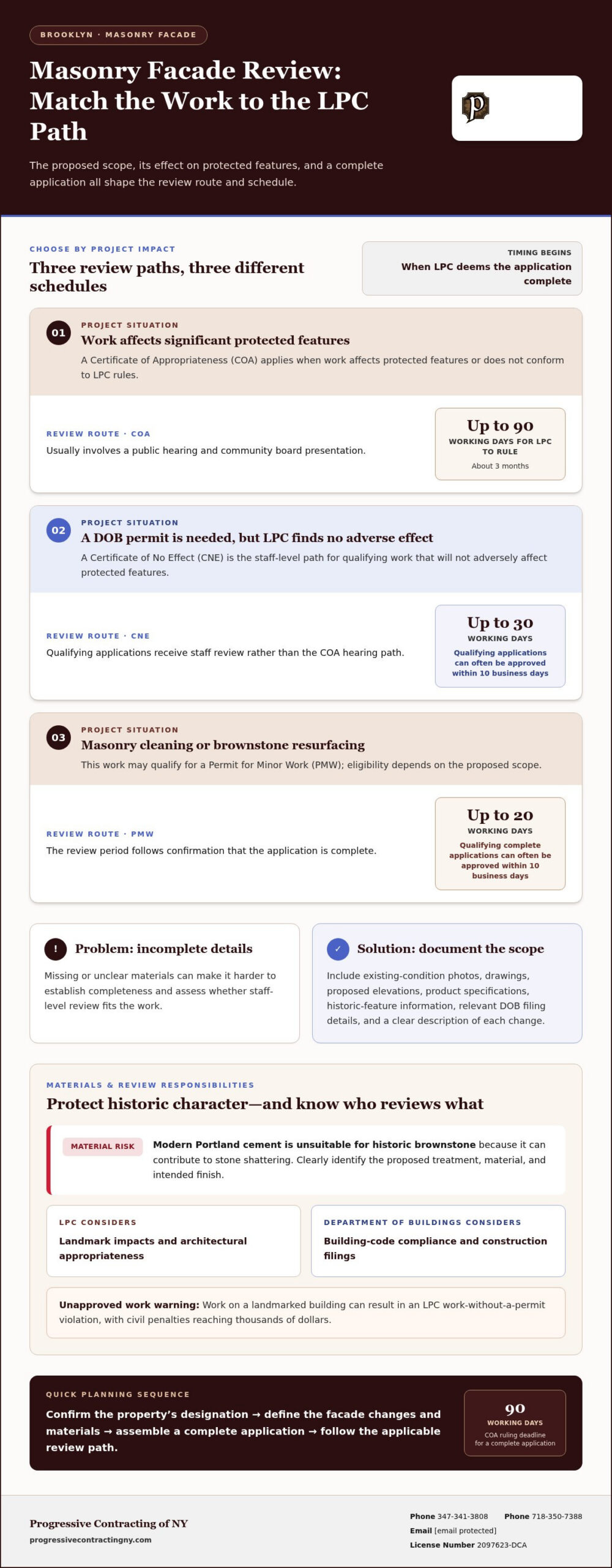
A Certificate of Appropriateness (COA) covers work that affects significant protected features or does not conform to LPC rules. A Certificate of No Effect (CNE) is a staff-level path for work requiring a Department of Buildings permit when LPC determines it will not adversely affect protected features. The distinction matters: a COA usually involves a public hearing and community board presentation, while qualifying CNE applications receive staff review. For a masonry facade, the proposed scope and its effect on historic character help determine the path.
Application Documents and Visual Materials
A Brooklyn masonry facade COA application may include existing-condition photographs, architectural drawings, proposed elevations, product specifications, information about historic features, relevant Department of Buildings filing details, and a clear description of each change. Specify the proposed masonry material and finish. Product specifications document the selection, while sample details can help show its appearance. These materials let reviewers compare existing conditions with the proposed work. When choosing a preservation professional, look for Brooklyn landmark masonry experience and examples of application drawings, material specifications, and facade projects.
Review Schedules and Approval Levels
Review timing begins once LPC deems an application complete. A complete COA application can take about three months, and LPC must issue a ruling within 90 working days. A complete CNE application has a review period of up to 30 working days; qualifying applications can often be approved within 10 business days. Masonry cleaning and brownstone resurfacing may qualify for a Permit for Minor Work, which has a review period of up to 20 working days after completeness is confirmed. Qualifying complete applications can often be approved within 10 business days. Clear photographs, drawings, and specifications help establish completeness and clarify whether staff-level review fits the proposed work.
Checking whether a Brooklyn property is landmarked
Use the LPC Discover NYC Landmarks map to check a Brooklyn address. It identifies individual landmarks, historic-district properties, and interior landmark designations.
Brooklyn buildings in historic districts and individually designated landmarks are found across many neighborhoods. Designation applies to specific properties, so a nearby landmark does not establish the status of the building you’re researching.
Landmark Status Checks
Enter the property address in the LPC Discover NYC Landmarks map, then review whether the result shows an individual landmark, historic district, or interior designation. This address-level check matters because a building’s location determines whether landmark protections may affect planned facade work. Compare the mapped location with the property itself, especially where a district boundary runs near the block. Record the designation shown for the address before planning exterior changes.
Historic Districts and Designated Buildings
New York City has over 35,000 landmarked properties across 139 historic districts. These include properties in Brooklyn, but the figures don’t mean every building in a neighborhood is designated. Check the map for the specific address rather than relying on a neighborhood name or nearby brownstone’s status. The map also distinguishes historic-district locations from individual landmarks and interior designations, which represent different property records.
Once you’ve confirmed the address, use its designation to guide project planning and preservation discussions. For masonry needs, Brooklyn brownstone facade restoration can address the physical repair work while landmark status informs the approval path.
LPC review of front facade and masonry work
Front-facade review considers how proposed work affects protected architectural features. For a Brooklyn project, planning an NYC LPC certificate of appropriateness for masonry facade work starts with defining the proposed changes and materials.
Historic brownstone needs compatible treatment. Modern Portland cement is unsuitable because it can contribute to stone shattering. LPC reviews landmark impacts and architectural appropriateness, while the Department of Buildings reviews building-code compliance and construction filings. This distinction helps owners understand which review addresses each part of the work.
Application and Permit Fees
A Permit for Minor Work for masonry cleaning or brownstone resurfacing has no LPC filing fee. That applies to this permit type, not automatically to every masonry application. A Certificate of Appropriateness applies when work affects significant protected architectural features or does not conform to LPC rules. An NYC LPC certificate of appropriateness for masonry facade work in Brooklyn is therefore relevant when the proposed scope meets those conditions.
Describe materials and methods clearly. Modern Portland cement can contribute to historic brownstone shattering, so identify the proposed treatment and its intended finish. Product specifications and information about historic features help reviewers assess the work against the facade’s existing character.
Consequences of Unapproved Work
Unapproved work on a landmarked building can result in an LPC work-without-a-permit violation, with civil penalties reaching thousands of dollars. Establishing the appropriate review path before construction helps keep the work aligned with the building’s protected features. LPC review addresses landmark effects; the Department of Buildings separately reviews matters such as code compliance, structural work, permits, and inspections.
For an NYC LPC certificate of appropriateness for masonry facade work in Brooklyn, connect the preservation scope to the proposed repair plan before work begins.
Plan Brooklyn brownstone facade restoration
Progressive Contracting NY: Rammstein stoop restoration
Progressive Contracting NY Corp. provides Rammstein stoop restoration and brick pointing for Brooklyn masonry projects. Once you understand the property’s landmark status and approval path, these services can address the physical repair work. The company also handles sidewalk repair and sidewalk violation removal, which may be relevant when exterior masonry work involves adjoining walkways.
For a stoop with deteriorated masonry or brick joints needing repair, describe the affected area and work you’re considering when you get in touch. This helps connect the project’s repair needs with the appropriate service. Keep the approved scope clear as the project moves from review toward construction.
Contact Progressive Contracting NY Corp. at 347-341-3808 or 718-350-7388, or email ProgressiveContractingNY@yahoo.com to discuss your masonry project.
Move Your Brooklyn Facade Project Forward
Before work begins, align the proposed repairs with the building’s character and approval path. A clear scope gives your project team a shared reference for materials, workmanship, and the facade areas involved. For an NYC LPC Certificate of Appropriateness for a Brooklyn masonry facade, connect preservation decisions with the physical repair plan.
Progressive Contracting of NY provides brownstone facade renovation and Brownstone Facade Restoration for exterior masonry projects. Its Rammstein stoop restoration service also covers stoop work. Keep the approved scope connected to the restoration plan as the project moves toward construction.
A careful start helps set a steady course for preserving your Brooklyn property.
Frequently Asked Questions
How long does it take to get LPC approval for facade work in NYC?
Review timing depends on the LPC approval route and application completeness. LPC must issue a ruling on a complete Certificate of Appropriateness application within 90 working days. A complete Certificate of No Effect application has up to 30 working days for review. Qualifying complete staff-level applications can often be approved within 10 business days. COA review usually includes a public hearing and community board presentation.
What Should You Have Ready Before Applying to LPC?
Prepare the property address, a precise work description, and records showing the facade’s existing condition. Organize photographs by building area, then match each image to the proposed repair or alteration. Include drawings and specifications that clearly identify the proposed materials and finish. If the scope involves Department of Buildings filings, include relevant filing information so reviewers can understand how the approvals relate.
What is a NYC LPC Certificate of Appropriateness (COA)?
A Certificate of Appropriateness is LPC approval for proposed work that affects significant protected architectural features or does not conform to LPC rules. It applies to the design and preservation impact of the proposal, not general building-code compliance. For a Brooklyn facade project, the COA process provides a formal decision on whether the planned changes suit the protected building or district.
When does masonry façade work in Brooklyn require LPC approval or a COA?
Owners of buildings in historic districts and individual landmarks generally need LPC permits for most alterations, with limited exceptions for ordinary exterior repair and maintenance. A COA applies when the proposal affects significant protected features or does not conform to LPC rules. The address designation and scope of work determine which review path applies, so distinguish a landmarked property from an undesignated neighbor.
What masonry façade work is considered ordinary repair versus a significant alteration by LPC?
Ordinary exterior repair and maintenance have limited exceptions from LPC permitting, but the work’s scope and effect matter. Masonry cleaning and brownstone resurfacing are examples of work that may qualify for a Permit for Minor Work. Changes that affect significant protected features or do not conform to LPC rules fall into COA review. Replacing historic material or changing the facade’s appearance can alter that assessment.