
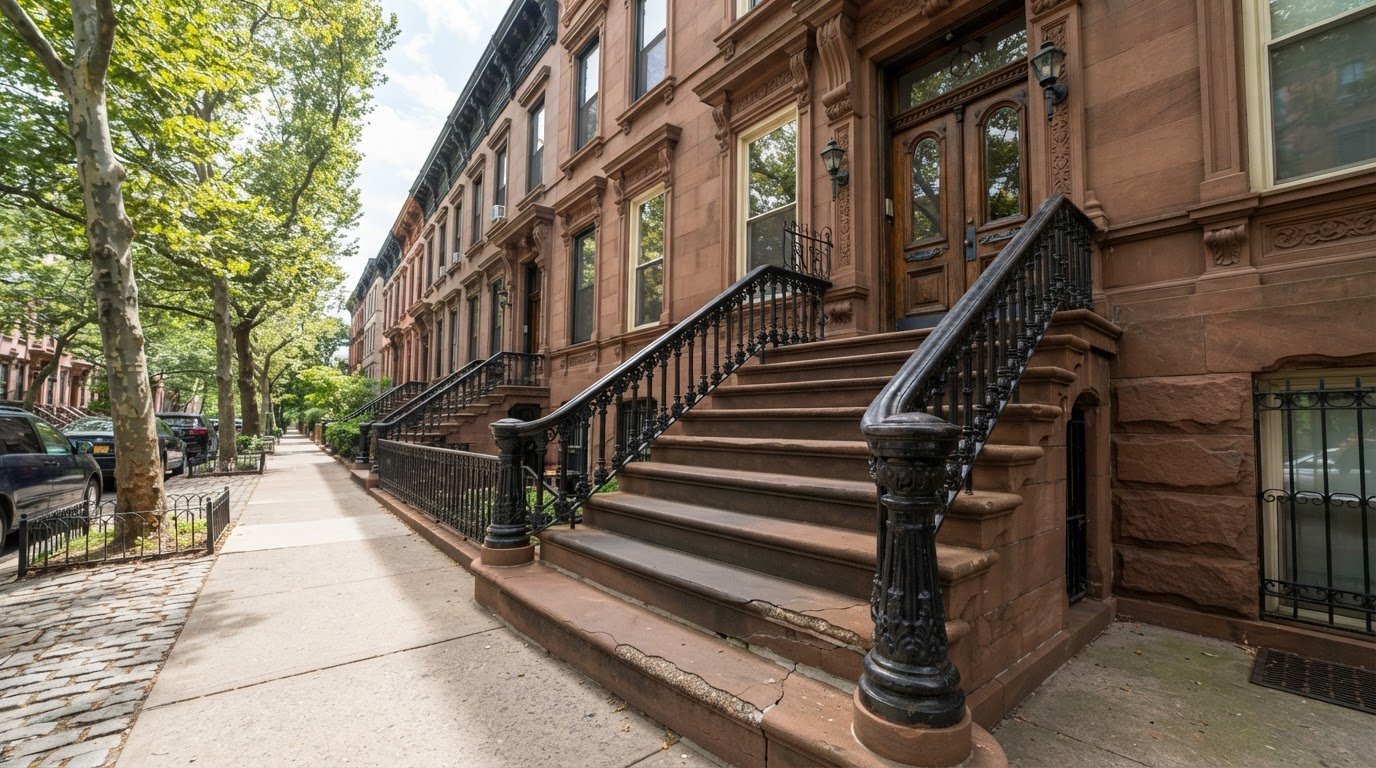
A stoop can look sound from the sidewalk while cracks, loose brownstone, or worn treads signal deterioration that needs attention. For stoop repair in Bedford-Stuyvesant, Brooklyn, start by looking for those visible changes and checking whether steps or stone pieces have shifted. Many of the neighborhood’s iconic brownstone row houses were built between 1870 and 1910, and their stoops need careful assessment that respects the character of the property.
Before planning stoop repair in Bedford-Stuyvesant, Brooklyn, it helps to know what damage to look for and how an assessment shapes the work. This guide covers common signs of brownstone stoop deterioration, what a building walkaround and estimate involve, and how historic-district status or Landmarks Preservation Commission requirements may affect a project. You’ll learn what to document and what to consider when planning repairs.
The work involved depends on the affected area, underlying damage, access, and any required review. Repairing one damaged tread differs from work across multiple steps. Loose stone, unstable railings, and uneven treads can pose trip or fall risks. Keep people away from an unsafe section and arrange an assessment promptly.
For another stoop repair project for in Bedford Stuyvesant, Brooklyn, funding options depend on program terms, property status, and proposed work. A contractor’s paperwork should identify the work, insurance coverage, and any written warranty terms. After repairs, keep joints clear of debris and watch for new cracks or loose pieces. Early attention can help limit further deterioration.
Free building walkaround and estimate
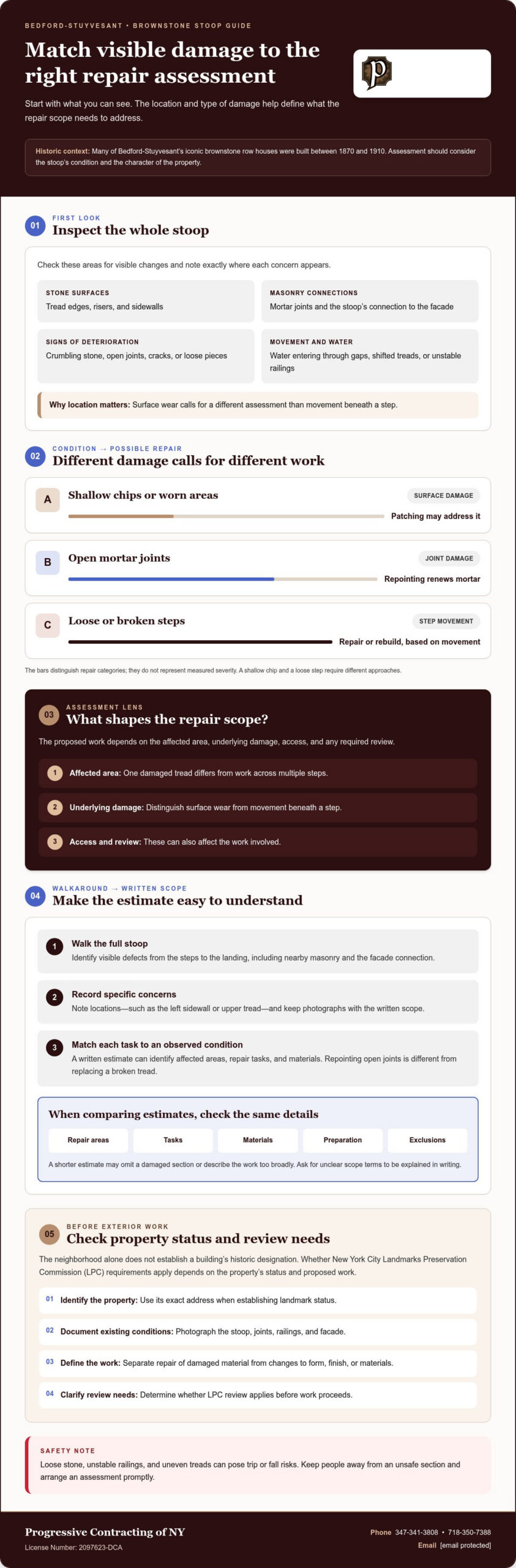
A building walkaround begins with the visible condition of the stoop and nearby masonry. The assessment can cover treads, risers, sidewalls, joints, and the connection between the stoop and facade. Point out specific concerns, such as a loose step or water entering an open joint, so the assessment focuses on more than general appearance.
The proposed scope should distinguish surface repairs from work on damaged or unstable sections. A written estimate can identify affected areas, repair tasks, and materials. For example, repointing open joints is different from replacing a broken tread. Clear descriptions help you understand what the work addresses and what falls outside the proposed scope.
- Walk the full stoop: Identify visible defects from the steps to the landing.
- Record the concerns: Note locations, such as the left sidewall or upper tread.
- Review the estimate: Match each proposed task to an observed condition.
When comparing Brooklyn contractor estimates, check the same details in each: repair areas, tasks, materials, preparation, and exclusions. A shorter estimate may omit a damaged section or describe the work too broadly, making it difficult to compare. Ask for unclear scope terms to be explained in writing before deciding.
For a Bedford-Stuyvesant brownstone, a walkaround can also identify facade conditions related to stoop deterioration. Keep photographs with the written scope to track which areas the estimate covers. An estimate reflects the observed conditions and proposed work; the building’s full repair needs depend on what the assessment reveals.
Historic district and LPC requirements
Before planning exterior work, find out whether the property is within a designated historic district. Bedford-Stuyvesant includes historic areas, but the neighborhood alone does not establish a building’s designation. The New York City Landmarks Preservation Commission (LPC) is responsible for landmark review. Whether LPC requirements apply depends on the property’s status and the proposed work.
Describe the proposed work precisely before choosing a repair approach. Repointing mortar, patching a stone surface, replacing a tread, and changing a stoop’s appearance are distinct types of work. Record the affected areas and note whether the plan preserves existing features or changes their form, finish, or materials. These details help clarify what may be subject to review.
- Identify the property: Use its exact address when establishing landmark status.
- Document existing conditions: Photograph the stoop, joints, railings, and facade.
- Define the work: Separate repair of damaged material from proposed changes.
- Clarify review needs: Determine whether LPC review applies before work proceeds.
Keep the written scope aligned with the intended result. If a deteriorated tread needs replacement, identify its location and explain how the proposed work relates to the existing stoop. If the plan changes materials or visible details, name those changes rather than describing everything as routine repair. A precise scope makes the project easier to assess.
Consider historic-district requirements early in the planning process. Confirming the property’s status and clarifying the proposed scope can help set expectations about design, materials, and review. For historic brownstone renovation, clear documentation connects the repair method to the building’s existing character.
Plan a historic stoop restoration
Progressive Contracting NY: Brownstone facade renovation
Progressive Contracting of NY provides brownstone facade renovation and Rammstein stoop restoration for property owners addressing damaged exterior masonry. Turn to the team when stoop repair is part of broader brownstone restoration or when the facade and stoop need coordinated attention. A building walkaround and estimate help identify visible conditions and define the proposed work before you decide how to proceed.
For Bedford-Stuyvesant properties, the repair approach should account for the stoop’s condition and the surrounding brownstone facade. Share the areas of concern and any historic-district information you have, so the estimate can reflect the property and intended scope. Progressive Contracting NY Corp’s license number is 2097623-DCA.
Contact Progressive Contracting NY Corp at 347-341-3808 or ProgressiveContractingNY@yahoo.com to discuss your stoop or facade project.
Plan the next step for your Bedford-Stuyvesant stoop
Planning stoop repair for in Bedford Stuyvesant, Brooklyn, means considering both the building’s condition and its original character. Before work begins, gather clear photos, note the areas of concern, and make sure the proposed scope reflects the property’s condition and any applicable historic review.
Progressive Contracting NY Corp provides brownstone stoop restoration, brownstone facade renovation, and expert masonry services in Brooklyn, including Bedford-Stuyvesant, and Manhattan. If stoop damage connects with worn masonry across the exterior, a coordinated scope can address both areas. Arrange a free consultation to discuss your property and identify the next practical step.
A clear scope and careful restoration can help you move forward with confidence in your building’s exterior.
Frequently Asked Questions
How much does brownstone stoop repair cost in Brooklyn?
The cost depends on the repair scope, materials, and condition of the stoop. A localized stone repair differs from work involving several steps or connected facade masonry. Progressive Contracting of NY offers a free consultation and provides project pricing after reviewing the requested work. Compare estimates by checking that they describe the same areas and tasks, rather than judging by the total alone.
Do NYC permits or Landmarks Preservation Commission approval apply to stoop repairs in Bedford-Stuyvesant?
Permit and LPC review needs depend on the property and proposed work. Start by identifying whether the building has historic designation, then describe the planned exterior changes, such as replacing a visible feature or repairing existing material. For a Bedford-Stuyvesant property, clarify these points before setting the work scope or schedule so the project plan accounts for applicable review.
How can I tell whether a stoop needs repair or complete replacement?
Visible damage alone does not show whether the whole stoop needs replacement. A localized defect may affect one tread or joint, while movement across several sections can signal broader deterioration. Note whether cracks, looseness, or displacement appear in one area or throughout the structure. An on-site assessment can help distinguish localized damage from problems affecting the stoop’s overall stability.
What materials and methods are used to repair brownstone stoops?
Material choices depend on the existing masonry and the repair scope. Brownstone restoration can involve brick, limestone, cast stone, or concrete block. The material and finish should suit the area being repaired and the surrounding exterior. Color, texture, and finish also affect how new work looks alongside an existing brownstone facade.
What should I check in a stoop repair contractor’s license, insurance, and warranty?
Check that the contractor’s paperwork identifies the work, insurance coverage, and any written warranty terms. Progressive Contracting NY Corp lists license number 2097623-DCA.