
What Is Interior Waterproofing for Basements and Foundations?
A damp or flooded basement is more than just a nuisance; it can undermine the structural integrity of your home, encourage mold growth and create unhealthy indoor air conditions. Homeowners who experience wet basements often look for solutions that are effective, budget‑friendly and minimally disruptive. Interior waterproofing has become a popular approach because it focuses on managing water once it enters the structure rather than excavating outside the foundation. For Progressive Construction customers and readers who are researching interior foundation waterproofing, this article provides a comprehensive overview of causes, methods, benefits and important regional considerations. We will also highlight the differences between interior and exterior systems and how professional contractors—including companies in Los Angeles that handle interior repairs and exterior waterproofing for leak issues—can help you select the right solution.
Understanding Interior Waterproofing
What is interior waterproofing?
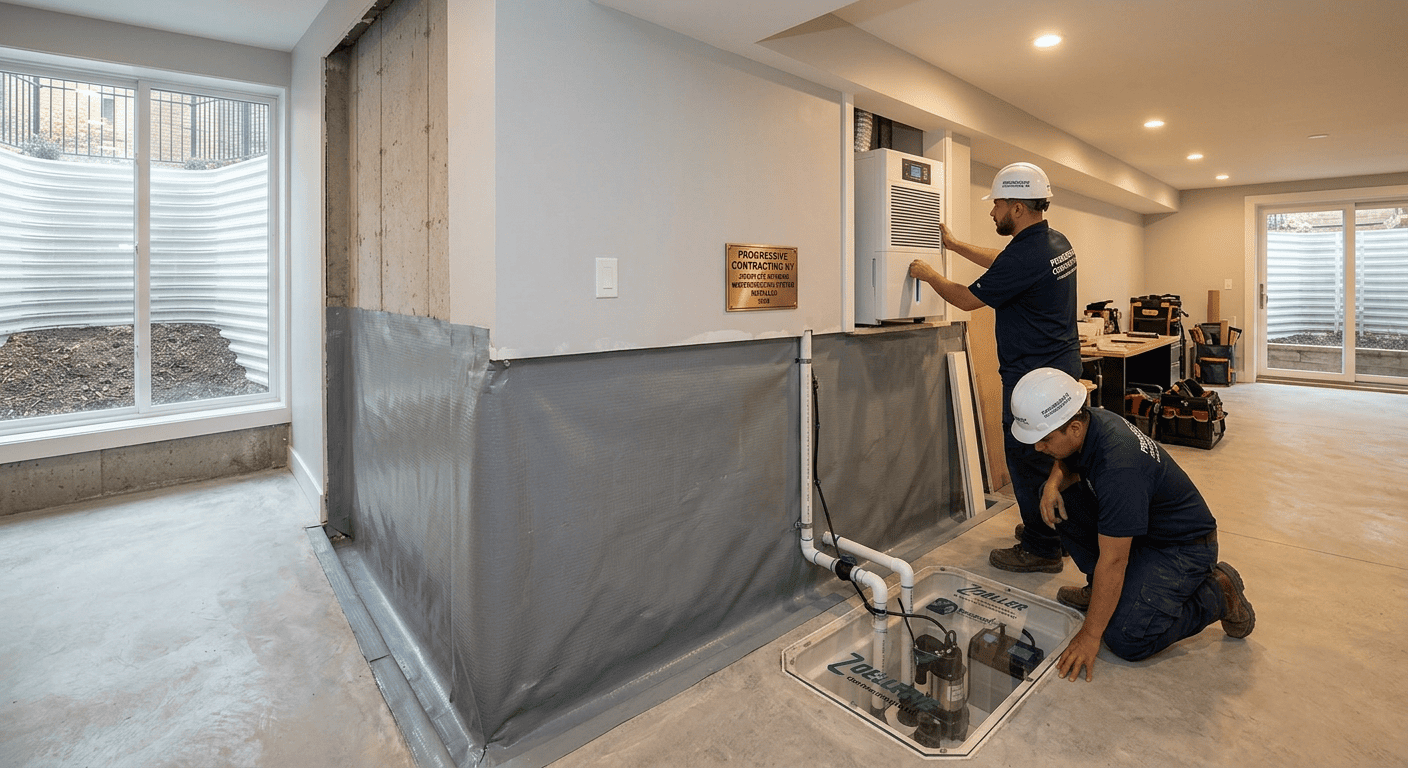
Interior waterproofing is the process of treating the inside surfaces of basements or foundations so that water infiltration is managed and channeled away. An authoritative article from Polyguard explains that waterproofing interior basement walls involves applying a waterproof material to the inside surfaces of the basement to prevent moisture from penetrating the walls and floors. Unlike exterior systems that block water from reaching the foundation, interior techniques deal with seepage and condensation from within. The goal is to control water after it enters, protect the structure, and preserve indoor air quality.
Interior waterproofing is particularly useful when exterior excavation is impractical or too expensive, such as in densely populated urban settings. The interior waterproofing system can be installed with minimal disruption to landscaping and existing structures. It works by capturing water through drain tiles, vapor barriers and and directing it safely away from living spaces. Proper basement interior waterproofing creates a continuous barrier that reduces humidity and prevents mold.
How Interior Foundation Waterproofing Works
Homeowners often wonder if to choose interior or exterior waterproofing. Exterior waterproofing is proactive; it prevents water from ever touching the foundation. It requires excavation around the house to apply waterproof membranes, install French drains and backfill, which makes it more expensive and disruptiv. Interior waterproofing is reactive; it manages water after it enters the structure. A blog from Frontier Foundation & Crawl Space Repair notes that interior systems cost less, can be installed quickly (often within a few days) and do not require heavy equipment. However, because the foundation is still exposed to moisture, some minor seepage may continue, and a sump pump is required for ongoing operation.
When comparing the two, consider your budget, property configuration and severity of water problems. New construction projects or severe hydrostatic pressure may warrant an exterior solution, while existing homes with moderate leaks often benefit from interior basement waterproofing systems. In Los Angeles, where soil movement and seismic activity make excavation risky, many property owners opt for a combination: exterior systems where accessible and interior systems where space is limited. Local companies in Los Angeles can inspect foundations and recommend if interior repairs or exterior waterproofing is the best approach for your leak issues.
Causes of Basement Moisture and Leaks
Hydrostatic pressure and groundwater
One of the primary causes of water intrusion is hydrostatic pressure. When soil around a foundation becomes saturated, water exerts pressure against basement walls and floors. Polyguard notes that this pressure forces moisture through cracks and joints, potentially leading to significant structural damage. UltraTech’s guide to basement waterproofing adds that hydrostatic pressure pushes water through small gaps in foundations and is a key factor behind basement dampness. In regions like Los Angeles, expanding clay soils and earthquakes intensify hydrostatic forces, so interior concrete waterproofing combined with exterior drainage may be necessary.
Improper drainage and soil grading
Water problems also arise from poor site grading and inadequate drainage systems. The American Dry Basement Systems article explains that ground sloping towards the foundation allows water to accumulate around the structure, while poor drainage and weak soil encourage water to seep through cold joints and porous walls. UltraTech notes that improper soil grading and inadequate drainage systems contribute to moisture accumulation. Ensuring that gutters, downspouts and surface drainage systems direct water away from the building is a crucial part of interior leak prevention and waterproof basement foundation maintenance.
Poorly maintained gutters and condensation
Clogged or damaged gutters send rainwater toward the foundation, worsening leak problems. Condensation is another contributor; warm indoor air meeting cool basement surfaces produces water droplets that encourage mold growth and damage. A moisture barrier or dehumidifier can help control humidity, but you still need to address cracks and drainage issues.
Cracks and structural weaknesses
Cracks in basement walls, floors and around windows provide direct pathways for water. Interior crack injection using epoxies or urethanes is one method for sealing these defects. Wikipedia points out that in poured concrete foundations, cracks and pipe penetrations are common entry points for seepage. Pressure-injected epoxy or urethane can penetrate and seal these openings. In masonry foundations, interior sealers are less effective for structural issues but can protect against humidity and surface moisture.
Understanding these causes helps homeowners target the root of moisture problems and select the right interior basement sealing, interior foundation sealing and interior moisture mitigation measures.
Interior Waterproofing vs Exterior Waterproofing for Leak Issues
Sealants and waterproof coatings
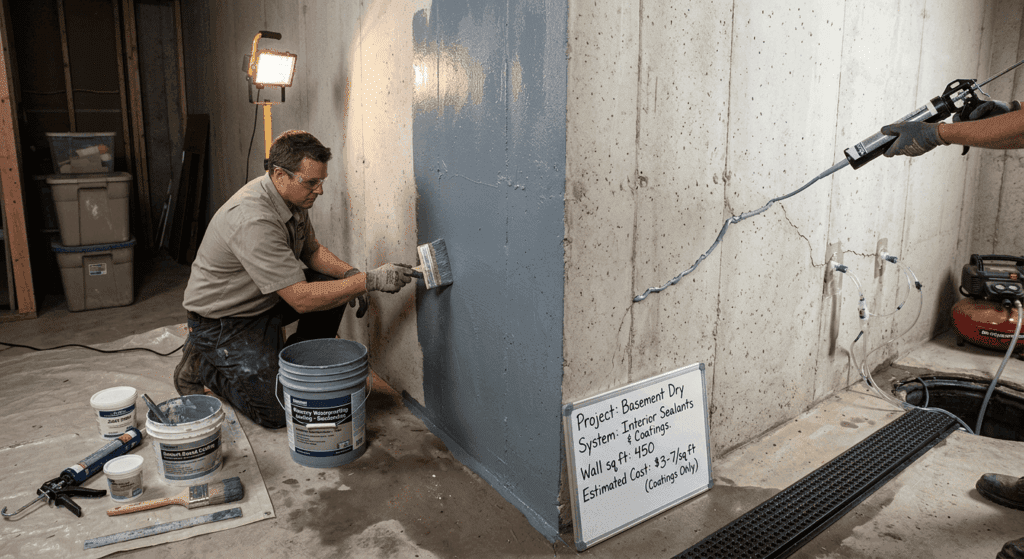
The first line of defense in many interior foundation waterproofing projects is sealing cracks and applying coatings. Polyguard recommends masonry sealants to create a flexible barrier against moisture. It also notes that gap‑filling products like joint fillers use STPE technology to seal substrate imperfections. Wikipedia explains that epoxies and urethanes can be pressure-injected into cracks to cut off the path of seepage. These interior waterproof coating products prevent moisture from wicking through porous concrete and are ideal for minor leaks. However, they do not address hydrostatic pressure or exterior drainage issues on their own.
In basement interior waterproofing, coatings may be cement‑based or elastomeric. Elastomeric coatings flex with slight wall movement and adhere well to concrete. The Stewart Milne guide lists waterproof coatings and sealants at around $3–$7 per square foot, making them a relatively affordable option for waterproofing interior basement walls. For serious water infiltration, coatings should be paired with drainage systems.
Interior drainage and French drains
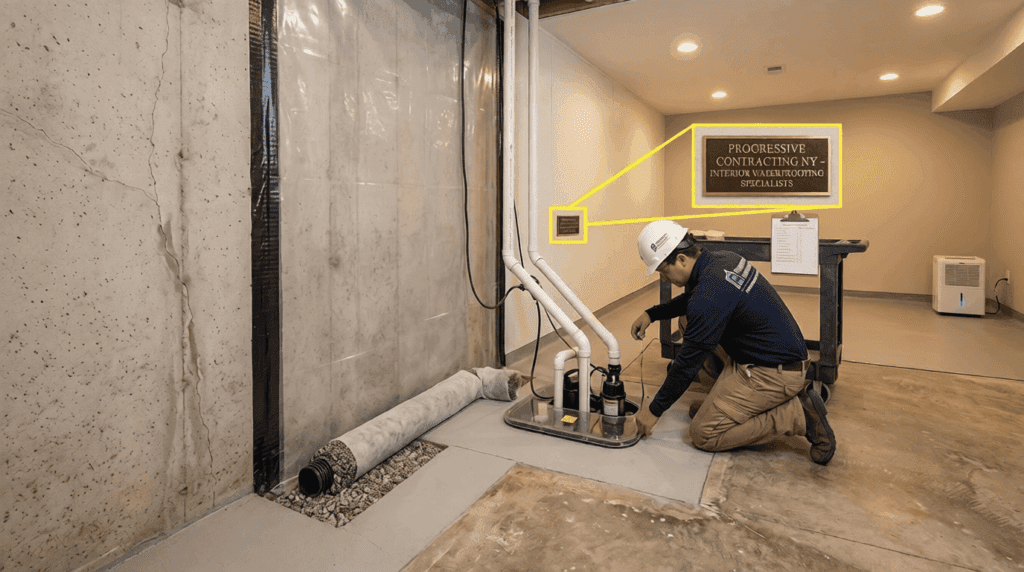
An effective interior waterproofing system includes drains that capture and redirect water. Polyguard’s article describes an interior French drain as a trench around the perimeter of the basement floor that channels water to a sump pump. This method manages groundwater infiltration and hydrostatic pressure. Wikipedia notes that interior drainage systems create channels along the footers, capturing water and directing it to a sump pump. Building officials recognize these systems as effective in controlling basement water.
Nash Distribution elaborates on several interior basement waterproofing systems, including drain tile and baseboard drainage systems designed for different foundation types. Drain tile collects water at the wall/floor joint and sends it to a sump pump, while baseboard systems install above the slab. Stewart Milne explains that an interior drain tile system involves cutting a trench along the inside perimeter, placing a perforated pipe surrounded by drainage stone and covering it with new concrete. This interior water control system keeps water from spreading across the basement floor and directs it to the sump basin.
Sump pumps and interior water control
Sump pumps are essential to move collected water out of the basement. Polyguard notes that collect water from French drains or directly from the floor and pump it out of the building. Frontier’s blog recommends using a backup battery‑operated sump pump to prevent flooding during power outages. Stewart Milne states that a primary pump installation costs around $800–$2,000, while a battery backup costs $600–$1,500. Many interior basement waterproofing products integrate with drainage channels, vapor barriers and dehumidifiers to create comprehensive interior sump pump installation systems.
Vapor barriers and interior waterproof membranes
To control humidity and direct moisture into drainage channels, vapor barriers (also called wall liners or membranes) are used. Polyguard mentions reinforced wall liners that, when combined with drainage systems, channel water away from the interior. AquaGuard’s WallSeal™ vapor barrier is a 12‑mil thick membrane that stops moisture from seeping through walls and directs leaks into the BasementGutter internal drainage system. It is mold‑resistant and can be paired with a sump pump and dehumidifier for complete protection. These membranes serve as an interior moisture barrier, reducing humidity, protecting stored items and improving indoor air quality.
Crack injections and foundation repairs
For isolated leaks, crack injection seals cracks with epoxy or polyurethane. According to UltraTech, foundation crack injections involve injecting liquid polyurethane or epoxy into cracks; the material hardens and forms a waterproof barrier. Stewart Milne notes that crack injection typically costs $300–$1,000 per crack. High‑pressure injections not only stop water from entering but also reinforce weakened sections of concrete. HomePro Green Remodeling’s article highlights that Los Angeles waterproofing contractors use epoxy injections and polyurethane sealants to seal cracks and reinforce basement walls.
Dehumidifiers and moisture control
After sealing and draining water, controlling humidity is vital for preventing condensation and mold. Maryland Mold & Waterproofing explains that interior waterproofing often includes installing a dehumidifier to regulate humidity levels. Dehumidification helps protect surfaces and maintain comfortable living conditions, complementing interior damp proofing and interior moisture mitigation measures.
Interior foundation sealing and basement sealing products
Beyond waterproof coatings, some systems use positive air pressure or cavity drain membranes for interior basement sealing. Permadry membranes create a channel for moisture behind wall coverings, directing it to drainage systems. In interior foundation sealing, contractors may use hydraulic cement or polymer-based cements to patch holes, seal cold joints and create a continuous moisture barrier. Combining membranes, sealants and drainage ensures the waterproof interior of basements and cellars.
Benefits of Interior Waterproofing
Interior waterproofing offers numerous advantages beyond keeping your basement dry.
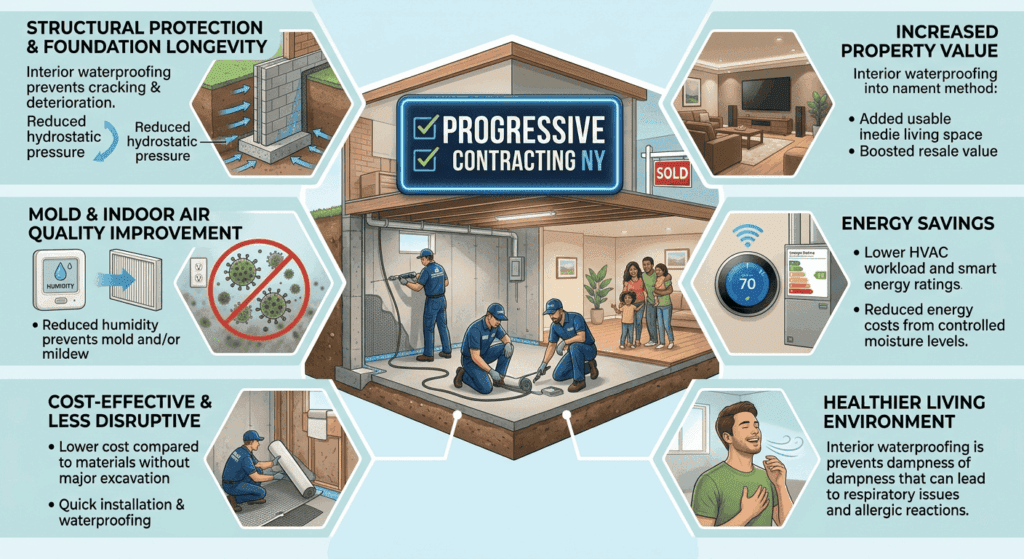
- Structural protection and foundation longevity. Preventing constant moisture exposure reduces hydrostatic pressure on walls and footings, protecting the waterproof basement foundation from cracking and deterioration. Polyguard stresses that addressing interior seepage prevents structural damage.
- Mold and indoor air quality improvement. High humidity and dampness encourage mold growth. AquaDry points out that interior waterproofing reduces humidity and thus helps prevent mold and mildew, safeguarding health and indoor air quality.
- Cost‑effective and less disruptive. Interior systems are often less expensive than exterior methods because they require no major excavation. Stewart Milne lists cost ranges for interior materials, which are generally budget‑friendly. Many interior waterproofing Toronto contractors and U.S. companies complete installations within two to three days.
- Increased property value. A dry, finished basement adds usable living space and appeals to buyers. HomePro Green Remodeling notes that documented foundation repair and waterproofing systems boost a property’s resale value and provide long‑term investment protection.
- Energy savings. UltraTech’s guide explains that reducing moisture levels in the home lowers the workload on HVAC systems, reducing energy costs.
- Healthier living environment. Mary land Mold & Waterproofing explains that interior waterproofing prevents dampness that can lead to respiratory issues and allergic reactions. A dry basement fosters a healthier and safer home environment.
Choosing the Right Interior Waterproofing System
Selecting the best interior waterproofing system requires evaluating the severity of moisture problems, foundation type, accessibility and budget. Here are factors to consider:
Assess the moisture source and severity
Determine if water is entering through cracks, porous concrete, window wells, or due to hydrostatic pressure and poor drainage. A thorough inspection by a professional helps identify the causes. For minor leaks, sealants and coatings may suffice. For persistent moisture or flooding, a comprehensive system that includes drainage, sump pump and vapor barrier is necessary.
Evaluate your foundation and basement use
Consider if your basement is finished or unfinished. Finished spaces benefit from interior drain tile systems and vapor barriers because they protect floors and walls without disrupting living areas. Unfinished basements may allow easier installation of trench drains and . Homes with monolithic slabs might require baseboard drainage systems.
Consider cost and long‑term maintenance
Interior waterproofing costs vary by system complexity. Stewart Milne provides cost ranges for drain tile, , vapor barriers and crack injections. Keep in mind that sump pumps require periodic maintenance and battery replacement. Some systems also need filters cleaned or check valves replaced. When budgeting, factor in both initial installation costs and ongoing maintenance.
Hire reputable contractors
Interior waterproofing is specialized work. American Dry Basement Systems warns that the industry is unregulated and some sellers promote inferior systems that require constant maintenance. Research contractors, read reviews and ask about certifications. In Los Angeles, IHC Construction Group offers interior and exterior waterproofing solutions, including drainage systems, sump pumps, crack repairs and vapor barriers. HomePro Green Remodeling highlights the importance of tailored solutions to address soil shifting, seismic activity and heavy rainfall. For homeowners in Toronto, numerous interior waterproofing Toronto specialists provide similar services adapted to cold climates and high water tables.
Plan for moisture mitigation and prevention
Preventing future leaks requires addressing exterior grading, gutter maintenance and window well drainage. First Choice Waterproofing notes that interior waterproofing manages water after it enters; however, it does not address exterior drainage problems. Combine interior work with proper landscaping, extended downspouts and gutter maintenance to reduce water load on the foundation.
Special Considerations for Los Angeles and Other Regions
Los Angeles presents unique challenges for interior foundation waterproofing. Homes sit on soils prone to expansion and contraction due to seismic activity and seasonal rainfall. HomePro Green Remodeling explains that earthquakes and soil movement exert hydrostatic pressure on foundations; waterproofing systems create a barrier that protects your property from these forces. The company also notes that heavy rainfall during El Niño events can cause flooding when homes have poor grading or drainage. Interior systems with vapor barriers, and drainage channels help manage water infiltration when excavation is impractical.
Given the region’s high property values, protecting basements and crawl spaces from moisture is a sound investment. Many companies in Los Angeles specialize in combined interior repairs and exterior waterproofing to solve leak issues. IHC Construction Group installs interior drainage systems, sump pumps and waterproof coatings while also offering exterior membranes and French drains. Their tailored solutions address both immediate moisture problems and long‑term structural protection, reinforcing cracked foundations with epoxy and polyurethane. When selecting a contractor, look for licensing, insurance and experience with local soil conditions.
Elsewhere, homeowners face different challenges. In Toronto, high water tables and freeze–thaw cycles put pressure on basements, making interior waterproofing Toronto an essential service. Many contractors employ similar methods—drain tiles, vapor barriers and crack injections—adapted for colder climates. Regardless of location, the principles remain the same: manage water inside, seal cracks, improve drainage and protect the structure.
Conclusion
Interior waterproofing is a practical and often cost‑effective approach to protecting your basement and foundation. By addressing water infiltration from within, you can prevent structural damage, reduce mold growth, improve air quality and increase property value. A comprehensive interior waterproofing system might include sealants, coatings, drain tiles, vapor barriers, crack injections and dehumidifiers. Understanding the causes of moisture—hydrostatic pressure, poor drainage, condensation and cracks—helps you choose the right combination of methods. While exterior waterproofing stops water at its source, interior solutions are ideal for existing homes with moderate leaks, limited exterior access or budget constraints.
Homeowners in regions like Los Angeles must also account for seismic activity and seasonal rainfall when deciding between interior and exterior methods. Consulting professional companies in Los Angeles or local contractors ensures that your system is designed for the local climate, soil conditions and building codes. If you need interior foundation waterproofing products, a waterproof interior for a finished basement or long‑term interior moisture mitigation, investing in quality materials and expert installation will keep your living space dry and healthy for years to come.