
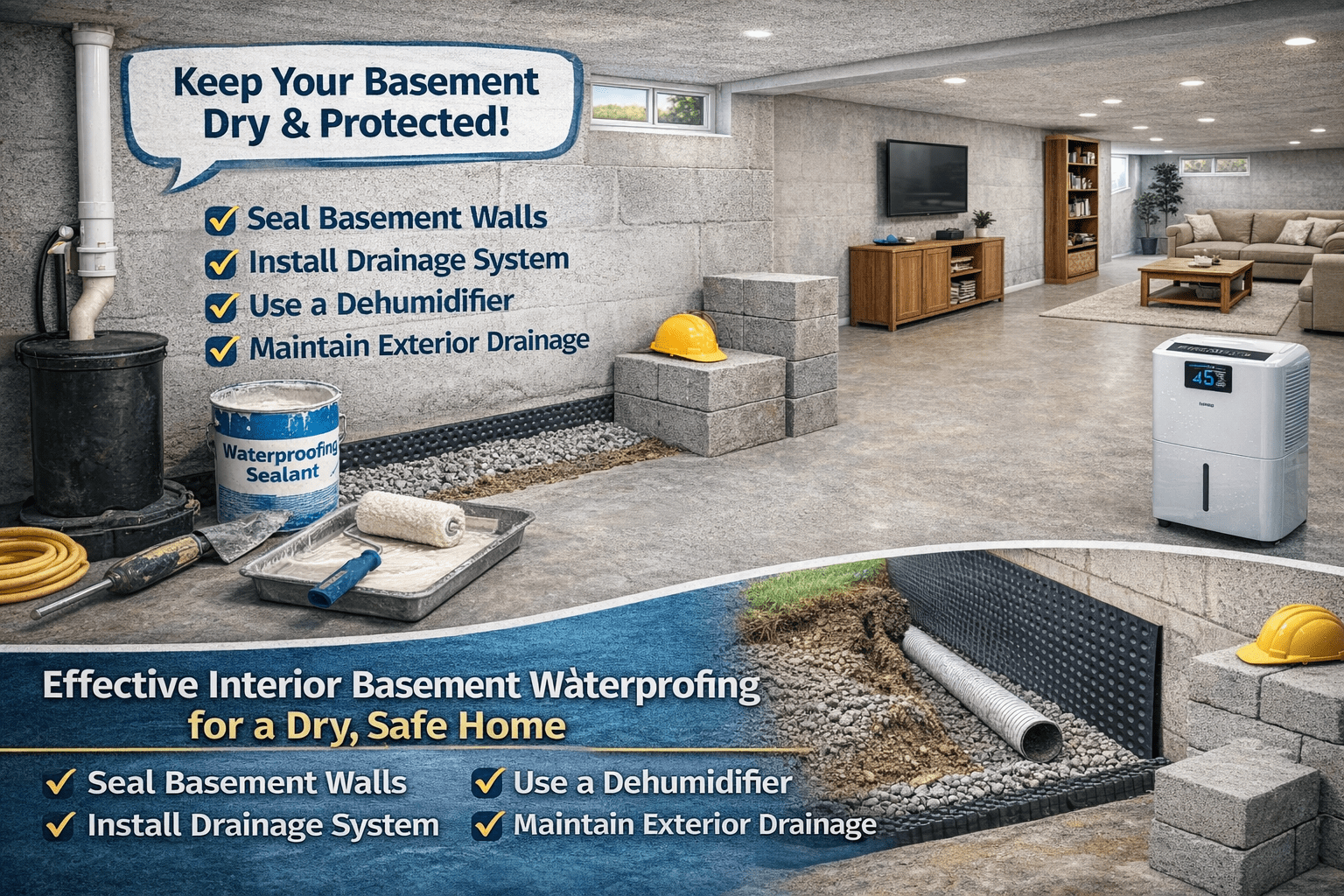
When it comes to protecting your basement from water damage, waterproofing basement walls from the inside is an essential solution for homeowners. If you’re dealing with minor leaks or more significant water infiltration, understanding the best ways to waterproof inside basement walls can save you time, money, and future headaches. In this blog post, we’ll guide you through the process of interior basement waterproofing, from choosing the right methods to applying the best products for a long-lasting solution.
Why Waterproofing Inside Basement Walls Is Essential
Waterproofing basement walls from inside isn’t just a cosmetic fix – it’s a crucial step in preventing water damage, mold growth, and structural issues. Basements are naturally prone to moisture due to their position below ground level, where water seeps in through cracks, foundation walls, and other gaps. Over time, this moisture can lead to serious issues like peeling paint, damaged flooring, and even mold growth, which can affect the air quality in your home.
By focusing on interior basement waterproofing, homeowners can address these problems early before they lead to expensive repairs. Additionally, interior waterproofing methods are often easier to apply and more affordable than exterior solutions.
Common Signs Your Basement Needs Waterproofing
Before diving into the methods of waterproofing interior basement walls, it’s essential to recognize the signs that your basement needs waterproofing:
- Visible Water Stains: If you see wet spots or water stains on your basement walls, it’s a sign that moisture is infiltrating your space.
- Musty Smell: The presence of mold and mildew often causes a musty smell, which is a clear indication of moisture problems.
- Damp Walls: Constantly damp or wet basement walls are a significant sign that your basement is not adequately waterproofed.
- Cracks in the Walls: Cracks in the foundation or walls can be entry points for water.
- Peeling Paint or Wallpaper: Water can cause paint or wallpaper to peel, leaving your walls looking unsightly and susceptible to further damage.
If you’ve noticed any of these signs, it’s time to take action by waterproofing the basement interior foundation leaks.
Managing Hydrostatic Pressure and Water Intrusion
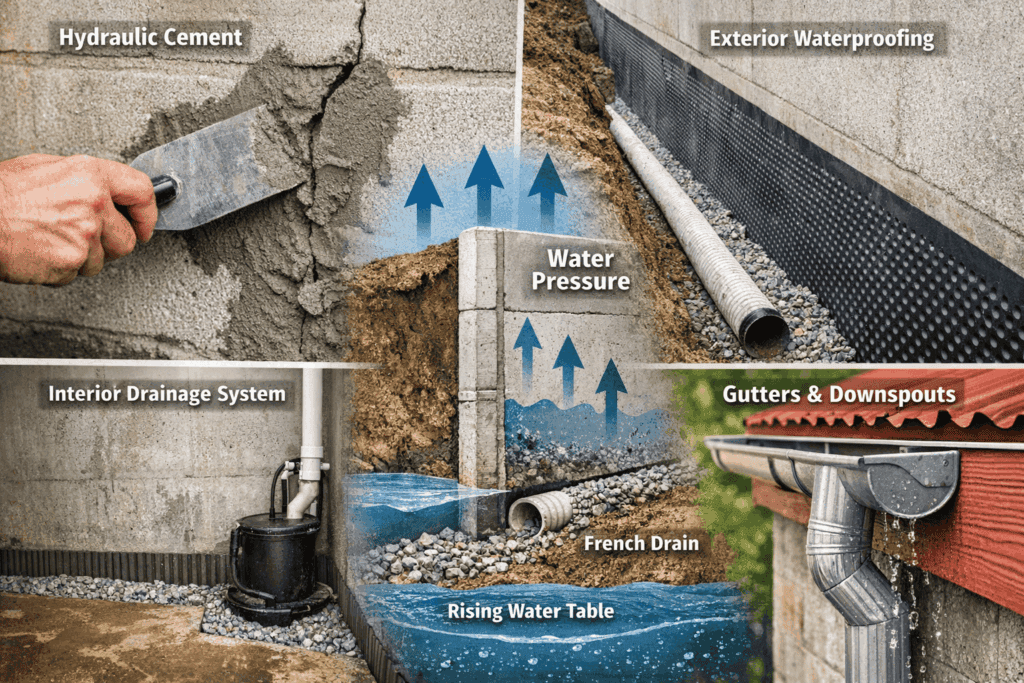
Hydrostatic pressure and water intrusion are common causes of moisture infiltration in basements, often leading to water seepage that can compromise the structural integrity of a home. To address this, an interior drainage system, such as a French drain system, can be installed to redirect water away from the foundation. Exterior waterproofing solutions, including French drains, gutters, and downspouts, work to manage water pressure and prevent water tables from rising. Waterproofing membranes and interior sealants are also essential for protecting against moisture, creating a barrier that keeps water from entering through cracks or porous building materials.
Effective Interior and Exterior Waterproofing Solutions
When dealing with hydrostatic pressure and water intrusion, a professional assessment is crucial to determine the most effective solution for each unique situation. Hydraulic cement can be used to seal cracks and gaps in foundation walls, providing a durable, water-resistant barrier. Exterior waterproofing methods, including French drains and proper gutter systems, work to mitigate water pressure from the outside, while interior drainage and sealants provide an extra layer of protection. By combining these techniques, homeowners can significantly reduce the risk of water damage and maintain a dry, stable living environment.
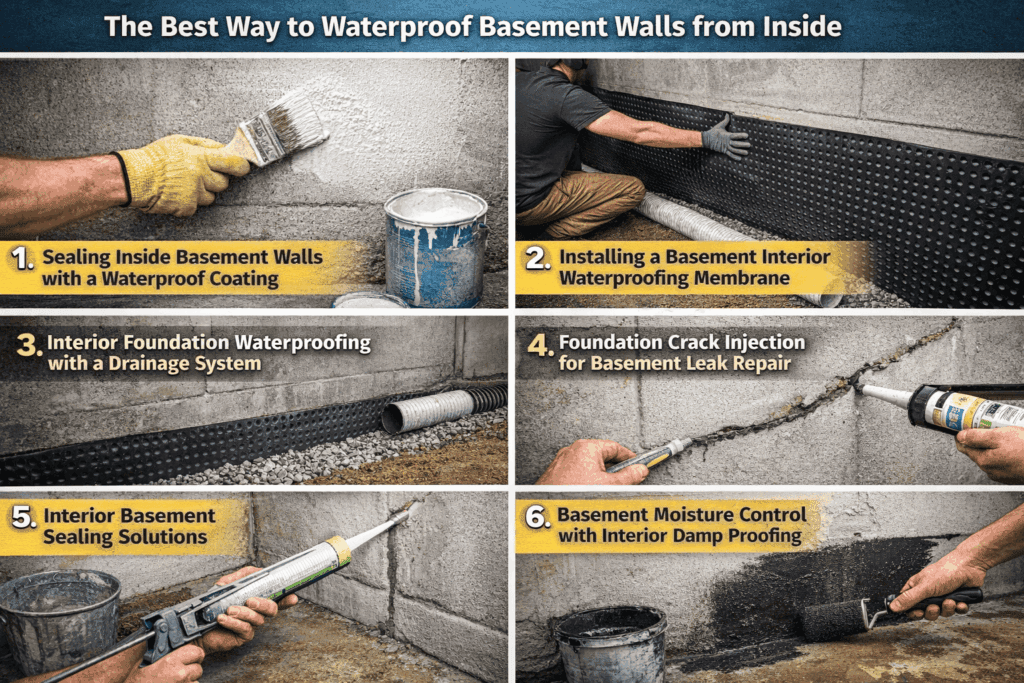
The Best Way to Waterproof Basement Walls from Inside
When considering waterproofing inside basement walls, there are several effective solutions to consider. Each method comes with its advantages and can be tailored to meet your specific needs. Let’s explore the top options available for waterproofing basement walls from inside.
1. Sealing Inside Basement Walls with a Waterproof Coating
One of the most effective methods of waterproofing interior basement walls is applying a waterproof coating. Waterproof basement wall coatings act as a barrier, preventing moisture from seeping through the walls and into the living space. These coatings are available in both liquid and paint-like forms, making them easy to apply directly onto the walls.
- Best for: Homeowners dealing with light to moderate moisture issues in their basement.
- Advantages: Affordable, easy to apply, and can be done as a DIY project.
- Considerations: Not ideal for severe water infiltration or constant flooding.
2. Installing a Basement Interior Waterproofing Membrane
Another reliable method of waterproofing basement walls from the inside is using an interior basement waterproofing membrane. This barrier system is designed to cover the entire interior basement wall, protecting it from moisture and leaks. The membrane is typically installed by applying adhesive directly to the walls, creating a waterproof barrier that prevents water from reaching the foundation.
- Best for: Homes with high humidity levels or frequent water infiltration.
- Advantages: Highly effective in sealing walls and controlling moisture.
- Considerations: Requires professional installation to ensure a proper seal.
3. Interior Foundation Waterproofing with a Drainage System
For more severe moisture problems, combining basement interior waterproofing with a drainage system can be the best way to waterproof basement walls. This system involves the installation of an interior drainage channel along the foundation walls, directing water to a sump pump or drain. This solution helps manage and prevent standing water in the basement, making it ideal for homes with recurring flooding.
- Best for: Basements that experience heavy rain, groundwater seepage, or flooding.
- Advantages: Effective for handling substantial water issues.
- Considerations: Involves digging up the floor and professional installation.
4. Foundation Crack Injection for Basement Leak Repair
Foundation cracks are one of the primary entry points for water into your basement. If you notice cracks in your basement walls, foundation crack injection is an effective way to seal and waterproof these openings. This method involves injecting a polyurethane or epoxy resin into the crack, which expands and hardens to form a watertight seal.
- Best for: Homes with significant foundation cracks that allow water to leak in.
- Advantages: Permanent solution for sealing cracks and preventing water seepage.
- Considerations: Professional installation is typically recommended to ensure proper application.
5. Interior Basement Sealing Solutions
Sealing the interior basement walls is an essential step in preventing water infiltration. A combination of water-resistant paints, sealants, and caulking can provide an effective barrier against moisture. Regular maintenance of these seals is crucial to ensure long-lasting protection.
- Best for: Homeowners seeking a simple and affordable method to control basement moisture.
- Advantages: Quick, cost-effective, and easy to apply.
- Considerations: May require reapplication over time, especially in areas with high moisture levels.
6. Basement Moisture Control with Interior Damp Proofing
Damp proofing the interior walls of your basement is another effective method for controlling moisture. This process involves applying a damp-proof membrane (DPM) or damp-proof paint to the basement walls, which helps prevent water from entering. This method works well for areas with low to moderate moisture issues.
- Best for: Homes in areas with high groundwater levels or moisture-laden soils.
- Advantages: Relatively inexpensive and simple to apply.
- Considerations: Not suitable for basements with severe flooding problems.
Additional Tips for Basement Waterproofing
To further enhance your basement waterproofing efforts, here are a few additional tips that can help you maintain a dry and moisture-free environment:
1. Proper Drainage Around Your Home
In addition to waterproofing inside basement walls, it’s essential to address exterior drainage. Ensure that gutters, downspouts, and grading around your home direct water away from the foundation. This reduces the risk of water pooling near your basement walls, ultimately improving the effectiveness of your interior waterproofing.
2. Regular Maintenance and Inspections
Waterproofing your basement is not a one-time task. Regularly inspect your basement for any signs of leaks, moisture buildup, or damage to your waterproofing systems. If you notice any issues, take corrective action immediately to prevent long-term damage.
3. Invest in a Dehumidifier
Installing a dehumidifier in your basement can help control moisture levels, especially in damp or humid climates. A dehumidifier helps maintain an optimal moisture level in your basement, complementing your waterproofing efforts.
Conclusion: Ensuring Long-Term Protection with Interior Basement Waterproofing
Waterproofing basement walls from the inside is a proactive and cost-effective solution to protect your home from water damage. If you’re dealing with minor leaks or severe flooding, the right interior waterproofing system can provide long-lasting protection. From sealing basement walls with a waterproof coating to installing a comprehensive drainage system, there are several methods to choose from depending on the severity of your water issues.
For the best results, consult a professional waterproofing contractor who can assess your basement’s needs and recommend the most effective solution. By investing in interior basement waterproofing, you’ll safeguard your home against water damage, mold growth, and foundation issues for years to come.
Remember, the best way to waterproof basement walls is to start early. Don’t wait for water to damage your home – take action today and enjoy a dry, secure basement tomorrow!