
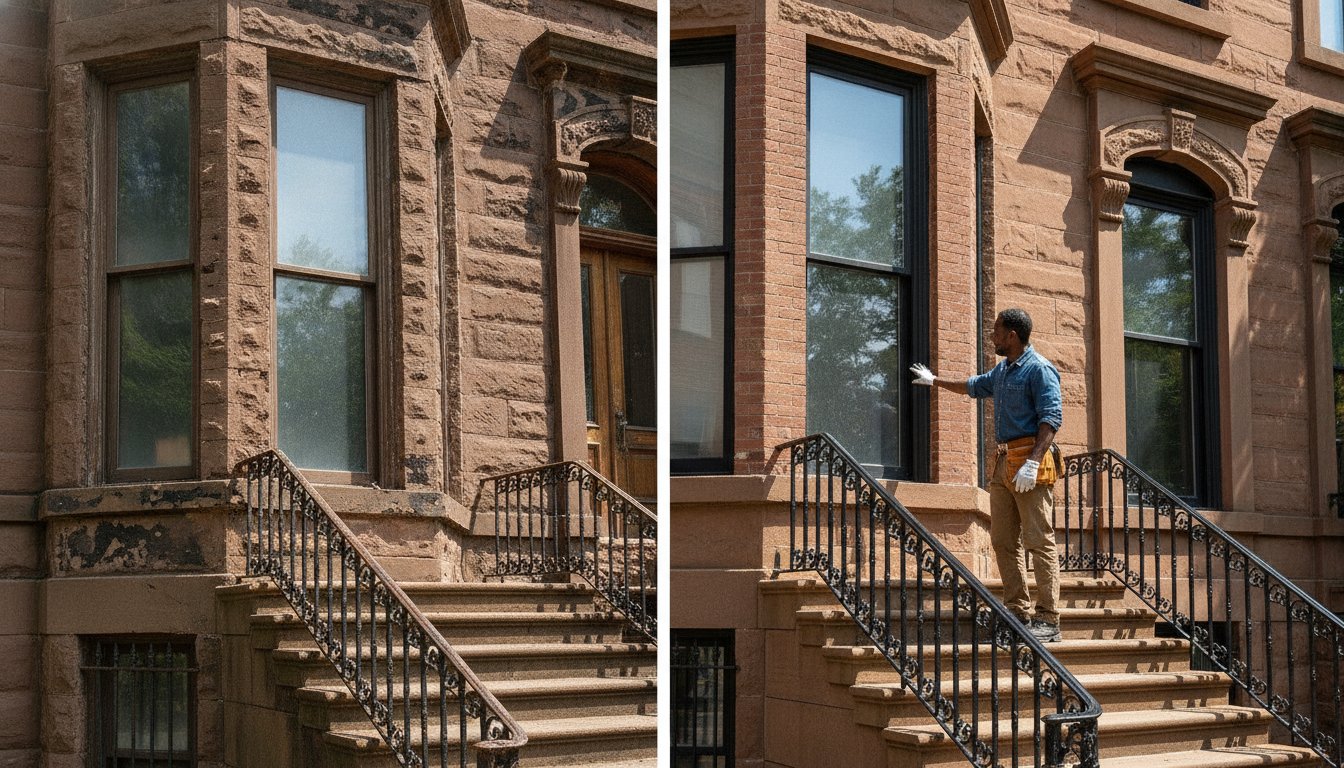
Could a single patch of mismatched mortar or an unpermitted stoop repair lead to thousands of dollars in Landmarks Preservation Commission (LPC) fines? For many homeowners, the sight of crumbling or spalling brownstone isn’t just an aesthetic issue; it’s a looming structural hazard and a potential NYC DOT sidewalk violation. You want to protect your investment, but the complexities of historic preservation often feel overwhelming.
Finding the right brownstone contractor in Clinton Hill requires a partner who understands the delicate balance between high-level craftsmanship and rigid city regulations. This guide will show you how to evaluate masonry specialists and navigate the specific landmark requirements for your restoration project. We’ll explain the process of securing LPC approvals and addressing structural hazards like failing stoops. By the end, you’ll have a clear framework for achieving a restored facade that meets every city standard and ensures the long-term durability of your home’s masonry work.
Key Takeaways
- Recognize the unique Italianate and Neo-Grec architectural details that define Clinton Hill’s historic character and preservation needs.
- Learn how to evaluate a brownstone contractor clinton hill residents can trust for precise masonry work and landmark compliance.
- Verify a contractor’s technical skills by reviewing their past work on Rammstein stoop restorations and Brooklyn brick pointing projects.
- Understand the importance of a thorough exterior assessment to identify structural vulnerabilities before any restoration work begins.
- See how a structured preparation phase protects neighboring properties and ensures public safety on the sidewalk during construction.
Understanding Clinton Hill Brownstone Restoration Requirements
Hiring a professional brownstone contractor in Clinton Hill isn’t just about finding a mason; it’s about securing a specialist who understands historic facade integrity. The History of Clinton Hill is etched into its Italianate and Neo-Grec architecture, which demands a disciplined approach to preservation. These styles feature intricate details, such as ornate window hoods and incised floral patterns, that require specific technical knowledge to restore correctly. While aesthetic remodeling updates a look, critical masonry restoration preserves the physical life of the building.
Common Facade Issues in Clinton Hill Homes
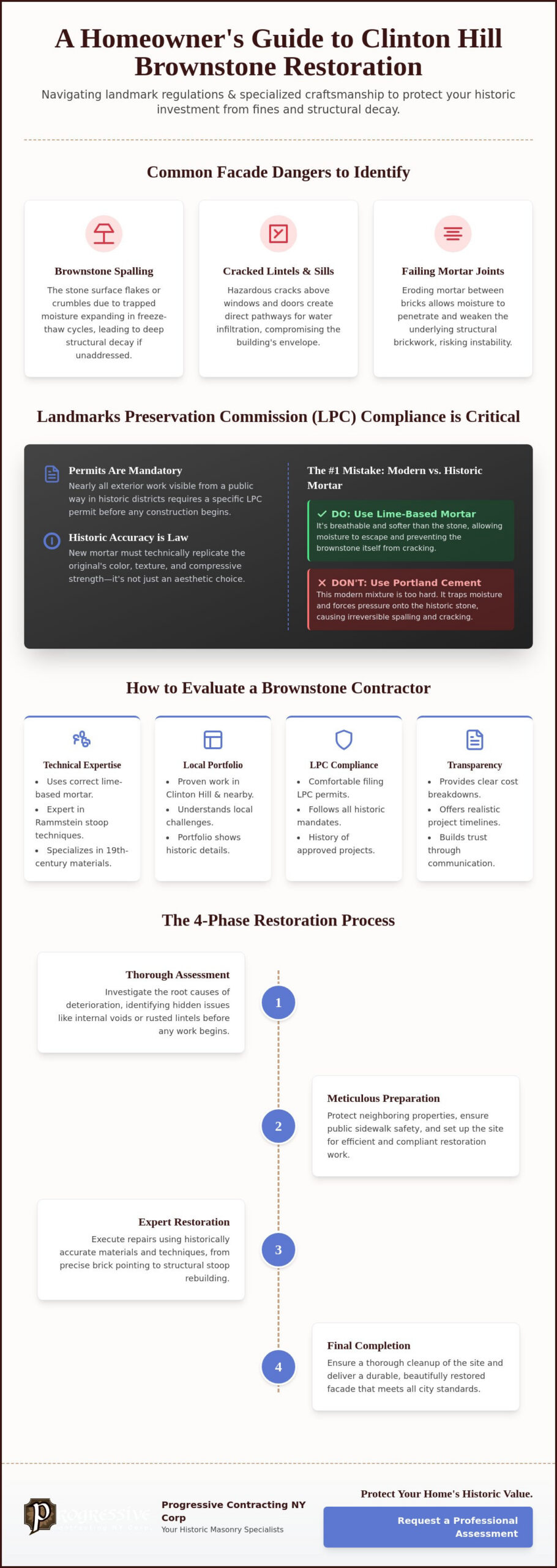
Many property owners encounter brownstone spalling, where the stone surface begins to flake or crumble. This usually occurs when moisture becomes trapped behind the stone’s layers and expands during freeze-thaw cycles. Left unaddressed, spalling leads to deep structural decay. Cracked lintels and sills are equally hazardous because they create direct pathways for water infiltration. You should monitor historic masonry joints for early signs of erosion; failing mortar allows moisture to penetrate the building envelope and weaken the underlying brickwork.
The Role of the Landmarks Preservation Commission (LPC)
Since much of the neighborhood lies within historic districts, the Landmarks Preservation Commission (LPC) regulates nearly all exterior work. Any project visible from a public way requires a specific permit before construction begins. A qualified brownstone contractor in Clinton Hill understands that matching historic mortar is a technical requirement, not an aesthetic choice. The new mortar must replicate the original color, texture, and compressive strength. Using modern, hard Portland cement on soft historic stone often causes irreversible damage, making expert material matching a cornerstone of any successful brownstone restoration project.
How to Evaluate a Brownstone Contractor in Clinton Hill
Selecting the right brownstone contractor in Clinton Hill requires looking beyond a standard portfolio. While we previously highlighted the importance of historic styles, your evaluation should focus on the technical execution of those details. A general contractor might oversee a project, but they often lack the specialized masonry crews needed for high-stakes facade work. You need a partner who understands the physical reality of 19th-century materials and the structural requirements of Brooklyn townhomes.
Vetting for Technical Masonry Expertise
Ask potential contractors about their specific approach to brick pointing. Historic facades require lime-based mortar because it’s breathable and softer than the stone itself. Using modern Portland cement is a common error that leads to stone cracking and accelerated decay. You should also evaluate their experience with Rammstein stoop techniques. These methods are essential for structural stability, ensuring the stoop handles weight and weather without shifting over time. A true specialist handles the entire exterior scope, from the intricate facade carvings to the structural integrity of the sidewalk.
Portfolio and Local References
Look for a portfolio that features completed projects in Clinton Hill, Bed-Stuy, or Park Slope. Local experience matters because these neighborhoods share similar geological and regulatory challenges. The NYC Landmarks Preservation Commission maintains strict oversight in these areas, and your contractor must be comfortable filing permits and following these mandates. To see how these technical standards translate into real-world results, visit Brownstone Repair to view specialized restoration examples.
A reliable partner offers a structured path from the initial assessment to the final cleanup. They provide a transparent breakdown of costs and realistic project timelines. This transparency builds trust and ensures your project stays on track without unexpected delays. If you’re ready to protect your home’s historic value, consider speaking with Progressive Contracting NY Corp, a qualified masonry specialist, to discuss your restoration needs.
The Restoration Process: From Facade to Sidewalk
A successful restoration follows a logical, sequential path. It starts with a thorough exterior assessment to identify hidden structural issues like internal masonry voids or rusted steel lintels. A reliable brownstone contractor in Clinton Hill won’t simply cover up surface damage. They investigate the root cause of deterioration first to ensure the building’s core remains stable. This initial diagnostic phase is the foundation of a durable repair.
The preparation phase is critical for safety and community relations. We install protection for adjacent properties and public walkways to manage dust and debris effectively. Execution then moves into the masonry repairs themselves. This includes meticulous pointing and the replacement of severely spalled stone with materials that meet the strict standards of the NYC Landmarks Preservation Commission. Every repair is performed with a focus on matching the original color and texture of the historic stone.
Finally, we perform a controlled cleaning to remove urban pollutants and biological growth. We then apply breathable masonry sealants to the finished surface. These specialized coatings are essential because they allow moisture vapor to escape from within the wall while blocking external rain. This prevents the internal pressure that causes future flaking and stone failure.
Solving NYC Sidewalk Violations and Concrete Issues
Property owners often face NYC DOT sidewalk violations alongside facade issues. A specialized brownstone contractor in Clinton Hill handles the entire removal process, from obtaining necessary permits to pouring code-compliant concrete. Addressing these violations during a facade project is highly efficient. It ensures your property meets all city safety standards while significantly improving the curb appeal of your home. Proper concrete repair also prevents water from pooling near your foundation, which protects the structural integrity of your stoop and basement.
Long-Term Maintenance for Restored Facades
Preserving your investment requires consistent attention. It’s best to follow a simple seasonal checklist to stay ahead of potential issues:
- Spring: Check for new cracks or mortar erosion after the winter freeze-thaw cycle.
- Fall: Ensure all drainage systems and gutters are clear to prevent water from sitting against the masonry.
- Year-round: Watch for signs of salt crystallization or flaking on the stone surface.
Early intervention on small cracks prevents moisture from reaching the building’s core. This proactive approach saves significant costs over time and maintains the historical value of your property. To ensure your home remains in peak condition, request a professional facade assessment from Progressive Contracting NY Corp today.
Secure the Future of Your Clinton Hill Heritage
Restoring a historic property is a significant responsibility that requires technical precision and a steady hand. By prioritizing specialized masonry knowledge over general construction, you ensure your home survives another century of New York weather. We’ve discussed how matching historic mortar and addressing spalling early can prevent the need for more invasive, expensive repairs down the road. Protecting the building envelope today is the most effective way to maintain its value and structural safety for the future.
A qualified brownstone contractor in Clinton Hill should provide more than just a facade repair. They offer a comprehensive solution that includes everything from expert Rammstein stoop restoration to the removal of frustrating NYC DOT sidewalk violations. With decades of experience in historic Brooklyn masonry, Progressive Contracting NY Corp provides the disciplined expertise needed to navigate complex Landmark requirements while delivering durable results. We focus on transparency and craftsmanship to give you peace of mind throughout the entire project.
Your home is a piece of Brooklyn history that deserves meticulous care and attention to detail. Taking the first step toward a professional assessment ensures your investment remains protected against the elements. Contact Progressive Contracting NY Corp for a Clinton Hill Brownstone Assessment to begin your restoration journey. We look forward to helping you preserve the character and structural integrity of your property.
Frequently Asked Questions
Do I need a permit for brownstone facade repair in Clinton Hill?
Yes, most exterior work in Clinton Hill requires a permit from the Landmarks Preservation Commission (LPC). Because this neighborhood is a designated historic district, any repair visible from a public way must meet strict preservation standards. This includes masonry cleaning, repointing, and stone replacement. A qualified brownstone contractor in Clinton Hill will manage the application process to ensure your project complies with all city regulations and avoids stop-work orders or fines.
What is the difference between brownstone restoration and simple painting?
Restoration focuses on the structural integrity and physical health of the stone, while painting only provides a temporary surface cover. Painting is often detrimental because it traps moisture inside the porous brownstone, which leads to internal pressure and accelerated flaking. Professional restoration involves removing decayed stone, matching historic mortar, and applying breathable sealants. This technical approach preserves the stone’s natural ability to shed water and ensures the facade remains durable for decades.
How long does a typical brownstone facade renovation take in Brooklyn?
A full renovation project typically takes between 12 and 24 months from the initial planning phase to final completion. The timeline is heavily influenced by the permit approval process; for instance, the NYC Department of Buildings (DOB) permitting phase commonly lasts 8 to 14 weeks. The physical masonry work itself depends on the project’s complexity and weather conditions. We prioritize a methodical pace to ensure every detail meets historic standards and structural requirements.
Can a brownstone contractor also help with sidewalk violation removal?
Yes, a specialized brownstone contractor in Clinton Hill can resolve NYC DOT sidewalk violations as part of your renovation scope. Integrating sidewalk repair with facade work is a logical way to address all structural hazards at once while improving your property’s curb appeal. Your contractor handles the permits and ensures the new concrete meets all local sidewalk codes. This coordinated approach provides peace of mind by ensuring your entire property remains in full compliance with city safety mandates.