
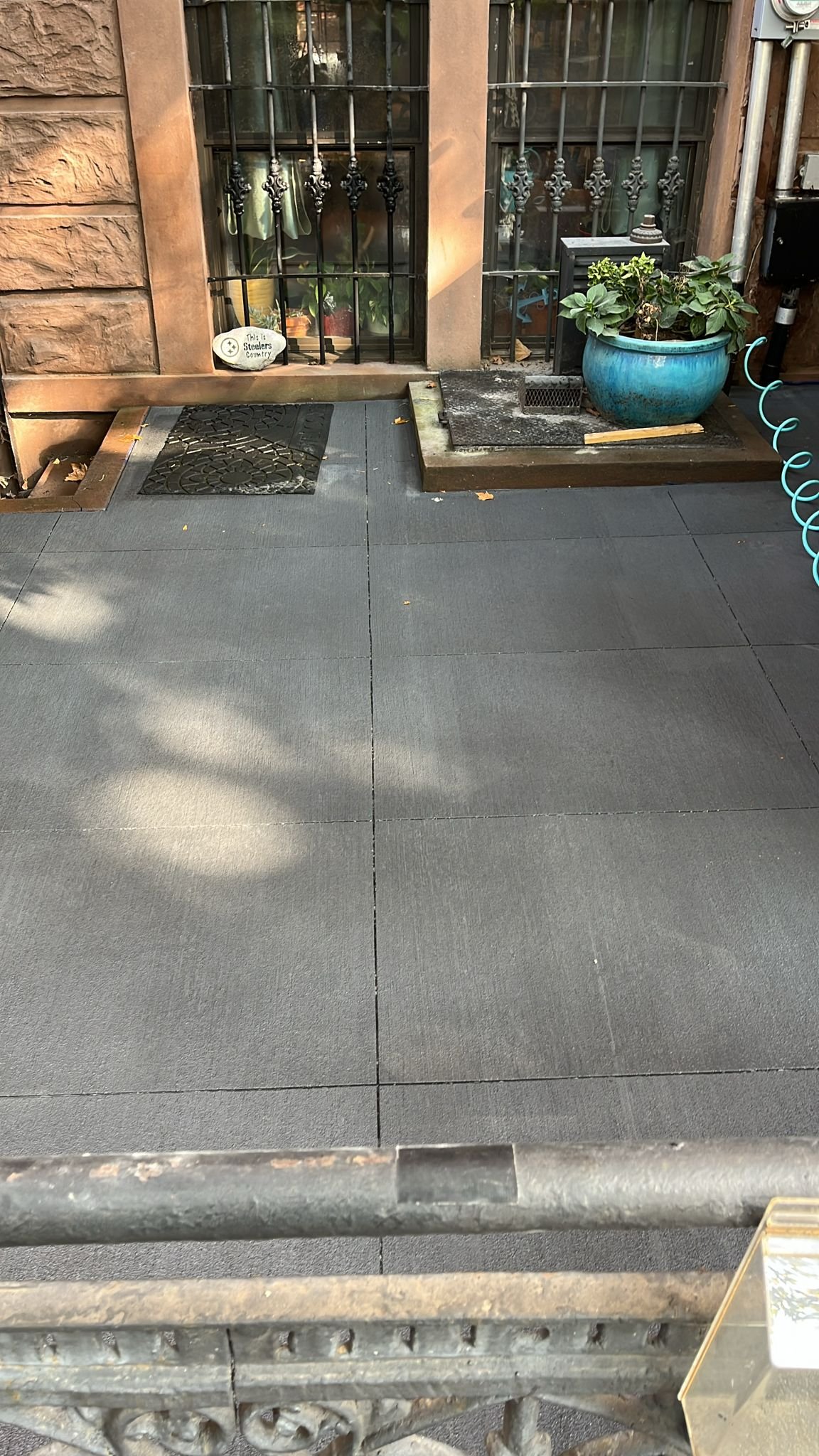
If you’ve received a notice from the NYC Department of Transportation, you aren’t just looking at a cracked piece of concrete; you’re looking at a ticking 75-day clock. Managing a sidewalk violation repair east village requires more than just pouring cement. It involves navigating the specific logistical hurdles of Manhattan and ensuring every permit is filed correctly to avoid the city’s high-cost intervention. We understand that the fear of a DOT lien or the confusion over historic district regulations can be overwhelming for any property owner.
We agree that the process feels designed to be difficult, especially when you’re balancing city mandates with the architectural integrity of an older neighborhood. This guide will show you exactly how to efficiently repair sidewalk violations and clear DOT liens from your East Village property. We’ll walk through the necessary DOT permits, the requirement for a DCWP-licensed contractor, and the specific steps to secure a final dismissal inspection. By following this structured path, you can protect your property value and ensure the work meets every city standard without the stress of unexpected city-mandated costs.
Key Takeaways
- Identify specific sidewalk defects like vertical trips and undermined flags to understand exactly why the DOT issued the notice.
- Act within the 75-day window to maintain control over the project and prevent the City from hiring their own high-cost crews.
- Learn the essential steps for a successful sidewalk violation repair east village, including how to secure DOT permits and schedule a dismissal inspection.
- Understand why hiring a Manhattan-based specialist ensures your project accounts for local logistical challenges and historic district requirements.
Table of Contents
Navigating NYC DOT Sidewalk Violations in the East Village
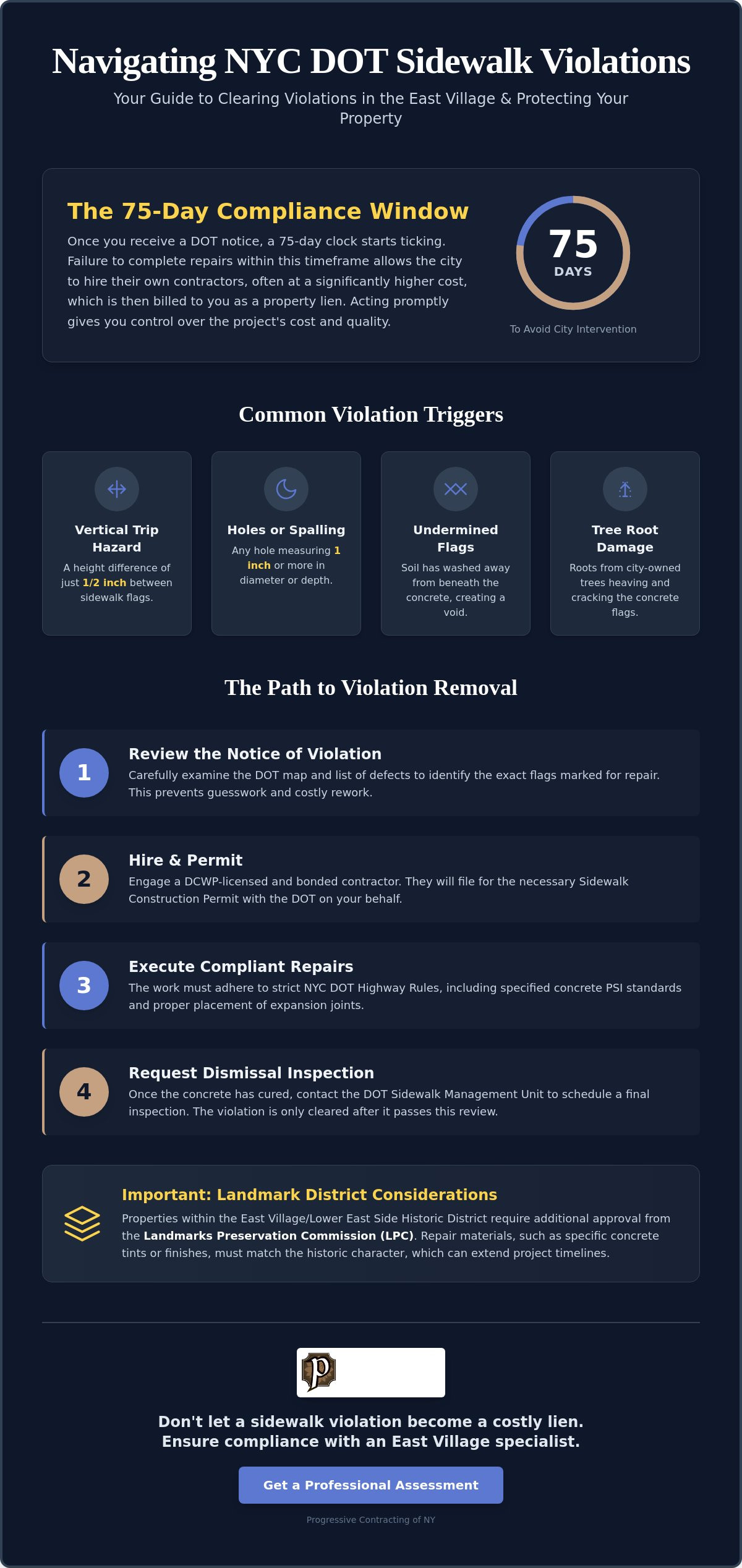
The New York City Department of Transportation (DOT) maintains strict standards for pedestrian safety across all five boroughs. In neighborhoods like the East Village, where foot traffic is constant, a simple crack quickly becomes a significant liability. If you receive a notice, you have exactly 75 days to complete the sidewalk violation repair east village property owners are legally required to perform. If you miss this deadline, the city may hire its own contractor to do the work. This usually results in significantly higher costs that are billed directly to your property tax account.
Property owners often face these violations due to specific physical defects. A vertical trip hazard of just 1/2 inch or a hole measuring 1 inch in diameter will trigger a notice. Additionally, "undermined" flags, where the soil beneath the concrete has washed away, are common triggers in older Manhattan blocks. These issues aren’t just safety hazards; they create a DOT lien against your property. This lien can complicate your financial standing, often preventing you from selling or refinancing your building until the violation is officially dismissed through a final inspection.
To better understand the process of removing these violations, watch this helpful video:
Common Violation Triggers for Manhattan Tenements
East Village tenements face unique wear and tear. Heavy foot traffic near St. Marks Place or Avenue A accelerates the degradation of older concrete flags. Many violations stem from the interface between the sidewalk and metal cellar doors or coal chutes common in the neighborhood. Additionally, tree roots from city-owned trees on narrow side streets often heave concrete flags upward. You must identify whether a flag requires minor patching or a full replacement based on the severity of "spalling" or deep structural cracking.
Landmark District Considerations
If your property is within the East Village/Lower East Side Historic District, you face additional layers of oversight. You must coordinate with the Landmarks Preservation Commission (LPC) to ensure repair materials match the historic character of the block. This often requires specific concrete tints or finishes that differ from standard NYC mixes. Because of these additional approvals, the historic district status can significantly extend your overall permitting and construction timeline.
How to Remove a Sidewalk Violation: A Step-by-Step Guide
Successfully managing a sidewalk violation repair east village requires a methodical approach. First, you must review the DOT Notice of Violation to identify the specific flags marked for repair. The DOT uses a map and a list of specific defects to pinpoint which sections of concrete are non-compliant. Don’t guess which flags to replace; the city only dismisses the violation if the exact cited areas meet current safety standards. Taking the time to cross-reference the notice with the physical sidewalk prevents costly rework later.
The Permitting and Repair Process
After identifying the scope, you must file for a Sidewalk Construction Permit. This permit currently costs $70 for up to 300 linear feet of sidewalk. You should always verify that your contractor holds a valid Home Improvement Contractor License and carries the necessary bonding. During execution, the work must adhere to NYC DOT Highway Rules, utilizing specific concrete PSI standards and proper expansion joints. Many owners coordinate these efforts with expert brownstone facade renovation to ensure the new sidewalk matches the building’s historic character and maintains overall curb appeal.
Requesting Your Dismissal Inspection
Your record isn’t clear until the DOT performs a final walkthrough. You must contact the NYC DOT Sidewalk Management Unit to request this dismissal inspection once the concrete has cured. This Sidewalk Violation Guide for Property Owners explains why leaving a violation open creates long-term liability risks and title issues. Prepare your documentation, including permit copies, signed affidavits, and before-and-after photos. If you see city crews staging on your street, contact a professional sidewalk restoration specialist immediately to resolve the issue before the city’s higher mandated rates apply.
Choosing an East Village Specialist for DOT Compliance
Selecting the right contractor for a sidewalk violation repair east village project involves more than comparing prices. In Manhattan, logistics often dictate the success of a masonry project. Narrow streets like East 4th Street or the busy corridors of Avenue B require precise staging for equipment and material deliveries. A contractor without deep local experience will struggle with parking permits and the tight physical constraints of tenement-style blocks. We prioritize logistics and planning to ensure the work proceeds without disrupting the neighborhood or incurring city fines for improper site management.
Financial transparency is equally critical when addressing city mandates. You should look for detailed masonry estimates that break down the costs of permits, excavation, and material disposal. A seasoned professional understands the nuances of NYC DOT lien dismissals and will provide the necessary documentation to ensure the violation is cleared from your title. We focus on being a dependable partner, providing clear communication from the initial assessment to the final city inspection.
Beyond Concrete: Comprehensive Exterior Care
Effective sidewalk restoration often reveals underlying issues that require a broader range of Manhattan masonry services. When we excavate for new concrete flags, we frequently encounter structural degradation near building foundations or historic stoops. It’s often practical to address brick pointing or facade repairs simultaneously to maintain the structural integrity of your property. We ensure a seamless transition between the historic brownstone elements of your building and the new, code-compliant concrete flags.
The Progressive Contracting Advantage
Progressive Contracting NY Corp brings years of specialized experience to East Village property owners and management companies. We understand the specific challenges of Manhattan restoration, from navigating landmark regulations to managing high-traffic pedestrian zones. Our team follows a sequential project management style, keeping you informed at every phase of the workflow. If you’ve received a DOT notice, your next step is a professional site assessment. We’ll evaluate the specific defects cited and provide a structured path toward total compliance and peace of mind.
Protect Your Investment and Ensure DOT Compliance
Resolving a sidewalk violation is more than a simple maintenance task; it’s a necessary step to protect your property’s title and long-term financial health. By acting within the 75-day window, you maintain control over the repair process and avoid the high costs associated with city-mandated contractors. Successful sidewalk violation repair east village requires a partner who understands both the technical NYC DOT Highway Rules and the logistical complexities of Manhattan’s historic neighborhoods.
We specialize in Manhattan historic district compliance and offer full-service masonry and facade restoration to ensure your property remains safe and visually cohesive. Our team manages every phase of the project, from securing the initial permits to requesting the final dismissal inspection. Don’t let a minor concrete defect become a major legal or financial burden for your building.
Request a Sidewalk Violation Assessment for Your East Village Property
With the right professional guidance and a commitment to quality craftsmanship, you can clear your record and restore your peace of mind today.
Frequently Asked Questions
How long do I have to fix a sidewalk violation in NYC?
You have exactly 75 days from the date of the notice to complete the necessary repairs. This timeframe is critical because it allows you to hire a private contractor and maintain control over the project’s quality and costs. Failing to complete your sidewalk violation repair east village within this window allows the DOT to perform the work themselves. Acting quickly prevents the city from taking over the project and charging higher mandated rates.
Can I repair the sidewalk myself to save money?
You cannot legally repair the sidewalk yourself unless you hold a valid Home Improvement Contractor License from the DCWP. NYC law requires a licensed professional for any sidewalk work costing more than $200. Additionally, you must obtain a DOT Sidewalk Construction Permit before any work begins. Hiring a professional for your sidewalk violation repair east village ensures the job meets specific city codes and passes the final dismissal inspection.
What happens if I ignore an NYC DOT sidewalk violation?
Ignoring a violation leads to the city hiring its own contractors to replace the defective flags. The city’s rates are often significantly higher than those of private masonry specialists. Once the work is done, the city bills the property owner. An unresolved violation remains as a lien against the property title. This lien can prevent you from selling or refinancing the building until it is officially cleared.
Does the city pay for sidewalk repairs caused by tree roots?
The City of New York only pays for sidewalk damage caused by city-owned trees if the property is a 1-, 2-, or 3-family home. For commercial buildings, vacant lots, or properties with four or more units, the owner remains responsible for all repairs. This includes damage caused solely by tree roots. You should verify your property classification before assuming the city will cover the restoration costs for your Manhattan building.