
In the dense architectural landscape of New York City, masonry is a preservation science rather than a simple construction service. Most owners realize that a crumbling facade or an unexpected NYC DOT sidewalk violation is more than a nuisance; it’s a direct threat to a building’s longevity. Finding a skilled masonry contractor manhattan is the only way to address these structural risks while respecting the meticulous craftsmanship of the city’s historic districts.
You likely agree that maintaining a historic property requires a partner who understands the balance between traditional aesthetics and modern safety standards. This article provides a structured guide to identifying and hiring a specialist who can navigate the complex 2026 regulatory environment, including the 2022 NYC Construction Codes and new 90-day limits on sidewalk shed permits. We’ll outline the evaluation process for restoration experts and explain how to ensure your project meets the latest FISP deadlines, moving your property from a state of disrepair to one of lasting stability.
Key Takeaways
- Understand how the “urban canyon” effect accelerates weathering on historic materials like brownstone and limestone, requiring specialized preservation techniques.
- Learn the essential criteria for vetting a masonry contractor manhattan, including the specific NYC licensing and insurance required for high-density urban work.
- Navigate the latest 2026 regulatory updates, such as the 90-day cap on sidewalk shed permits and the new DOB digital attestation requirements for co-ops.
- Identify the technical phases of a Rammstein stoop restoration to ensure your property’s entrance maintains its structural integrity and historic character.
- Develop a clear framework for evaluating project bids that prioritizes financial transparency and long-term durability over temporary fixes.
Table of Contents
-
The Unique Challenges of Manhattan Masonry: Why Expertise Matters
-
Evaluating a Masonry Contractor in Manhattan: A Decision Framework
The Unique Challenges of Manhattan Masonry: Why Expertise Matters
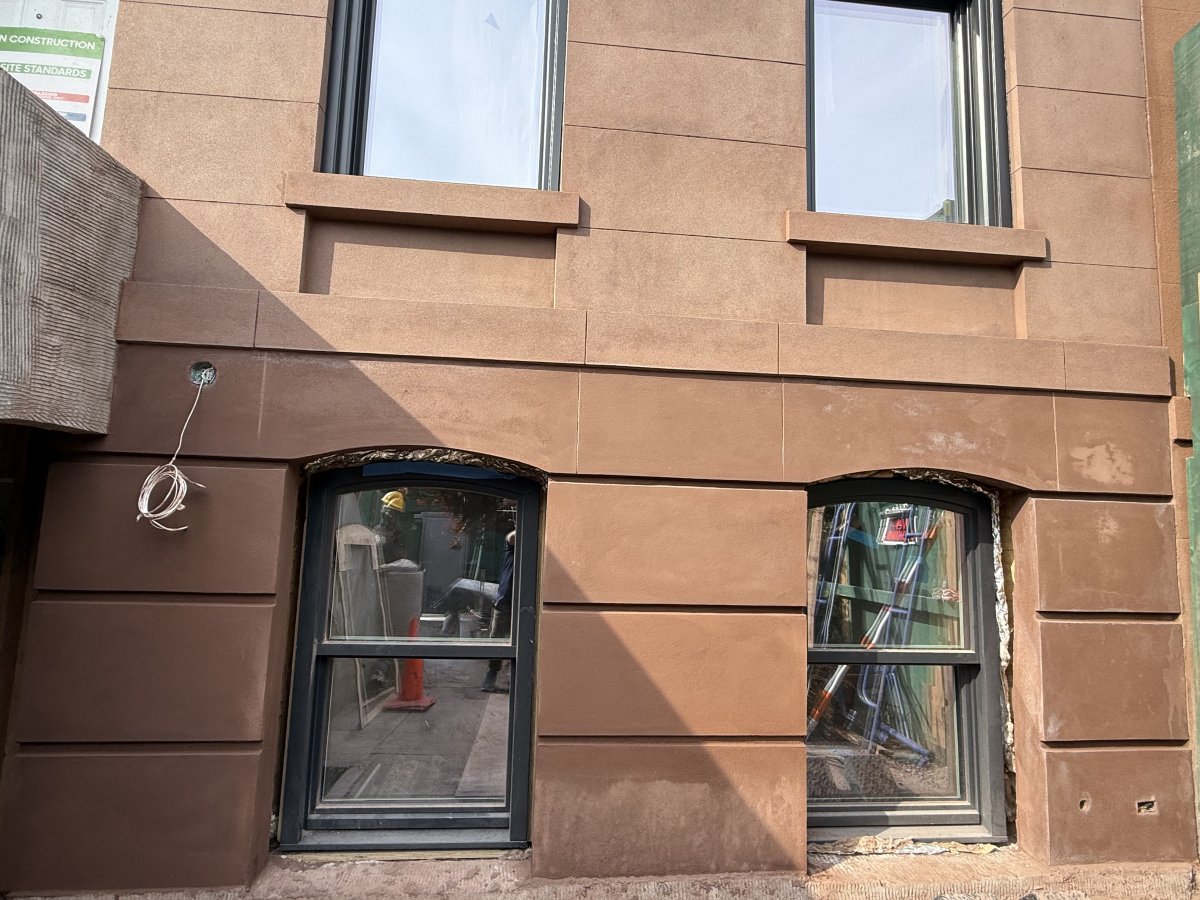
Manhattan’s architectural identity relies on its historic brownstone, limestone, and old-growth brick. These materials require more than basic maintenance; they demand a deep understanding historic preservation. A skilled masonry contractor manhattan treats every building as a unique structural puzzle. They must account for the "urban canyon" effect, where skyscrapers create wind tunnels and trap moisture against older facades. This environment accelerates stone decay and makes moisture management the most critical factor in any restoration project.
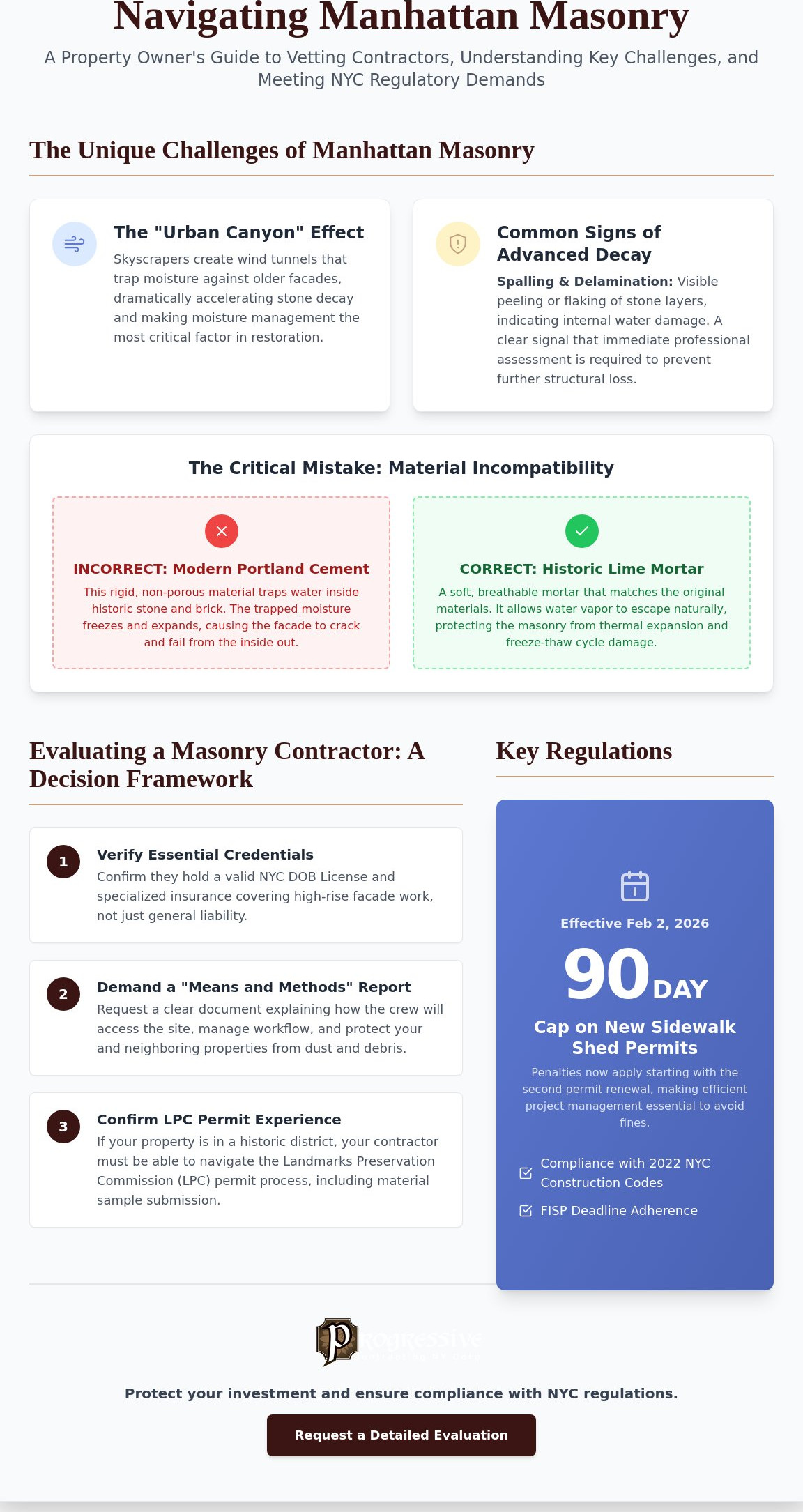
Material compatibility is the foundation of a successful repair. Many general builders mistakenly use modern Portland cement on historic facades. This material is far too rigid and non-porous for 19th-century masonry. While the historic stone is soft and breathable, Portland cement traps water inside. This trapped moisture eventually causes the stone to crack and fail from the inside out. Properties in landmarked districts like the Upper West Side or Greenwich Village require specialized knowledge to avoid these costly mistakes.
To see these preservation principles in action, watch this restoration project in the heart of the city:
Brownstone and Sandstone Deterioration
Owners of Manhattan townhouses frequently notice layers of stone peeling away from their facades. This process, known as spalling or delamination, is a clear sign of advanced decay. It’s often caused by water freezing within the stone’s layers or by previous, low-quality repairs that used incompatible materials. When you see these signs, seeking professional brownstone repair services is the only way to stabilize the facade and prevent further structural loss.
The Science of NYC Brick Pointing
Correct repointing is a technical process that balances aesthetics with structural health. The new mortar must match the original in color and texture to maintain the building’s historic look. More importantly, it must match the vapor permeability of the original materials. If the new mortar is harder than the surrounding bricks, the bricks will bear the brunt of thermal expansion and eventually shatter. You can refer to a repointing historic brownstone guide to learn about the specific mortar blends required for these projects.
Evaluating a Masonry Contractor in Manhattan: A Decision Framework
Hiring a masonry contractor manhattan requires a vetting process that goes beyond checking online reviews. You need a partner who understands the high stakes of working in a high-density urban environment. Start by verifying that the contractor holds valid NYC Department of Buildings (DOB) licensing and specialized insurance. General liability isn’t enough; they must have coverage specifically for high-rise facade work and structural repairs. You should also demand a clear "means and methods" document. This report explains exactly how the crew will access the building and protect neighboring properties from dust and debris during the restoration process.
Finding a firm with this level of attention to detail is essential for any high-end project; for those seeking comparable construction expertise in London, you can discover Daniels Contractors and their portfolio of premium residential and commercial builds.
Many owners hesitate at the higher cost of a specialist. However, hiring a general mason often leads to expensive rework or DOB penalties. A specialist ensures your building stays compliant with the 2022 NYC Construction Codes and the latest 2026 regulations regarding sidewalk sheds. Effective February 2, 2026, all new sidewalk shed permits are capped at 90 days. A professional contractor manages the workflow to meet these tight windows, avoiding the penalties that now apply starting with the second permit renewal. If you are planning a project, you can request a detailed evaluation to see how a structured approach protects your investment.
Navigating Landmarks Preservation Commission (LPC) Requirements
If your property sits within a historic district, you cannot perform masonry work without an LPC permit. A qualified masonry contractor manhattan handles the technical side of this bureaucracy. They provide the physical samples required for matching historic stone and mortar, ensuring the restoration meets strict aesthetic standards. They also navigate the DOB NOW digital system. As of early 2026, co-op and condo boards must digitally attest to project approval before permits are issued, a step that typically adds two to four weeks to the planning phase.
Portfolio and Local Reference Checks
Always ask for a portfolio of Manhattan projects that match your building type. Historic masonry restoration is a blend of structural engineering and artistic replication. When speaking with references, ask about punctuality and site cleanliness. A reliable contractor maintains a tidy job site to minimize the impact on your neighbors and tenants. They should also be familiar with masonry cleaning and water-repellent treatments to ensure the finished work remains durable against the city’s harsh environmental conditions.
Specialized Masonry Solutions for Manhattan Property Owners
A top-tier masonry contractor manhattan provides solutions that go beyond surface-level fixes. These services focus on the structural core of the building while preserving its historic facade. Precision work begins with a technical approach to brick pointing. This involves grinding out old, failing mortar to a specific depth, cleaning the joints to remove debris, and applying new mortar with meticulous pressure. Following the guidelines for repointing mortar joints ensures that the new material is softer than the historic brick. This prevents the brick faces from shattering during seasonal temperature shifts.
Restoring the Iconic Manhattan Stoop
The Rammstein stoop restoration process is a multi-phase structural project. It starts with a full assessment of the underlying masonry. We repair cracked treads and crumbling risers to ensure the staircase is safe for daily use. Waterproofing the underside of the stoop is a critical step that many general contractors overlook. This protects your cellar from water infiltration and prevents the internal rebar from rusting. We finish the project by applying custom-tinted brownstone cement. This material is carefully blended to match the color and texture of your building’s original facade, creating a seamless and durable finish.
NYC Sidewalk Violation Removal and Concrete Work
Receiving a DOT sidewalk violation requires immediate action to avoid property liens and safety hazards. The removal process involves a series of logical steps. First, we secure the necessary permits and set up a safe work zone. We then remove the non-compliant concrete and prepare the sub-base. Our crews install expansion joints and ensure a proper pitch for drainage. This is vital for Manhattan’s high-traffic walkways where ponding water can lead to rapid concrete deterioration. This methodical approach ensures your sidewalk meets all current city standards. If you are ready to address your property’s needs, Consult with our Manhattan masonry specialists today.
Securing Your Building’s Architectural Legacy
Preserving a historic building in New York requires technical precision and a deep respect for original materials. You now understand that successful restoration depends on matching vapor permeability in mortar and ensuring full compliance with the 2022 NYC Construction Codes. By prioritizing specialized knowledge over generic repairs, you protect your building from the accelerated weathering caused by the urban canyon effect. Selecting the right masonry contractor manhattan is the most important step in resolving active spalling or clearing urgent DOT sidewalk violations before they result in property liens.
Progressive Contracting NY Corp brings decades of experience in historic brick pointing and a thorough understanding of NYC DOB and LPC compliance. We’re specialists in Manhattan and Brooklyn brownstone restoration, providing the steady hand needed for complex facade projects. Our team focuses on structural longevity and financial transparency; we ensure your restoration project proceeds without unexpected delays or regulatory penalties. Don’t leave your building’s structural health to chance. Get a Professional Facade Assessment from Progressive Contracting NY Corp today to ensure your property remains a safe and beautiful part of the city skyline.
Frequently Asked Questions
How do I know if I need a masonry contractor or a general contractor for my Manhattan facade?
You should choose a specialized masonry contractor manhattan for any project involving your building’s structural envelope or historic facade. General contractors typically manage broad interior renovations but often lack the specialized equipment and technical training required for historic stone restoration. A masonry specialist focuses exclusively on material compatibility and structural longevity, ensuring your building’s exterior remains weatherproof and compliant with city safety standards.
What is the best time of year to perform masonry repairs in Manhattan?
Spring and autumn are the ideal seasons for masonry repairs because mortar and stone patches require moderate temperatures to cure correctly. Most restoration materials perform best when the temperature remains between 40 and 80 degrees Fahrenheit. While winter work is possible with specialized heating equipment, the stable weather in the spring and fall helps prevent premature cracking and ensures a stronger bond between the new and old materials.
How long does a typical brownstone facade restoration take in NYC?
A standard brownstone facade restoration in Manhattan takes approximately four to eight weeks to complete. The process follows a logical sequence, starting with site protection and scaffolding installation followed by the removal of deteriorated stone layers. The timeline can fluctuate based on the building’s size and the complexity of its architectural details. It’s best to establish a clear project schedule at the start to ensure you know exactly how the work will progress.
Do I need a permit for minor brick pointing or masonry repairs in a Manhattan historic district?
You generally need a permit from the Landmarks Preservation Commission (LPC) for any masonry work in a historic district, including minor repointing or brick repair. Even small changes to the facade’s appearance require an official review to ensure the new materials match the original aesthetic. A qualified masonry contractor manhattan will handle the permit application process and provide the necessary stone and mortar samples to secure the required approvals from the city.