
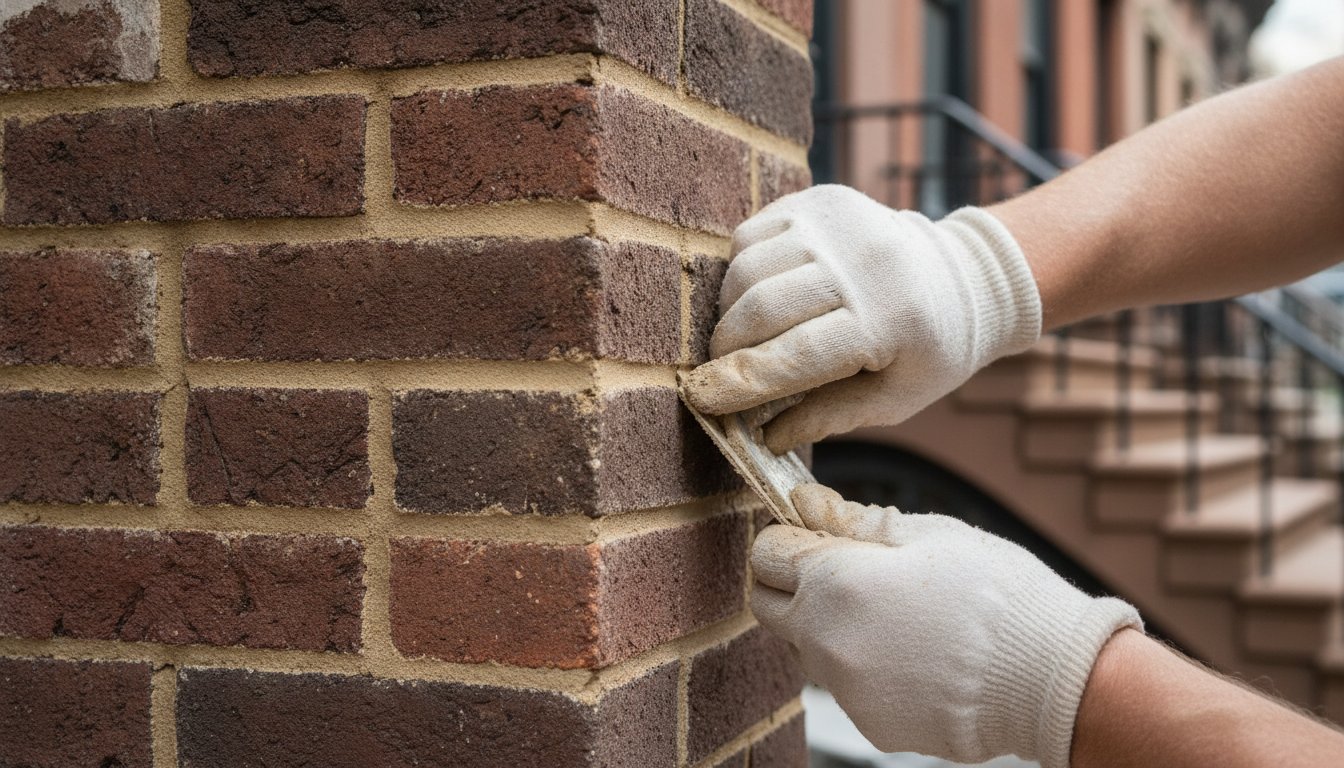
Using the wrong mortar on a 19th-century facade isn’t just a cosmetic mistake; it’s a slow-motion structural disaster. If you’ve noticed sand-like grit on your stoop or damp patches on your interior walls, you’re likely facing the need for professional brick pointing Brooklyn homeowners trust. It’s a common concern, especially with the city’s stricter 2026 regulations regarding facade maintenance and the "Get Sheds Down" initiative. You understand that your building’s exterior is its first line of defense, but the fear of a contractor using harsh, modern cement on historic, soft brick is a valid worry that keeps many owners from starting necessary repairs.
We believe in a methodical approach to restoration that respects the original craftsmanship of your property. In this article, you’ll discover the specific technical standards and preservation techniques required to protect your historic masonry from water infiltration and decay. We’ll outline the step-by-step repointing process, explain why lime-based mortar is often non-negotiable for older structures, and clarify how to maintain compliance with the latest New York City building codes. By the end, you’ll have a clear path forward to achieving a watertight, beautifully preserved facade that stands the test of time.
Table of Contents
Understanding Brick Pointing: Why Brooklyn’s Historic Facades Require Expert Care
Brick pointing is the technical process of renewing the external portion of mortar joints to protect a building’s core. For property owners seeking Understanding Brick Pointing, it’s vital to recognize that mortar acts as a sacrificial layer. It is intended to weather over decades, absorbing environmental stress so the bricks remain intact. When this layer fails, the entire facade becomes vulnerable to the elements.
Brooklyn’s climate is particularly aggressive toward 19th-century masonry. The intense freeze-thaw cycles cause moisture trapped within the joints to expand and contract with significant force. This pressure eventually breaks the bond between the mortar and the brick. When mortar is neglected, water penetrates deeper, leading to "spalling," which is the physical crumbling or shearing of the brick face. In Brooklyn’s historic rowhouses, these walls are often load-bearing. Losing the brick’s surface isn’t just an aesthetic problem; it compromises the structural integrity of the entire building. Expert intervention ensures the new mortar matches the compressive strength of the original historic brick to prevent this decay.
To better understand this concept, watch this helpful video:
Signs Your Brooklyn Home Needs Repointing
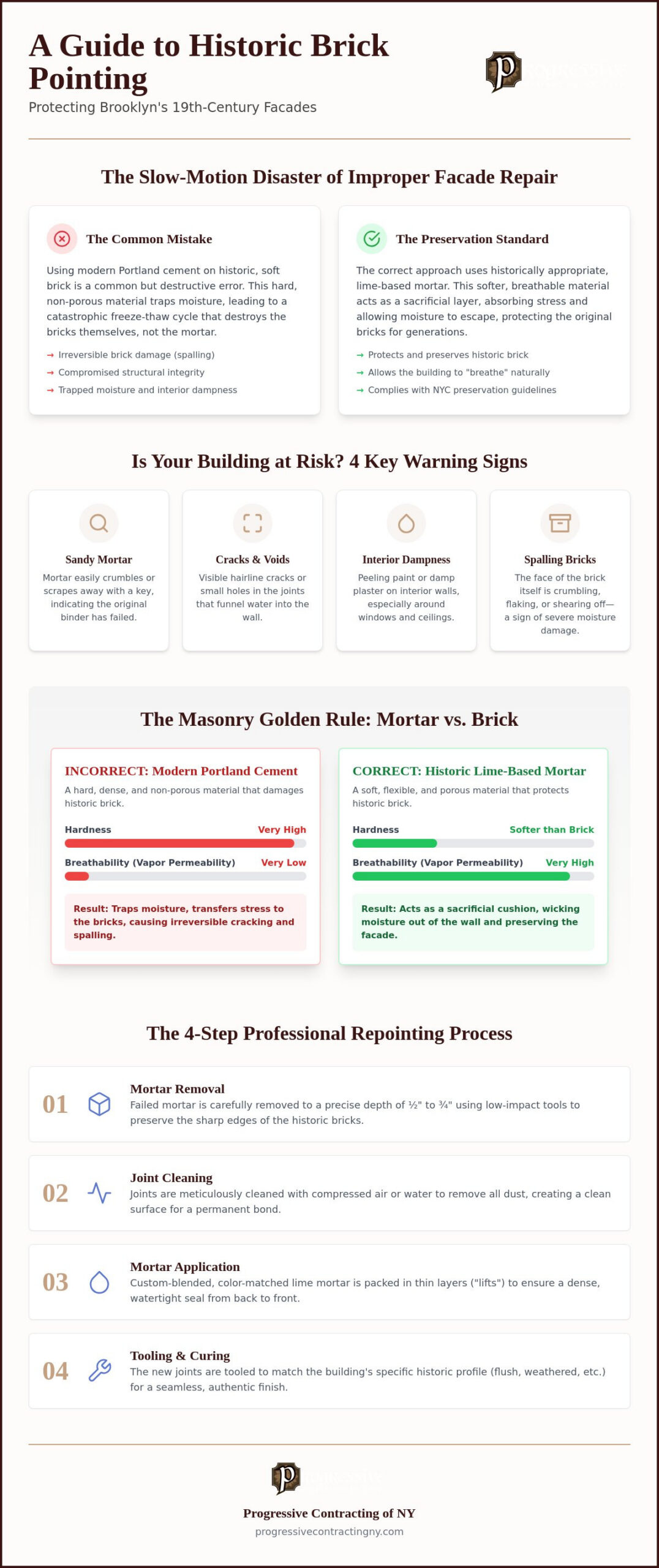
Identifying the right time for brick pointing brooklyn projects involves a simple physical inspection. Look for "soft" or sandy mortar that you can easily scrape away with a key or a fingernail. This indicates the binder has failed, leaving only loose sand behind. You should also watch for hairline cracks and small voids. These openings act as funnels, drawing rain into the building envelope. This often creates visible signs of water damage on brownstone facades, such as damp interior plaster or peeling paint near windows. Proactive maintenance prevents these small voids from turning into major structural failures that require total facade reconstruction. If you’re also noticing flaking stone or surface deterioration on your stoop, reviewing a comprehensive brownstone repair brooklyn checklist can help you assess the full scope of your property’s restoration needs.
The Technical Standard for Brooklyn Brick Pointing: Materials and Methods
Successful restoration begins with a fundamental rule of masonry: the new mortar must always be softer than the surrounding brick. This "Mortar Match" ensures that the joints remain the breathable, sacrificial element of the wall. When performing brick pointing brooklyn projects on buildings dating back to the 1800s, we adhere to the Technical Standard for Brick Pointing. This standard prioritizes the long term health of the masonry over quick, modern fixes that often do more harm than good.
Using modern Portland cement on historic Brooklyn bricks is a common and costly mistake. Portland cement is extremely hard and non-porous. When the building naturally shifts or moisture expands during a freeze, the hard cement refuses to give way. Instead, the pressure transfers to the soft, historic bricks, causing them to crack and face-spall. This damage is often irreversible. We avoid this by using custom blended mortars that mirror the flexibility and vapor permeability of the original materials.
The physical work follows a disciplined sequence. First, we remove the failed mortar to a precise depth of 1/2 to 3/4 of an inch. This depth is necessary to provide enough "key" for the new material to bond securely. We use hand tools or low impact power tools to ensure the edges of the bricks remain sharp and undamaged. After removal, we clean the joints thoroughly with water or compressed air to remove all dust. This preparation creates a clean, porous surface that allows the new mortar to hydrate and cure correctly.
Historic Mortar Composition and Color Matching
For repointing historic brownstone and brick, we utilize lime based mixes rather than high strength cements. These traditional mixtures allow the building to "breathe," letting moisture escape through the joints rather than trapping it behind the brick face. Our masons take great care to match the color and texture of the original 100-year-old mortar. We analyze the sand grain size and pigment of the existing joints to ensure the repair is invisible and maintains the property’s historical value.
The Application and Curing Process
We pack the new mortar into the joints in thin layers, or "lifts," to eliminate air pockets and water channels. This methodical packing ensures a dense, watertight seal from the back of the joint to the surface. Once the mortar reaches the correct consistency, we tool the joints to match the neighborhood’s specific architectural style, whether it’s a flush, weathered, or concave finish. If you’re concerned about the current state of your facade, consulting a masonry contractor early can help you avoid the high costs of structural brick replacement. For properties showing signs of stone deterioration alongside mortar failure, understanding the full scope of brownstone repair brooklyn requirements in 2026 will help you prioritize repairs and stay ahead of DOB compliance deadlines.
Vetting a Brooklyn Masonry Contractor: Ensuring Longevity and Compliance
Vetting a contractor for brick pointing brooklyn requires more than a quick search for the lowest price. It demands a partner who understands the specific architectural heritage of neighborhoods like Park Slope and Bed-Stuy. These areas feature unique masonry challenges that modern construction crews often overlook. You must verify that your contractor holds specific NYC licenses and comprehensive insurance for exterior masonry work. This isn’t just about safety; it’s about Ensuring Longevity and Compliance with local regulations that have become significantly stricter in 2026.
A reliable guide will provide a structured project timeline and complete financial transparency. They won’t hide costs or leave you guessing about the next phase of the restoration. In the current regulatory environment, where Local Law 51 of 2025 imposes fines of $5,000 to $20,000 for delayed facade repairs, punctuality and clear communication are essential for your peace of mind. We believe in providing a steady hand through these complex requirements, ensuring your project moves from start to finish without legal or structural surprises.
LPC Guidelines for Brick Pointing in Brooklyn
If your property sits within a designated historic district, you almost certainly need a permit from the Landmarks Preservation Commission (LPC) before work begins. The LPC has strict standards for mortar composition, joint profile, and color matching to maintain the neighborhood’s visual history. A seasoned masonry contractor in Brooklyn manages this process by preparing mortar samples for approval and ensuring every joint meets city standards. This prevents the legal headaches and costly rework that follow unpermitted or non-compliant repairs.
The Progressive Contracting NY Corp Approach to Accountability
We approach every project with a disciplined "problem-process-result" framework. This means we identify the root cause of your masonry decay before we ever touch a tool. Progressive Contracting NY Corp prioritizes structural reality over quick, cosmetic fixes that only mask deeper issues like water infiltration or load-bearing stress. Our goal is to be a dependable partner for the local community, offering clear technical expertise throughout the lifecycle of your facade restoration. This methodical pace ensures a stable, watertight result that protects your investment for another century.
Securing Your Property’s Future with Expert Masonry Restoration
Protecting a historic facade requires a balance of technical precision and regulatory knowledge. You now understand that using the correct lime based mortar is the only way to prevent spalling and structural decay. Staying ahead of the city’s evolving facade maintenance laws is also essential to avoid penalties and ensure the long term safety of your building. By choosing a partner who respects traditional methods, you ensure your home remains a stable and beautiful part of the local landscape. High quality brick pointing brooklyn homeowners can rely on starts with a detailed inspection and a commitment to historic standards.
Progressive Contracting NY Corp specializes in historic Brooklyn neighborhoods, bringing deep expertise in LPC compliant restoration to every project. We prioritize transparent project progression and total accountability from the initial assessment to the final joint finishing. Our team understands the unique challenges of 19th century masonry and the importance of maintaining the structural reality of your property. Request a Professional Masonry Assessment from Progressive Contracting NY Corp to secure your building’s envelope today. Your historic home has stood for over a century; with the right care, it will stand for another.
Frequently Asked Questions
How long does professional brick pointing last on a Brooklyn townhome?
High quality brick pointing brooklyn projects typically last between 30 and 50 years. This lifespan depends on the use of correct mortar mixtures and the building’s exposure to wind and rain. If a contractor uses modern, hard cement on historic brick, the repair will fail much sooner and likely damage the bricks themselves. Regular inspections every few years help identify minor weathering before it becomes a structural issue.
Is brick pointing the same as tuck pointing?
No, they are distinct techniques with different goals. Brick pointing is the process of removing and replacing failed mortar to restore structural integrity. Tuck pointing is a decorative method that uses two different colors of mortar to create the illusion of very thin, perfectly straight joints. While pointing focuses on protection and durability, tuck pointing is primarily about achieving a specific historical aesthetic common in certain high end rowhouses.
Can brick pointing stop water from leaking into my basement?
Professional brick pointing brooklyn services seal the building envelope above the ground line, which stops water from traveling down through the wall cavity. While it prevents moisture from entering through the facade and reaching the interior plaster, it won’t solve leaks caused by hydrostatic pressure in the foundation. If your basement is leaking, you may need to combine facade repairs with specialized foundation waterproofing to redirect water away from the structure.
Does my Brooklyn home need an LPC permit for brick pointing?
Yes, if your property is located within a designated historic district, the Landmarks Preservation Commission (LPC) requires a permit for any repointing work. The city mandates this to ensure that the new mortar matches the original in color, texture, and composition. We handle the application process and provide the necessary mortar samples to ensure your project meets all city standards and avoids stop work orders or fines.