
Why does a brick pointing estimate for a Park Slope brownstone often look nothing like a quote for a rowhouse in Bed-Stuy, even when the dimensions are nearly identical? Most homeowners start their search by trying to pin down a standard brick pointing cost per square foot nyc 2026, but they quickly realize that the base rate is only the beginning of the story. It’s stressful to compare three different quotes that all seem to use different math, especially when you’re worried about the added weight of NYC DOT permits and DOB filing fees.
We understand that you want a fair price without sacrificing the structural integrity of your historic facade. This guide will help you master the variables of NYC masonry pricing so you can secure a high-quality estimate that protects your investment. You’ll learn exactly how scaffolding requirements, mortar analysis, and site access impact your final invoice. We have also included a practical checklist to help you vet contractor proposals with total confidence, ensuring your property remains a stable and beautiful part of the community for decades.
The NYC Brick Pointing Landscape in 2026: Understanding Pricing Models
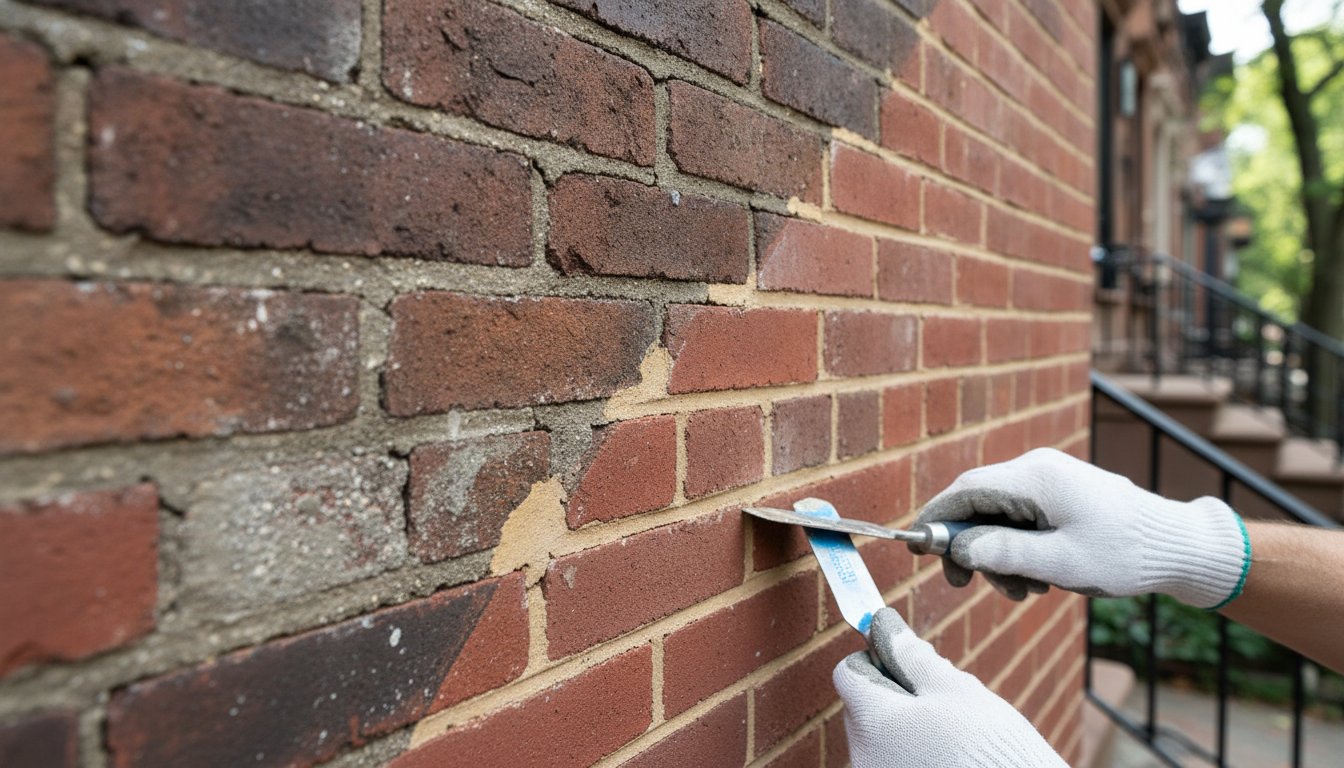
Professional masonry restoration begins with a clear definition of what is brick repointing. It’s the surgical process of grinding out decayed mortar and replacing it with fresh material. Current market rates for the brick pointing cost per square foot nyc 2026 reflect more than just sand and lime. New York City contractors must account for rising insurance premiums, specialized historic district permits, and the complex logistics of moving materials through narrow Brooklyn streets.
A Queens rowhouse often presents a straightforward project with easy street access. Conversely, a Manhattan brownstone located in a landmarked district requires a different level of precision and administrative oversight. These factors shift the baseline brick pointing cost per square foot nyc 2026 before a single joint is ground out. Experience in these specific neighborhoods allows a contractor to provide a quote that accounts for these local variables from the start.
To better understand the physical process and how it impacts your estimate, watch this helpful video:
Typical Project Scopes for New York City Homes
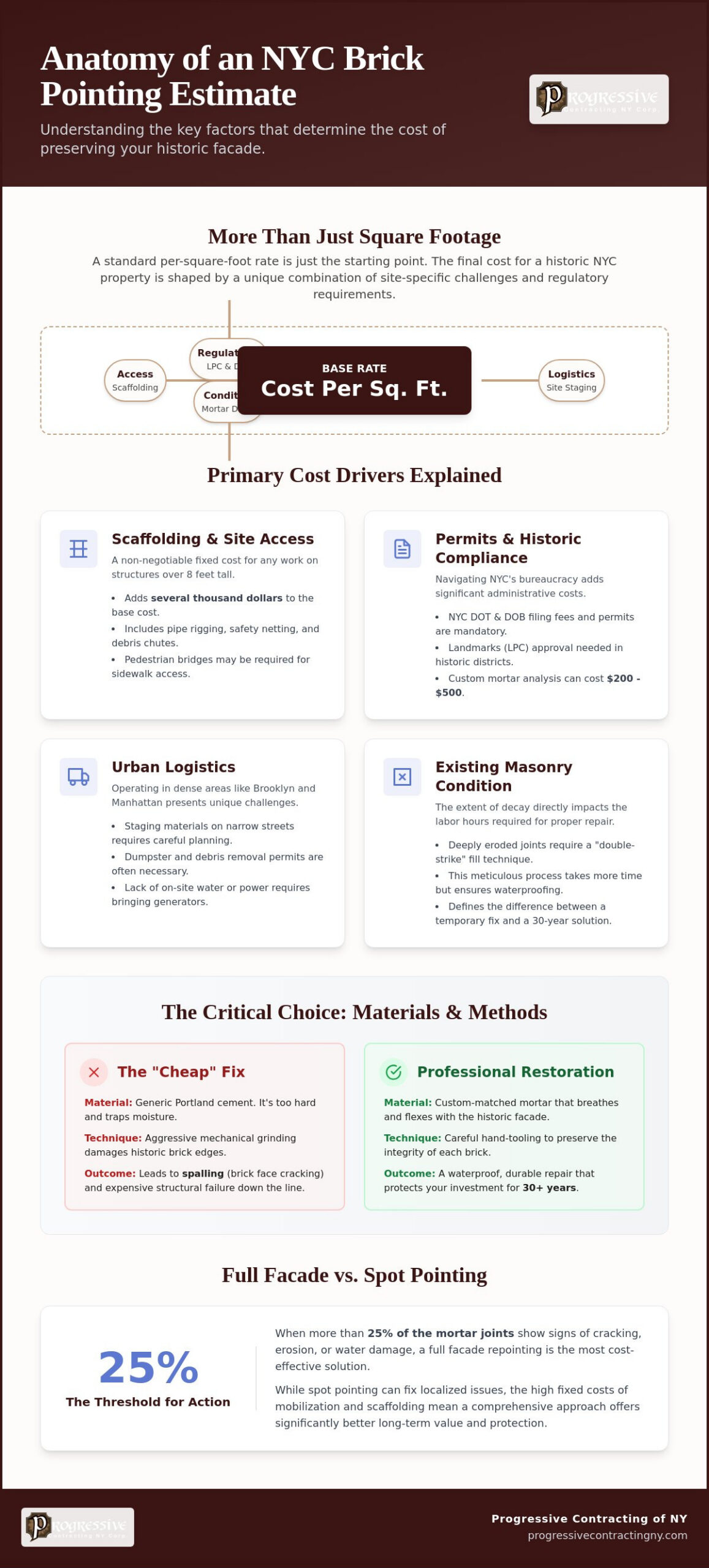
Project scope is the primary driver for your total invoice. A full facade repointing is necessary when more than 25% of the mortar joints show erosion, cracking, or water infiltration. While spot pointing addresses localized damage, it’s often less cost-effective. Mobilization costs and scaffolding setup remain constant whether we repair ten bricks or ten thousand. For long-term protection, a comprehensive “grind and point” strategy usually offers better value.
Why “Cheap” Repointing Often Leads to Expensive Spalling
Cutting corners on material costs is a mistake that leads to structural failure. Many generic contractors use modern Portland cement because it’s fast and easy to apply. However, this material is too hard for the soft, historic bricks found in Brooklyn and Manhattan. When the building shifts or temperatures change, the hard mortar won’t give. This causes the brick face to crack and fall off, a process known as spalling. We prioritize mortar matching to ensure the new material breathes and flexes with your historic facade.
NYC Cost Drivers: Why Estimates Vary Across Brooklyn and Manhattan
The brick pointing cost per square foot nyc 2026 is heavily influenced by the physical height of your structure. For a standard three-story brownstone, contractors must deploy pipe rigging and safety netting to protect both workers and pedestrians. These access costs are fixed expenses that apply before any masonry work begins. If your wall is taller than eight feet, the complexity of the setup increases, often adding several thousand dollars to the total project budget for scaffolding rental and installation.
City regulations add another layer of expense that national estimates ignore. The NYC Department of Transportation requires specific permits for scaffolding that extends over the sidewalk on narrow streets. In many cases, you must install a pedestrian bridge to maintain safe passage. If your property already has existing issues, integrating sidewalk violation removal into the project scope can be an efficient way to handle multiple compliance requirements at once.
The Impact of NYC Landmarks (LPC) and Historic Districts
Working within historic districts like Park Slope or Bed-Stuy changes the technical requirements of the job. The Landmarks Preservation Commission often mandates specific mortar colors and textures to maintain the neighborhood’s aesthetic. This requires custom mortar analysis, which can cost between $200 and $500. We avoid mechanical grinding in these sensitive areas to prevent damaging the edges of historic bricks. Instead, we use hand-tooling techniques that ensure your property meets city standards while preserving its structural integrity.
Logistical Challenges of Urban Masonry
Logistics in Manhattan and Brooklyn are notoriously difficult. Staging materials on a narrow street requires careful planning and often necessitates dumpster permits for debris removal. Older buildings may also lack reliable exterior water or power access, requiring the contractor to bring in specialized equipment. If you are planning a restoration, it’s wise to consult with a brownstone specialist who understands these local constraints.
The condition of the existing mortar also dictates the labor hours. Deep-seated erosion requires a “double-strike” filling technique to ensure the joint is fully packed and waterproof. This process takes more time than a standard surface application but prevents future water infiltration and structural decay. This meticulous attention to detail is what separates a temporary fix from a 30-year solution.
Evaluating Masonry Proposals: Getting the Best Value for Your Facade
A professional masonry quote should be a roadmap, not a guessing game. When you compare the brick pointing cost per square foot nyc 2026 across different proposals, look for a clear “Problem-Process-Result” framework. A reliable estimate must detail the exact depth of grinding, which should be at least 3/4 of an inch, and the specific type of mortar required for your building. If a contractor offers a flat rate without a physical site visit or fails to mention NYC DOB filing requirements, consider it a significant red flag. These omissions often lead to surprise change orders once the scaffolding is already in place.
At Progressive Contracting NY Corp, we prioritize transparency in every brownstone facade renovation. We believe that clear communication about material costs and permit fees is the only way to ensure long-term structural integrity. Investing in high-quality pointing today offers a substantial return on investment. A professional job completed in 2026 prevents the five-figure structural repairs that typically follow years of water infiltration. By sealing the building envelope now, you protect your home’s interior and maintain its market value.
Proposal Checklist for NYC Homeowners
Before signing a contract, verify the technical specifications. Ensure the mortar mix is appropriate for your building’s era. Historic bricks require lime-based mixtures, while modern builds typically use Type N. You should also confirm that the contractor holds a specific riggers license for NYC scaffolding. Without this, the city can shut down your project, leading to costly delays and potential fines. Punctuality and proper licensing are non-negotiable for a professional restoration.
Planning for Longevity and Maintenance
The work doesn’t end when the mortar is dry. You must allow for a proper cure time before applying any breathable sealants. Premature sealing can trap moisture inside the brick, causing it to deteriorate from the inside out. We recommend scheduling a professional inspection every five years. This proactive approach helps you catch early signs of water damage on brownstone facades, such as hairline cracks or salt deposits, before they escalate into major restoration projects.
Secure Your Historic Facade for the Future
Mastering the brick pointing cost per square foot nyc 2026 allows you to move forward with a restoration that actually lasts. The final invoice reflects more than just mortar; it accounts for the specialized access, regulatory permits, and the meticulous craftsmanship required for NYC masonry. By prioritizing high standards and financial transparency, you avoid the cycle of temporary repairs and protect your building’s structural integrity.
Progressive Contracting NY Corp serves as a reliable guide for complex restoration projects across Brooklyn and Manhattan. We specialize in Park Slope and Bed-Stuy historic districts, bringing a decade of expertise to every facade. Our team handles the nuances of NYC DOT sidewalk violation removals and DOB compliance, ensuring your project moves from start to finish without administrative delays.
Ready to protect your investment? Request a Transparent NYC Brick Pointing Estimate today. Let’s ensure your historic facade remains a source of pride for decades to come.
Frequently Asked Questions
How much does it cost to repoint a brick house in NYC in 2026?
Total project costs depend on your building’s size and the specific mortar requirements of your neighborhood. Factors like scaffolding height and historic district regulations play a major role in the final invoice. For a typical rowhouse, the brick pointing cost per square foot nyc 2026 includes labor, materials, and logistical setup. It’s best to get a site-specific estimate to account for your property’s unique height and condition.
Is brick pointing the same as tuckpointing?
Brick pointing and tuckpointing are distinct masonry techniques with different goals. Pointing involves removing failed mortar and replacing it with fresh material to restore structural integrity. Tuckpointing is a more labor-intensive decorative process that uses two contrasting mortar colors to give the illusion of perfectly straight, thin joints. While both protect your facade, standard repointing is the primary method used for historic maintenance in New York City.
How long does a professional brick pointing job last in NYC climate?
A high-quality repointing project typically lasts between 20 and 30 years when executed with the correct materials. The harsh NYC climate, with its freeze-thaw cycles and salt air, puts significant stress on masonry. Using a mortar mix that matches the original brick’s density ensures the joints flex and breathe properly. Regular five-year inspections help you identify minor issues before they compromise the entire facade.
Do I need a permit for brick pointing in Brooklyn or Manhattan?
Yes, you generally need permits from the NYC Department of Buildings (DOB) for facade work. If your property is in a landmarked district, you must also obtain approval from the Landmarks Preservation Commission (LPC). Any scaffolding that occupies the sidewalk requires a permit from the Department of Transportation (DOT). We handle these administrative filings to ensure your project remains compliant with all local safety and historic regulations.
Can I repoint my own brick facade to save on costs?
DIY repointing is not advisable for historic New York City properties due to the technical precision required. Using the wrong mortar mix, such as a hard Portland cement on soft historic bricks, can cause irreversible damage. Professional masons use specialized tools to grind joints to the correct depth without nicking the brick edges. Hiring an expert ensures the work meets city codes and protects your home’s long-term value.
What happens if I ignore crumbling mortar joints?
Ignoring decayed mortar leads to water infiltration and significant structural instability. When joints crumble, moisture enters the wall and expands during winter freezes, which can cause bricks to crack or detach from the building. This water also migrates to the interior, damaging plaster, wood framing, and insulation. Addressing these issues early prevents a standard maintenance task from turning into a full-scale emergency reconstruction.