
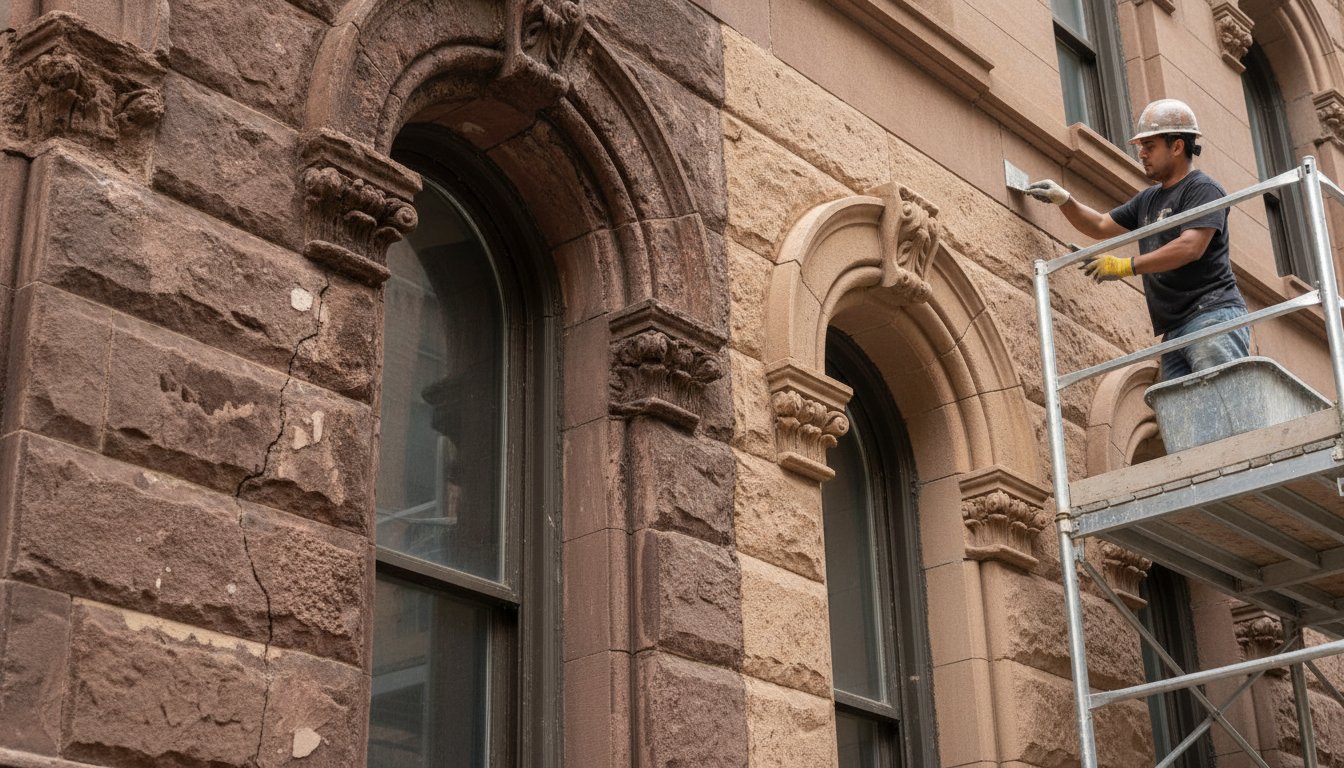
Using the wrong mortar on a 19th-century facade isn’t just a cosmetic mistake. It is a slow-motion structural disaster that can lead to irreversible stone decay and permanent damage to your building’s character. Most Manhattan property owners understand that maintaining a historic brownstone or townhouse is a significant responsibility, yet the fear of a $10,000 DOB penalty or a rejected LPC permit often causes unnecessary stress. Finding a qualified historic preservation masonry contractor manhattan is the only way to protect your investment while staying compliant with the city’s evolving 2026 regulations.
You deserve a partner who understands the science of material compatibility and the nuances of the Landmarks Preservation Commission’s approval process. In this guide, you’ll learn how to vet specialists who prioritize chemical matching over speed to avoid the pitfalls of previous bad restorations. We will walk through the critical FISP Cycle 10 filing windows, the impact of the 2026 "Get Sheds Down" legislation, and the exact steps to take to ensure your masonry work stands the test of time without triggering heavy fines.
Table of Contents
Evaluating a Historic Preservation Masonry Contractor in Manhattan
Choosing a historic preservation masonry contractor manhattan requires more than a casual search. Manhattan’s dense architecture creates a microclimate often called "Urban Canyon" weathering. Wind tunnels and concentrated pollution accelerate the decay of soft stones like brownstone and limestone. To understand the foundational science behind these structures, it’s helpful to look at What is Masonry? and how traditional materials react to modern environments. A specialist must demonstrate they understand these chemical interactions to prevent your facade from crumbling within a few seasons.
To better understand these restoration concepts in a local context, watch this video of a Manhattan project:
Licensing and Insurance for High-Stakes Manhattan Projects
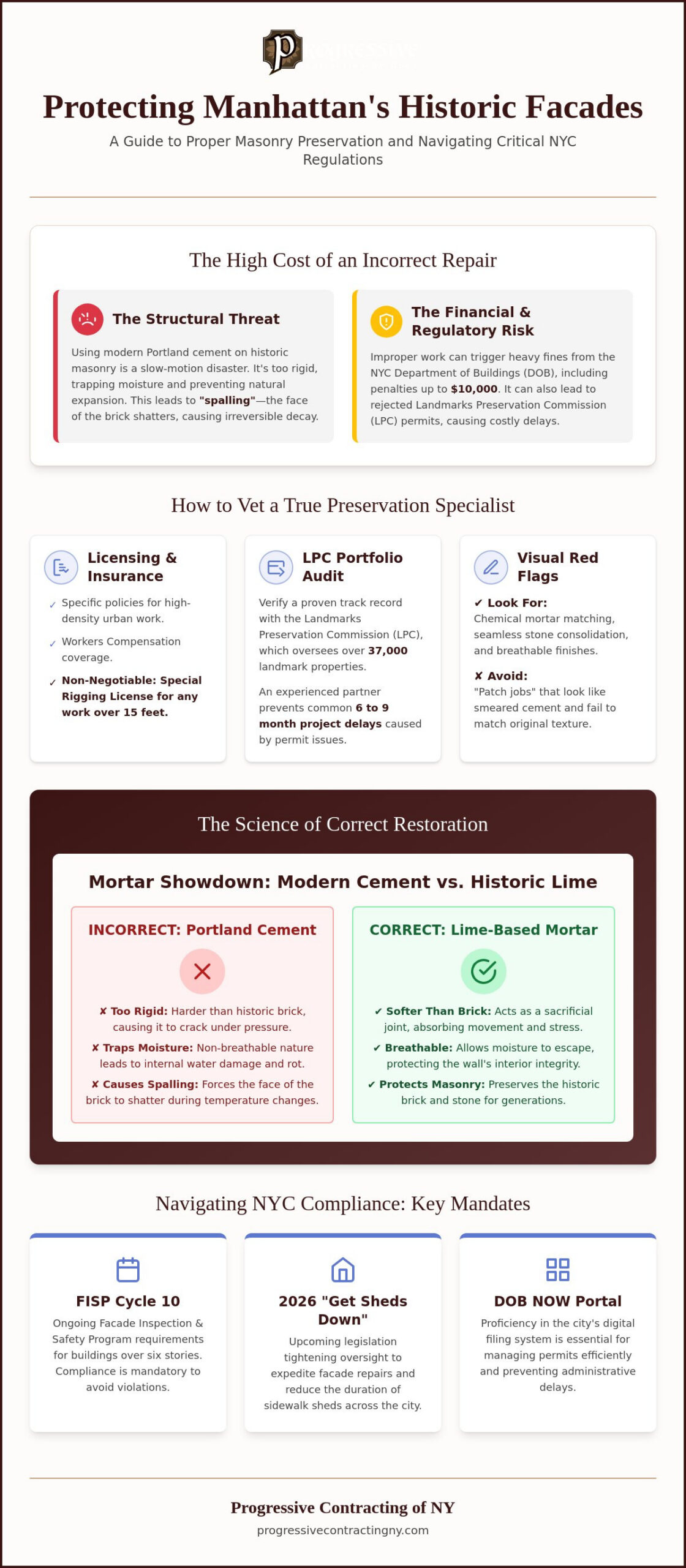
Contractors must carry General Liability and Workers Compensation policies that specifically cover high-density urban work. Standard residential insurance often fails to meet the requirements for working on Manhattan townhouses. If a project involves facade work over 15 feet, the NYC Department of Buildings (DOB) requires a Special Rigging license. This is a non-negotiable credential. It ensures the crew is trained for the specific risks of Manhattan heights and protects the property owner from massive liability in the event of an accident.
The Portfolio Audit: LPC Success and Historic Accuracy
A successful portfolio shows more than just "clean" buildings. Look for evidence of chemical mortar matching and stone consolidation. A "patch job" is easy to spot; the repairs look like smeared cement and don’t match the original stone’s texture or breathability. True historic restoration blends seamlessly with the existing structure. Verify that the contractor has a track record with the Landmarks Preservation Commission (LPC). In 2026, the LPC oversees over 37,000 landmarks. A contractor who manages these filings or works with proven partners can prevent the 6 to 9 month delays that often plague unguided projects.
Specialized Masonry Solutions: Materials and Methods That Matter
Modern Portland cement is too rigid for 19th-century masonry. When temperatures fluctuate, rigid cement prevents historic brick from expanding, which leads to "spalling"—a process where the face of the brick literally shatters. Professionals with specialized training in historic masonry understand that mortar must be softer than the surrounding material. It acts as a sacrificial joint, absorbing movement and moisture to protect the structural units of your building.
The Science of NYC Brick Pointing and Mortar Matching
The process of historic masonry restoration begins with a chemical analysis of the existing binder. We don’t just guess the color; we match the composition of the original 19th-century materials. This ensures the new mortar breathes at the same rate as the old stone. A skilled historic preservation masonry contractor manhattan uses lime-based mixes that prevent moisture from becoming trapped within the wall. This is the most effective way to stop internal masonry rot before it compromises the facade.
Restoring the Iconic Manhattan Stoop
A Rammstein stoop restoration is a multi-phase technical project. It starts by stripping away failing surface layers to evaluate the structural core. We stabilize the internal brickwork before applying a new, breathable finish that replicates the original brownstone aesthetic. This specific brownstone facade renovation is essential for property value. The stoop is the first thing a visitor sees, and a stable, beautiful entry provides the highest visual return on investment for any restoration project.
For larger facade sections, a historic preservation masonry contractor manhattan must decide between custom stone casting and natural stone replacement. Casting is ideal for recreating intricate architectural details that have eroded beyond repair. Natural stone offers superior durability for structural elements like window sills. We finish every project with a breathable waterproofing treatment. We avoid non-porous sealants that trap vapor, as these cause stones to crack during New York’s freeze-thaw cycles. You can request a detailed facade inspection to determine which method fits your building’s current condition.
Navigating NYC Compliance: FISP and 2026 Regulatory Updates
Manhattan property owners face an increasingly strict regulatory environment in 2026. The Department of Buildings (DOB) and the Landmarks Preservation Commission (LPC) have tightened oversight to ensure public safety while maintaining historic aesthetic integrity. A seasoned historic preservation masonry contractor manhattan must be proficient in the DOB NOW portal to manage digital filings efficiently. This proficiency prevents administrative delays that can stall a project before the first stone is even touched.
FISP Deadlines and the New 90-Day Sidewalk Shed Cap
FISP Cycle 10 is currently in full effect. For buildings in Sub-cycle 10A (blocks ending in 4, 5, 6, or 9), the filing window closes on February 21, 2027. If your building block ends in 0, 7, or 8, your window for Sub-cycle 10B begins on February 21, 2026. These deadlines are non-negotiable and require early planning to secure a qualified team.
The "Get Sheds Down" legislation, effective January 2026, has shifted the timeline for facade work. New rules aim to remove "zombie" scaffolding from Manhattan streets by imposing a 90-day limit on sidewalk shed permits in many zones. If owners leave sheds up without actively addressing unsafe conditions, they face penalties ranging from $5,000 to $20,000. You need a contractor who can move from mobilization to completion within these tighter permit windows to avoid compounding fines.
From Violation to Compliance: The Removal Process
Property compliance often extends from the facade down to the street level. The NYC DOT frequently issues violations for cracked or uneven pavement that poses a trip hazard. We help owners resolve these issues by coordinating professional masonry repair with the necessary DOT permit filings. This ensures your entire property remains in good standing with city agencies.
Clearing a violation follows a logical progression. We start with a site inspection to determine the scope of the repair. Once we secure the permits, our team executes the work to meet strict NYC DOT specifications. We then handle the final paperwork to ensure the violation is officially dismissed. For a step-by-step breakdown of this process, see our guide on sidewalk violation removal NYC. Coordinating this work alongside a brownstone facade renovation is the most efficient way to maintain your building’s structural integrity and legal compliance.
Protecting Your Manhattan Legacy for the Next Century
Preserving a historic building in Manhattan requires a balance of traditional craftsmanship and modern regulatory expertise. You now understand that successful restoration depends on chemical mortar compatibility and a proactive approach to FISP Cycle 10 deadlines. By prioritizing LPC-compliant restoration methods and transparent project timelines, you protect both the aesthetic value and the structural integrity of your property. Navigating high-density Manhattan logistics is a unique challenge. The right historic preservation masonry contractor manhattan ensures your project moves from permit to completion without the burden of "zombie" scaffolding or heavy DOB fines.
Ready to secure your building’s future? Request a Professional Manhattan Masonry Assessment today. Our team provides the precision and financial transparency needed to handle complex restorations with complete peace of mind. It’s an investment in quality that ensures your historic facade remains a proud landmark for generations to come.
Frequently Asked Questions
How do I know if I need a masonry contractor or a general contractor for my Manhattan facade?
You should hire a specialized masonry contractor when the project involves structural stone, historic brick, or landmarked details. General contractors often oversee broad interior renovations but lack the technical training required for chemical mortar matching and stone consolidation. A historic preservation masonry contractor manhattan focuses exclusively on the building’s envelope. This expertise ensures your facade remains breathable and compliant with the Landmarks Preservation Commission’s strict aesthetic standards.
What is the best time of year to perform historic masonry repairs in Manhattan?
The ideal window for masonry work in Manhattan is between late March and early November. Mortar and stone patches require consistent temperatures above 40 degrees Fahrenheit to cure properly without cracking. While some minor repairs can proceed in winter using heated enclosures, the most durable results happen in moderate weather. Planning your project for the spring also helps you avoid the end-of-year rush for annual parapet inspection deadlines.
How long does a typical brownstone facade restoration take in NYC?
A standard brownstone restoration project requires three to six months for physical site work. You must also factor in the administrative timeline, as LPC permits can take six to nine months to secure. Total project duration often reaches twelve months from the initial consultation to final scaffolding removal. Starting the process early ensures you don’t run into the 2026 sidewalk shed permit limits or seasonal weather delays.
What are the penalties for missing a FISP filing deadline in 2026?
Missing a FISP filing deadline results in an immediate $5,000 penalty, plus monthly late fees that accumulate until you submit the report. In 2026, the DOB also enforces stricter fines for "zombie" scaffolding. Owners who fail to address unsafe conditions within the new 90-day permit window face additional penalties between $5,000 and $20,000. Working with a historic preservation masonry contractor manhattan helps you meet these deadlines and avoid these escalating legal expenses.