
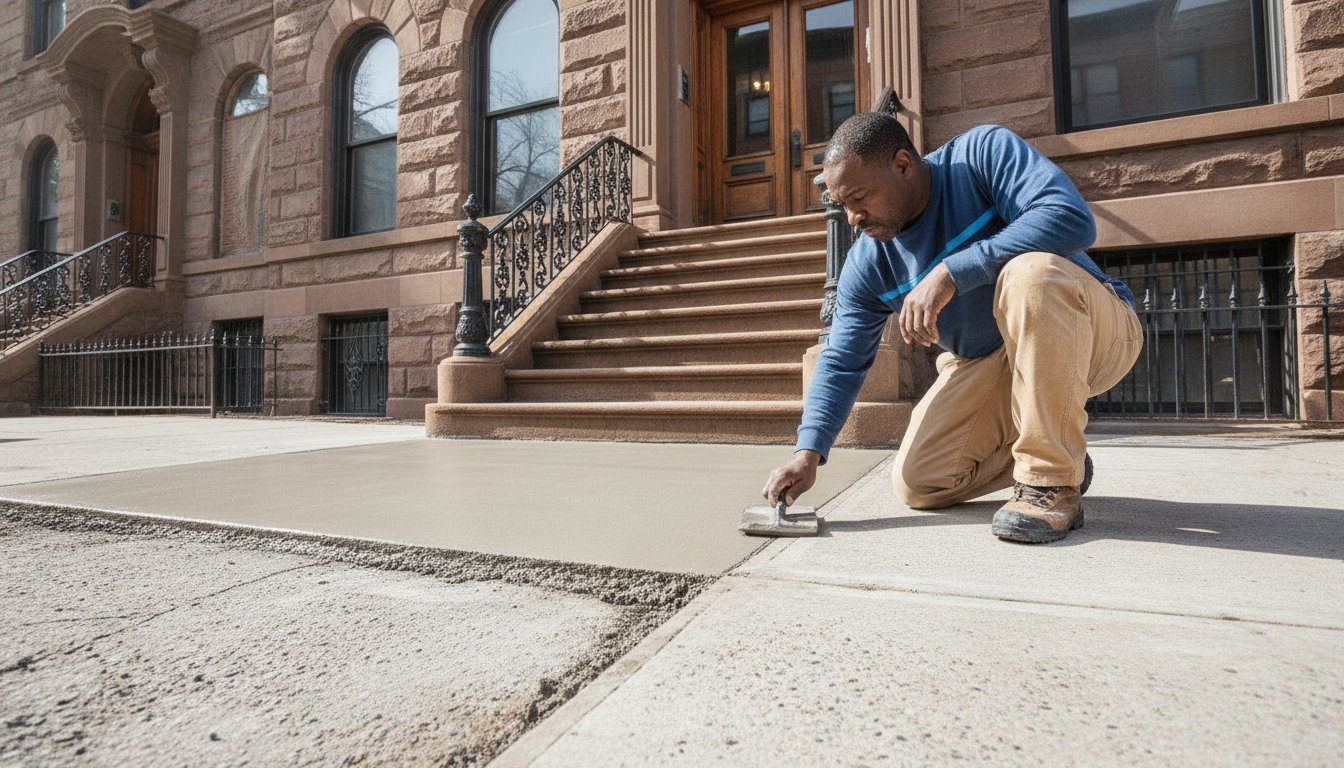
That official-looking Notice of Violation from the NYC DOT isn’t just a repair request; it’s a ticking clock that can lead to a permanent lien on your property title. Most Brooklyn and Manhattan property owners feel a sense of dread when they realize they’re responsible for the public walkway in front of their home. It’s often frustrating to manage the overlapping rules of the DOT and the Parks Department while trying to find a contractor who won’t disappear halfway through the job. Securing a sidewalk repair permit nyc shouldn’t feel like a full-time job, yet the stakes for your property’s value remain high.
We recognize that you want this violation cleared quickly and correctly to protect your investment. This guide provides the exact steps to secure the right permits, meet the 75-day repair window, and avoid the city’s high-cost default contractors. You’ll learn how to handle the 2026 fee structures and the specific requirements for landmark districts so your sidewalk remains a durable, legal asset rather than a liability. By the end of this guide, you’ll have a clear path to restoring your property’s structural integrity and your own peace of mind.
Understanding NYC Sidewalk Permits: When and Why You Need Them
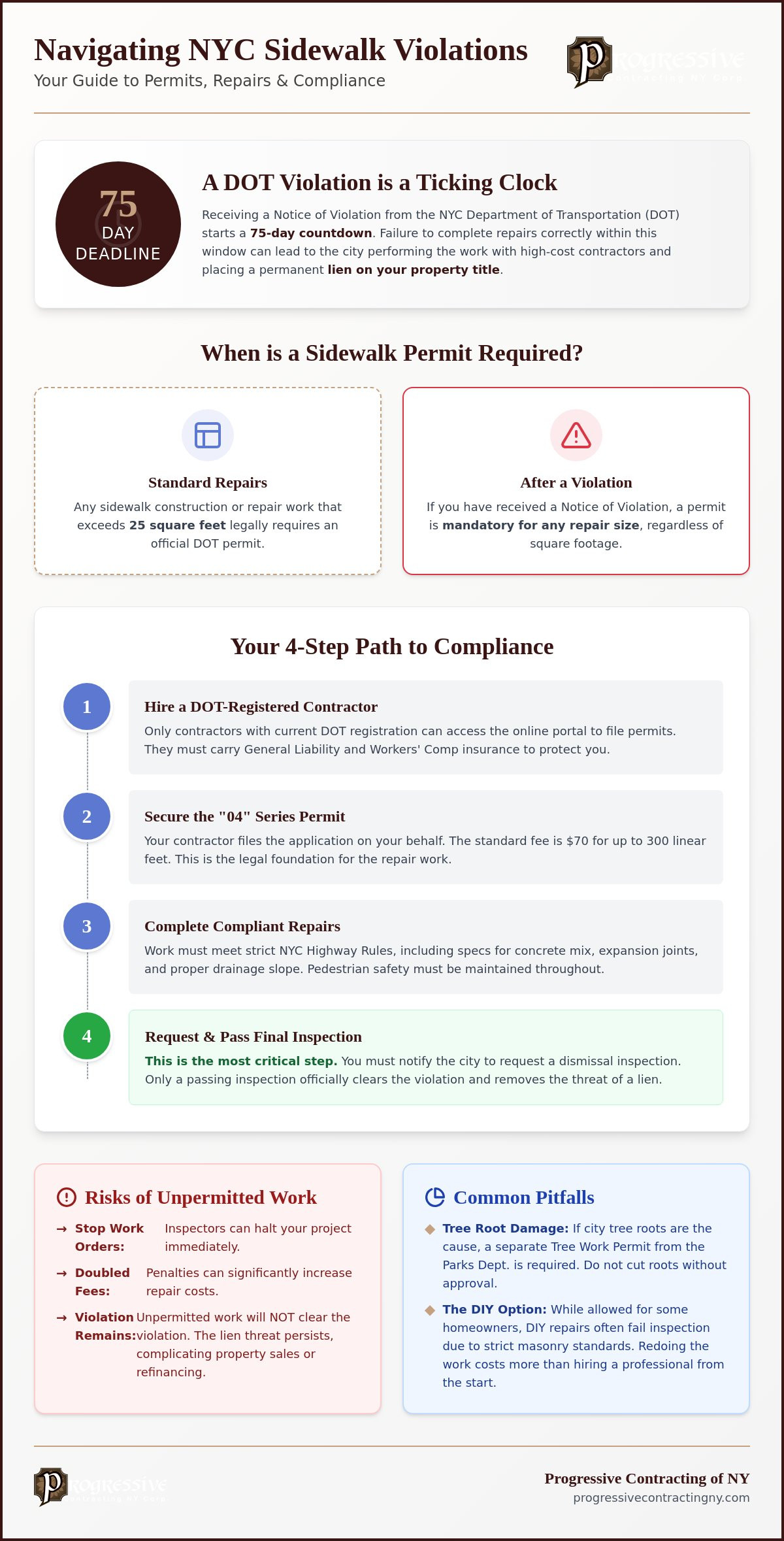
Every legal sidewalk project in the five boroughs begins with the “04” permit series. This specific category, managed by the New York City Department of Transportation (DOT), covers all sidewalk construction and repair activities. While some minor patches might seem simple, a sidewalk repair permit nyc is a legal requirement for any work exceeding 25 square feet. If you’ve received a formal Notice of Violation, the size of the repair no longer matters; you must secure a permit regardless of the square footage involved.
To better understand how the city identifies these issues, watch this official guide on common defects:
For owners of historic Brooklyn and Manhattan homes, the process involves more than just pouring concrete. Standard city contractors use basic concrete mixes that often clash with the aesthetic of a historic block. As a specialist Brownstone contractor, we ensure your repair meets strict NYC Highway Rules while respecting your property’s architectural integrity. A permit acts as your primary defense against future liability. It proves the work was performed by a registered contractor to city specifications. This protects you if a pedestrian claims an injury on your walkway later.
DOT vs. Parks Department: Who Owns the Damage?
Confusion often arises when a city tree causes the sidewalk to heave. If tree roots are the culprit, you might qualify for the “Trees & Sidewalks” program. You cannot simply cut roots to level the concrete. Doing so requires a separate Tree Work Permit from the Parks Department. Attempting a repair without coordinating between these two agencies can lead to structural damage to the tree and additional penalties for the homeowner.
The Risks of Unpermitted Work
Skipping the permit process is a high-risk gamble. NYC inspectors actively monitor neighborhoods for unpermitted masonry. If they catch a crew without an active “04” permit, they will issue a “Stop Work Order” and may double the standard fees. More importantly, unpermitted work won’t clear an existing violation. The lien will remain on your property title, potentially stalling a future sale or refinancing until the work is redone legally.
How to Obtain a Sidewalk Repair Permit in NYC: A Step-by-Step Walkthrough
Securing a sidewalk repair permit nyc requires following a specific sequence to satisfy city inspectors. First, you must partner with a contractor who holds a current DOT registration. These professionals access the DOT’s online permit portal to file the application on your behalf. While the standard fee is $70 for up to 300 linear feet, the real value lies in the contractor’s ability to navigate the technical requirements of the 04-series permit. They ensure the application matches the specific lot and block details of your property.
During the work, you’re responsible for maintaining a safe pedestrian path. If the project requires blocking more than half the sidewalk, your contractor must also secure an “Occupancy of Sidewalk” permit to stay compliant. Once the concrete cures, the final phase is the inspection. This is the only way to ensure the work meets city standards and is essential for Resolving a Sidewalk Violation officially. Without this final sign-off, the city won’t dismiss the notice from your property record.
Hiring a Licensed NYC Sidewalk Repair Contractor
Verification is the most important step in this process. A legitimate contractor must carry General Liability and Workers Compensation insurance to protect you from personal liability. At Progressive Contracting NY Corp, we manage the entire filing process for our clients. We act as your representative at the permit office; we ensure every document is accurate before the first shovel hits the ground. This takes the bureaucratic weight off your shoulders and keeps the project moving forward.
The Self-Repair Option for Homeowners
NYC does allow Tax Class 1 property owners, typically one- to three-family homes, to apply for a permit by mail to do the work themselves. However, this is rarely the best path for most owners. The DOT enforces strict standards for expansion joints and specific slopes to ensure proper drainage. DIY repairs often fail inspection because they don’t meet these precise masonry standards. Redoing the work costs significantly more than doing it right the first time. If you’re facing a deadline, hiring a specialized sidewalk contractor ensures the job is finished correctly within the city’s 75-day window.
Resolving DOT Violations and Ensuring Long-Term Compliance
Closing the loop on a sidewalk violation requires more than just finishing the masonry. Once the work is complete, you must notify the city to request a dismissal inspection. This is the final step in the lifecycle of a sidewalk repair permit nyc. An inspector will visit the site to verify that the new slabs meet city specifications, including the correct slope and the use of 4-inch or 7-inch concrete as dictated by your property type. If the work passes, the DOT will issue a dismissal notice. This eventually clears the lien held at the County Clerk’s office.
Compliance often hinges on technical details that are easy to overlook. For instance, the city requires specific expansion joint spacing to prevent cracking during seasonal temperature shifts. Precision matters. Using a concrete mix with the proper PSI rating ensures the walkway can handle heavy foot traffic without deteriorating prematurely. Failing to meet the standards set by your sidewalk repair permit nyc can result in costly do-overs. If an inspector rejects the repair, you’re often forced to remove the new concrete and start again.
Clearing DOT Liens and Violations
The timeline for violation dismissal varies. It generally takes several weeks after a successful inspection for the property record to reflect the change. If you’re in the middle of a property sale, you’ll need to provide the signed-off permit and the dismissal letter to the title company to prove the lien is resolved. Should the repair be rejected, the DOT will provide a list of defects that must be corrected. We recommend keeping all permit documentation and photos of the work in progress. This provides clear evidence of compliance if any disputes arise with the city later.
Sidewalk Maintenance for Historic Properties
Owners of historic homes face a unique challenge: balancing modern safety codes with the aesthetic of a brownstone facade renovation. In landmark districts, you may need approval from the Landmarks Preservation Commission (LPC) in addition to your DOT permit. This is especially true if your project involves a Brownstone stoop restoration where the sidewalk meets the base of your stairs. Preventative care, such as sealing joints and addressing small cracks before they expand, is the most effective way to avoid the 75-day pressure of a DOT notice. Regular maintenance preserves the structural integrity of your masonry and keeps your property’s curb appeal intact for decades.
Protect Your Property and Clear Your Sidewalk Violation Today
Managing a sidewalk violation doesn’t have to be a source of constant stress for your household. You now understand that securing a sidewalk repair permit nyc is the foundational step toward clearing your property’s title and avoiding the high costs of city-mandated contractors. By choosing to work with a registered professional, you ensure that every new slab meets precise DOT slope requirements and expansion joint standards. This methodical approach protects your financial investment and provides the concrete evidence needed for a successful dismissal inspection.
Don’t let a simple maintenance issue turn into a permanent lien on your property. Our team acts as your direct bridge to the DOT; we handle the complex permit filing while delivering the high-level craftsmanship your historic Brooklyn or Manhattan home deserves. As an NYC DOT Registered Contractor and specialists in sidewalk violation removal, we provide expert masonry for historic NYC districts that satisfies both modern safety codes and traditional aesthetics. You’ve done the necessary research; now it’s time to restore your walkway with total confidence and professional support.
Frequently Asked Questions
How much does a sidewalk repair permit cost in NYC in 2026?
A standard sidewalk repair permit nyc costs $70 for up to 300 linear feet of sidewalk for a single property. If you own a corner property that requires work on both sides, you’ll need to secure two separate permits. These fees are paid directly to the DOT at the time of application. This cost is a consistent administrative fee that applies to both voluntary repairs and mandatory violation removals across the five boroughs.
How long is an NYC sidewalk construction permit valid for?
Most sidewalk construction and repair permits remain valid for a 30-day period from the date of issuance. This relatively short window means you should have your contractor and materials ready before the permit is active. If your project faces delays due to weather or scheduling, you’ll need to apply for an extension. Working outside of this active 30-day window can lead to city inspectors issuing a summons or a stop-work order.
Can I fix my own sidewalk to remove a DOT violation?
Owners of one to three-family homes can apply for a mail-in permit to perform their own repairs. However, you must obtain a sidewalk repair permit nyc regardless of the repair size if the goal is to clear a formal violation. Keep in mind that the city enforces the same strict masonry standards for homeowners as they do for professional contractors. Failing to meet the specific slope and expansion joint requirements will result in a rejected inspection.
What happens if I ignore a sidewalk violation notice?
If you don’t complete repairs within 75 days of receiving a Notice of Violation, the city may hire its own contractor to perform the work. You’ll be billed for these repairs at the city’s current contract rate, which is often higher than private market prices. The violation also remains on file with the County Clerk as a lien. This encumbrance will likely stall any attempt to sell or refinance your property until it’s officially dismissed.