
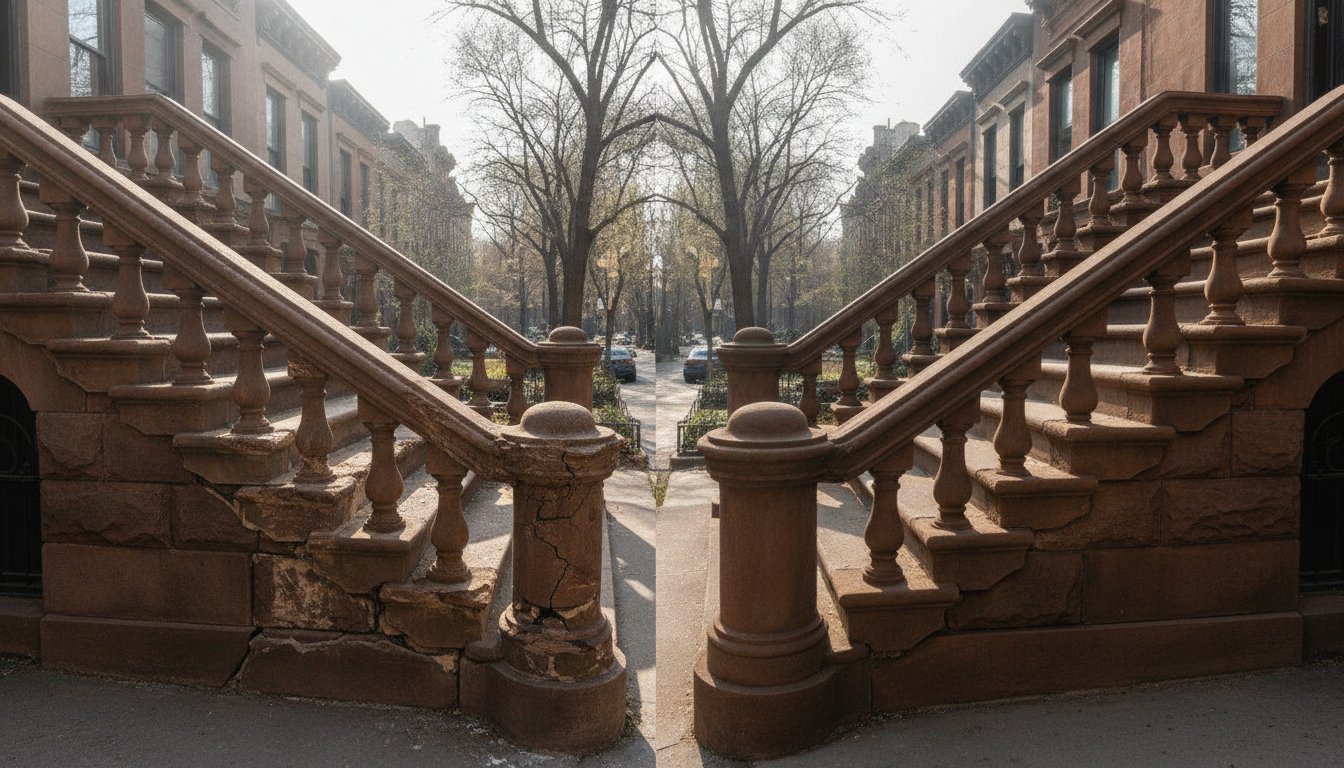
Your stoop is the most significant architectural feature of your Brooklyn home, yet it is often the first to fail under the weight of NYC weather and decades of foot traffic. If you have noticed crumbling treads or received a notice from the Landmarks Preservation Commission, you know the stress of maintaining a historic property. A proper brownstone stoop restoration brooklyn requires more than a quick patch of cement; it demands a deep understanding of masonry and historic compliance. You want a safe, beautiful entrance that respects original craftsmanship without triggering costly fines or safety hazards.
It’s possible to restore your entrance to its 19th-century glory while ensuring it meets modern structural standards. This guide provides the clarity you need to move forward with confidence. We will cover the essential steps of the restoration process, from stripping failed layers to sculpting the final details with historically accurate mortar mixes. You will also learn about current NYC permit timelines through the Portico portal and what to expect regarding project logistics. This roadmap helps you protect your investment and maintain the architectural integrity of your neighborhood.
Key Takeaways
- Learn to identify early warning signs of stone decay, such as surface spalling and the “sugar-coating” effect, before they lead to structural failure.
- Understand the technical phases of a professional brownstone stoop restoration brooklyn, including precision demolition and the application of cementitious scratch coats.
- Navigate the Landmarks Preservation Commission (LPC) requirements to determine when your project needs a permit and how to utilize the Portico filing portal.
- Discover why investing in historically accurate mortar mixes and expert masonry provides a higher return on property value than temporary cosmetic patches.
Identifying Brownstone Stoop Decay: Why Brooklyn Homeowners Can’t Ignore Spalling
The brownstone row houses that define Brooklyn’s skyline are built from a specific type of sandstone that is as beautiful as it is fragile. To understand the root of the problem, one must ask, what is a brownstone and what makes it so vulnerable to decay? It’s a porous material held together by iron oxide. Because of this composition, it’s highly susceptible to spalling. This is the process where the stone’s outer layers begin to flake or peel away, often due to internal pressure or environmental stress. Ignoring these early signs often leads to a more expensive brownstone stoop restoration brooklyn later on.
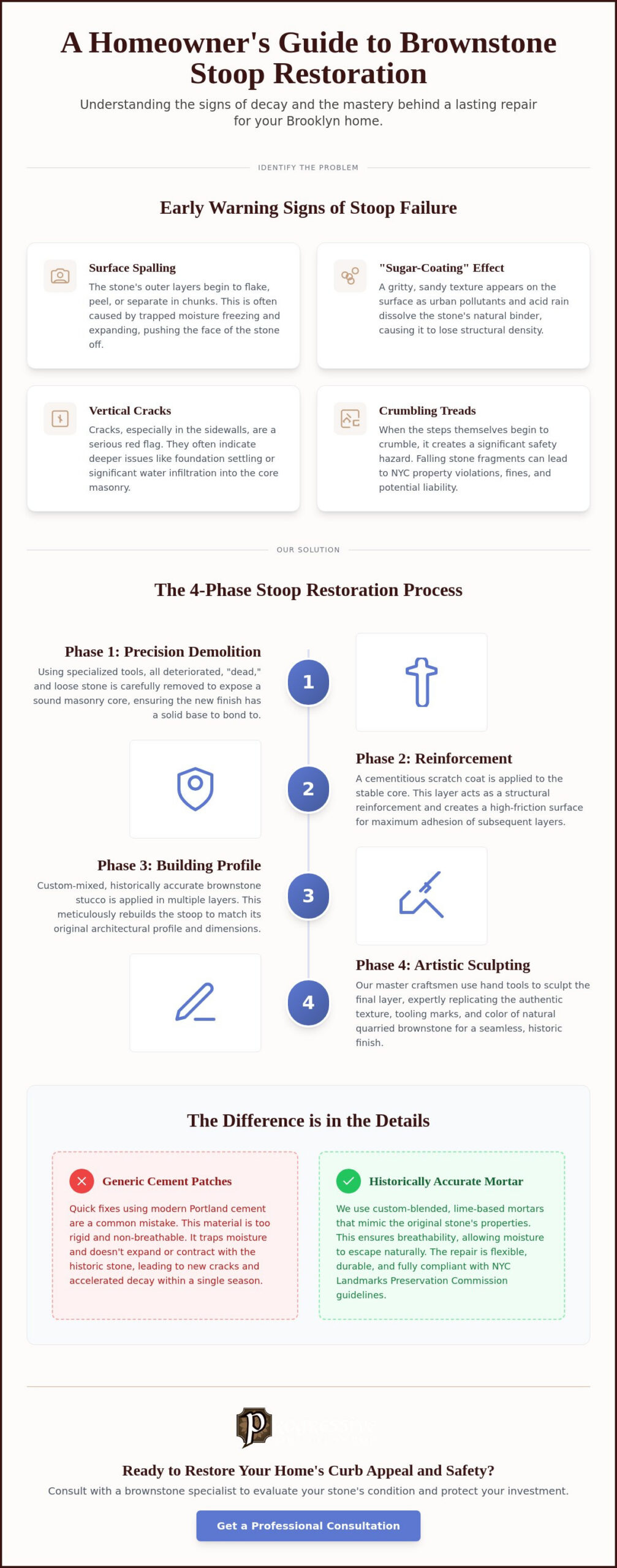
You might also notice a gritty, sandy texture on the surface of your steps. This is known as the “sugar-coating” effect. It happens when acid rain and urban pollutants react with the stone’s natural binder, causing the surface to literally dissolve. If your stoop feels like it’s turning into loose sand under your feet, the stone is losing its structural density. This decay isn’t just a cosmetic flaw; it’s a signal that the masonry is no longer weather-tight. A professional brownstone stoop restoration brooklyn addresses this by stabilizing the core before the profile is lost entirely.
Beyond surface issues, look for vertical cracks in the stoop sidewalls. These cracks often indicate foundation settling or deep water ingress that has reached the core masonry. Crumbling treads create significant safety hazards and can result in NYC property violations. When stone fragments fall onto the sidewalk, you face potential liability and fines from the city. Addressing these red flags early prevents a total structural failure of the entrance.
The Role of Water Infiltration in Stoop Failure
Water is the most common cause of masonry failure in New York. During the winter, Brooklyn’s freeze-thaw cycle wreaks havoc on porous stone. Moisture enters the pores, freezes, and expands, forcing the stone to heave. If the stone has been covered in non-breathable masonry paint, the damage is even worse. The paint traps moisture behind the surface, which eventually causes the entire face of the brownstone to separate and fall off in large chunks.
When to Call a Brownstone Specialist
It’s important to differentiate between minor surface scaling and deep structural rot. While a general contractor might suggest a quick fix, generic cement patches are a mistake. These materials don’t expand or contract at the same rate as historic stone. They’re too rigid, which causes the surrounding brownstone to crack even further within a single season. A specialist uses custom-blended, lime-based mortars that mimic the original stone’s breathability and strength, ensuring a repair that lasts.
The Rammstein Stoop Restoration Process: A Masterwork in NYC Masonry
A successful brownstone stoop restoration brooklyn follows a disciplined sequence to ensure the new facade bonds permanently to the core. The process begins with Phase 1: precision demolition. We use specialized chipping tools to remove all deteriorated or “dead” stone. This step is critical because any remaining loose material will cause the new finish to fail. Once we reach the sound masonry, we move to Phase 2. This involves structural reinforcement and the application of a cementitious scratch coat. This layer creates a high-friction surface that guarantees maximum adhesion for the rest of the project.
The restoration gains its shape during Phase 3. We apply custom-mixed brownstone stucco in layers to match the original architectural profile. Finally, Phase 4 focuses on artistic sculpting. Our craftsmen use hand tools to replicate the texture and tooling of natural quarried stone. This Rammstein stoop restoration method ensures that your home retains its historic character while gaining modern durability. If you’re ready to stabilize your entrance, you can consult with a brownstone specialist to evaluate your stone’s condition.
The Importance of Custom Mortar and Color Matching
We analyze the original stone to create a pigment-matched finish that looks seamless. The science of breathability is vital here. Modern Portland cement is often the enemy of historic masonry because it is too rigid and non-porous. We follow the guidelines in the NYC Landmarks Preservation Commission Rowhouse Manual to ensure our mortar mixes allow moisture to escape, preventing future spalling.
Curing and Weather Protection
Long-term durability depends on the curing phase. We protect fresh masonry from Brooklyn’s humidity and sudden temperature swings. Proper seasonal timing is essential; we avoid extreme heat or freezing conditions that could compromise the chemical bond of the stucco. This methodical approach ensures the restoration survives decades of NYC winters.
Navigating Landmarks (LPC) and Stoop Restoration Costs in Brooklyn
Managing a historic property in a borough with 150 historic districts requires a firm grasp of local regulations. The Landmarks Preservation Commission (LPC) oversees any work visible from a public way, which includes every square inch of your stoop. While minor repairs might move quickly through a staff-level review, significant structural changes often require a more formal permit process. Starting a brownstone stoop restoration brooklyn without the proper paperwork can lead to costly stop-work orders and Department of Buildings violations. It’s always more efficient to ensure compliance before the first chisel hits the stone.
Vetting your contractor is the most effective way to protect your investment. You should always verify that a mason holds updated licenses and comprehensive insurance specific to NYC. Ask to see a portfolio of completed work in districts like Park Slope or Bedstuy to ensure they understand the aesthetic standards of the neighborhood. A qualified expert will be familiar with the technical guidelines found in the NPS Preservation Brief on Historic Masonry. This ensures that the materials used will actually bond with your home’s original 19th-century facade rather than causing it to crack further.
LPC Approval and Permit Requirements
For major reconstructions, homeowners often need a Certificate of Appropriateness. This involves submitting detailed material samples and architectural specifications to the commission. The process has become much more streamlined since the launch of the Portico online portal in March 2024. Progressive Contracting NY Corp handles this complex administrative work for you, managing the filings and ensuring every detail of the project meets strict historic standards.
Maximizing ROI Through Historic Preservation
A professionally restored entrance provides a significant boost to property value and curb appeal. In competitive markets like Brooklyn, a pristine stoop is a primary focal point for buyers and appraisers alike. Beyond the immediate financial gain, proactive masonry maintenance prevents future NYC DOT sidewalk violations that occur when crumbling stone becomes a public hazard. To protect your new finish, avoid using harsh chemical de-icers during the winter. These salts can penetrate the stone’s pores and cause rapid decay, undoing years of careful restoration work in a single season.
Restore Your Property’s Historic Integrity
A crumbling stoop is a solvable problem when you apply the right masonry techniques and respect NYC’s historic standards. You now understand how to identify early stone decay and the importance of the Rammstein restoration process. By choosing materials that allow your brownstone to breathe, you protect your home from the destructive freeze-thaw cycles that plague Brooklyn row houses. This proactive approach eliminates safety hazards and ensures your property remains compliant with local regulations.
Investing in a professional brownstone stoop restoration brooklyn is a commitment to your property’s long-term value. We bring over a decade of experience serving homeowners in Park Slope, Bedstuy, and Manhattan. Our team specializes in Rammstein stoop restoration and provides full support for NYC Landmarks (LPC) compliance. We manage the technical details so you can focus on the result. Get a Free Estimate for Your Brooklyn Stoop Restoration. Your historic home deserves a steady hand and expert craftsmanship to return it to its original architectural glory.
Frequently Asked Questions
How long does a brownstone stoop restoration typically take in Brooklyn?
A standard restoration usually takes between two and four weeks to complete. This timeline includes the sequential phases of precision demolition, structural scratch coats, and the final artistic sculpting. Brooklyn’s weather plays a significant role in this schedule, as masonry requires specific temperature windows to cure for maximum durability. Intricate projects with extensive hand-carved detailing may require additional time to ensure a perfect finish.
Do I need a permit from the Landmarks Preservation Commission (LPC) to fix my stoop?
You generally need an LPC permit if your property is landmarked or located within a historic district. Most exterior work visible from the street requires approval before construction begins. Minor repairs often qualify for staff-level reviews through the Portico portal, which is faster than the public hearing process for major reconstructions. We handle the necessary filings to ensure your brownstone stoop restoration brooklyn meets all city requirements.
Why is my brownstone stoop crumbling or peeling?
The primary cause of crumbling is spalling, which occurs when moisture enters the stone’s pores and expands during freeze-thaw cycles. This internal pressure forces the outer layers of the iron-oxide sandstone to flake away. Over time, acid rain and urban pollutants also break down the stone’s natural binders. This creates a “sugar-coating” effect where the steps literally dissolve into sand, indicating that the stone’s structural integrity is failing.
Can you match the color of my new stoop to the rest of the brownstone facade?
We achieve a seamless match by analyzing the specific hue and mineral texture of your existing stone. Our specialists use custom-blended mortar and specific pigments to replicate the look of the original 19th-century masonry. Understanding what is a brownstone’s unique geological composition is essential to achieving this level of color accuracy. This level of precision is a standard part of a professional brownstone stoop restoration brooklyn. The goal is to create a repair that is indistinguishable from the rest of the facade, preserving the home’s historic character.