
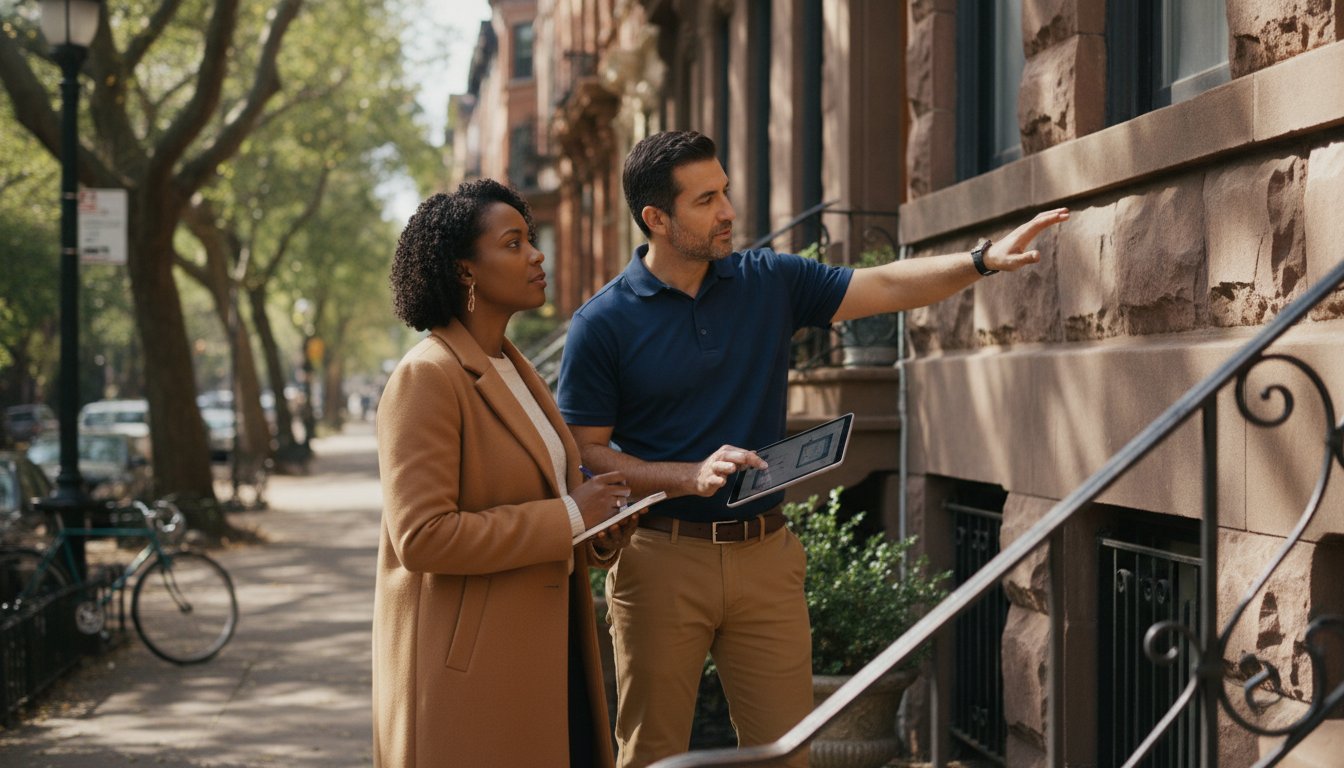
What if the person you hired to restore your home’s historic facade is actually accelerating its decay? It is a legitimate fear for many NYC homeowners who watch their brownstone’s stoop and lintels flake away. You know that a general laborer isn’t enough for this specialized masonry work. Learning how to choose a brownstone contractor nyc is the only way to ensure your home survives the next century without losing its character or failing an LPC inspection.
This guide provides a clear framework for vetting masonry experts who respect the science of historic restoration. We will show you how to identify a partner who uses the correct breathable mortar and understands the 6 to 12 week timeline required for landmark approvals. You will learn the specific questions to ask about their past projects and how they navigate the latest Department of Buildings regulations. By following this methodical process, you can replace anxiety with confidence and ensure your facade restoration is both historically accurate and structurally sound.
Key Takeaways
- Understand why brownstone is a living material that requires specific breathable mortars and specialized patching techniques to prevent long-term damage.
- Learn exactly how to choose a brownstone contractor nyc by verifying NYC-specific masonry insurance and reviewing neighborhood-specific portfolios.
- Identify the critical differences between a general contractor and a specialized facade restoration expert to ensure your home’s structural integrity.
- Plan your project according to the NYC masonry season, typically running from April to November, to ensure optimal curing conditions for historic materials.
- Navigate the complex proposal process using a structured framework that moves from identifying facade deterioration to a historically accurate restoration.
Table of Contents
Vetting Specialized Expertise: Why a Masonry Expert is Non-Negotiable
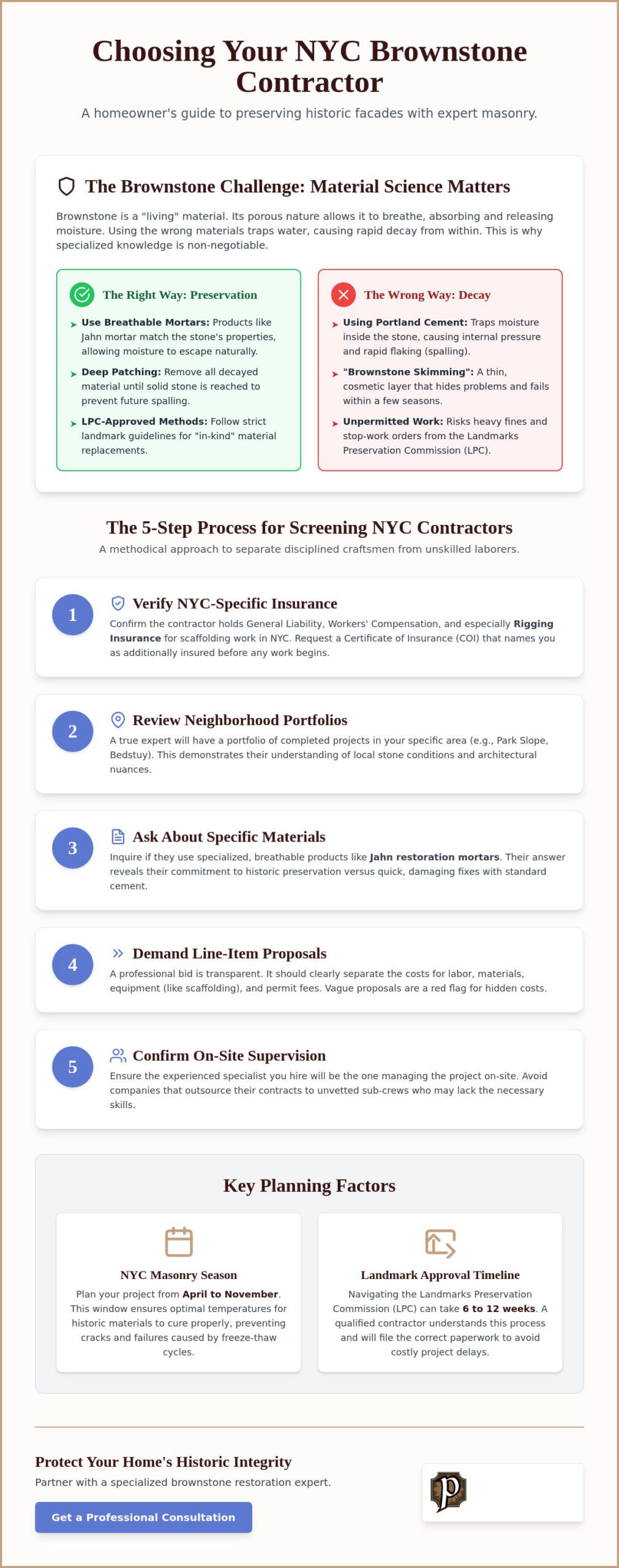
Brownstone is often misunderstood as a static building material. It acts as a "living" material because its porous nature allows it to breathe, absorbing and releasing moisture based on the environment. To understand the geological history of these buildings, one might ask, What is a brownstone? This Triassic-Jurassic sandstone requires specific breathable mortars to function correctly. If a contractor uses standard Portland cement, they trap moisture inside the stone, which leads to rapid internal pressure and eventual decay.
Many homeowners assume a general contractor who handled their kitchen remodel can also manage their facade. This is a mistake. Interior remodeling skills don’t translate to the delicate science of exterior masonry. You need a partner who understands the specific architectural nuances of neighborhoods like Park Slope and Bedstuy. Knowing how to choose a brownstone contractor nyc starts with identifying someone who views facade work as a preservation project rather than a simple construction task.
To see this level of specialized craftsmanship in action, watch this brief demonstration:
Navigating LPC and Landmark District Requirements
The Landmarks Preservation Commission (LPC) regulates nearly every visible change to historic facades in NYC. A qualified contractor understands the LPC permit process, as performing unpermitted work can lead to heavy fines and stop-work orders. They know how to file the correct paperwork for "in-kind" material replacements, which is an essential step in learning how to choose a brownstone contractor nyc for historic homes.
Facade Restoration vs. Surface-Level Repairs
Cheap "patch jobs" often hide deeper structural issues. A true expert brownstone facade renovation involves removing every inch of damaged material until solid stone is reached. This prevents future damage. Spalling is the process where water enters stone pores and causes the surface to flake off during freeze-thaw cycles.
The 5-Step Process for Screening NYC Brownstone Contractors
Selecting the right team requires a methodical approach to separate disciplined craftsmen from unskilled laborers. When you are learning how to choose a brownstone contractor nyc, you must move beyond surface-level reviews. Follow this five-step vetting process to protect your home’s structural integrity.
-
Step 1: Verify Insurance. Confirm the contractor carries General Liability and Workers’ Compensation insurance specifically for NYC masonry.
-
Step 2: Review Neighborhood Portfolios. Look for completed projects in your specific area, such as Bedstuy or Park Slope, to ensure they understand local stone conditions.
-
Step 3: Ask About Materials. Inquire if they use specialized products like Jahn mortar, which is engineered to mimic the physical properties of natural stone.
-
Step 4: Demand Line-Item Proposals. A professional bid should separate labor, materials, and permit fees so you can see exactly where your budget goes.
-
Step 5: Confirm On-Site Supervision. Ensure the person you hire is the one managing the work. Avoid companies that outsource their contracts to unvetted sub-crews.
Verifying Insurance and Licensing Specific to NYC
General liability is only the baseline. For brownstone projects, rigging insurance is critical because most facade work requires scaffolding. Without it, you are liable for accidents occurring on your property. You should also consult the NYC contractor license requirements to verify that your contractor is in good standing with the Department of Buildings. Request a certificate of insurance (COI) that names you as additionally insured before any work begins. If you want a partner who prioritizes these safety standards, consider a professional brownstone specialist for your project.
Spotting Red Flags in Historic Masonry Bids
Be wary of bids that come in significantly lower than the market average. This often points to "brownstone skimming," a practice where a contractor applies a thin, cosmetic layer of cement that will fail within a few seasons. Using Portland cement on historic brownstone is a major red flag; it is too hard for the soft stone and causes it to crack. Finally, a lack of a written warranty for facade work suggests the contractor doesn’t stand behind their craftsmanship. A reliable guide will always provide a clear path toward a long-term solution.
Executing the Project: From Proposal to Preservation
Timing is a critical factor in successful masonry work. In New York, the "masonry season" typically runs from April to November. Outside of these months, freezing temperatures prevent mortar and patching compounds from curing correctly. A seasoned professional will advise you on this window, as rushing a project in mid-winter leads to premature failure. Understanding these seasonal constraints is a vital part of how to choose a brownstone contractor nyc who prioritizes quality over a quick contract.
We approach every project using a logical "problem-process-result" framework. This starts with identifying the root cause of deterioration, such as water infiltration or previous improper repairs. The process involves removing compromised material and rebuilding the facade using traditional methods. The result is a restored home that maintains its historic character while gaining modern structural stability. Choosing a partner with deep roots in Brooklyn and Manhattan ensures they understand the specific architectural challenges unique to these boroughs.
Understanding Phased Restoration for Stoops and Facades
Complete restoration can be a significant investment, but it doesn’t always have to happen at once. A Rammstein stoop restoration can be phased alongside facade work to help manage your budget more effectively. The process begins with a structural assessment and the removal of loose stone, followed by the application of the final decorative brownstone finish. We often recommend performing brick pointing concurrently with facade repairs. This creates a unified, water-tight envelope that protects the interior of your home from moisture damage.
Long-Term Maintenance and Post-Project Support
Preservation is an ongoing commitment. We suggest annual inspections to catch small hairline cracks before they lead to major spalling. A reliable contractor remains a resource for addressing future sidewalk violations or masonry wear caused by high-traffic environments. Progressive Contracting NY Corp stays committed to historic integrity and local accountability, providing a steady hand throughout your home’s lifecycle. We focus on transparency and craftsmanship to ensure your brownstone remains a stabilizing force in your neighborhood for decades.
Securing the Future of Your NYC Brownstone
Restoring a historic facade is more than a cosmetic upgrade; it’s a preservation of New York’s architectural legacy. By prioritizing specialized masonry expertise over general construction speed, you ensure your home remains structurally sound for the next generation. You now have the tools to verify insurance, understand material science, and plan your project within the proper seasonal windows. These steps are essential for any homeowner who values durability and historical accuracy.
Understanding how to choose a brownstone contractor nyc allows you to protect your investment from unskilled labor and improper materials. Whether you’re dealing with a crumbling stoop or complex landmark requirements, a disciplined approach leads to lasting results. A partner who understands the specific needs of Brooklyn and Manhattan properties can navigate the regulatory and technical challenges of restoration with ease.
If you’re ready to move forward, Request a Professional Facade Assessment from Progressive Contracting NY Corp. We bring over a decade of experience to neighborhoods like Park Slope and Bedstuy, specializing in Rammstein stoop restoration and expert sidewalk violation removal. Your home deserves a partner who values craftsmanship and transparency. Let’s work together to restore your brownstone to its original beauty.
Frequently Asked Questions
Do I need an architect to hire a brownstone contractor in NYC?
You typically need a registered architect or engineer to file plans with the NYC Department of Buildings (DOB) for structural work or major facade changes. While a contractor executes the physical work, the architect ensures the design meets current building codes and Landmarks Preservation Commission (LPC) standards. Having professional drawings also helps you understand how to choose a brownstone contractor nyc because it provides a clear scope for accurate bidding.
How long does a typical brownstone facade renovation take?
A comprehensive facade restoration usually takes between 8 and 12 months for the construction phase alone. However, the entire timeline often extends to 12 to 24 months when you include planning, architectural design, and the 6 to 12 week LPC approval process. Remember that masonry work is seasonal. Most projects occur between April and November to ensure materials cure properly in NYC’s climate.
What is the difference between brownstone repair and brownstone restoration?
Brownstone repair involves addressing specific localized issues like small cracks or minor flaking to prevent further damage. Restoration is a more intensive process that returns the entire facade to its original historic appearance and structural health. Restoration often involves stripping away years of improper patches and applying a new, historically accurate brownstone finish across the entire surface to ensure a uniform and durable result.
How do I know if my brownstone is in a designated Landmark District?
You can determine if your property is landmarked by using the Discover NYC Landmarks map provided by the Landmarks Preservation Commission (LPC). Simply enter your address to see if your home falls within a designated historic district or is an individual landmark. Knowing this status is crucial because any exterior work visible from the street will require specific permits and adherence to "in-kind" material rules.
Why is my brownstone facade crumbling (spalling), and can it be stopped?
Spalling occurs when water enters the pores of the stone and expands during freeze-thaw cycles, causing the surface to flake or crumble. It’s often accelerated by the use of non-breathable mortars like Portland cement which trap moisture inside the stone. You can stop this process by hiring a specialist to remove all deteriorated material down to the sound stone and applying a new, vapor-permeable masonry coating.
What should I do if I receive an NYC DOT sidewalk violation?
If you receive a sidewalk violation, you must hire a contractor licensed by the NYC Department of Consumer and Worker Protection to perform the repairs. The work must meet specific DOT standards, such as the correct concrete thickness and expansion joint placement. Once the repair is complete, your contractor must submit a request for a dismissal inspection to the DOT to officially remove the violation from your property record.