
In New York City, a single mistake on a brownstone facade doesn’t just cost money; it can trigger a cascade of DOT violations and Landmarks Preservation Commission (LPC) fines that haunt a property for years. Knowing the right questions to ask masonry contractor candidates is the only way to protect your investment and your peace of mind. You’ve likely spent hours worrying if a team truly understands the nuances of historic restoration or if they’re just another crew with a trowel. It’s stressful to hand over your building’s structural integrity to someone when local regulations feel like a moving target.
This guide equips you with a professional vetting checklist to ensure your project is handled by a true restoration expert. You’ll learn how to verify insurance, navigate the 2026 building code updates, and manage the latest 90-day sidewalk shed permit limits. We’ll walk through the essential steps to secure a durable, aesthetically correct facade while maintaining total compliance with NYC’s evolving regulatory landscape. By the end of this article, you’ll have the confidence to choose a partner who values precision as much as you do.
Key Takeaways
- Confirm the contractor holds a valid NYC Home Improvement Contractor (HIC) license and insurance that specifically covers facade work at height.
- Use our checklist of questions to ask masonry contractor professionals to verify they use lime-based, breathable mortars suitable for historic structures.
- Identify the correct technical approach for brownstone restoration, including proper bonding techniques for spalling repairs that prevent future deterioration.
- Establish financial clarity by requiring line-item estimates and a payment schedule that aligns with project milestones rather than large upfront deposits.
- Navigate NYC-specific hurdles like Landmarks Preservation Commission (LPC) approvals and the 2026 building code updates with confidence.
Credentials and Compliance: Questions to Verify NYC Expertise
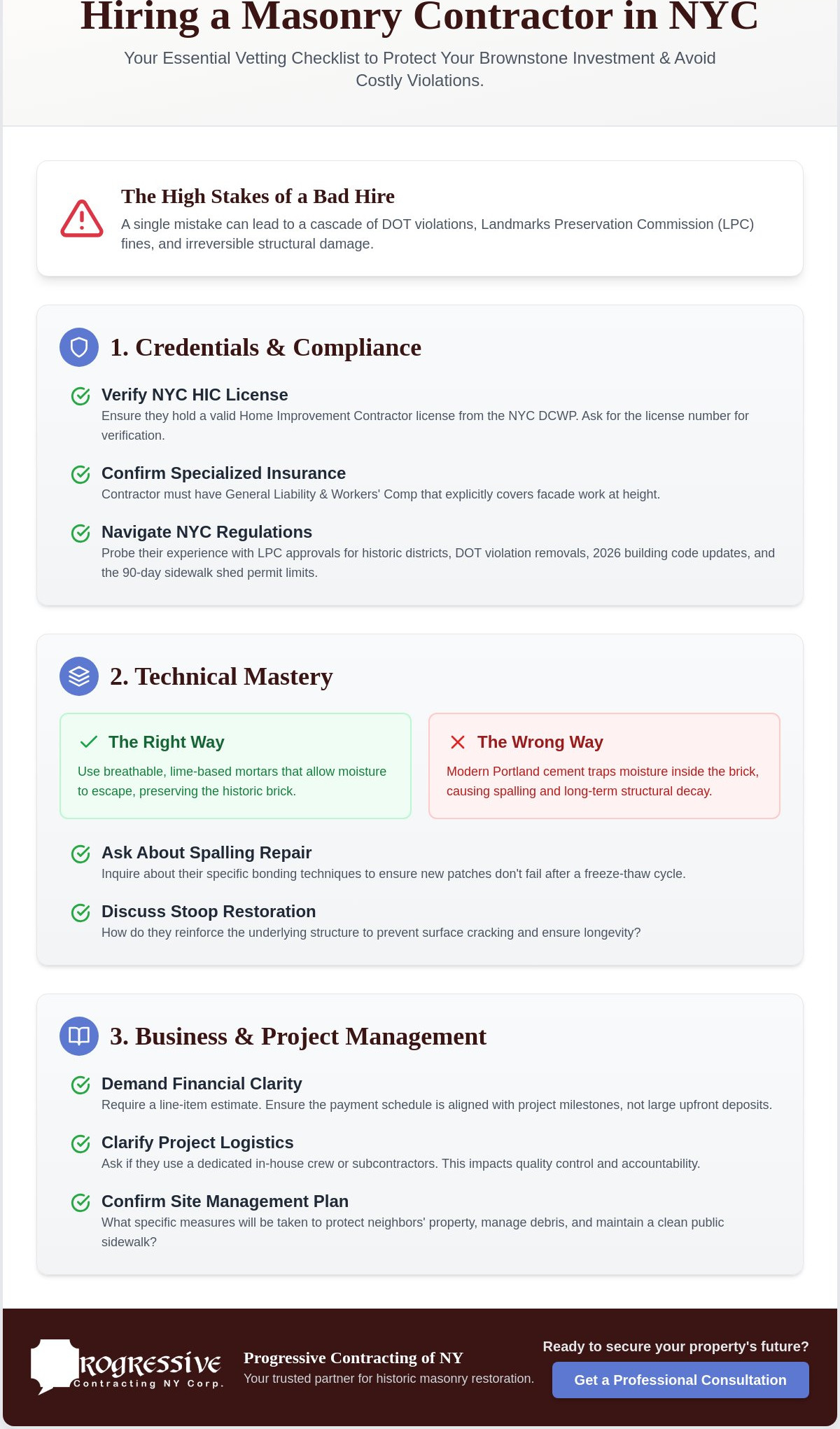
Hiring a team for a historic building isn’t just about finding a skilled hand; it’s about legal protection. You must confirm that your candidate holds a Home Improvement Contractor (HIC) license issued by the NYC Department of Consumer and Worker Protection. An NYC masonry license is non-negotiable for property protection because it ensures the business is bonded and regulated by the city, shielding you from liability. Before signing any contract, these are the essential questions to ask masonry contractor candidates regarding their legal standing:
- Are you specifically licensed as an HIC, and can you provide your license number for verification?
- Do you carry general liability and workers’ compensation insurance that explicitly covers work at heights and facade-specific risks?
- Can you show me a portfolio of recently completed projects in neighborhoods like Park Slope or Bedstuy?
To understand the fundamentals of what is masonry and why it requires specialized licensing, one must look at the structural demands of NYC buildings. Professional expertise is what prevents a minor repair from becoming a structural failure.
To better understand this concept, watch this helpful video:
Navigating Landmarks (LPC) and DOT Requirements
NYC’s regulatory environment is unique. A contractor must understand the Landmarks Preservation Commission (LPC) rules to avoid stop-work orders on historic brownstones. They need to prove they have successfully pulled permits for Brownstone Facade Restoration in the past. When interviewing, use these questions to ask masonry contractor teams to ensure they understand the 2026 building code updates. Ask about their experience with NYC DOT sidewalk violation removals and the subsequent inspection process. Since January 2026, sidewalk shed permits are capped at 90 days, so your contractor needs a clear plan to meet these tight deadlines. Always request specific examples of how they’ve managed historic district restrictions and permit filings in the past. This level of transparency ensures your project stays on schedule and avoids costly city fines.
Technical Mastery: Asking About Brownstone and Historic Restoration
Expertise in historic restoration isn’t a general skill; it’s a specific discipline that requires deep knowledge of materials used over a century ago. When vetting a team, one of the most critical questions to ask masonry contractor candidates is what specific mortar mix they use for brick pointing on pre-war structures. You want to hear they use breathable, lime-based mixes rather than pure Portland cement. Using the wrong material traps moisture inside the brick, which often leads to irreversible structural decay. This technical precision is tied to meeting NYC General Contractor Registration Requirements, which emphasize the importance of following city-mandated construction standards.
Spalling repair is another area where many generalists fail. You should ask exactly how they approach specialized brownstone repair to ensure the new layer bonds permanently with the original stone. Without the right preparation and bonding agents, patches will simply fall off after a single NYC freeze-thaw cycle. This same attention to detail applies to Rammstein stoop restoration. Ask your contractor how they reinforce the underlying structure to prevent the surface cracking that often plagues historic stoops. If you want to ensure your building’s longevity, it’s wise to consult a brownstone specialist who understands these specific nuances.
Project Logistics and Site Management
Successful restoration requires more than just technical skill; it demands organized site management. These are important questions to ask masonry contractor teams before they arrive at your property:
- Will you use a dedicated in-house crew, or do you subcontract the masonry work to third parties?
- What specific measures do you take to protect my neighbors’ property and the public sidewalk during construction?
- How do you handle debris removal on high-density Manhattan or Brooklyn residential blocks?
In-house teams typically provide better quality control and accountability than subcontractors. A professional team will have a clear, documented process for handling waste and maintaining a clean site. This prevents neighbor complaints and protects you from city fines related to site maintenance. Clear logistical planning is just as important as the masonry work itself when working in a dense urban environment.
Business Transparency: Estimates, Warranties, and Payments
Financial transparency is the foundation of a successful restoration partnership. You should always demand an estimate that provides a clear line-item breakdown of materials, labor, and permit fees. This level of detail prevents hidden costs from surfacing mid-project and ensures you aren’t overcharged for administrative tasks. When considering the right questions to ask masonry contractor teams, your focus should remain on the payment schedule. Avoid contractors who require a large deposit before materials arrive on-site. A standard NYC payment schedule should align with verifiable milestones, such as scaffold installation or completion of the first phase of brick pointing.
A comprehensive written contract with a detailed scope of work is the only safeguard against project creep and financial disputes. This document must clearly state what the warranty covers and for how long. You want a guarantee that covers the structural integrity of the masonry work, ensuring the repairs meet Masonry Technical and Safety Standards. If a contractor hesitates to put these terms in writing, it’s a sign they may not stand behind their craftsmanship. These questions to ask masonry contractor candidates protect your budget as much as your building’s facade.
The Final Walkthrough and Post-Project Support
The work isn’t finished when the scaffolding comes down. You need a clear process for addressing “punch list” items, which are minor corrections identified after the main equipment is removed. If your project involved sidewalk repairs, ensure the contractor provides a final signed-off inspection report from the city to clear any outstanding DOT violations. For those focused on the longevity of their property, investing in Brownstone facade restoration nyc ensures you have access to expert maintenance advice long after the initial project concludes. This proactive approach preserves the historic value of your building and prevents the need for major repairs in the future.
Securing Your Building’s Future with Professional Restoration
Restoring a historic NYC property is a significant responsibility that requires a balance of technical skill and regulatory knowledge. By using this checklist of questions to ask masonry contractor candidates, you’ve taken the first step toward protecting your building’s structural integrity and aesthetic value. True experts prioritize breathable materials and transparent business practices, ensuring your project meets updated city standards without unexpected delays or costs. This thorough vetting process eliminates the anxiety of poor craftsmanship and costly city fines.
Progressive Contracting NY Corp brings decades of experience to every Brooklyn and Manhattan brownstone restoration. Our team understands the rigorous Landmarks Preservation Commission (LPC) standards and has a proven track record of successful NYC DOT sidewalk violation removal. We believe in building trust through clear communication and meticulous craftsmanship. Don’t leave your facade’s health to chance. Request a professional facade assessment from Progressive Contracting NY Corp today. We’re ready to help you preserve your property for the next generation.
Frequently Asked Questions
How do I verify a masonry contractor’s license in NYC?
You can verify a license by visiting the NYC Department of Consumer and Worker Protection (DCWP) website. Use their “Search for a Licensee” tool to look up the business by name or license number. This step confirms the contractor is legally authorized and bonded to perform home improvements in the city. Always ensure the license is current and matches the name on your contract to protect your legal rights.
What is the difference between a general mason and a brownstone specialist?
A general mason often works with modern concrete and standard brick, while a brownstone specialist focuses on historic restoration. Specialists understand the chemical composition of old stone and use breathable, lime-based mortars. Using the wrong materials can cause moisture to trap inside your building’s facade, leading to structural damage. Choosing a specialist ensures your historic building’s aesthetic and integrity remain intact for decades.
Do I need a permit for minor brick pointing or brownstone repair in a historic district?
Yes, if your building is in a historic district, you almost always need a permit from the Landmarks Preservation Commission (LPC). Even minor brick pointing or facade cleaning must follow specific guidelines for color and material matching. Starting work without an approved permit often results in heavy city fines and immediate stop-work orders. A seasoned contractor will handle this filing process as part of their project management.
What should be included in a masonry contract to avoid hidden costs?
Your contract should include a line-itemized breakdown of labor, materials, permit fees, and debris removal. It’s essential to define specific payment milestones tied to project progress rather than time. Including these details is one of the top questions to ask masonry contractor teams to prevent mid-project price hikes. A clear “scope of work” ensures both parties have the same expectations for the final result.