
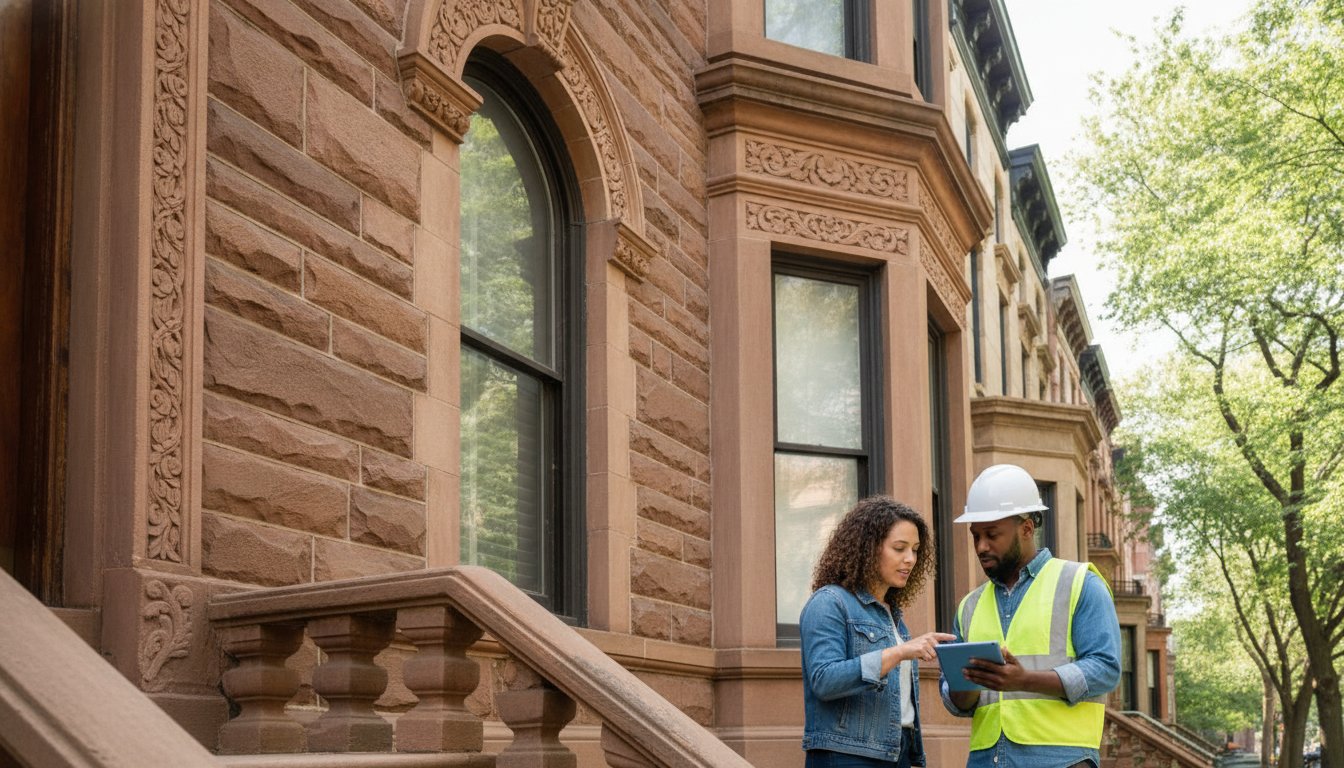
In New York City, a single unapproved repair on a landmarked brownstone can trigger fines that far outweigh the cost of the original masonry work. Getting landmark approval for facade work nyc doesn’t have to be a source of anxiety, but it does require a disciplined approach to historic standards. You likely want to restore your property’s original character, yet the prospect of navigating the Landmarks Preservation Commission (LPC) often feels like a bureaucratic maze. It’s natural to feel concerned about choosing the wrong permit or hiring a contractor who doesn’t respect the structural integrity of a 19th-century building.
We’re here to provide a steady hand through this complex process. This guide will help you master the LPC permit requirements so your brownstone restoration proceeds smoothly and remains fully compliant with city law. You’ll gain a clear understanding of the differences between a Permit for Minor Work (PMW) and a Certificate of No Effect (CNE). We’ll also provide a roadmap for matching historic materials and managing timelines, ensuring your facade preserves both New York’s architectural history and your long-term property value.
Key Takeaways
- Identify whether your project requires a Certificate of No Effect (CNE) or a Permit for Minor Work (PMW) based on the scope of your facade restoration.
- Learn why hiring an experienced masonry contractor who specializes in historic NYC brownstones is the first step toward a successful application.
- Discover the specific documentation and high-resolution photography required to meet the NYC Landmarks Preservation Commission’s rigorous standards.
- Simplify the process of getting landmark approval for facade work nyc by avoiding common administrative pitfalls like missing signatures or notary seals.
- Understand the typical approval timelines and how to set realistic expectations for your restoration project’s start date.
Understanding the 3 Primary LPC Permit Types for Facade Work
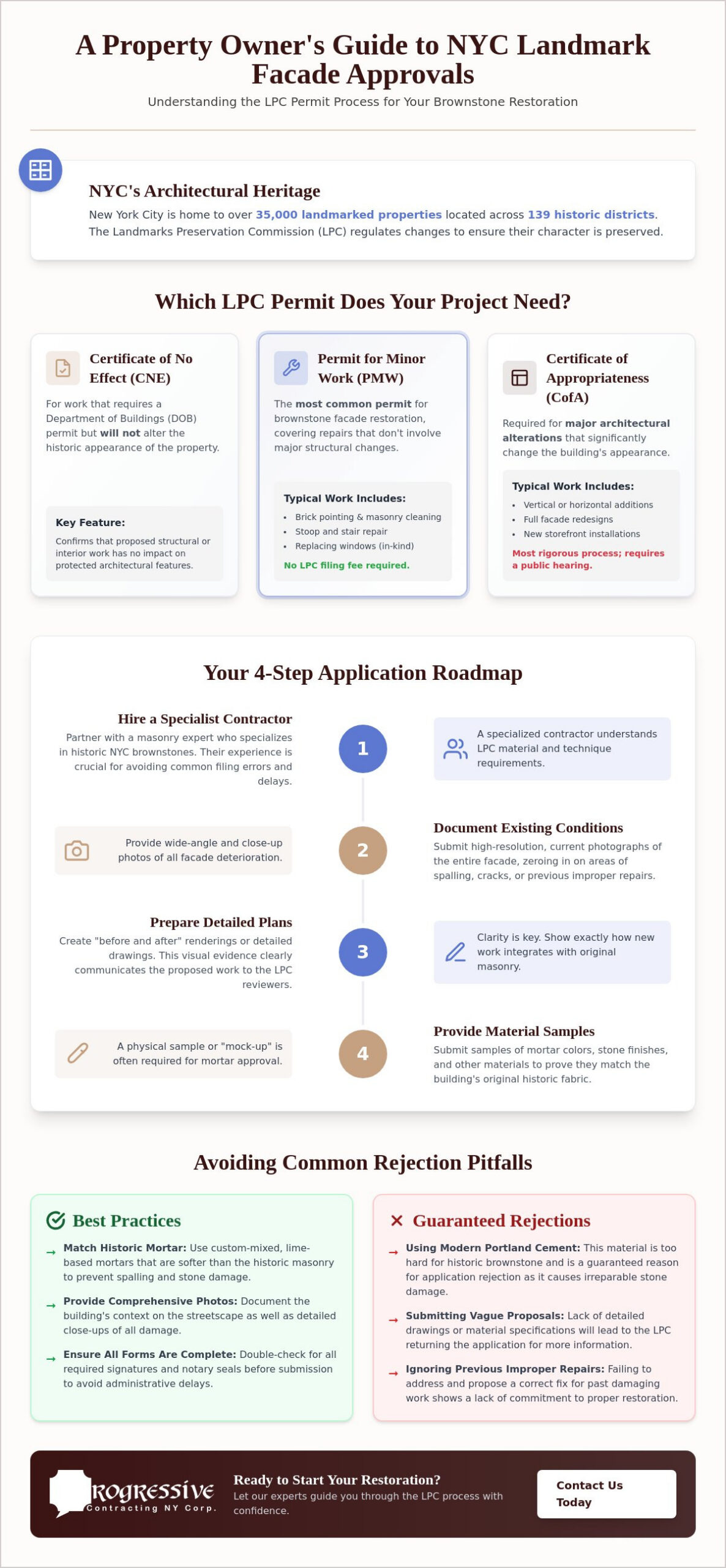
The process of getting landmark approval for facade work nyc starts with a simple check of your property’s status. New York City contains over 35,000 landmarked properties located across 139 historic districts. Your first step is to confirm whether your building is an individual landmark or sits within one of these districts. The New York City Landmarks Preservation Commission (LPC) regulates these properties to ensure that any physical changes respect the city’s architectural heritage.
To better understand why these regulations matter beyond simple aesthetics, watch this helpful video:
The LPC issues three main types of permits based on the scope of your project. A Certificate of No Effect (CNE) applies when your work requires a Department of Buildings (DOB) permit but won’t change the building’s historic appearance. A Permit for Minor Work (PMW) is the most frequent choice for masonry restoration. Finally, a Certificate of Appropriateness (CofA) is reserved for major architectural alterations.
CNE vs. PMW: Which One Fits Your Restoration?
The distinction between a CNE and a PMW depends on whether the work requires a DOB permit. Most brownstone facade renovations, such as brick pointing or stoop repair, fall under the Permit for Minor Work category because they involve surface-level restoration rather than structural changes. If your project includes replacing windows or cleaning masonry without changing the building’s character, a PMW is likely your path forward. This permit has no LPC filing fee, making it a cost-effective choice for standard maintenance.
The Certificate of Appropriateness Process
If your project involves a significant change, such as a vertical addition or a full facade redesign, you must apply for a Certificate of Appropriateness. This is the most rigorous path for getting landmark approval for facade work nyc. It requires a public hearing where you or your contractor must present the proposal. Your local Community Board will also review the plans and provide a recommendation to the LPC. Because this process involves public testimony and committee reviews, it typically takes longer than the expedited paths for minor work.
Steps to Prepare a Successful Landmark Application
Getting landmark approval for facade work nyc requires more than just filling out forms; it requires a technical presentation of your building’s current state and your plan for its future. You must demonstrate a clear understanding of your property’s specific needs before submitting your application. The first step is to partner with a masonry contractor who specializes in historic NYC brownstones. These professionals understand the nuances of the LPC’s requirements and can help you avoid common filing errors that delay projects for months.
Next, you need a visual record of the property. High-resolution, current photographs are essential for a complete submission. These photos should cover the entire facade and zero in on specific areas of deterioration. When you move to the design phase, create detailed drawings or “before and after” renderings of the proposed work. This level of detail is the most effective way of getting landmark approval for facade work nyc because it allows the commission to see exactly how the new masonry will integrate with the original structure. Finally, provide material samples, including specific mortar colors and stone finishes, to match the original historic fabric.
Documenting Existing Conditions
Your documentation should highlight the physical challenges your building faces. Focus on capturing spalling, deep cracks, and any previous improper repairs that have caused damage over time. Wide-angle shots provide necessary context for the building’s location within the streetscape, while close-up photos allow LPC staff to inspect the specific texture and depth of the masonry decay.
Matching Historic Materials and Mortar
The LPC is particularly strict about the composition of your materials. Many homeowners make the mistake of using modern Portland cement, but this is a guaranteed way to get an application rejected because it’s too hard for historic brownstone and often causes the stone to shatter. Instead, your contractor will perform a “mock-up” process. This involves applying a small sample of custom-mixed mortar to the building for LPC staff to inspect. They’ll check for color, aggregate size, and texture to ensure a seamless match. If you’re ready to begin this meticulous process, consulting with an experienced brownstone specialist can ensure your materials meet every historic standard.
Approval Timelines and Avoiding Common Rejection Pitfalls
Timing is a critical factor in any restoration project. For a complete application, typical wait times for a Permit for Minor Work (PMW) or a Certificate of No Effect (CNE) range from 10 to 30 business days. However, this timeline only applies if your submission is flawless. The most frequent cause of delay is the “incomplete application” trap. You must ensure all required signatures and notary seals are present before submission. Missing a single seal can reset your waiting period, pushing your project start date back by weeks.
The financial stakes of skipping the permit process are high. “Work Without a Permit” violations from the LPC are severe and can reach thousands of dollars in civil penalties. Beyond the fines, the commission may require you to undo any work that doesn’t meet historic standards, doubling your restoration costs. This is particularly true in districts with strict oversight, such as Park Slope or the Upper West Side, where specific neighborhood rules govern everything from cornices to ironwork. Understanding these local nuances is essential for getting landmark approval for facade work nyc without facing unexpected legal hurdles.
Expedited Review and Fast-Track Options
If your project is time-sensitive, look into the LPC’s accelerated programs. You may qualify for an Expedited Certificate of No Effect (XCNE) for specific interior work that supports facade integrity, which typically offers a 5-day review. Additionally, the Fast-Track program provides a 10-day review for certain non-visible exterior repairs. These options are valuable tools for getting landmark approval for facade work nyc without the standard month-long wait, provided your plans meet the strict eligibility criteria.
Why Professional Masonry Expertise Matters
Navigating these regulations requires a partner who understands the administrative side of restoration as well as the physical side. Working with a brownstone specialist who has an established track record with the LPC ensures your application is formatted correctly the first time. Before signing a contract, verify that your masonry team carries the specific insurance required for landmarked NYC properties. This protects your investment and ensures that your project meets the city’s rigorous safety and preservation standards from start to finish.
Protecting Your Property’s Historic Value
Restoring a landmarked facade is a significant investment in New York City’s architectural legacy. Success requires a disciplined approach to permit selection, meticulous documentation, and the precise matching of historic materials. By following this structured roadmap for getting landmark approval for facade work nyc, you safeguard your home against costly fines and ensure the work meets the highest standards of craftsmanship. Orderly planning and professional guidance are the most effective ways to avoid the bureaucratic delays that often stall restoration projects.
Since 2010, we’ve specialized in historic brownstone masonry and building facade restoration. Our team brings extensive experience in facade compliance and NYC sidewalk violation removal, providing a steady hand through every stage of the LPC process. We’ve built a proven track record of successful projects in historic districts throughout Park Slope and Manhattan, focusing on durability and structural integrity.
Get expert help with your NYC Landmark application and facade restoration today. Our expertise ensures your restoration is completed on time and in full compliance with city regulations. We look forward to helping you preserve the unique character of your historic home.
Frequently Asked Questions
How long does it take to get LPC approval for facade work in NYC?
Standard approval for facade work takes between 10 and 30 business days once the Landmarks Preservation Commission receives a complete application. If you are getting landmark approval for facade work nyc through the Fast-Track program, you might receive a permit in as little as 10 days. These timelines depend heavily on the accuracy of your documentation and the complexity of the restoration project.
Can I repair my brownstone stoop without a landmark permit?
No, you cannot legally repair or restore a brownstone stoop in a historic district without a permit. Most stoop projects require a Permit for Minor Work (PMW) because they involve restoring the building’s historic masonry and character. Skipping this step risks a stop-work order and heavy fines, even if you are performing “in-kind” repairs that match the original stone perfectly.
What happens if I start facade work without LPC approval?
Starting work without approval triggers “Work Without a Permit” violations that can cost thousands of dollars in civil penalties. The LPC has the authority to halt your project immediately and may require you to remove any unapproved materials at your own expense. This process for getting landmark approval for facade work nyc is designed to protect the city’s architectural integrity, and the commission strictly enforces these regulations.
Does interior remodeling require a landmark permit in a historic district?
Yes, most interior renovations in landmarked buildings require a Certificate of No Effect (CNE) if they require a permit from the Department of Buildings. While interior work generally doesn’t change the building’s historic exterior, the LPC must verify that the project won’t impact the structure’s protected features. For minor interior changes, you may qualify for an Expedited Certificate of No Effect (XCNE), which offers a 5-day review.