
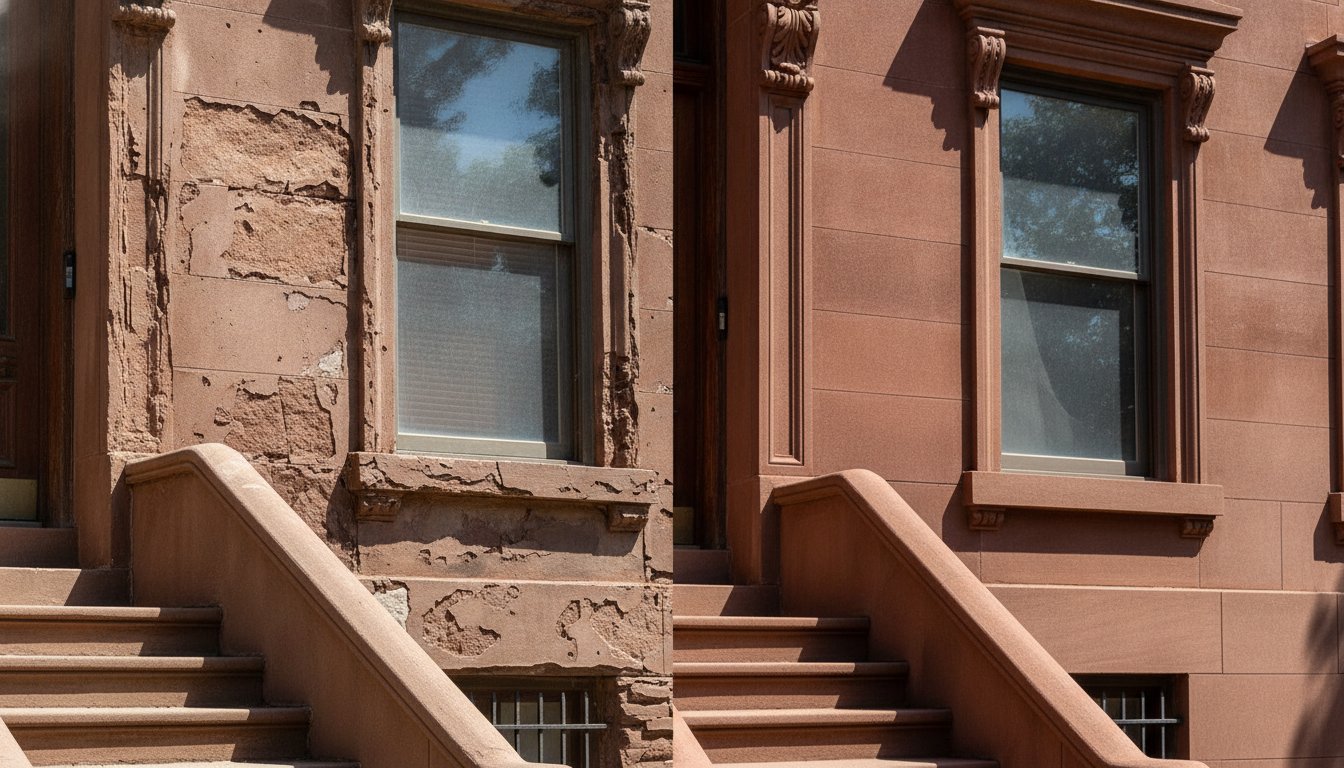
Your brownstone is a living piece of New York history, but the wrong repair materials could be suffocating the stone from the inside out. Most homeowners in neighborhoods like Park Slope or Bed-Stuy feel a deep sense of pride in their historic facades, yet they often face a constant undercurrent of anxiety. You might notice small flakes of stone on the sidewalk or worry that an unexpected violation from the Landmarks Preservation Commission is waiting in your mailbox. A proper brownstone restoration is about more than just aesthetics; it is a technical process of moisture management and structural preservation.
We understand that the restoration process can feel overwhelming and opaque. This guide provides the clarity you need to protect your investment and avoid the high costs of structural failure. You will learn to identify early signs of spalling, understand the specific phases of a professional project, and find a reliable local specialist to handle the work. For direct assistance with your property, you can contact us at 347-341-3808 or 718-350-7388, or reach out via email at ProgressiveContractingNY@yahoo.com to discuss your project requirements with a seasoned expert.
Understanding Brownstone Deterioration: Why NYC Facades Decay
To understand the necessity of brownstone restoration, you must first understand the material itself. What is brownstone? It is a type of porous sandstone that was favored by 19th-century builders for its rich color and ease of carving. However, this same porosity makes it highly susceptible to the harsh environmental conditions of New York City. Unlike harder granite or marble, brownstone acts like a sponge, absorbing moisture from rain and humidity. For a deeper look at the geological and architectural history of these buildings, you can explore our detailed guide on what is a brownstone.
The primary driver of decay in NYC is the freeze-thaw cycle. When water gets trapped inside the stone’s pores and temperatures drop, the water expands as it turns to ice. This internal pressure is immense. Over time, it forces the layers of the stone to separate. This leads to a destructive process called spalling, where the facade literally crumbles away. Urban pollution and acid rain exacerbate this by eating into historic mortar joints, allowing even more water to penetrate the building’s envelope.
Common Signs of Facade Failure
Early detection is the best way to manage restoration costs. Look for these three specific indicators:
- Spalling: This occurs when the outer layer of the stone flakes away or peels off in thin sheets. You might find brown grit or larger stone chips on your sidewalk.
- Cracking: Small hairline cracks are often aesthetic, but deep, jagged cracks usually signal structural settlement or significant internal water pressure.
- Efflorescence: These are white, powdery salt deposits. They appear when water moves through the stone and evaporates, leaving minerals behind on the surface.
The Risk of Delayed Repair
Ignoring minor surface damage is a significant risk. When the stone’s protective face fails, water reaches the underlying brickwork. This can cause the entire facade to bulge or pull away from the structural frame. Addressing these issues early through professional brownstone restoration prevents a manageable repair from turning into a full-scale structural emergency. If you notice any of these signs, contact us at 347-341-3808 or 718-350-7388. You can also reach our team at ProgressiveContractingNY@yahoo.com to schedule a site visit and protect your property’s integrity.
The Brownstone Restoration Process: A Step-by-Step Guide
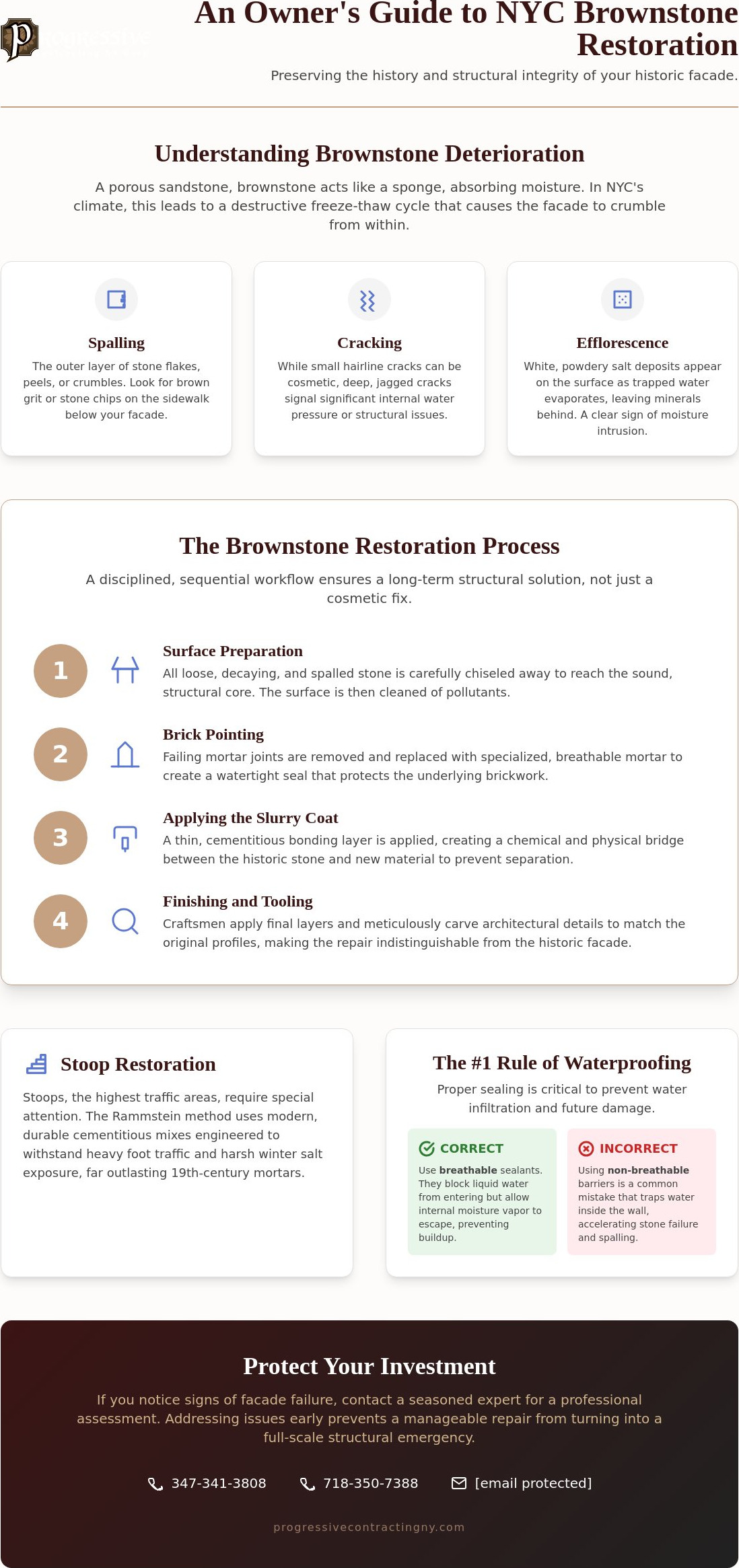
A successful brownstone restoration follows a disciplined, sequential workflow. This methodical approach ensures that the repair is not just a cosmetic fix but a long-term structural solution. We prioritize transparency and precision at every phase to provide homeowners with absolute peace of mind. Following these steps correctly prevents future spalling and maintains the architectural integrity of your property.
- Step 1: Surface Preparation: We begin by removing all loose, decaying stone. Our team carefully chisels away the spalled layers until we reach the sound, structural core. This stage also includes a thorough cleaning to strip away carbon crust and urban pollutants.
- Step 2: Brick Pointing: We address the underlying mortar joints by removing old, failing material and replacing it with specialized mortar. This creates a watertight seal that protects the building’s skeleton.
- Step 3: Applying the Slurry Coat: This thin, cementitious layer acts as a bonding agent. It creates a chemical and physical bridge between the historic stone and the new restoration material, ensuring the layers don’t separate over time.
- Step 4: Finishing and Tooling: Our craftsmen apply the final layers and carve the architectural details back into the stone. We match the original profiles and textures, ensuring the new work is indistinguishable from the historic facade.
Rammstein Stoop Restoration
Stoops are the most high-traffic areas of any NYC home and endure the most environmental stress. Progressive Contracting NY Corp specializes in brownstone stoop restoration using the Rammstein method. This process utilizes modern cementitious mixes that offer far greater durability than 19th-century lime mortars. These advanced materials are engineered to withstand the heavy foot traffic and salt exposure common in Brooklyn and Manhattan winters.
Brick Pointing and Waterproofing
Expert brick pointing is the first line of defense against water infiltration. It’s essential to use breathable sealants that allow internal moisture to escape. Trapping water behind a non-breathable barrier is a common mistake that leads to rapid stone failure. For more tips for a successful renovation, it’s always best to consult with a specialist who understands local climate challenges. If you’re ready to secure your home’s exterior, visit our official site or call us directly at 347-341-3808 or 718-350-7388. You can also reach our lead contractor at ProgressiveContractingNY@yahoo.com for a detailed project assessment.
Maintaining Your Restored Facade and Hiring a Specialist
Completing a brownstone restoration is a significant milestone, but your home’s exterior requires ongoing vigilance to ensure longevity. Adopting a philosophy of Preserving History Through Design means viewing maintenance as an essential extension of the original craftsmanship. We recommend performing a thorough inspection every spring to catch minor issues before they escalate. Pay close attention to window sills, lintels, and cornices where water is most likely to pool and cause damage. If you notice new hairline cracks or white salt deposits, refer to our brownstone repair FAQ for guidance on when to call a professional.
Hiring a qualified masonry contractor for your brownstone restoration in Brooklyn or Manhattan requires looking beyond a portfolio of finished projects. You need a partner who understands the technical science of vapor permeability and stone density. Ask potential contractors about their experience with specific mortar mixes and their familiarity with local landmark requirements. A reliable specialist provides a clear, structured workflow and maintains transparent communication from the initial assessment through the final cleanup. This ensures the project stays on track and meets the high standards of NYC craftsmanship.
Working with NYC Regulations
If your property is in a designated historic district, the Landmarks Preservation Commission (LPC) must approve all exterior work. This process requires matching the specific color, texture, and tooling of the original stone to remain in compliance. We also specialize in NYC sidewalk violation removal, which is often linked to the health of your building’s base. Cracks in your sidewalk can allow water to seep into the foundation, eventually affecting the lower levels of your masonry. Maintaining compliance with both the LPC and the Department of Buildings protects your property value and prevents costly fines.
Direct Expert Consultation
Don’t leave the structural integrity of your home to chance. A professional facade assessment provides the data you need to make informed decisions about your property’s future. We offer over a decade of local experience in neighborhoods like Park Slope and Bed-Stuy, providing a steady hand for complex projects. To discuss your specific restoration needs or to schedule a site visit, call us at 347-341-3808 or 718-350-7388. You can also send project inquiries and photos of your facade to ProgressiveContractingNY@yahoo.com for a direct response from our expert team.
Protect Your Investment with Professional Craftsmanship
Restoring a brownstone is a meticulous investment in New York’s architectural legacy. You’ve learned that the science of moisture management and the precision of the restoration process are what truly protect your facade from the elements. By catching signs of spalling early and following a disciplined maintenance schedule, you can avoid the high costs of structural failure and LPC violations. Each phase of the work, from brick pointing to the final carving, must be handled with the technical accuracy these historic buildings deserve.
Whether you’re dealing with a crumbling stoop or need a full facade assessment, choosing a partner who understands the specific needs of Park Slope and Bedstuy is critical. Contact Progressive Contracting NY Corp today at 347-341-3808 or 718-350-7388 for a professional brownstone restoration estimate. Our team brings specialized expertise in Rammstein stoop repair and NYC sidewalk violation removal to every project. For direct inquiries, email us at ProgressiveContractingNY@yahoo.com. Your home is a piece of history; let’s work together to ensure it remains a neighborhood icon for generations to come.
Frequently Asked Questions
How long does a typical brownstone restoration project take?
A typical brownstone restoration project generally takes between four and eight weeks to complete. This timeline includes the initial setup of scaffolding, the removal of decayed stone, and the meticulous finishing work required for a high-quality result. Large-scale projects or those with extensive structural damage may require more time. We prioritize a methodical pace to ensure that all materials cure correctly and the architectural details are perfectly restored.
Do I need a permit from the Landmarks Preservation Commission for brownstone repair?
Yes, you need a permit from the Landmarks Preservation Commission if your property is located within a designated historic district. Most brownstone restoration work is visible from the street, which triggers the requirement for an LPC permit. This ensures the repairs use historically accurate mortar colors and textures that match the neighborhood’s character. Our team manages the technical documentation needed for these filings to give you peace of mind throughout the process.
What is the difference between patching and a full brownstone renovation?
Patching is a localized repair of small chips or cracks, whereas a full renovation involves a complete overhaul of the stone’s surface. While patching might solve immediate aesthetic issues, it often fails to address the underlying moisture problems that cause stone decay. A full restoration provides a uniform, watertight seal across the entire facade to prevent future spalling. To discuss the best approach for your home, contact us at 347-341-3808 or 718-350-7388.
Can brownstone restoration be done in the winter in NYC?
Restoration work should not be performed during the peak of winter because the materials cannot cure in freezing temperatures. Mortar and slurry coats need temperatures to remain above 40 degrees to bond successfully to the porous sandstone. We typically schedule projects between April and November to ensure the best durability and results. For inquiries about our seasonal availability or to plan your upcoming project, reach out to us at ProgressiveContractingNY@yahoo.com.