
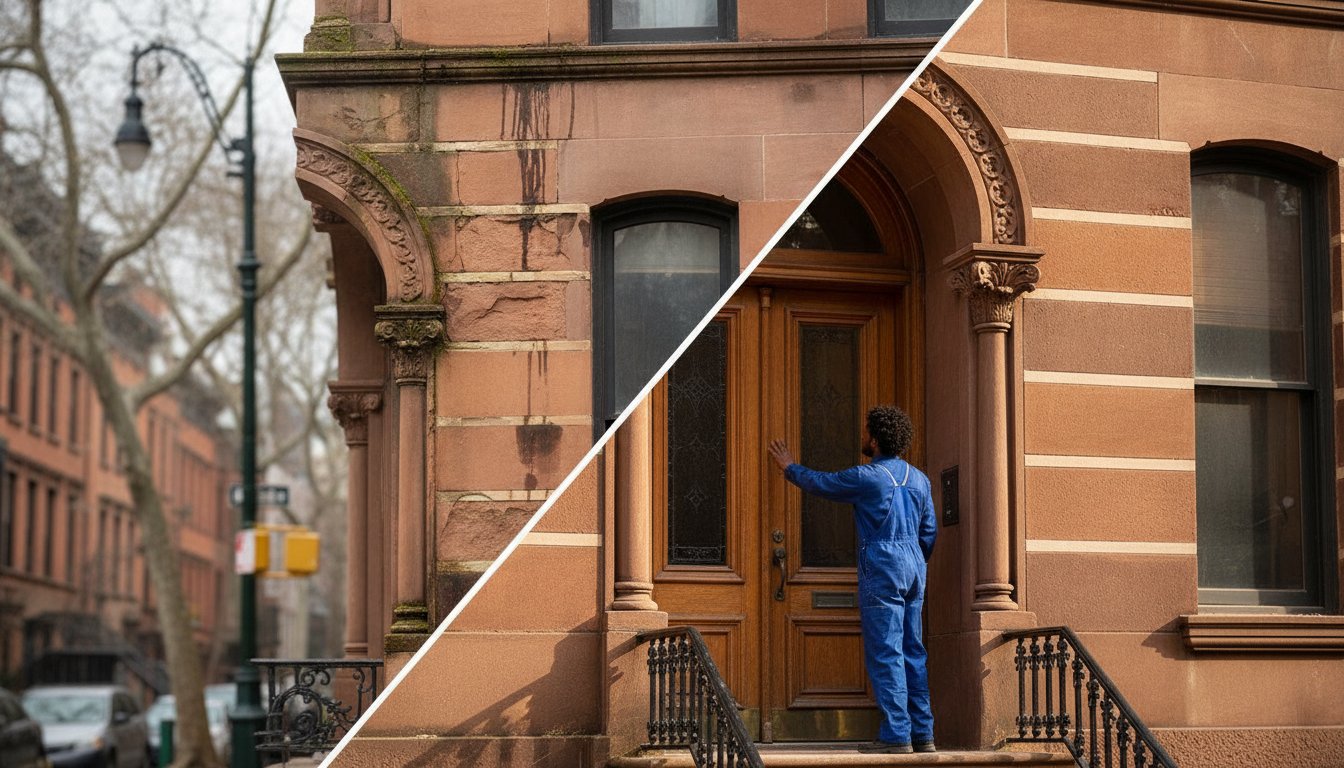
A single piece of spalling stone on your sidewalk is more than a maintenance chore; it is a signal that your home’s historic envelope is losing its fight against the NYC climate. You want to preserve the architectural integrity of your property, yet the fear of hiring the wrong mason for a brownstone repair or accidentally violating Landmarks Preservation Commission (LPC) rules often leads to costly delays. It’s stressful to manage a restoration project when the stakes include both your home’s value and potential city fines under new regulations like Local Law 51.
We believe that high-quality restoration should be transparent and predictable. This guide will help you identify the specific causes of stone decay and explain how to navigate the restoration process without the usual confusion. You will learn how to choose the right materials for a weather-proof finish and how to remain compliant with NYC building codes. We’ll walk through everything from the mandatory Portico filing requirements to the best practices for stopping water infiltration before it reaches your structural joists. By the end, you’ll have a clear path toward a restored facade that stands the test of time.
Understanding Brownstone Deterioration: Why NYC Facades Crumble
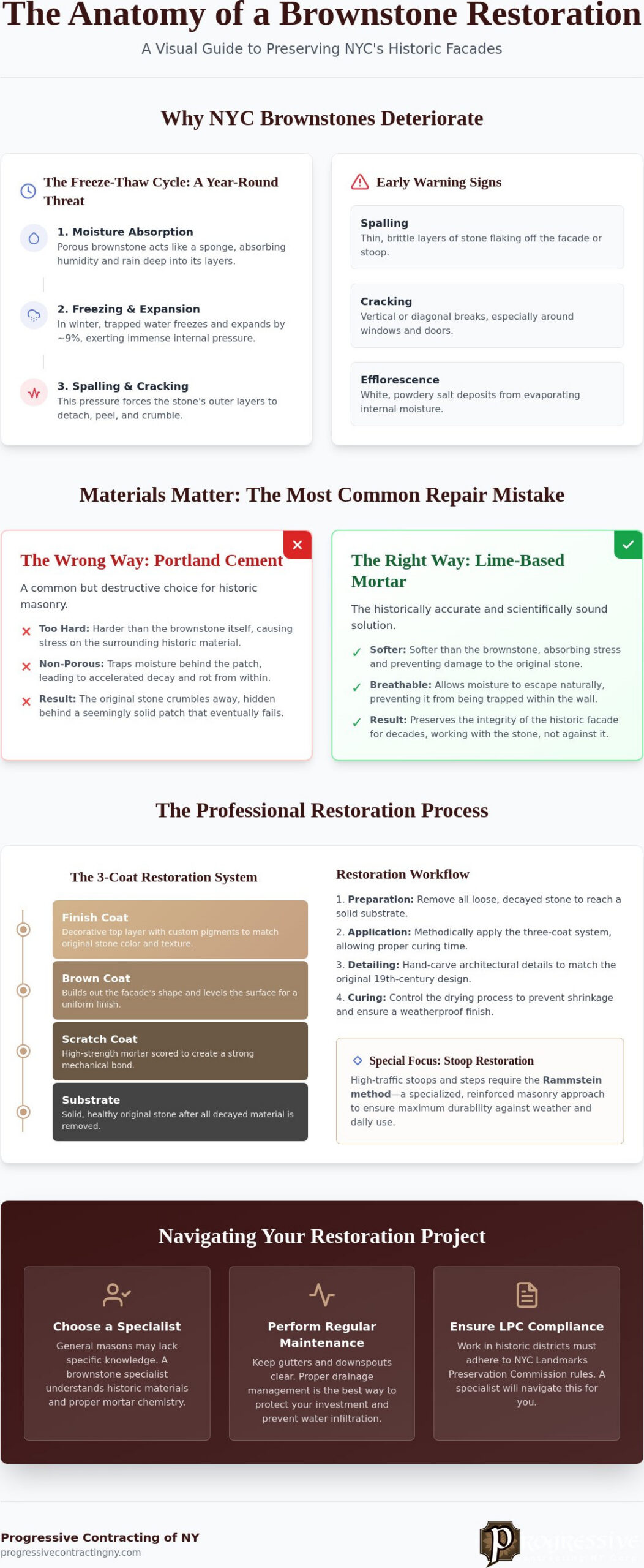
To understand why your facade is failing, you must first ask: What is brownstone? It is a sedimentary sandstone, prized for its color but naturally porous. This porosity makes it a magnet for NYC’s high humidity. Unlike harder granite, brownstone absorbs moisture deep into its layers.
The NYC climate creates a destructive cycle. During the winter, trapped moisture undergoes a freeze-thaw process. As water turns to ice, it expands by approximately 9%, exerting immense internal pressure on the stone. This pressure eventually forces the outer layers to detach, a process known as spalling.
Many 19th-century builders accelerated this decay by laying the stone “against the grain.” This practice, called face-bedding, places the stone’s natural layers parallel to the facade surface. When water enters these vertical seams, the stone delaminates and peels away in large sheets. Over decades, air pollution and acid rain further dissolve the cementitious bonds holding the sand grains together, leaving the surface sandy and weak.
Common Signs Your Brownstone Needs Repair
Recognizing the early warning signs that your home needs a professional brownstone repair can prevent minor flaking from turning into a full-scale structural failure.
- Spalling: Thin, brittle layers of stone flaking off the facade or stoop.
- Cracking: Vertical or diagonal breaks, particularly around window lintels and door sills.
- Efflorescence: White, powdery salt deposits that appear when deep-seated moisture evaporates at the surface.
The Danger of Using Portland Cement
One of the most common mistakes in brownstone repair is the use of modern Portland cement. This material is too hard and non-porous for historic masonry. It traps moisture behind the patch, which eventually causes the original stone to rot and crumble from the inside out. You must use breathable, lime-based mortars to allow moisture to escape naturally and maintain the structural integrity of the historic stone.
The Professional Process of Brownstone Facade Repair
A successful brownstone repair requires more than just a surface patch. It is a methodical, multi-layered masonry process that restores both the appearance and the structural integrity of your home. The work begins with thorough preparation. We remove all loose, decayed stone until we reach a solid, healthy substrate. This ensures that the new material bonds correctly and won’t fail prematurely.
We use a specialized three-coat system to replicate the original stone. This process starts with a scratch coat, which is a high-strength mortar layer scored to provide a mechanical bond. Next, the brown coat builds out the facade’s shape and levels the surface. Finally, the decorative finish coat is applied. This top layer is where we mix custom pigments to match the specific hue of your neighborhood. Because every project must meet the standards of the NYC Landmarks Preservation Commission, precise color matching and material selection are non-negotiable.
Step-by-Step Restoration Workflow
The workflow moves from cleaning to detailed craftsmanship. We begin by stripping old paint and debris using gentle methods that protect the underlying stone. After the scratch and brown coats have set, we focus on the finish coat. This is where our masons carve architectural details like cornices and chamfers by hand to match the original 19th-century design. Proper curing is the final, essential step. We control the drying process to prevent shrinkage and future cracking, ensuring a weather-proof result. For a deeper understanding of the full scope of this work, our complete guide to brownstone restoration covers every phase of the process in detail.
Stoop Restoration: The Rammstein Method
Stoops and steps face the highest traffic and the most severe weather exposure. For these areas, we utilize the Rammstein method to ensure maximum durability while maintaining a traditional aesthetic. This approach focuses on reinforced masonry that can withstand the constant friction of daily use. If your entryway is showing signs of deep cracking or unstable treads, a specialized Brownstone Stoop Restoration Brooklyn project can secure the structure for decades. For homeowners looking to start this process, scheduling a professional brownstone repair is the first step toward a permanent solution.
Choosing a Specialist and Navigating NYC Landmarks
Selecting the right professional for a brownstone repair is the most critical decision in the restoration process. While a general mason may be skilled with brick or concrete, they often lack the specific knowledge required to handle delicate sandstone. You need a specialist who understands the chemical properties of historic stone and the precise mortar mixes required to ensure a long-lasting bond. Asking for a detailed breakdown of materials is essential for transparency. A disciplined expert will always explain why they chose a specific lime-based binder over cheaper, high-strength alternatives that can damage your facade. Understanding the full technical scope of brownstone restoration in NYC will help you ask the right questions and evaluate contractor proposals with confidence.
Proper maintenance extends the life of your restoration. Ensure your gutters and downspouts are clear to prevent water from cascading over the stone surface. Managing drainage effectively prevents the deep water infiltration discussed in previous sections, protecting your investment for decades. By addressing small issues early, you avoid the need for more invasive structural work in the future.
Working with the NYC Landmarks Preservation Commission
If your home is located in a historic district like Park Slope or Bedstuy, any exterior work requires approval. Navigating these regulations doesn’t have to be a burden. For minor facade repairs that match the original exactly, you may qualify for an “Expedited Review” process. This can significantly reduce the waiting time for your permit. We recommend reviewing the NYC Landmarks Preservation Commission’s Rowhouse Manual to understand the specific standards for your property type. For more context on why these buildings are protected, read our guide on What is a Brownstone? to see the historical significance of these icons.
Questions to Ask Your Brownstone Contractor
Before signing a contract, you should vet your partner with specific questions to ensure they meet the high standards of NYC restoration. A transparent contractor will provide clear answers and documentation for each of these points:
- Do you provide a warranty? A reliable contractor should stand behind their work against future spalling or cracking for a specified period.
- How do you handle color matching? Mortar looks different when wet. Ask how they test samples to ensure a natural look once the material has fully cured.
- Can you handle sidewalk violations? Often, facade work reveals issues with the walkway. Choosing a brownstone repair specialist who can also manage sidewalk violation removals provides a seamless, one-stop solution for your property’s exterior.
Securing Your Home’s Historic Legacy
Restoring a historic facade requires a balance of geological understanding and precise craftsmanship. You now know that identifying spalling early and avoiding non-breathable cements are the keys to a successful brownstone repair. By following a structured three-coat system and navigating LPC regulations with a specialized partner, you can stop active deterioration and preserve your home’s architectural value for the next generation. Proper drainage and regular maintenance will ensure that your restored facade remains weather-proof against the NYC climate.
Progressive Contracting NY Corp brings years of local expertise to every project. We are specialized in Brooklyn and Manhattan historic facades and offer expert Rammstein stoop restoration. As a licensed NYC masonry and sidewalk repair contractor, we provide the steady hand needed for complex restoration work. Get a Professional Brownstone Repair Quote from Progressive Contracting NY Corp to begin your project with confidence. Your brownstone is a significant piece of New York history, and taking the right steps today will ensure it remains a landmark for years to come.
Frequently Asked Questions
How much does brownstone repair cost in NYC?
The total investment for a brownstone repair project depends on several variables including the building’s height, the severity of the stone decay, and whether the property sits within a landmarked district. Scaffolding, sidewalk protection, and city filing fees also influence the final budget. It’s best to request a detailed site assessment to receive a transparent breakdown of labor and materials for your specific project.
How long does a typical brownstone facade restoration take?
A typical facade restoration takes between four and eight weeks to complete. This timeframe accounts for the necessary curing periods between the scratch, brown, and finish coats described earlier in this guide. Complex projects involving intricate hand-carved details or stoop reconstruction may require additional time to ensure the structural integrity of the masonry remains intact for decades.
Can I repair my own brownstone using a store-bought patch kit?
You shouldn’t use store-bought patch kits for historic brownstone. These products often contain acrylics or hard cements that trap moisture behind the patch, leading to internal rot and further stone failure. Professional repairs use custom-blended, breathable lime mortars that expand and contract at the same rate as the natural sandstone, preventing the delamination common with DIY fixes.
Do I need a permit for brownstone repair in Brooklyn or Manhattan?
Most facade work in Brooklyn and Manhattan requires a permit from the NYC Department of Buildings and approval from the Landmarks Preservation Commission (LPC). Since 2025, all landmark applications must be submitted through the Portico online portal. Failing to secure the proper permits can lead to heavy city fines and will likely complicate the future sale of your property.
What is the best time of year to perform brownstone masonry work?
The best time for a brownstone repair is during the spring or fall when temperatures are moderate. Mortar requires a stable environment to cure without freezing or drying out too quickly. We generally avoid performing major stone work during the peak of winter or the most humid weeks of summer to prevent premature cracking and ensure the bond is permanent.
How long will a professional brownstone restoration last?
A high-quality restoration can last 30 to 50 years if the home is maintained properly. The durability of the repair depends on the quality of the bond and the management of water runoff. Keeping your gutters clear and your roof in good condition will protect the stone from the moisture infiltration that causes the freeze-thaw cycles and spalling mentioned earlier.