
A single application of the wrong mortar can cause more permanent damage to your historic facade than a decade of harsh New York winters. If you’ve noticed flaking stone or "spalling" on your stoop, you’re right to feel concerned about the long-term structural health of your property. Managing brownstone repair brooklyn isn’t just about aesthetics; it’s a precise preservation science that requires a deep understanding of NYC’s evolving building standards.
It’s understandable to feel overwhelmed by the complexities of Landmarks Preservation Commission (LPC) "in-kind" material mandates or the visual inspection requirements now enforced under Local Law 126. You want a watertight, historically accurate home without the stress of Department of Buildings (DOB) violations or the risk of hiring an inexperienced crew. This 2026 checklist provides the clarity you need to protect your investment. We’ll identify the early warning signs of masonry decay, explain how to vet specialized contractors who prioritize craftsmanship, and outline the steps to ensure your restoration meets every NYC preservation standard.
Table of Contents
Identifying Brownstone Decay: Your Exterior Inspection Checklist
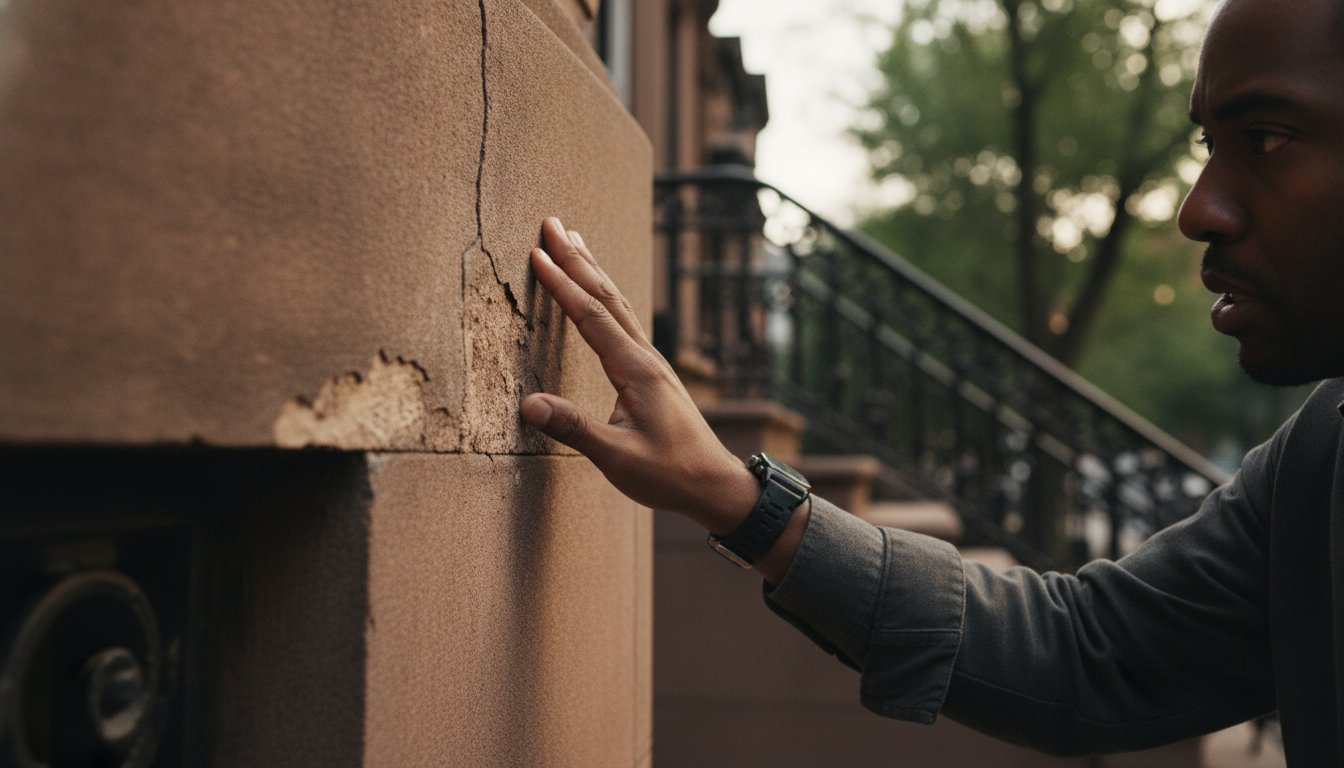
Understanding the physical composition of your home is the first step toward long-term preservation. To understand what is brownstone, you must recognize it as a porous, sedimentary rock that’s naturally prone to "spalling." This occurs when thin layers of stone flake or peel away from the facade. When planning for brownstone repair brooklyn, a simple visual scan can reveal these early warning signs before they escalate into structural instability.
To better understand how these issues manifest on a job site, watch this helpful video:
The Tap Test for Spalling Facades
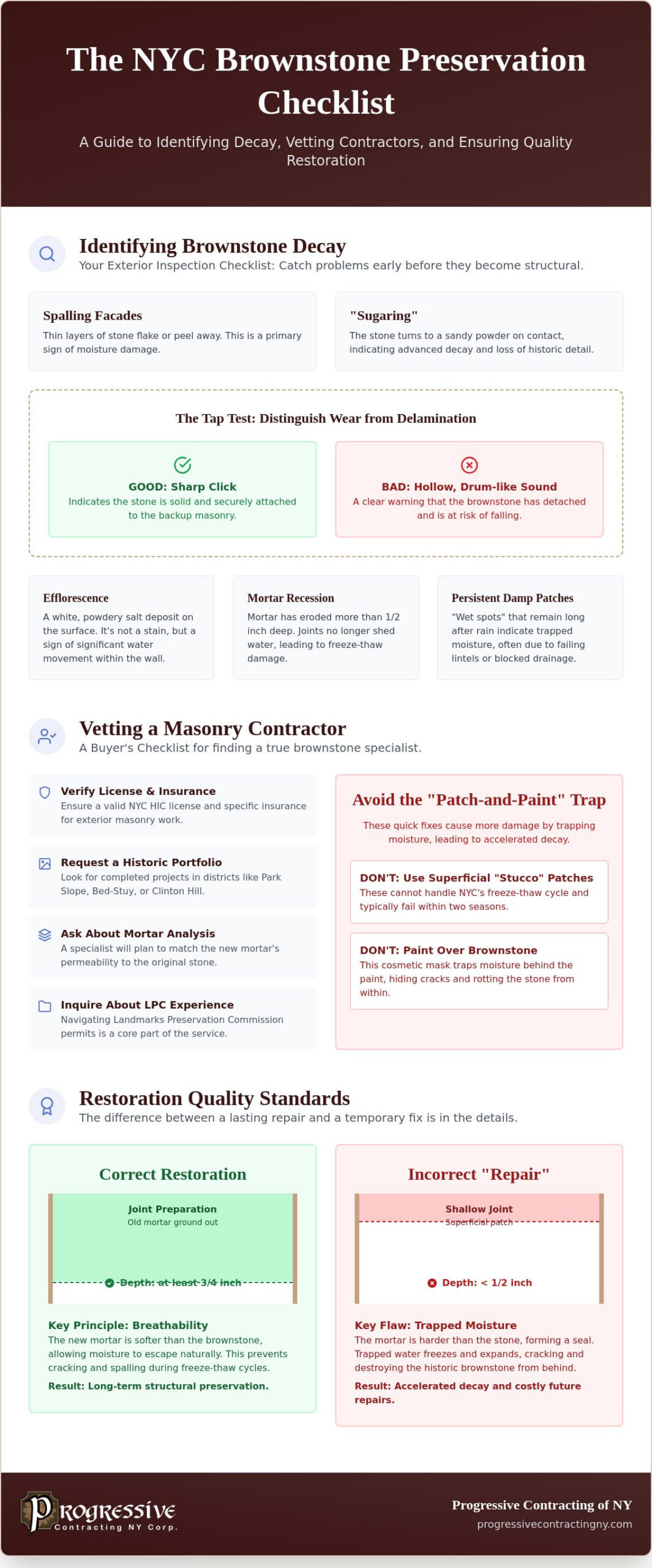
You can distinguish between cosmetic wear and deep delamination by performing a "tap test." Gently use a small rubber mallet to tap across the facade. A solid stone will produce a sharp click, while a drum-like, hollow sound indicates that the brownstone has detached from the backup masonry. In some cases, you might encounter "sugaring," where the stone turns to a sandy powder upon contact. This signal of advanced decay requires immediate intervention to stop the loss of historic detail.
Beyond the stone itself, look for efflorescence, which appears as a white powdery salt deposit. This isn’t just a stain; it’s a sign of significant water movement within the wall. Additionally, examine your mortar joints for "recession." If the mortar has eroded more than half an inch behind the stone face, the joints are no longer shedding water. This allows moisture to pool behind the stone, accelerating the freeze-thaw cycles that destroy Brooklyn facades.
Signs of Water Damage on Brooklyn Facades
Persistent damp patches that remain visible long after a rainstorm suggest that moisture is trapped deep within the masonry. These "wet spots" often indicate failing lintels or blocked drainage points. For a more detailed deterioration breakdown, review these signs of water damage on brownstone facades. Identifying these issues early is the most effective way to manage the costs of brownstone repair brooklyn.
Vetting a Masonry Contractor in Brooklyn: A Buyer’s Checklist
Choosing the right partner for brownstone repair brooklyn is a decision that affects your property’s value for decades. You must verify a valid NYC Home Improvement Contractor (HIC) license and ensure their insurance specifically covers exterior masonry work. General liability alone is insufficient when workers are on scaffolding three stories above a public sidewalk. A qualified contractor will provide a clear, sequential project timeline that moves logically from initial scaffolding permits to final debris removal.
Request a portfolio of completed projects specifically in historic districts like Park Slope, Bed-Stuy, or Clinton Hill. These neighborhoods have strict aesthetic requirements that general masons often overlook. A true specialist will offer a "Mortar Analysis" plan to ensure the new mix matches the original stone’s permeability. Following professional repointing standards is essential; if the mortar is harder than the stone, it will trap moisture and cause the facade to crack during the next winter cycle.
Questions for Your Brooklyn Brownstone Specialist
Before signing a contract, ask: "Do you use Rammstein stoop restoration techniques for historic stairs?" This method is vital for preserving the traditional profile and durability of Brooklyn stoops. You should also inquire about their experience with the NYC Landmarks Preservation Commission (LPC) permit process. Navigating these regulations is a core part of the service. For more details on what to look for in a partner, see this guide on a Masonry Contractor Brooklyn: How to Vet for Quality.
Avoiding the "Patch-and-Paint" Trap
Some contractors offer quick fixes using superficial "stucco" patches. These fail within two seasons because they cannot handle NYC’s intense freeze-thaw cycle. Never allow a contractor to paint over brownstone to hide structural cracks; this traps moisture behind the paint and accelerates decay. A reliable partner like Progressive Contracting NY Corp prioritizes a thorough restoration process that addresses the root cause of damage. A true brownstone specialist will always focus on long-term preservation rather than a cosmetic mask.
Restoration Quality Standards: What a Professional Job Looks Like
A professional restoration is defined by the technical steps hidden beneath the surface. For a lasting brownstone repair brooklyn, joint preparation is the most critical phase. Experts must mechanically grind out old, failing mortar to a depth of at least 3/4 inch. This creates enough space for the new material to form a structural bond with the masonry. Skipping this step often results in mortar popping or falling out within just a few seasons because there isn’t enough surface area for adhesion.
Once joints are clear, we address the substrate. Any "honeycombed" or crumbling stone must be removed back to sound, solid material. Applying a new finish over a weak base leads to rapid delamination. The new brownstone cement is then applied in multiple thin layers rather than one thick coat. This sequential approach prevents shrinkage and ensures the material cures evenly without cracking. The final finish coat should meticulously match the original stone’s tool marks and natural color variations, ensuring the high-standard brownstone repair brooklyn properties require.
The Science of Historic Mortar Matching
Using hard Portland cement on soft historic stone is a common but devastating mistake. Hard mortar traps moisture within the stone, leading to accelerated decay during New York’s winter freeze-thaw cycles. We follow NPS guidelines for repointing historic masonry, which prioritize vapor permeability. For a deeper look at lime-based mixtures and stone health, read our guide on Repointing Historic Brownstone: A Homeowner’s Guide.
Final Inspection and Maintenance
A successful project ends with a detailed review of water management features. All drip edges and moldings must be correctly shaped to shed water away from the facade. This prevents pooling and protects the new masonry from premature erosion. Proper maintenance is the key to protecting your investment after the scaffolding comes down. You can find essential post-restoration tips in our article on Brick Pointing Brooklyn: Protecting Your Home.
Protecting Your Historic Investment for the Next Generation
Maintaining a historic facade is a long-term commitment that requires both vigilance and technical expertise. By using this 2026 restoration checklist, you can now approach brownstone repair brooklyn with the confidence that your home will remain watertight and compliant with NYC’s strict preservation codes. Proactive inspections and high craftsmanship standards don’t just fix existing damage; they prevent the catastrophic stone failure that often results from neglect or the use of improper modern materials.
Progressive Contracting NY Corp provides the steady hand needed to navigate these complex projects. With over a decade of experience in Brooklyn and Manhattan historic restoration, we specialize in Rammstein stoop restoration and LPC-compliant masonry. Our process emphasizes financial transparency and methodical project management, ensuring you stay informed from the initial scaffolding setup to the final cleanup. We respect the traditional methods that define New York’s architectural history while delivering results that meet modern durability standards.
Request a Professional Brownstone Inspection from Progressive Contracting NY Corp to secure your home’s future. It’s a legacy worth protecting, and with a reliable partner, you can ensure your property remains a neighborhood landmark for decades to come.
Frequently Asked Questions
How much does brownstone repair cost per square foot in Brooklyn?
Industry pricing for brownstone repair brooklyn depends on the level of deterioration and the property’s location in a landmarked district. While general NYC townhouse renovations follow broad per-square-foot ranges, facade work is priced by the specific depth of stone decay and the complexity of decorative details. Scaffolding permits and the specialized labor required for historic preservation are the primary drivers of the total project investment.
How long does a professional brownstone facade restoration last?
A professional facade restoration typically lasts 20 to 30 years when performed with historically accurate, vapor-permeable materials. The lifespan of the repair is dictated by the quality of the mortar bond and the effectiveness of the building’s drainage system. Regular inspections of the cornice and lintels help prevent water from pooling behind the new stone, ensuring the restoration remains stable through decades of New York winters.
Do I need a permit from the Landmarks Preservation Commission (LPC) for minor repairs?
LPC approval is required for almost all exterior work in designated historic districts, including minor repointing and stone patching. The commission mandates the use of "in-kind" materials that match the original color, texture, and profile of the building. Working with a specialist in brownstone repair brooklyn ensures that all permit filings and material samples meet these strict preservation standards, protecting you from potential Department of Buildings fines.
Can I repair spalling brownstone myself with retail hardware store products?
Standard retail products like high-strength Portland cement or generic stucco are unsuitable for historic masonry because they trap moisture. Brownstone is a soft, porous material that requires specialized lime-based mortars to breathe. Using hard, modern products often leads to accelerated "sugaring" and stone failure within just a few seasons. Professional restoration involves removing damaged material back to a sound substrate and applying custom-blended layers that mimic the original stone’s properties.