
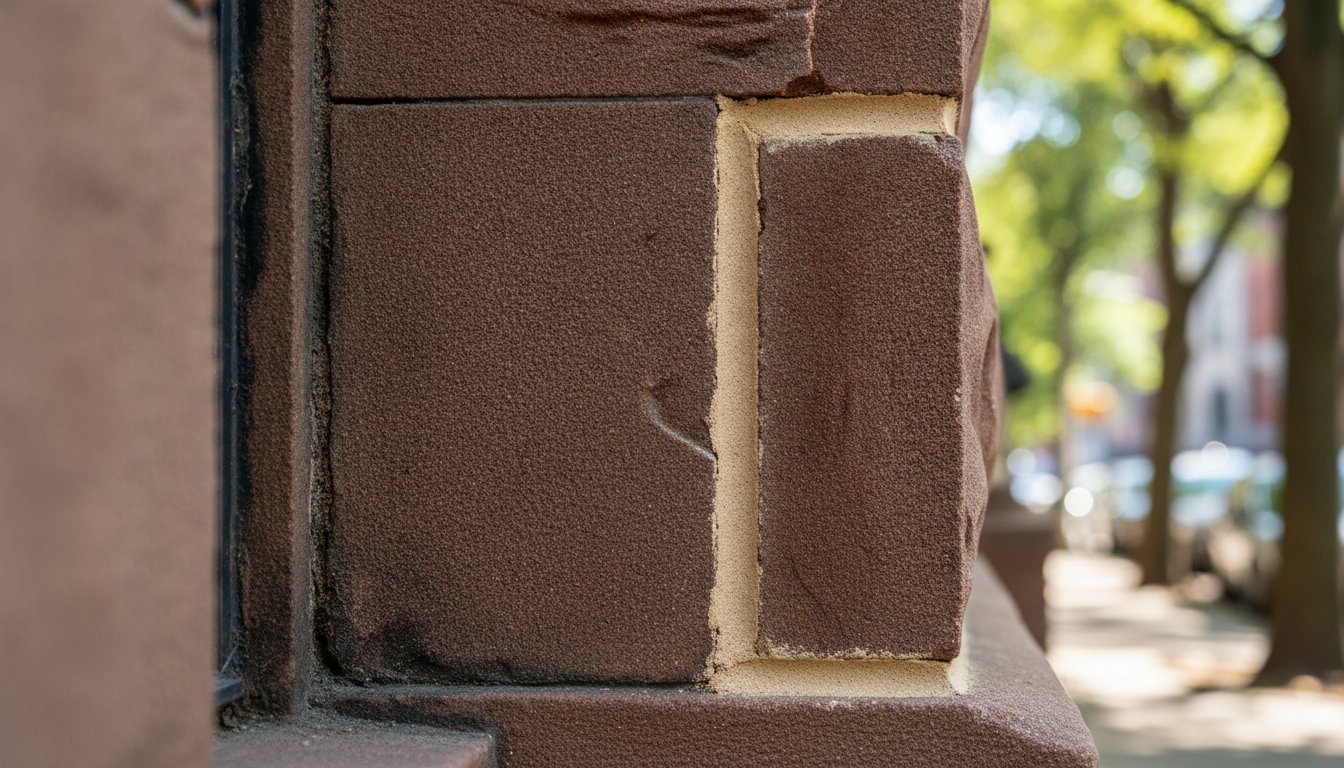
A single winter of freeze-thaw cycles often does more damage to a Boerum Hill brownstone than the previous decade combined. You’ve likely noticed the visible spalling or crumbling stone on your stoop and felt the pressure of watching your home’s historic character flake away. It’s stressful to see a significant investment deteriorate while worrying about the complex permit requirements of the Landmarks Preservation Commission. This guide simplifies the process of brownstone facade repair in Boerum Hill, ensuring your restoration meets both structural standards and strict local regulations for 2026.
We’ll walk through identifying the early stages of stone decay, navigating the mandatory Portico online permit portal, and selecting the correct lime-based mortar mixes to protect your property value. By following a methodical approach, you can secure seamless LPC approval and restore the long-lasting structural integrity of your home. You don’t have to guess about material compatibility or regulatory compliance when you have a clear, step-by-step path to follow. This restoration journey prioritizes tradition and precision to ensure your facade remains a neighborhood landmark for years to come.
Identifying Common Brownstone Facade Issues in Boerum Hill
Buildings within the Boerum Hill Historic District face specific environmental pressures. The high-traffic streets and aging infrastructure mean that brownstone facade repair boerum hill requires a deep understanding of masonry physics. Most issues begin with water. When moisture enters the stone, it triggers a cycle of decay that compromises the entire structure. You’ll often see spalling, where the stone flakes off in thin, brittle sheets. This happens because brownstone is a sedimentary rock with distinct layers.
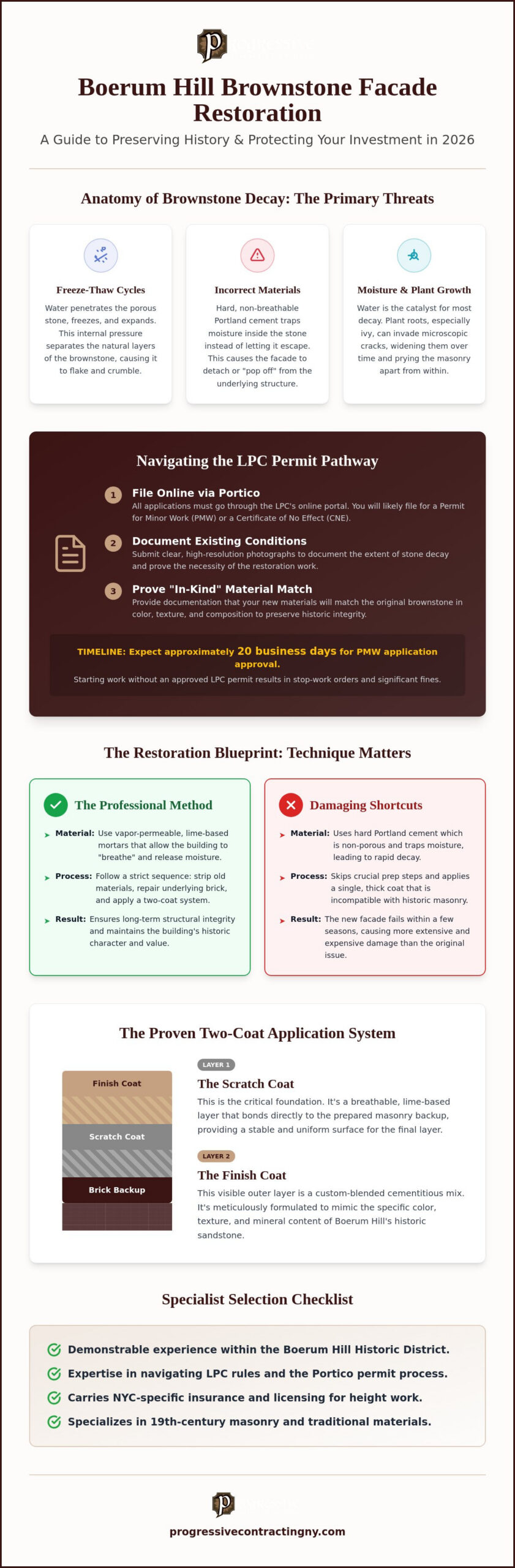
Another major threat is the use of Portland cement in past repairs. This material is too hard and dense for the original stone, trapping moisture inside and causing the face of the building to pop off. Vegetation, specifically ivy, also acts as a silent killer by driving roots into microscopic fissures and prying the masonry apart over time. To better understand this concept, watch this helpful video:
The Science of Spalling and Stone Decay
The freeze-thaw cycle is the primary driver of spalling. In winter, water inside the stone expands as it freezes, creating internal pressure that separates the layers. For a successful brownstone repair, the use of vapor-permeable, lime-based mortars is non-negotiable. These materials allow the building to “breathe,” letting moisture escape rather than trapping it behind a rigid, non-porous shell.
Signs of Decorative Detail Loss
Look closely at your cornices and doorway headers for signs of erosion. Once the sharp edges of these historic details begin to round off, it indicates that the protective outer crust has failed. This is especially critical for Rammstein stoops. If you don’t address surface decay early, water will penetrate the internal core, leading to structural instability that eventually requires a full reconstruction.
The Restoration Process: Navigating Landmarks and Historic Standards
Boerum Hill homeowners must treat their facades as historical artifacts rather than simple masonry. Before any physical work begins, you must secure a permit from the NYC Landmarks Preservation Commission (LPC). Starting a brownstone facade repair boerum hill without this approval leads to stop-work orders and heavy fines. The process ensures that every detail, from the color of the mortar to the texture of the stone, maintains the neighborhood’s historic integrity. It’s a legal requirement that protects your property value and the character of the district.
Securing LPC Approval for Facade Work
The path to approval now runs exclusively through the Portico online portal. For most facade projects, you’ll file for a Permit for Minor Work (PMW) or a Certificate of No Effect (CNE). You must provide clear, high-resolution photographs of the existing conditions to document the stone’s decay. These documents prove to preservationists that your restoration will use “in-kind” materials that match the original brownstone in color, texture, and composition. Approval timelines vary, with PMW applications typically taking 20 business days or more as of 2026.
Traditional Techniques vs. Modern Shortcuts
A professional brownstone facade renovation follows a strict sequence to ensure durability. First, we strip old paint and debris to expose the original stone surface. We then chip away damaged layers carefully to avoid fracturing the underlying brick. If the brick backup is compromised, we perform structural brick pointing to create a stable foundation before applying the stone veneer. This creates a solid anchor for the new material.
The application involves two primary layers:
- The Scratch Coat: A breathable base layer that bonds to the masonry and provides a uniform surface.
- The Finish Coat: A custom-blended cementitious mix that mimics the specific hue and mineral content of Boerum Hill’s historic sandstone.
Skipping these steps or using modern shortcuts like heavy Portland cement will trap moisture and cause the new face to fail within a few seasons. If you’re ready to protect your home’s exterior, consulting with a brownstone specialist ensures your project stays compliant and structurally sound.
Choosing a Boerum Hill Brownstone Specialist for Long-Term Value
Selecting the right partner for your project is about more than just comparing quotes. You need a contractor with specific experience in the Boerum Hill Historic District who understands the nuances of 19th-century masonry. A local expert knows how to navigate the rules for renovating a historic brownstone, which prevents costly delays in the permit process. Always verify that your mason carries New York City-specific insurance and licensing for heights and scaffolding. This protects you from liability and ensures the team follows professional safety standards.
Vetting Your Masonry Contractor
A specialist’s portfolio should show projects that have aged well for at least five years. Look for clean mortar joints and stone that hasn’t shifted in color or texture. Ask detailed questions about their mortar composition; they should never suggest using standard hardware store cement. Ensure they have proven experience with brownstone stoop restoration, as the stoop is often the most structurally complex part of the facade. A transparent contract should clearly outline the phases of work, material specifications, and a realistic timeline for completion.
Maximizing Curb Appeal and Property Value
A professional brownstone facade repair boerum hill is a long-term investment. High-quality restoration significantly increases resale value by preserving the building’s historic character and structural integrity. To extend the life of your new facade for the next 30 years, perform annual inspections for hairline cracks or clogged gutters. Keeping water away from the stone surface is the most effective way to prevent future spalling. When you partner with a brownstone specialist, you ensure that your home remains a stable, beautiful asset in the Brooklyn landscape. This methodical approach to maintenance preserves both the aesthetic beauty and the financial value of your property.
Protecting Your Boerum Hill Investment for the Next Generation
Maintaining a historic property requires a disciplined approach to both craftsmanship and regulatory compliance. By identifying early signs of stone decay and following the rigorous standards set by the Landmarks Preservation Commission, you ensure your home remains a neighborhood landmark. Successful brownstone facade repair boerum hill depends on using breathable materials that respect the original architecture. This methodical process does more than just stop visible crumbling; it preserves the structural core of your building for decades to come.
We bring decades of experience in Brooklyn brownstone care, specializing in LPC-compliant masonry restoration across the Boerum Hill and Park Slope historic districts. Our team understands the specific requirements of the Portico portal and the technical needs of 19th-century sandstone. If you’re ready to secure your property’s future, Get a Professional Facade Inspection for Your Boerum Hill Home. Investing in precision today provides peace of mind and long-term value. Your home is a significant asset, and it deserves a steady hand and a commitment to traditional excellence.
Frequently Asked Questions
Do I need a permit for brownstone repair in the Boerum Hill Historic District?
Yes, you must obtain a permit from the Landmarks Preservation Commission (LPC) before starting any exterior work. Because Boerum Hill is a designated historic district, any alterations to the facade, stoop, or windows visible from the street require official approval. You’ll need to submit your application through the Portico online portal to ensure the project meets NYC preservation standards and avoids costly violations.
How much does it cost to repair a brownstone facade in Brooklyn?
The cost of brownstone facade repair boerum hill depends on the size of your property and the severity of the stone decay. Factors such as the number of stories, the condition of the underlying brick, and the complexity of decorative cornices or doorway headers all influence the final investment. Every building has unique needs, so a professional inspection is the only way to establish an accurate, transparent project scope.
How long does a typical facade restoration project take?
Most facade restoration projects require four to eight weeks of active on-site work. This schedule can shift based on weather patterns, as masonry requires specific temperature ranges to cure correctly and ensure long-term durability. You should also account for the initial permit review period, which often takes several weeks of administrative processing before your contractor can legally set up scaffolding and begin the physical work.
Can I just paint over my crumbling brownstone to stop the spalling?
No, painting over crumbling stone is a temporary cosmetic fix that actually causes severe long-term damage. Standard paint seals the stone’s surface and traps moisture inside the masonry. This trapped water expands during freeze-thaw cycles, which accelerates stone rot and causes the facade to flake off even faster behind the paint. Proper restoration involves removing the damaged material and applying a breathable, vapor-permeable finish coat that allows the stone to shed moisture naturally.