
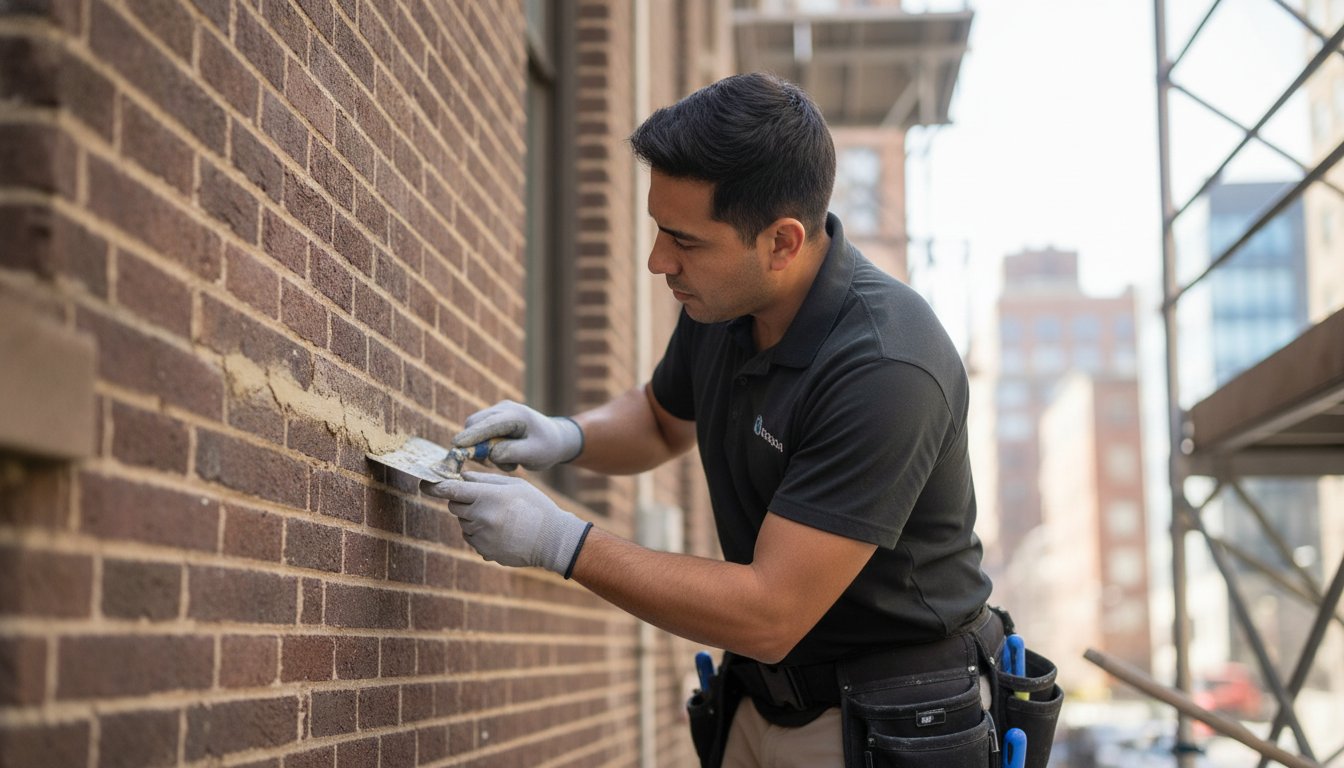
A single mistake in restoring a historic facade can cost an Upper East Side homeowner more in building violations and Landmark Preservation Commission (LPC) fines than the actual masonry work itself. You likely understand that maintaining a pre-war townhouse requires more than just standard repair; it demands a deep respect for architectural heritage and a strict adherence to evolving city codes. Finding a qualified masonry contractor upper east side residents can trust means looking for a partner who balances high-level craftsmanship with a thorough knowledge of NYC’s complex regulatory landscape.
It’s vital to protect your investment from poor craftsmanship that leads to further facade deterioration. This guide will show you how to select an expert who understands the specific requirements of historic preservation while ensuring your property meets all current safety standards. We will walk through the essential steps for navigating LPC permits, understanding the 2026 updates to the Facade Inspection & Safety Program (FISP), and identifying the technical skills necessary for a perfectly restored facade that increases your property’s long-term value and structural durability.
Selecting a Masonry Contractor for Upper East Side Historic Properties
Upper East Side properties are architectural landmarks that require more than basic maintenance. Hiring a general contractor for a pre-war facade often leads to irreversible damage because they lack specialized training in historic preservation. Selecting a dedicated masonry contractor upper east side homeowners trust is the first step in protecting your property’s legacy. You need a professional who understands What is Masonry? and how it behaves over centuries. This expertise ensures that repairs don’t just cover up problems but actually resolve the underlying causes of decay.
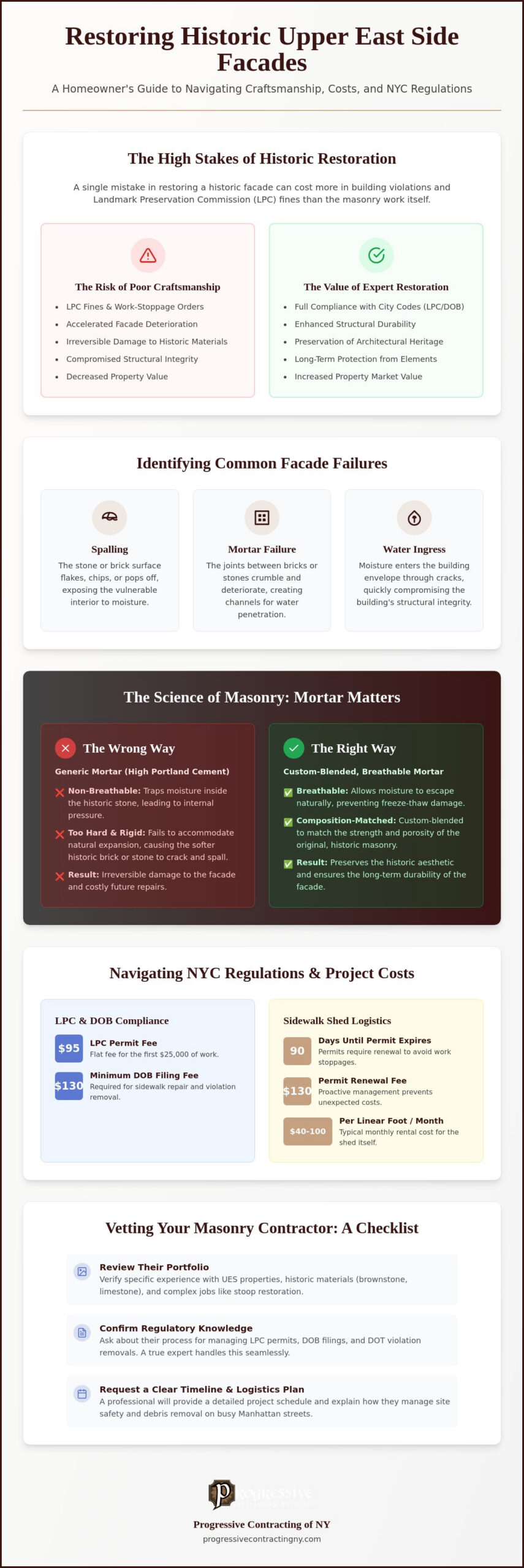
UES townhouses frequently suffer from spalling, where the stone surface flakes away, or mortar failure, where the joints between bricks crumble. These issues allow water to penetrate the building envelope, which quickly compromises structural integrity. A specialized masonry contractor upper east side residents rely on will perform a detailed assessment to identify these vulnerabilities early. Addressing these failures through professional facade restoration prevents the need for more expensive, emergency interventions later.
To see these restoration techniques in action, watch this video on Manhattan brownstone repair:
Navigating Landmarks Preservation Commission (LPC) Requirements
The Landmarks Preservation Commission (LPC) regulates nearly every exterior change in UES historic districts. Starting a project without the correct Certificate of Appropriateness results in immediate work-stoppage orders and significant financial penalties. For projects in 2026, the LPC charges a flat fee of $95 for the first $25,000 of work. A disciplined expert handles the permit process from the start, ensuring all materials and methods align with city requirements. This transparency gives you peace of mind that your project is legally compliant and avoids unnecessary delays.
UES Townhouse Facades: Brownstone vs. Limestone Care
Restoring brownstone requires a vastly different approach than cleaning or repairing limestone. Many inexperienced contractors use generic mortar mixes high in Portland cement. This is a critical mistake. These hard mortars don’t allow historic stone to breathe, leading to internal pressure and eventual cracking. Precise restoration involves custom-blending mortars to match the strength and porosity of the original masonry. This level of craftsmanship preserves the historic aesthetic and protects the long-term market value of your Manhattan home. By using the correct materials, you ensure the durability of the facade for decades to come.
How to Evaluate Masonry Services: A Vetting Guide for Homeowners
Hiring a masonry contractor upper east side residents can depend on requires more than a quick price comparison. You must verify their specific experience with historic materials and the logistical challenges of Manhattan. Ask potential candidates about their previous work on Rammstein stoop restoration and how they manage debris removal in high-traffic residential blocks. A disciplined expert will provide a clear project timeline and explain exactly how they handle the required DOB filings and permit renewals. This transparency builds the trust necessary for a successful restoration project.
Managing a project on a busy Manhattan street involves significant administrative overhead. For instance, all sidewalk shed permits now expire every 90 days and require a $130 renewal fee. Your contractor should proactively manage these deadlines to avoid work stoppages. They should also have a clear plan for site safety, as the monthly rental for a sidewalk shed can range from $40 to $100 per linear foot. Ensuring your contractor is organized and punctual prevents these logistical costs from ballooning unexpectedly.
Expert Brick Pointing and Facade Restoration
Precision is the standard for historic brownstone renovation. Brick pointing isn’t just about filling gaps; it’s about matching the original mortar’s color, texture, and chemical composition. If a contractor uses modern, non-breathable mortar, it traps moisture and causes the brick faces to pop off. Look for clean edges and consistent depth in their portfolio. If you’re seeing signs of mortar failure, a professional brownstone specialist can assess the damage before it spreads to the building’s core.
Sidewalk Repair and DOT Violation Removal
Managing NYC sidewalk violations is a technical process that requires a specialized concrete contractor. When the DOT issues a notice, you have a limited window to perform repairs before the city performs the work and places a lien on your property. A reliable masonry contractor upper east side owners hire will handle the entire process. This includes filing the $130 minimum DOB filing fee, performing the repair to city specifications, and ensuring the violation is officially removed from the record. This sequential approach resolves the legal burden while restoring your property’s curb appeal.
Progressive Contracting: Your Partner for UES Masonry Restoration
Progressive Contracting of NY serves as a stabilizing force for complex restoration projects throughout Manhattan. We bring over a decade of experience to every brownstone facade renovation and masonry restoration project we undertake. As a dedicated masonry contractor upper east side homeowners trust, we prioritize accountability and technical precision. We understand that your property is both a cherished home and a significant financial asset. Our team approaches every task with the discipline of a seasoned professional who has seen every challenge Manhattan architecture presents.
Our team operates using a structured problem-process-result framework. We first identify specific vulnerabilities, such as mortar failure or stone decay. Next, we implement a sequential restoration plan using traditional methods and high-quality materials. Finally, we deliver a durable, code-compliant result that preserves your property’s value. This methodical approach ensures a predictable and comforting experience. We’ve built our reputation on being a dependable partner rather than just a service provider, offering a steady hand from the initial inspection to the final cleanup.
Our Approach to Historic Brownstone and Stoop Repair
We specialize in brownstone stoop restoration and historic facade repair. Our craftsmen use traditional materials to ensure aesthetic perfection and long-term durability. Whether restoring a Rammstein stoop or performing a historic brownstone renovation, we focus on meticulous detail. This commitment to quality has made us a preferred masonry contractor upper east side residents rely on, as well as a trusted name in Park Slope and historic Brooklyn neighborhoods. We don’t try to reinvent the wheel; we master the craft by respecting traditional methods.
Getting Started with Your Upper East Side Project
The first step in our process is a thorough structural integrity and facade inspection. We provide clear communication regarding the scope of work and financial requirements from the start. You won’t find trendy buzzwords here; instead, you’ll receive straightforward advice based on years of local expertise. We manage every detail, including LPC compliance and necessary DOB filings. We believe in transparency and punctuality, ensuring you always know where your project stands. If you’re ready to protect your home’s exterior, contact a brownstone specialist today to discuss your restoration needs.
Protecting the Legacy of Your Upper East Side Home
Restoring a historic property is a significant responsibility that requires a meticulous approach to both craftsmanship and city regulations. By selecting a qualified masonry contractor upper east side residents can ensure their facade remains structurally sound while adhering to strict Landmarks Preservation Commission (LPC) standards. You’ve learned that precision in material selection and a deep understanding of NYC building codes are essential for preventing long-term deterioration and avoiding costly violations. A disciplined expert doesn’t just fix a crack; they preserve the architectural history of the neighborhood for the next generation.
Progressive Contracting provides the stability and expertise needed for these complex restoration projects. Our team is licensed and insured for high-stakes Manhattan masonry work. We are specialists in NYC Landmark Preservation Commission (LPC) compliance and feature an expert Rammstein stoop restoration team. We handle the technical details and administrative filings so you can have complete peace of mind throughout the project lifecycle. We prioritize transparency and durability in every brick and stone we lay.
Take the first step toward a perfectly restored facade today. Request a Professional Facade Inspection from Progressive Contracting to secure the future of your property. We look forward to serving as your reliable partner in maintaining the beauty and integrity of your home.
Frequently Asked Questions
How do I know if my Upper East Side building is in a landmarked district?
You can identify if your property is landmarked by using the “Discover NYC Landmarks” interactive map provided by the Landmarks Preservation Commission (LPC). Simply enter your address to see if your building falls within one of the Upper East Side’s historic districts. A qualified masonry contractor upper east side owners hire can also verify this status during a consultation to ensure all work follows proper legal channels from the start.
What is the difference between brick pointing and repointing?
Pointing refers to the initial process of finishing mortar joints during new construction, while repointing is the act of repairing or replacing deteriorated mortar in existing masonry. In the context of restoration, most projects actually involve repointing to restore structural integrity and stop water infiltration. This process requires removing old mortar to a specific depth and applying a new, compatible mix that matches the original aesthetic.
How long does a typical brownstone facade restoration take on the Upper East Side?
A typical brownstone facade restoration on the Upper East Side usually takes between eight and sixteen weeks, though the timeline varies based on the building’s condition. Obtaining LPC approval often adds four to twelve weeks to the project schedule before physical work even begins. Once on-site, a disciplined team follows a sequential workflow to ensure the restoration meets high standards of durability without causing unnecessary delays for the homeowner.
Can a masonry contractor help with NYC DOT sidewalk violations?
Yes, a specialized masonry contractor upper east side residents trust can manage the entire process of resolving NYC DOT sidewalk violations. They perform the necessary concrete repairs to city specifications and handle the administrative steps required to remove the lien from your property record. This comprehensive service ensures your sidewalk is safe, durable, and remains in full compliance with Department of Transportation standards for years to come.