
With over 313,000 active sidewalk violation records currently listed on the NYC Open Data portal, receiving a DOT notice is a common but stressful reality for local property owners. Most people feel an immediate sense of dread regarding potential liens or the technical confusion of coordinating between DOT permits and DOB regulations. It’s a high-stakes situation where a single error in masonry or paperwork can stall a property sale or lead to costly city-mandated repairs. You need a clear strategy to remove sidewalk violation new york records before your 75-day window closes.
You don’t have to handle this bureaucracy alone. While the notice itself isn’t a fine, it’s a formal mandate to restore your pavement to current city standards. This guide provides a professional path to compliance, ensuring your property remains safe and your title stays clear. We’ll walk through the $70 permit process, the latest 2026 ADA requirements, and the specific steps to secure a final dismissal. By the end of this article, you’ll have the confidence to hire the right specialist and resolve your violation for good.
- Identify the Root Cause: Understand the specific defects, such as trip hazards or collapsed flags, that triggered your NYC DOT inspection notice.
- Navigate the Permit Process: Learn how to remove sidewalk violation new york records by securing the mandatory $70 DOT permit through a licensed contractor.
- Avoid the “City Repair” Trap: Act within the 75-day window to prevent the city from hiring its own crews, which often results in higher costs and property liens.
- Meet 2026 Technical Standards: Ensure your masonry work complies with current specifications, including the requirement for 5-inch thick concrete and proper drainage slopes.
- Preserve Historic Integrity: Discover the specialized repair methods required for properties in historic districts to satisfy both the DOT and the Landmarks Preservation Commission.
Understanding the NYC DOT Sidewalk Violation Notice
A sidewalk violation is an official notice from the NYC Department of Transportation (DOT) stating that your walkway is defective. It is not a criminal summons or an immediate fine. Instead, it serves as a formal demand for restoration. This notice exists because the city prioritizes pedestrian safety and accessibility. To effectively remove sidewalk violation new york records, you must understand that this document creates a “cloud” on your property title. This status prevents you from selling or refinancing until the DOT issues a final dismissal.
The history of NYC sidewalk liability changed significantly in 2003; this shifted the legal burden of maintenance from the city to the property owner for most building types. You generally have 75 days from the date you sign for the certified mail or the notice is posted to complete the necessary repairs. While you should aim to begin work within a 45-day window to show progress, the 75-day mark is the critical deadline. If this period passes without action, the city may hire its own contractors and bill you through your property taxes, which often results in a lien.
To better understand the inspection and appeal process, watch this helpful video from the NYC DOT:
Common Defects That Trigger Violations
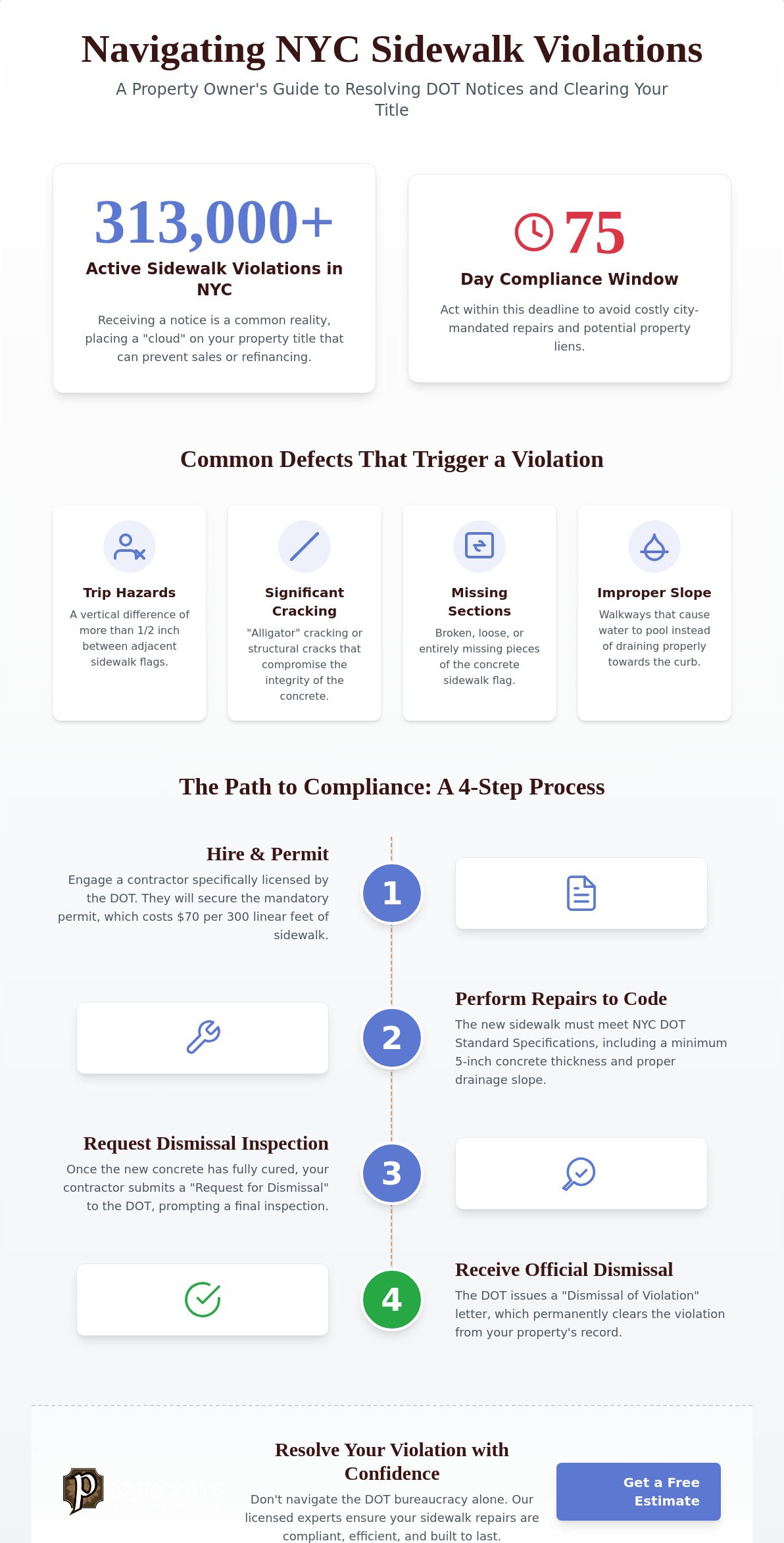
Inspectors look for specific structural failures that compromise safety. The most common trigger is a vertical displacement, or trip hazard, where one concrete flag sits more than 1/2 inch higher than the next. Other issues include structural “alligator” cracking, where the concrete resembles scales, or missing pieces of the flag entirely. Improper slopes are also flagged. If water pools on the walkway rather than draining toward the curb, it creates a slip hazard that requires correction.
The Legal Responsibility of NYC Property Owners
NYC Administrative Code Section 19-152 clearly defines your obligations. Owners must maintain the sidewalk from the curb to the property line. This includes keeping the area free of snow, ice, and structural decay. Identifying these exact boundaries is vital for a precise repair plan. A professional concrete contractor brooklyn helps owners map out these responsibilities to ensure the repair covers the full area cited in the violation. Taking proactive steps ensures your property remains compliant and safe for the community.
The Step-by-Step Process to Remove a Sidewalk Violation
Clearing a property record requires a methodical approach that satisfies both administrative and structural requirements. To successfully remove sidewalk violation new york records, you must follow a specific sequence of actions that begins with technical preparation and ends with city approval. Following NYC’s official violation removal process ensures you don’t waste resources on unapproved repairs or contractors who lack the proper credentials.
The workflow moves through four distinct phases:
- Phase 1: Hire a DOT-licensed contractor to pull the required permits.
- Phase 2: Perform the repair according to NYC DOT Standard Specifications, ensuring a 5-inch concrete thickness.
- Phase 3: Submit the “Request for Dismissal” inspection once the new concrete has fully cured.
- Phase 4: Receive the official “Dismissal of Violation” letter to permanently clear your property record.
Permits and DOT Regulations for 2026
A standard Home Improvement Contractor license is insufficient for this work; you must hire a contractor specifically licensed by the DOT to work on city sidewalks. The permit filing process involves submitting detailed sketches and paying a fee of $70 for every 300 linear feet of walkway. The “Standard 5×5 Flag” rule mandates that sidewalk flags must generally be 5 feet by 5 feet in dimension to maintain a uniform city grid and ensure consistent pedestrian paths.
Winning the Dismissal Inspection
Success in the final walkthrough depends on technical precision. Once work is complete, you or your contractor must schedule a final inspection where a DOT official verifies the structural integrity of the repair. The inspector will check for proper expansion joints, correct grading for water drainage, and the PSI strength of the concrete mix. They focus on whether the repair eliminates the original hazard while meeting long-term durability standards. For a deeper look at these specific compliance standards, consult a specialized nyc sidewalk repair contractor. If you want to ensure your property meets every city requirement the first time, working with a seasoned masonry partner can simplify the entire dismissal process.
Costs, Timelines, and Avoiding Common Pitfalls
Managing the financial and logistical side of a DOT notice requires quick action. Many owners fall into the “City Repair” trap. If you don’t begin repairs within the 75-day window, the city will hire its own contractor to perform the work. This cost is then billed directly through your property taxes. While this might seem convenient, city-hired crews prioritize basic functionality over the aesthetic integrity of your property. Private contractors generally offer superior finish quality and more competitive pricing, as they are directly accountable to you rather than a municipal agency.
A typical project to remove sidewalk violation new york records takes between 4 and 8 weeks. This timeline includes filing for permits, completing the physical masonry work, and waiting for the final city inspection. One common mistake is attempting to “patch” cracks with a bag of hardware store cement. The DOT rarely accepts patches; they almost always require a full flag replacement to ensure structural longevity. Cutting corners now usually leads to a failed inspection and double the expense later.
How to Vet a Sidewalk Contractor
Not every mason is qualified for city-compliant work. You must verify that your contractor holds a valid DOT license and carries both General Liability and Workers Compensation insurance. Ask for specific references in Brooklyn or Manhattan to evaluate their ability to match existing masonry textures. Most importantly, ensure your contract explicitly states that the contractor will handle the “Dismissal Request” paperwork. Without this final step, the violation remains on your record even if the physical work is perfect. Brooklyn property owners in particular should review a comprehensive sidewalk repair brooklyn guide to understand the borough-specific DOT requirements and how to protect their home’s long-term value.
The Hidden Risks of Ignoring a Violation
Leaving a violation open creates significant legal exposure. In New York, an open sidewalk violation serves as “prima facie” evidence of negligence in personal injury cases. If a pedestrian trips on your walkway, your legal defense is severely weakened. Additionally, insurance carriers frequently audit property records. They may drop your coverage or significantly increase premiums if they discover unresolved safety hazards. To protect your investment and ensure total compliance, contact a specialist in sidewalk violation removal who understands these high-stakes requirements.
Preserving Value: Masonry Standards for Historic Walkways
In historic neighborhoods like Park Slope and Brooklyn Heights, a standard concrete patch often diminishes the architectural value of the property. Homeowners in these areas face a unique challenge when they need to remove sidewalk violation new york records. The city frequently requires masonry that respects the streetscape’s original character. This involves matching the specific tint and texture of surrounding flags rather than pouring bright white, utilitarian concrete. Achieving this level of precision requires a specialized understanding of material science and local history.
The process of sidewalk restoration frequently intersects with brownstone facade renovation brooklyn projects. When the exterior of a home is being restored, the walkway should serve as a complementary frame. We use high-strength masonry mixes designed to withstand harsh NYC winters. These specific blends prevent early spalling and resist damage from road salt; this ensures the repair lasts for decades rather than just a few seasons. Quality craftsmanship at the street level protects the aesthetic integrity of the entire building.
Sidewalks and Structural Integrity
A poorly executed repair does more than just fail a DOT inspection; it can threaten your building’s foundation. If the concrete is not pitched correctly, water can seep into your brownstone’s cellar. We maintain a strict pitch of 1/4 inch per foot to direct runoff away from the structure and toward the curb. Proper drainage is a critical component of Brownstone Repair that protects your investment from long-term moisture damage and structural decay.
The Progressive Contracting NY Corp Advantage
We approach concrete work with the mindset of a master mason. While speed is important, precision remains the priority. Our team handles every aspect of the DOT bureaucracy, from the initial permit filing to the final dismissal request. This allows you to remove sidewalk violation new york records without the stress of managing city paperwork yourself. Clear your record with Progressive Contracting NY Corp, a partner who understands Brooklyn’s architectural heritage and delivers results that enhance your home’s curb appeal and structural health.
Secure Your Property Record and Curb Appeal
Resolving a DOT notice is about more than just pouring concrete; it’s a critical step in protecting your property’s title and structural health. Acting within the 75-day window allows you to maintain control over the quality and cost of the restoration. By choosing a specialized approach, you ensure that your walkway meets modern safety standards while respecting the architectural heritage of your neighborhood. A successful project results in a clear record and a foundation protected from water infiltration.
Our team provides the steady hand you need to remove sidewalk violation new york records with total confidence. As a DOT-licensed contractor with a 100% success rate in violation dismissals, we bridge the gap between technical masonry and city bureaucracy. We bring expert craftsmanship to Brooklyn and Manhattan historic districts, ensuring every flag replacement is durable and aesthetically precise. You don’t have to navigate the inspection process alone.
Take the first step toward a clear property record. Request a Professional Sidewalk Inspection and Violation Removal Quote to secure your home’s value and your own peace of mind.
Frequently Asked Questions
How long do I have to remove a sidewalk violation in NYC?
You have 75 days from the date you sign the certified mail receipt or the notice is posted on your property to complete the required repairs. This timeframe allows you to hire a private contractor and manage the quality of the masonry yourself. If you don’t act within this window, the city may perform the work and bill you through your property taxes.
Can I sell my house if I have an open sidewalk violation?
You can sell a property with an open violation, but it often complicates the closing process. Most title companies and lenders require a clear record before they will finalize a mortgage or transfer the title. To smoothly remove sidewalk violation new york records before a sale, you should begin the repair and dismissal process as soon as you decide to list the property.
What happens if I ignore the NYC DOT sidewalk violation notice?
Ignoring the notice leads to the city performing the repairs through their own contractors. The city then bills you for the work through property taxes; failure to pay can result in a lien on the property. These city-mandated repairs focus on basic safety rather than aesthetic matching, which can negatively impact the curb appeal of historic homes.
Is a permit required for sidewalk repair in New York City?
Yes, a DOT sidewalk construction permit is mandatory for any repair work on the public walkway. This permit currently costs $70 for every 300 linear feet of sidewalk. A licensed contractor must pull this permit to ensure the city recognizes the work and schedules the necessary follow-up inspection for dismissal.
How do I check if my sidewalk violation has been officially dismissed?
You can check the status of your property through the NYC Open Data portal or the DOT’s online sidewalk violation search tool. Once the inspector approves the work and the paperwork is processed, the status will change from “Active” to “Dismissed.” Always keep the physical “Dismissal of Violation” letter in your permanent records to remove sidewalk violation new york concerns during future refinancing.