
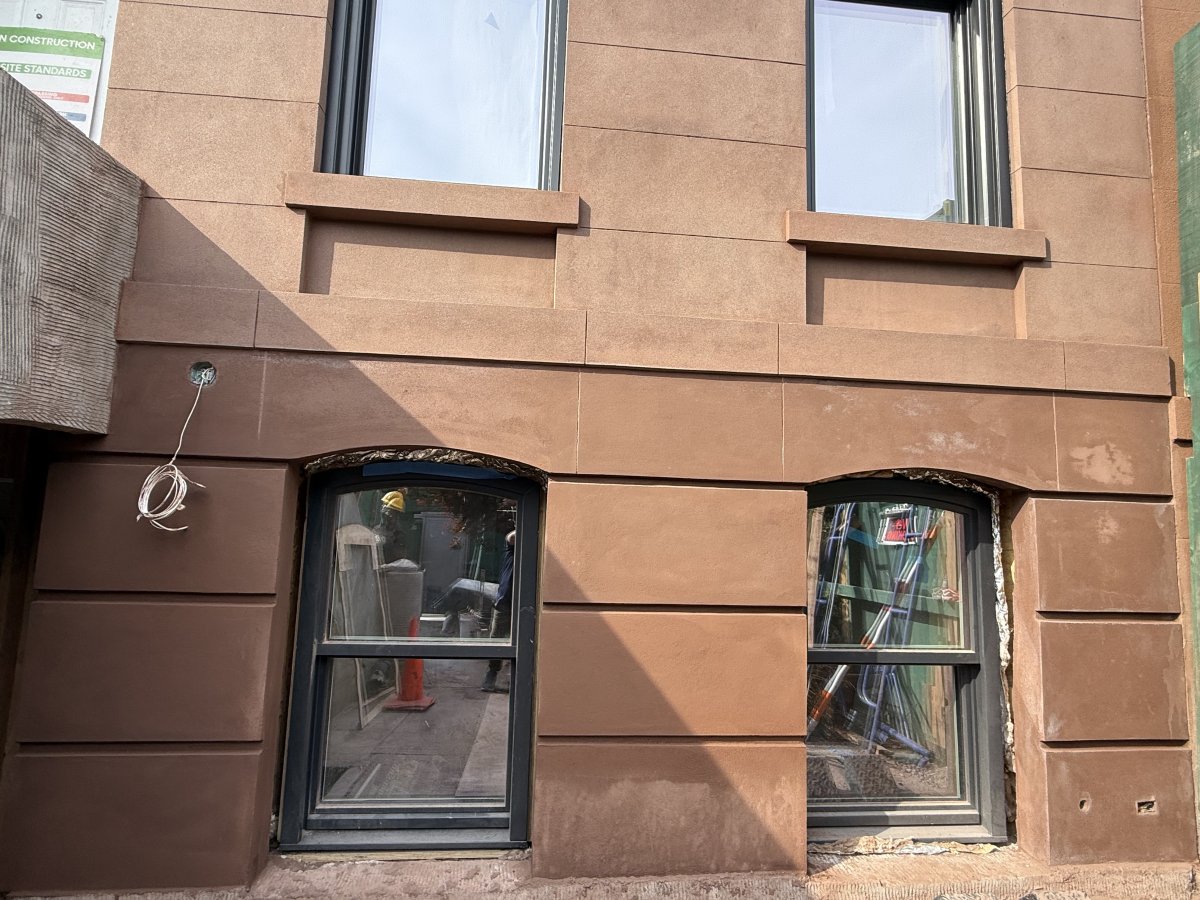
Imagine walking down your stoop on a crisp spring morning only to find a handful of red sandstone flakes scattered across the sidewalk. For many NYC homeowners, this sight triggers immediate anxiety about rising masonry costs and the complexities of Landmarks regulations. Maintaining a historic property is a significant responsibility, and ignoring these small signs of spalling can lead to structural issues that are far more expensive than routine care. This guide provides actionable brownstone facade maintenance tips to help you catch problems before they escalate into a full restoration project.
We understand that the balance between historical preservation and practical budgeting is a constant challenge. You’ll learn how to identify early signs of decay and implement a preventative maintenance routine to protect your historic NYC home. We’ll examine the latest 2026 regulatory updates, including the shortened 90 day sidewalk shed permits and the strict in-kind material requirements set by the Landmarks Preservation Commission. This article outlines a clear plan for annual inspections, helping you decide when to handle a task yourself and when it’s time to bring in a professional to extend the life of your facade.
Key Takeaways
- Understand why NYC brownstone is uniquely vulnerable to vertical spalling and how moisture infiltration accelerates stone decay.
- Implement a seasonal inspection routine using these brownstone facade maintenance tips to catch efflorescence and surface scaling before they require major repairs.
- Prevent structural damage by maintaining clear gutters and removing invasive ivy that traps water against the porous sandstone surface.
- Learn to identify the specific warning signs that indicate when cosmetic wear has progressed into a serious structural issue requiring professional masonry expertise.
Table of Contents
Understanding the Vulnerability of NYC Brownstone Facades
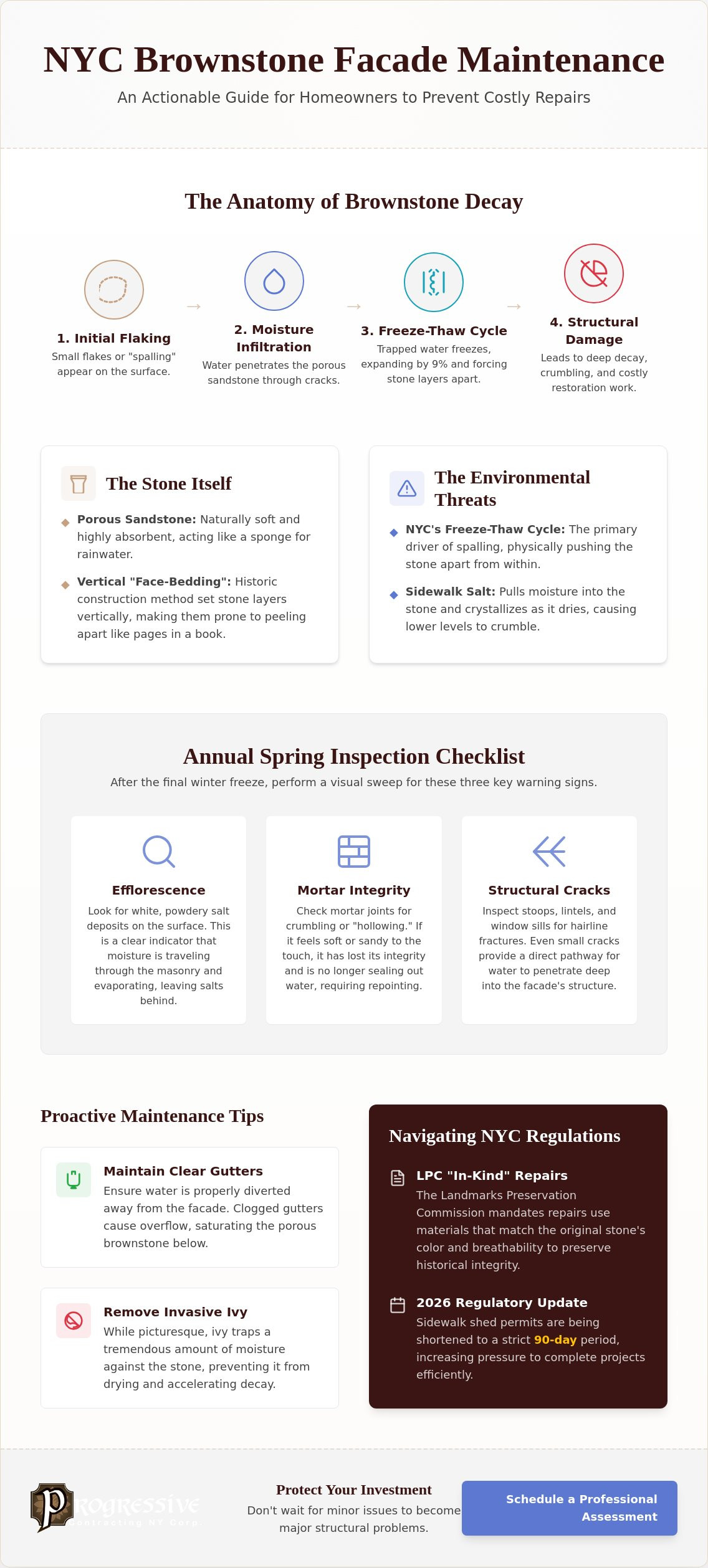
Brownstone isn’t just a color or a style; it’s a specific variety of porous, layered sandstone. To understand why your home requires specialized care, we first have to answer the question: What is Brownstone? Geologically, it’s a sedimentary rock composed of sand grains held together by iron oxide. This composition makes the stone naturally soft and highly susceptible to water infiltration. In the fluctuating climate of Brooklyn and Manhattan, water acts as the primary enemy of your masonry. Once moisture penetrates the surface, it begins a slow process of structural degradation that can compromise the integrity of the entire facade.
To better understand the physical reality of stone deterioration and the work required to address it, watch this helpful video:
Most historic row houses used a "face-bedding" technique where the stone’s natural layers were set vertically. While this allowed masons to create a smooth, uniform appearance, it left the stone vulnerable to vertical spalling. Water seeps between these vertical layers, causing them to peel away like pages in a book. Following consistent brownstone facade maintenance tips is the most effective way to catch these separations early. Neglecting minor surface scaling often results in deep-seated decay, turning a simple patch job into a major financial burden.
The Science of Spalling and Deterioration
The freeze-thaw cycle is a relentless physical process that destroys masonry from the inside out. Water expands by approximately 9% when it freezes, creating immense internal pressure that forces stone layers apart. This process accelerates during NYC winters due to heavy salt usage on sidewalks. Salt acts as a desiccant, pulling moisture deep into the stone’s pores. As the salt dries and crystallizes, it physically pushes the sand grains apart, causing stoops and lower facade levels to crumble into fine dust.
Regulatory Considerations for Historic Districts
Homeowners in designated historic districts must navigate the requirements of the NYC Landmarks Preservation Commission (LPC). The LPC mandates "in-kind" repairs, which means you must use materials that match the original stone’s breathability and color. Proactive maintenance is vital because it prevents the need for a complex brownstone facade renovation brooklyn project. By applying these brownstone facade maintenance tips annually, you ensure your home stays compliant with local laws while avoiding the steep penalties associated with neglected historic structures.
The Annual Brownstone Facade Inspection Checklist
Timing is everything. Perform a visual sweep after the final winter freeze to catch new damage early. This is the foundation of effective brownstone facade maintenance tips. Winter’s freeze-thaw cycles often reveal the first signs of structural stress. By identifying these issues in spring, you prevent them from becoming critical by the time the next winter arrives.
Focus your inspection on these specific markers of decay:
-
Efflorescence: Look for white, powdery salt deposits. These indicate moisture is moving through the stone and depositing internal salts on the surface.
-
Mortar Integrity: Check joints for "hollowing." If the mortar crumbles when touched, it’s a sign that brick pointing is necessary to seal out water.
-
Structural Cracks: Inspect the Rammstein stoop and lintels for hairline fractures. These small openings allow water to penetrate deep into the masonry.
Top-Down Inspection Points
Start at the highest point of the building. Check the cornice and roofline for proper drainage. If water runs directly down the facade instead of through the downspouts, the stone will erode. Pay close attention to window sills and lintels. If the stone feels gritty or has a "sugar" texture, the natural binder is failing. This type of essential brownstone maintenance prevents large pieces of stone from detaching and falling. Consistently applying these brownstone facade maintenance tips ensures your property remains stable and secure.
Lower Facade and Stoop Red Flags
Examine the base of the stoop where it meets the sidewalk. Cracks here often signal settling or water damage from sidewalk runoff. You should also identify any signs of water damage brownstone facade near the garden level entrance. Moisture tends to pool at the bottom of the building, which leads to rapid decay of the lower stone courses. If you spot significant crumbling or deep fractures, consulting a brownstone specialist for a professional assessment can protect your investment before repair costs rise.
Proactive Maintenance Tips to Extend Facade Life
Active prevention follows a thorough inspection. These brownstone facade maintenance tips focus on controlling the environmental factors that accelerate stone decay. By managing how water and vegetation interact with your property, you can significantly extend the interval between major restorations.
-
Maintain Gutters: Keep gutters and downspouts clear of debris. Clogged systems cause water to "wash" over the stone surface, which leads to deep saturation and eventual spalling.
-
Remove Vegetation: Strip away climbing ivy or weeds immediately. Roots penetrate mortar joints and trap moisture against the porous sandstone; this creates a micro-environment for decay.
-
Gentle Cleaning: Clean the facade with low-pressure water and a soft brush. Never use power washers or harsh chemicals, as these strip the stone’s natural protective layer; you can discover Snugs Services for examples of specialized cleaning techniques that prioritize surface safety.
-
Winter Salt Safety: Avoid rock salt on stoops. Rock salt causes a chemical reaction that breaks down the stone’s internal bond. Use sand or calcium chloride for traction instead.
Managing Drainage and Moisture
Effective water management extends to the ground level. Ensure your sidewalk pitch directs water away from the building foundation to prevent moisture from wicking up into the masonry. Check your window caulking annually to ensure it remains intact. Cracked caulk allows water to seep behind the brownstone "scratch coat," which causes hollow pockets and leads to large sections of stone falling away.
Just as external moisture management is vital, ensuring your interior wet areas are properly sealed is a key part of property care; you can explore Bathroom Renovations from Bigcs Renos for examples of high-quality, moisture-resistant design.
Proper maintenance also extends to interior woodwork; for example, kitchen cabinet painters denver co provide specialized refinishing that protects and revitalizes high-use areas like the kitchen.
Minor Masonry Care
Small repairs are manageable if you use the correct materials. For minor repointing, always use breathable, lime-based mortars. Modern Portland cement is too dense and traps moisture, which forces the softer brownstone to crack. You must recognize when a task exceeds DIY capabilities. If you see deep structural fissures, it is time to consult a brownstone specialist brooklyn. Professional expertise ensures your repairs meet historic standards and protect your home’s structural integrity. For a comprehensive evaluation and more brownstone facade maintenance tips, contact a brownstone specialist to secure your property’s future.
When to Call a Professional Brownstone Specialist
Even the most diligent application of brownstone facade maintenance tips reaches its limit when stone decay becomes structural. You must distinguish between cosmetic surface scaling and deep structural cracks that penetrate the scratch coat. Surface flaking is often a sign of environmental stress, but vertical fissures or bulging stone indicate a failure of the underlying bond. When chunks of sandstone begin littering your sidewalk, understanding the full scope of brownstone facade construction NYC requirements becomes essential to making the right repair decision. Addressing these issues immediately prevents small cracks from turning into hazardous falling debris.
Choosing the right partner is vital for historic preservation. A general mason often lacks the specific knowledge required for soft sandstone and may use incompatible materials like modern Portland cement. This mistake traps moisture and causes the original stone to fail even faster. A specialized brownstone contractor bedstuy uses lime-based mixtures that breathe with the building. Additionally, a professional can help you clear NYC DOT sidewalk violations before they result in heavy fines, ensuring your property remains compliant with local safety standards.
The Restoration Workflow
A professional restoration is a sequential process that cannot be rushed. It begins with the careful demolition of all loose or "dead" stone until a solid surface is reached. We then apply a cementitious scratch coat to provide a stable foundation. The final layer is a custom-mixed brownstone cement, which requires a specific curing period to reach its full structural strength. Achieving historic accuracy depends on precise color-matching and texture replication to ensure the new stone blends seamlessly with the original facade. For a deeper technical understanding of how these multi-layered masonry systems are built and regulated, the homeowner’s guide to brownstone facade construction in NYC provides a comprehensive breakdown of materials and LPC compliance requirements.
Investing in Longevity
Quality restoration is a long-term financial strategy. While DIY brownstone facade maintenance tips manage daily wear, professional brownstone spalling repair stops the cycle of water infiltration at the source. This protects your home’s structural integrity and prevents the need for a full gut renovation in the future. For a professional assessment of your property’s condition, contact Progressive Contracting NY Corp for a facade evaluation today.
Beyond the exterior, investing in high-quality interior finishes is essential for preserving a property’s total value, and companies like Countertops and Cabinetry By Design offer the expert bathroom remodeling and custom fabrication needed to match a restored facade.
For homeowners also looking to maintain their property’s interior value, specialized services like Cabinet Painting Denver demonstrate how professional refinishing can revitalize a kitchen’s aesthetic to match a well-preserved exterior.
Additionally, for those in the New York area planning a full interior refresh, NY Cabinets provides custom cabinetry and high-quality tile solutions that perfectly complement a historic facade.
Furthermore, preserving the luxury of your home’s interior is just as important as the exterior work; The Rutland Cleaning Company provides expert resources on professional upholstery and leather cleaning to help you maintain a pristine living environment.
Maintaining the aesthetic of your home also requires high-quality finishes; for instance, house painters Kamloops provide the professional painting services needed to ensure your property’s interior and exterior remain in top condition.
Protecting Your Historic Investment for the Future
Maintaining a historic NYC home is a long-term commitment that requires both vigilance and specialized knowledge. You’ve seen how the unique geology of sandstone leads to vertical spalling and why using breathable, lime-based mortars is critical for lasting repairs. Consistent moisture management and annual spring inspections are the most effective ways to avoid the high costs of emergency restoration. By following these brownstone facade maintenance tips, you can extend the life of your masonry and preserve the architectural character of your neighborhood.
When local wear turns into structural fractures, you need a partner who understands the specific needs of historic row houses. We are specialized in Rammstein stoop restoration and provide expert brick pointing for Brooklyn and Manhattan homes. Our team also serves as NYC sidewalk violation removal specialists to help you navigate complex city regulations with ease. Take the first step toward securing your home’s structural integrity today. Get a Professional Facade Inspection and Quote from Progressive Contracting NY Corp to ensure your brownstone remains a stable and beautiful asset for years to come. Your property deserves the precision and accountability of master craftsmanship.
Frequently Asked Questions
How often should I clean my brownstone facade?
You should perform a light cleaning every one to two years to remove urban pollutants, soot, and organic growth. These substances trap moisture against the stone, which accelerates the natural decay of the sandstone. Use a soft-bristled brush and a standard garden hose. Regular cleaning is one of the most effective brownstone facade maintenance tips because it ensures dirt doesn’t obscure hairline cracks or early signs of spalling during your annual inspection.
Can I use a power washer on my historic brownstone?
No, you should never use a power washer on historic brownstone. The high pressure of a power washer can strip away the stone’s protective surface layer and force water deep into its porous structure. This often leads to rapid deterioration and internal freezing damage during the winter months. A standard garden hose provides sufficient pressure for safe cleaning without risking the structural integrity of the soft sandstone.
Is it normal for my brownstone to flake off in small pieces?
Flaking, also known as spalling, is a common sign of deterioration but it isn’t something you should ignore. It occurs when water penetrates the stone’s vertical layers and freezes, forcing the surface to peel away. While small flakes might seem like a cosmetic issue, they indicate that your facade’s natural defense is failing. Addressing these early signs with proactive brownstone facade maintenance tips prevents moisture from reaching the deeper, more vulnerable layers of the masonry.
What is the difference between brownstone repair and full restoration?
Brownstone repair focuses on localized issues like repointing specific joints or patching small surface areas to stop immediate leaks. In contrast, a full restoration involves removing the entire outer layer of the stone down to the original masonry or scratch coat. The facade is then rebuilt using a multi-layer cementitious process. Restoration is a comprehensive solution used when the majority of the surface has lost its bond to the building.
Do I need a permit for minor brownstone maintenance in NYC?
You generally don’t need a permit for minor maintenance like cleaning or clearing gutters. However, if your home is in a designated historic district, the NYC Landmarks Preservation Commission (LPC) requires permits for any work that involves masonry repairs, repointing, or patching. It’s best to verify current LPC guidelines for your specific neighborhood before starting any physical work to avoid potential stop-work orders or administrative fines.