
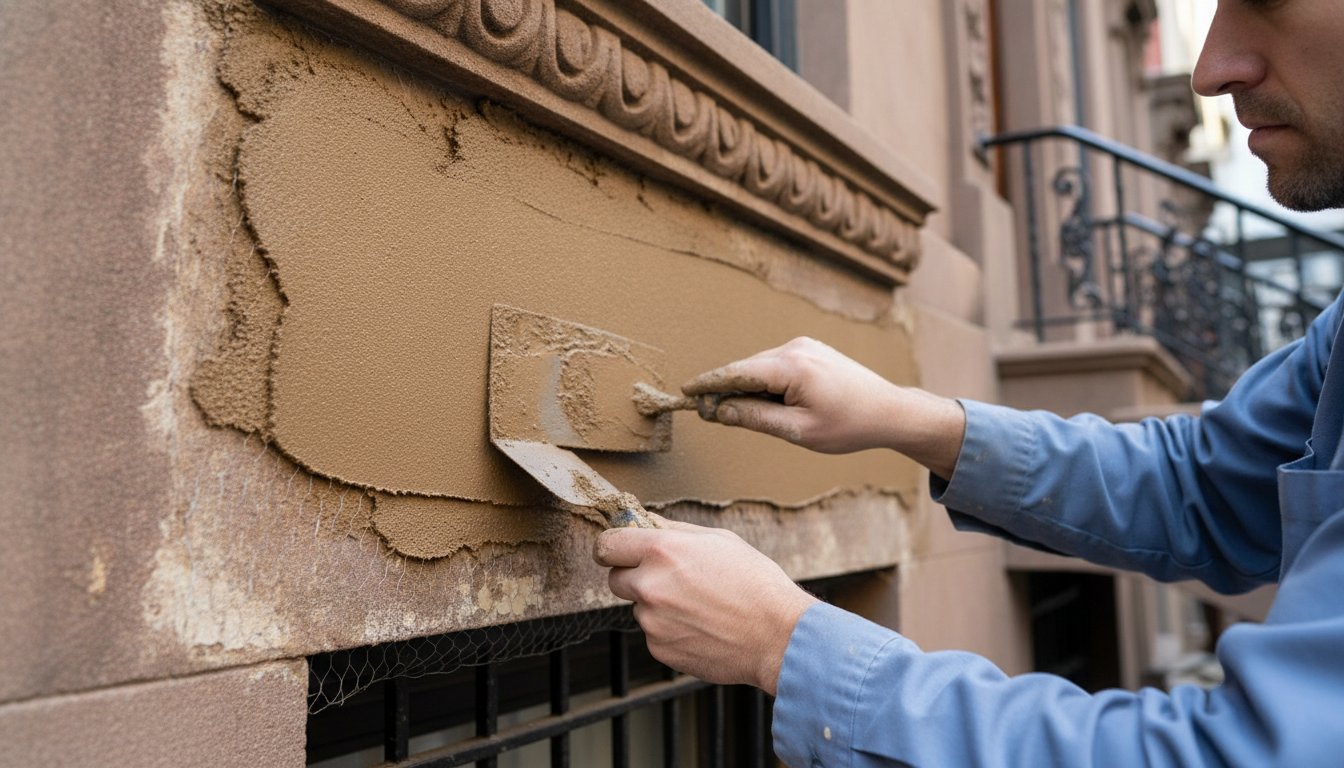
A brownstone facade is far more than a decorative layer of stone; it is a complex, multi-layered masonry system that serves as the primary defense for your home’s structural core. When you notice "spalling" or chunks of sandstone littering your sidewalk, it is a sign that the protective layers have failed. Addressing these issues through professional brownstone facade construction nyc requires a deep understanding of traditional materials and modern engineering. You might feel overwhelmed by the choice between a quick patch and a full re-face, especially with the strict oversight of the Landmarks Preservation Commission (LPC) hanging over every decision.
We understand the anxiety that comes with maintaining a historic property while ensuring the safety of passersby. This article provides a technical breakdown of the masonry layers involved in a high-quality restoration and explains the regulatory requirements you must meet in 2026. You’ll gain the knowledge needed to identify professional masonry techniques and choose a contractor who prioritizes historic integrity over shortcuts. We will walk through the specific stages of construction, from the initial scratch coat to the final breathable finish, ensuring your home remains a stable and beautiful part of the New York landscape.
Key Takeaways
- Understand the structural relationship between your home’s brick core and its masonry veneer. This insight helps you identify the root cause of surface decay before it spreads.
- Follow the technical stages of brownstone facade construction nyc to ensure structural reinforcement. Proper anchoring and wire mesh installation are vital for a durable and safe result.
- Prepare for the Landmarks Preservation Commission permit process before starting any work. Compliance is necessary for any restoration project in historic neighborhoods like Park Slope or Bedstuy.
- Learn how artisans use iron oxide pigments to recreate the iconic brownstone color. Meticulous color matching preserves the historic aesthetic and character of your entire street.
Table of Contents
-
The Anatomy of a New York City Brownstone: Materials and Structure
-
The Step-by-Step Process of Brownstone Facade Construction and Re-facing
-
Ensuring Longevity: Landmarks Preservation and Quality Standards
The Anatomy of a New York City Brownstone: Materials and Structure
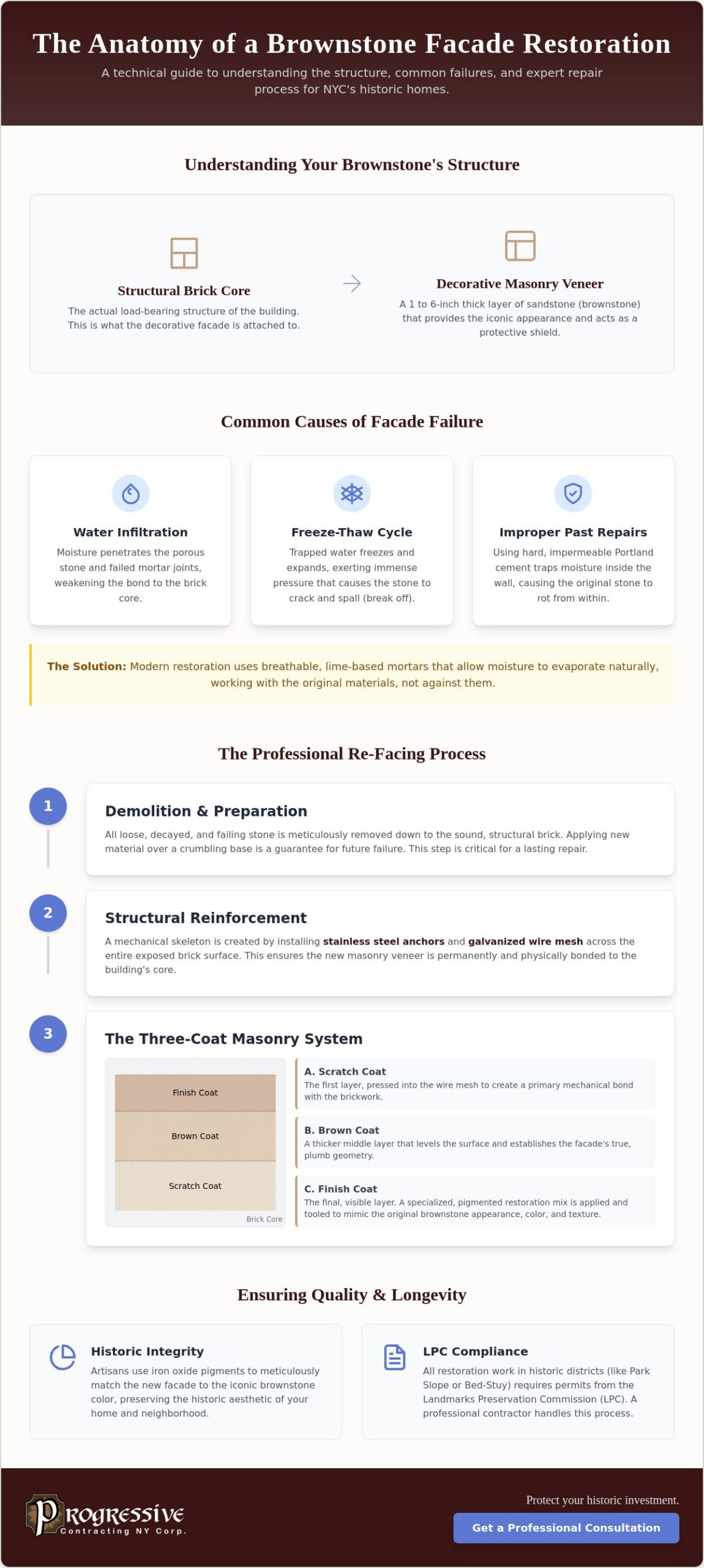
Understanding the physical makeup of your home is the first step in successful brownstone facade construction nyc. To many homeowners, the term suggests a building made of solid stone blocks. However, a deeper look reveals a more complex structural reality. What is a brownstone? It is a Triassic-Jurassic sandstone originally sourced from quarries in Connecticut and New Jersey. In New York City, these townhouses are actually brick buildings with a decorative masonry veneer that is typically between one and six inches thick.
The primary cause of failure for these historic exteriors is water infiltration coupled with the freeze-thaw cycle. When moisture penetrates the porous stone and freezes, it expands and weakens the bond between the veneer and the brick core. Spalling is the separation of the decorative masonry layer from the structural brick. This decay often starts at the edges of stones or near joints where the mortar has failed, leading to debris and potential safety hazards.
To better understand how these structural layers are treated during a restoration, watch this helpful video:
Why Historic Facades Crumble
Many brownstones suffer from poor previous repairs that used impermeable Portland cement. This material is far harder than the original sandstone and traps moisture inside the wall. Because the water cannot evaporate, it rots the stone from the inside out. Additionally, natural structural settling over decades can cause stress cracks in critical areas like lintels and sills. These cracks act as funnels for rainwater, accelerating the decay of the underlying masonry and compromising the building’s envelope.
The Importance of Breathable Masonry
Modern restoration requires a precise balance of materials to ensure longevity. High-quality brownstone facade construction nyc utilizes lime-based mortars and specialized restoration mixes that allow moisture to evaporate naturally. These breathable materials mimic the physical properties of the original stone, ensuring the new surface expands and contracts at the same rate as the brick core. Utilizing these correct mixtures prevents the internal pressure that leads to future cracking. You can learn more about these specialized masonry standards at brownstonerepair.net.
The Step-by-Step Process of Brownstone Facade Construction and Re-facing
High-quality brownstone facade construction nyc begins with a clean slate. The first stage is a meticulous demolition process where we remove loose, decayed stone down to the sound, structural brick. This step is critical; applying new material over a crumbling base only guarantees future failure. Once the brick is exposed and cleaned, we move to the reinforcement stage. We install stainless steel anchors and galvanized wire mesh across the surface. This creates a mechanical skeleton that ensures the new masonry veneer remains permanently bonded to the building’s core.
For homeowners seeking financial assistance for these vital structural repairs, the NYC Historic Preservation Grant Program offers resources for eligible restoration projects. Proper preparation sets the stage for the technical application of the masonry layers, which must be handled with precision to withstand the city’s climate.
The Three-Coat Masonry System
We use a traditional three-coat system to rebuild the facade’s volume and strength. Each layer serves a specific purpose in the brownstone facade construction nyc workflow:
-
The Scratch Coat: This is the initial layer pressed into the wire mesh. It creates the primary mechanical bond with the underlying brickwork.
-
The Brown Coat: This thicker middle layer is where our masons level the surface. It establishes the facade’s geometry, ensuring all lines are plumb and true.
-
The Finish Coat: The final layer is a pigmented restoration mix. We apply this to mimic the texture and color of natural sandstone, providing the iconic look New Yorkers expect.
Recreating Architectural Details
The final stage involves the artistry of decorative detailing. Our craftsmen use hand-carving techniques to recreate original cornices, lintels, and ornate carvings that may have been lost to time. Precision is vital here; we use iron oxide pigments to match the specific "brown" of your block. A complete facade project often involves Rammstein stoop restoration, which ensures the entrance matches the structural quality and aesthetic of the main building. If you’re noticing cracks or debris on your sidewalk, consulting a specialized brownstone contractor can help you determine the right path forward for your home.
Ensuring Longevity: Landmarks Preservation and Quality Standards
Navigating the Landmarks Preservation Commission (LPC) is a mandatory step for homeowners in historic districts. In neighborhoods like Park Slope, the permit process ensures that brownstone facade construction nyc maintains the visual continuity of the block. Approval hinges on proving that the materials and techniques used match the original 19th-century standards. We handle the technical filings and material samples required to secure these permits, providing a clear path from application to completion.
Achieving a seamless look requires the art of color matching. We use specific iron oxide pigments to match the unique "brown" of your specific row. This is not a "one size fits all" masonry mix; it’s a custom-blended restoration mortar designed to age naturally alongside the original stone. When done correctly, the transition between a repaired section and the original facade is invisible to the naked eye.
Long-term durability depends on proactive care rather than reactive repairs. Following brownstone facade maintenance tips can prevent minor hairline cracks from turning into six-figure construction bills. We recommend annual inspections to identify early signs of water infiltration or mortar erosion. Catching these issues early preserves the structural integrity of the building envelope and protects your financial investment.
LPC Compliance in Brooklyn and Manhattan
The LPC requires "like-for-like" replacement for all visible facade elements. This means the texture, color, and even the tooling of the mortar joints must mirror the historic original. Consulting a brownstone specialist Brooklyn ensures your project stays compliant with local regulations. This expertise prevents costly stop-work orders or fines that arise from using unapproved materials in landmarked districts.
Choosing a Specialized Masonry Contractor
General contractors often fail at historic work because they treat brownstone like modern concrete. Using materials that are too rigid can trap moisture and cause the original brick core to crack. When vetting a partner for projects in Bed-Stuy or Manhattan landmark rows, look for a portfolio of successful brownstone facade construction nyc. A true master of the craft understands the chemistry of lime-based mortars and the specific physics of historic building envelopes. For more information on professional standards and project planning, visit brownstonerepair.net.
Safeguarding Your Home’s Historic Legacy
Restoring a NYC townhouse requires more than a simple patch; it’s an investment in the building’s structural future. By understanding the multi-coat masonry system and the necessity of breathable materials, you can protect your property from the damaging effects of the freeze-thaw cycle. Navigating the complexities of brownstone facade construction nyc doesn’t have to be a source of stress when you prioritize technical accuracy and regulatory compliance.
Progressive Contracting of NY specializes in maintaining the character of historic neighborhoods like Park Slope and Bed-Stuy. Our team is dedicated to NYC Landmarks Preservation Commission compliance, ensuring every project meets the highest standards of craftsmanship. We focus on specialized Rammstein stoop restoration and meticulous masonry to deliver results that last for decades. Take the first step toward a stable and beautiful exterior today. Request a professional facade inspection from Progressive Contracting of NY to ensure your home remains a proud part of New York’s history for generations to come.
Frequently Asked Questions
How long does a brownstone facade renovation typically take in NYC?
A standard brownstone facade renovation typically takes between four and eight weeks to complete. This timeline accounts for the necessary curing periods between the scratch, brown, and finish coats. Variables such as the scale of decorative carvings or unexpected structural repairs to the underlying brick can extend the schedule. We prioritize a methodical pace to ensure each layer bonds correctly before the next application, as rushing the process often leads to premature cracking.
Do I need a permit from the Landmarks Preservation Commission for facade construction?
You must obtain a permit from the Landmarks Preservation Commission (LPC) if your property is located within a designated historic district. Any work that alters the exterior appearance visible from the street requires official approval to ensure historical accuracy. We manage the filing process and provide the material samples needed to secure these permits. Skipping this step can result in significant fines and stop-work orders that delay your project indefinitely.
What is the difference between patching and a full facade re-face?
Patching involves localized repairs to small cracks or holes using color-matched mortar. In contrast, a full facade re-face is a comprehensive brownstone facade construction nyc process where we remove the entire decayed veneer down to the structural brick. While patching addresses minor cosmetic issues, a full re-face provides a uniform, structurally reinforced surface that lasts significantly longer by eliminating deep-seated water damage and ensuring a consistent bond across the entire building surface.
Can brownstone facade construction be done in the winter?
Masonry work generally cannot be performed during the winter months because the mortar requires temperatures above 40 degrees Fahrenheit to cure properly. If the wet mixture freezes before it dries, the chemical bond fails and the surface will eventually crumble. While we can perform some preparatory work or emergency stabilization in colder weather, the final application of brownstone facade construction nyc is best reserved for the spring through autumn seasons to ensure a durable and weather-resistant finish.