
In Manhattan, you aren’t just paying for mortar; you’re paying for the logistical mastery required to work on a vertical island. It’s no secret that maintaining a building here feels like a constant battle against rising labor costs and complex Department of Buildings requirements. You want to protect your property’s structural integrity without getting buried under inflated quotes or unexpected permit fees. Determining the average cost of brick pointing manhattan requires looking beyond simple square footage to account for scaffolding, sidewalk sheds, and the latest FISP compliance standards.
This 2026 guide provides a clear breakdown of current pricing factors, the impact of recent regulatory shifts like Local Law 51, and how to choose a contractor who understands the nuances of historic masonry. You’ll learn what a fair quote looks like in today’s market and how to navigate the eight month timeline for filing work permits once a sidewalk shed is in place. We’ll show you how to avoid costly DOB violations while ensuring your building remains a stable, high-value asset for years to come. By understanding the balance between quality craftsmanship and regulatory demands, you can approach your next restoration project with confidence.
Key Takeaways
- Learn how logistical challenges like sidewalk bridges and pedestrian protection requirements impact your total masonry budget in NYC.
- Evaluate the average cost of brick pointing manhattan by identifying the specific site conditions and labor intensity required for your project.
- Understand the technical differences between hand-raking and mechanical grinding to ensure you choose the right removal method for your building’s age.
- Protect your property’s long-term value by preventing water infiltration and the subsequent risks of interior mold or structural decay.
- Stay ahead of updated 2026 FISP cycles and Local Law 51 penalties to maintain compliance and avoid costly Department of Buildings fines.
Manhattan Brick Pointing Costs: Logistical and Regulatory Realities
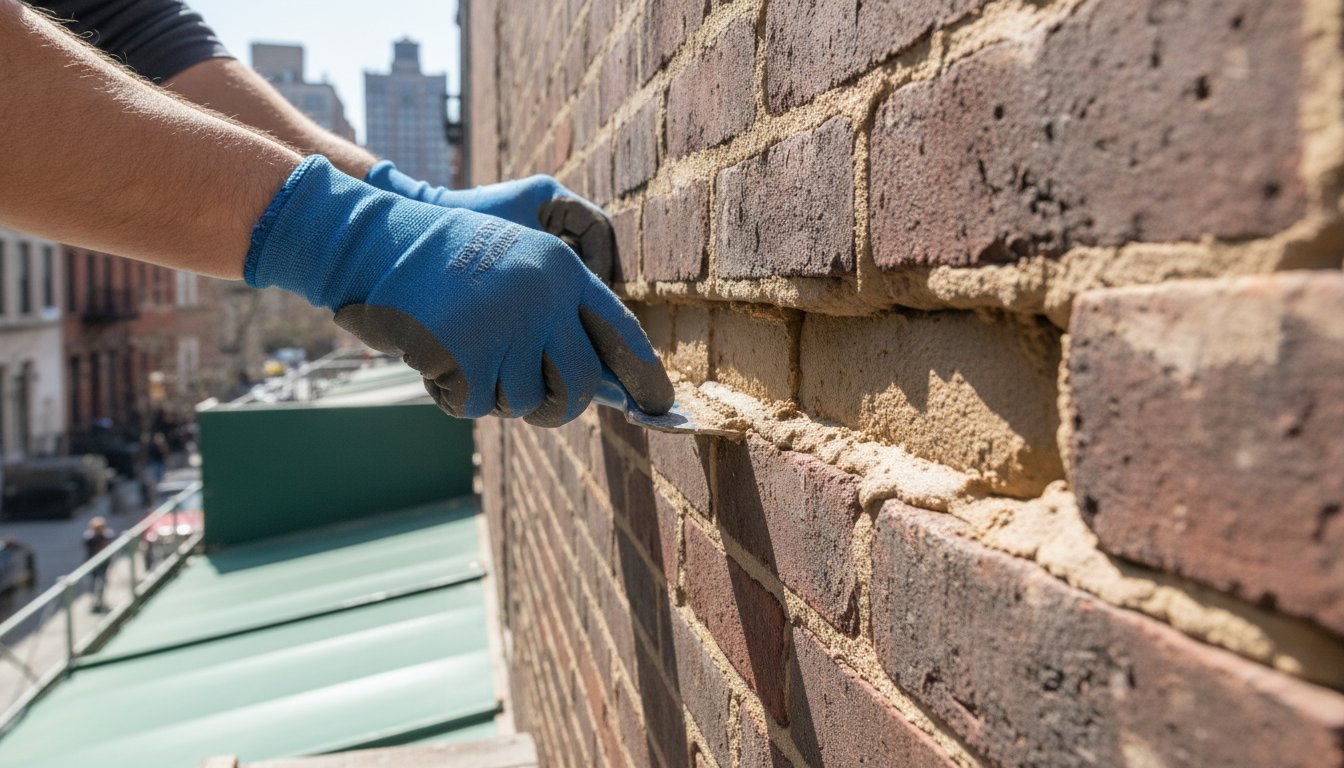
Manhattan masonry projects operate under a unique set of constraints that aren’t found in other boroughs. When property owners research the average cost of brick pointing manhattan, they often find that local logistics account for a significant portion of the quote. Unlike suburban projects where a contractor can simply park a truck and set up a ladder, Manhattan projects require precise coordination. What is Brick Repointing? At its core, it’s the process of renewing the external part of mortar joints, but in NYC, the preparation for this work is often as complex as the masonry itself.
To better understand how these factors influence a project’s scope, watch this helpful video:
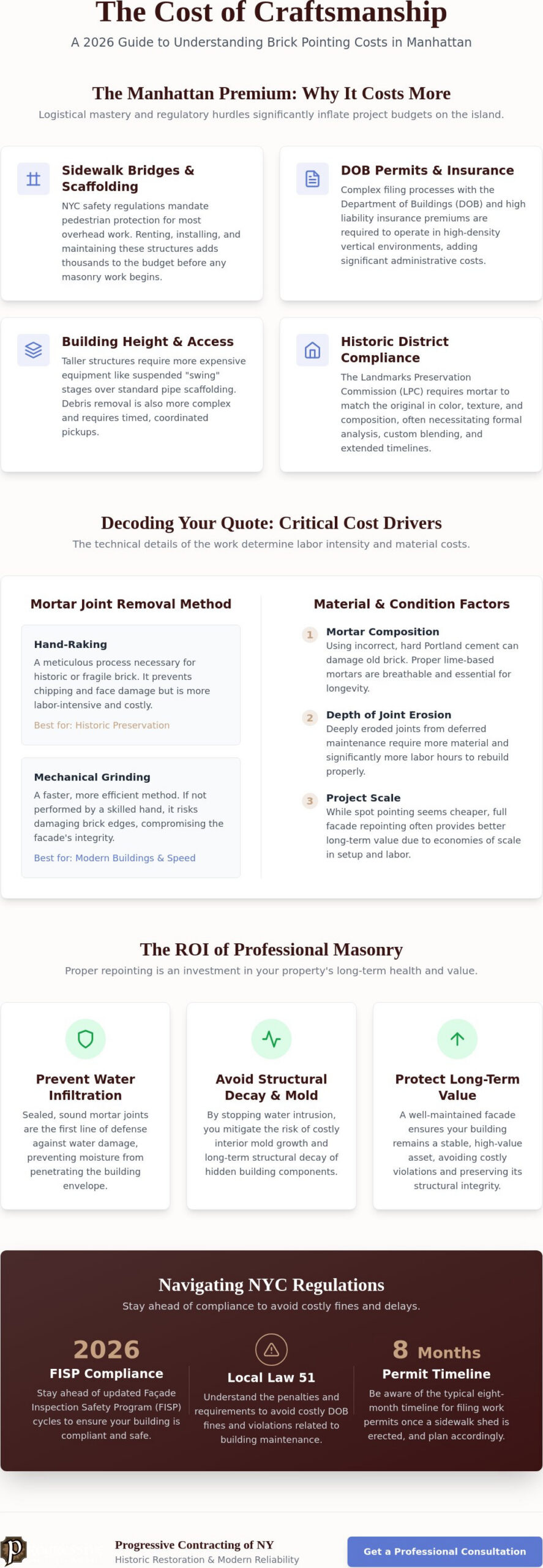
The “Sidewalk Bridge” factor is perhaps the most visible cost driver. New York City safety regulations require pedestrian protection for almost any work occurring above a public walkway. These heavy timber and steel structures aren’t just for safety; they serve as a vital platform for the work ahead. Renting, installing, and maintaining these bridges adds thousands to a budget before a single joint is raked. Beyond the physical structure, the NYC Department of Buildings (DOB) requires specific permits and filing fees that vary based on the project’s scale. Contractors must also carry higher insurance premiums to work in high-density neighborhoods, protecting against the liability risks inherent in vertical construction.
The Impact of Building Height and Accessibility
Height dictates the equipment. While a low-rise brownstone might only require pipe scaffolding, taller structures often necessitate suspended “swing” stages or specialized rope access. Each choice carries different labor costs and setup times. Debris removal in Manhattan is another logistical hurdle. Contractors can’t simply leave a dumpster on a narrow street. They must coordinate frequent, timed pickups to keep the site clear and compliant with city sanitation codes. These layers of coordination are why Manhattan masonry carries a premium.
Historic Districts and LPC Compliance
Working within a designated historic district adds another layer of oversight. The Landmarks Preservation Commission (LPC) requires that new mortar matches the original in color, texture, and chemical composition. This often necessitates a formal mortar analysis and custom blending. These requirements ensure the preservation of Manhattan’s architectural heritage but also extend project timelines. Experienced teams at Brownstone Repair understand that matching 19th-century masonry is a precision task that requires both patience and technical skill.
Evaluating Your Repointing Quote: 5 Critical Cost Drivers
Evaluating the average cost of brick pointing manhattan requires a close look at the specific technical requirements of your building. A professional quote isn’t just a single number; it reflects the labor intensity and material science required for a durable result. The removal method is the first major factor. Hand-raking is often necessary for historic or fragile brick to prevent chipping and face damage. While mechanical grinding is faster, it carries the risk of damaging brick edges if it isn’t performed by a skilled hand. Experienced crews balance speed with the meticulous care required to preserve the masonry’s integrity.
Mortar composition also plays a vital role in your project’s longevity. Using standard Portland cement on older buildings can lead to structural failure because the material is too hard and lacks breathability. The ROI of Professional Masonry is achieved by selecting breathable, lime-based mixtures that allow moisture to escape. If your building’s joints have eroded deeply, the project will require more material and significantly more labor hours to build the joint back up to the surface. Deeper erosion often points to years of deferred maintenance, which increases the complexity of the repair.
Project scale significantly impacts the price per square foot. Spot pointing might seem like a cost-saving measure, but full repointing often offers better long-term value through an economy of scale. Setting up a Manhattan job site involves fixed costs for mobilization and safety equipment. Addressing the entire facade at once is usually more efficient than paying for multiple small repairs over several years.
Material Quality and Mortar Matching
Using the wrong mortar isn’t just an aesthetic mistake. It can cause permanent brick face spalling and accelerated decay. Custom color matching ensures that the new work blends seamlessly with the existing facade. This is especially critical in Manhattan neighborhoods where visual continuity is a point of pride and often a legal requirement. High-quality materials resist the harsh freeze-thaw cycles of New York winters far better than generic hardware store mixes.
Contractor Expertise and Local Track Record
Vetting a team for their Brownstone Facade Restoration experience is essential. Cheap masonry crews often lack the specific NYC credentials and insurance needed for high-stakes urban environments. Hiring an unqualified contractor might save money today, but it often leads to DOB violations or expensive corrective work later. If you want a clear assessment of your building’s condition, it’s best to schedule a professional site evaluation with a local specialist who understands Manhattan’s specific masonry challenges.
The ROI of Professional Masonry: Protecting Your Manhattan Investment
Investing in professional masonry is about more than aesthetics; it is a critical strategy for risk management. The primary goal of any repointing project is to prevent water infiltration. In the high-density environment of New York, even a small leak can lead to extensive interior water damage and mold growth that spreads across multiple units. While the average cost of brick pointing manhattan might seem substantial at first, it is far lower than the price of structural timber replacement or mold remediation. A sound facade acts as the building’s first line of defense against the city’s harsh coastal elements.
Property appraisals in Manhattan are deeply influenced by the condition of the exterior. A well-maintained facade signals to buyers and lenders that the building has been cared for properly. Conversely, visible masonry decay can trigger red flags during inspections, potentially stalling sales or lowering valuations. Compliance with NYC’s Façade Inspection & Safety Program (FISP) is also a legal necessity for buildings over six stories. Staying ahead of these requirements through proactive maintenance prevents the emergency repair costs and heavy fines associated with unsafe building designations.
Identifying the Need for Repointing Early
Catching masonry issues before they escalate saves money. Property owners should look for white, powdery salt deposits known as efflorescence or mortar joints that sound hollow when tapped. Spalling is the process where the outer face of a brick chips or flakes away because moisture is trapped behind failing or overly hard mortar. If you notice these signs, the average cost of brick pointing manhattan will likely be lower if addressed now rather than after a major leak occurs.
Taking the Next Step with Progressive Contracting NY Corp
Navigating the logistical maze of Manhattan construction requires a partner who handles everything from DOB permit filings to final site cleanup. Progressive Contracting NY Corp focuses on transparency and craftsmanship to ensure your restoration project provides lasting value. Our team provides the steady hand needed to manage scaffolding permits and historic district requirements without the stress of hidden fees. To ensure your building remains a stable asset, Get a detailed masonry evaluation for your Manhattan property today.
Securing the Future of Your Manhattan Facade
Maintaining a building in Manhattan is a long-term commitment to structural stability. We’ve seen how logistical factors and strict local regulations shape the average cost of brick pointing manhattan. You now have the tools to evaluate quotes based on mortar science and removal methods rather than just the bottom line. Addressing these needs today prevents the cascading expenses of interior water damage or regulatory fines. Sound masonry is the first step toward ensuring your property remains a protected, high-value asset.
Professional restoration requires a partner who manages every detail from sidewalk bridges to landmark-compliant cleanup. Progressive Contracting NY Corp brings specialized expertise to historic brick and brownstone preservation throughout the borough. We handle the complex DOB filings and site logistics so you don’t have to worry about compliance or project delays. To ensure your building’s exterior remains durable and aesthetically sound, Request a Transparent Brick Pointing Quote from Progressive Contracting NY Corp. Your property’s legacy deserves a steady hand and a commitment to quality that lasts for decades.
Frequently Asked Questions
Is brick pointing the same as repointing or tuckpointing?
Pointing and repointing are often used interchangeably in general conversation, though repointing specifically refers to the repair of existing joints. Tuckpointing is a distinct decorative technique that uses two different colors of mortar to create the illusion of very thin, perfect joints. While pointing and repointing focus on structural integrity and water resistance, tuckpointing is primarily an aesthetic choice often found on historic Manhattan facades.
How often do Manhattan brick buildings need to be repointed?
Most Manhattan brick buildings require repointing every 20 to 30 years to maintain their structural integrity. Factors like exposure to heavy wind, salt air, or improper past repairs can shorten this lifespan significantly. Regular inspections help identify early signs of mortar failure like cracks or powdery residue. Catching these issues early ensures the average cost of brick pointing manhattan remains manageable by avoiding deep structural decay or interior water damage.
Will I need a permit from the NYC DOB for brick pointing?
Yes, most brick pointing projects in Manhattan require a permit from the NYC Department of Buildings (DOB). While minor spot repairs might occasionally fall under ordinary maintenance, any project involving scaffolding or sidewalk sheds necessitates formal filing. Working without the proper permits can lead to costly Stop Work orders and heavy fines. It is essential to verify specific filing requirements for your building height and location before starting work.
How long does a typical brick pointing project take in Manhattan?
A standard brick pointing project for a Manhattan brownstone or mid-rise building typically takes between two to six weeks. This timeline includes the setup of safety equipment, the meticulous removal of old mortar, and the application of new joints. Complex projects in historic districts may take longer due to specialized mortar matching requirements or additional oversight. Weather conditions and building accessibility also play a significant role in the final project duration.