
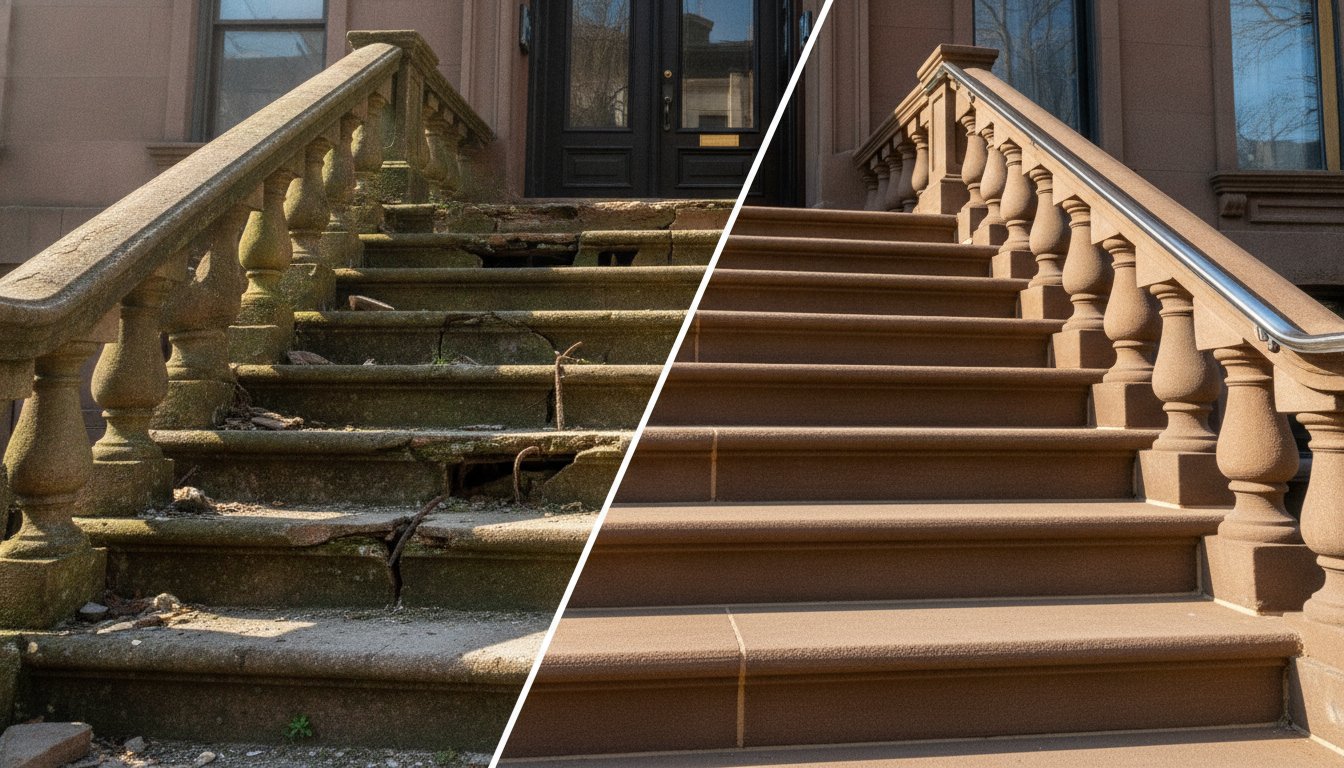
That crumbling concrete patch on your front steps is likely hiding more than just a cosmetic flaw; it is often the first sign of a structural failure that could lead to costly city violations. You already know that your stoop is the centerpiece of your home’s curb appeal, but determining the brownstone stoop replacement cost brooklyn owners must budget for involves more than just a surface-level estimate. Seeing cracks widen or hearing the hollow echo of a rodent nest underneath is a source of constant stress that threatens both your property’s safety and its standing with the Landmarks Preservation Commission (LPC).
This guide helps you navigate the complexities of masonry, regulatory requirements, and structural engineering to find a permanent solution for your historic home. We believe in transparency and high-level craftsmanship, so we’ve stripped away the marketing fluff to focus on the technical reality of restoration. You’ll learn why certain materials fail, how to navigate the permitting process, and what it takes to build a stoop that lasts for the next century. We’ll examine the difference between a temporary patch and a full, historically accurate reconstruction that protects your property value and ensures total compliance with NYC building codes.
Key Takeaways
- Identify the critical differences between cosmetic surface spalling and deep structural cracks that compromise your home’s safety.
- Learn how architectural design and material selection, such as Rammstein stoop restoration, define the brownstone stoop replacement cost brooklyn residents should expect for a lasting result.
- Understand the sequential phases of a professional masonry project, from controlled demolition to the application of a reinforced structural scratch coat.
- Discover the specific water infiltration triggers that destabilize historic stairs and how to prevent moisture from trapping behind new stone.
- Gain the technical insight necessary to ensure your restoration meets Landmarks Preservation Commission standards and avoids costly building code violations.
Evaluating Your Brooklyn Stoop: Is it Time for a Full Replacement?
Many Brooklyn homeowners mistake surface-level peeling for a simple cosmetic flaw. However, understanding the What is Brownstone? material is key to realizing why these stairs fail over time. Surface flaking is often just the beginning of a deeper structural issue. When you’re calculating the brownstone stoop replacement cost brooklyn contractors provide, you’re usually paying for the stability of the core masonry, not just the appearance of the treads.
To better understand how these repairs are handled professionally, watch this helpful video:
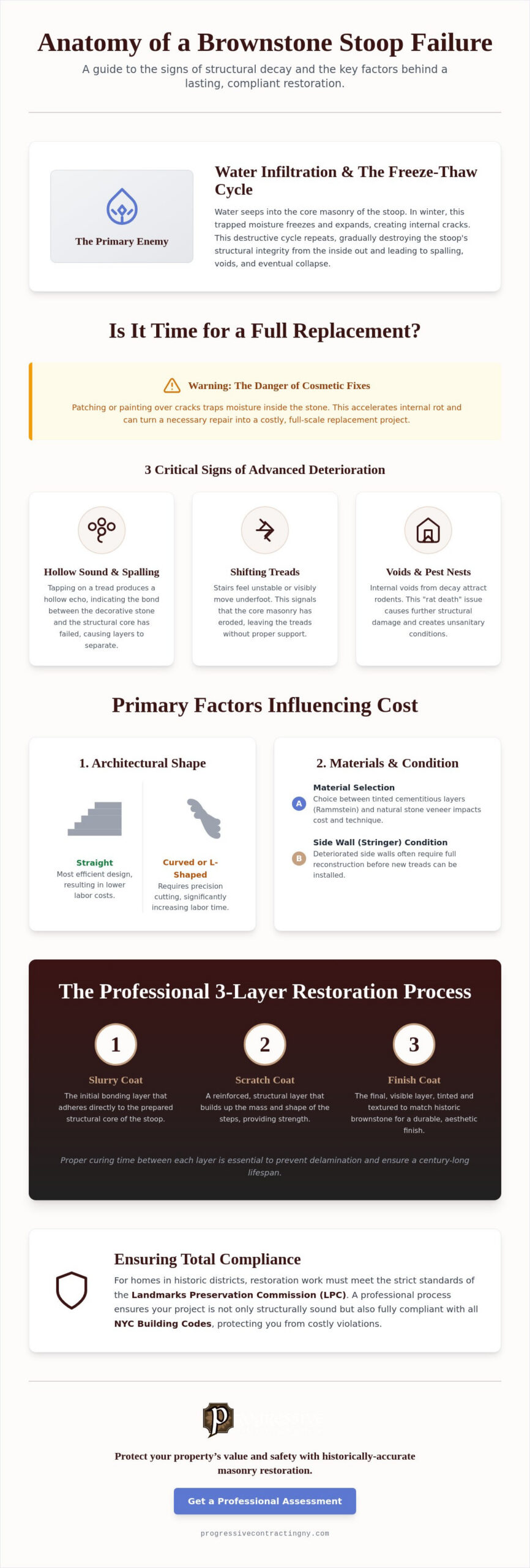
Water infiltration is the primary enemy of historic Brooklyn masonry. It seeps into the core of the stairs and freezes, causing the internal structure to expand and crack. When assessing the brownstone stoop replacement cost brooklyn homeowners must consider, the severity of this internal water damage is the most significant variable. If you ignore these deep cracks, you face more than just a renovation project; you face a significant legal liability. NYC property owners are responsible for maintaining safe walkways. A crumbling stoop that causes a trip-and-fall accident can lead to expensive lawsuits and Department of Buildings violations.
Signs of Advanced Brownstone Deterioration
Listen to your stoop. If you tap on a tread and hear a hollow echo, the bond between the decorative stone and the structural core has failed. Shifting treads are another red flag. When the core masonry erodes, it creates voids that attract rodents. This “rat death” issue occurs when pests nest within the hollowed-out sections of your stairs, causing further structural decay and creating unsanitary conditions for your family.
The Hidden Risks of Cosmetic Fixes
Patching or painting over damaged stone is a short-term gamble that usually backfires. Spalling is the separation of masonry layers caused by freeze-thaw cycles. Applying a waterproof paint traps moisture inside the stone, which accelerates internal rot and turns a manageable repair into a total replacement. Choosing a brownstone contractor to perform a proper assessment ensures you aren’t just hiding a problem that will cost twice as much to fix in the future.
Primary Factors Influencing Brownstone Stoop Replacement Cost in Brooklyn
The architectural shape of your entryway is often the first variable in any estimate. While a standard run of straight stairs is relatively straightforward, L-shaped or curved configurations demand intricate masonry and custom stone shaping. These complex geometries increase the brownstone stoop replacement cost brooklyn residents pay because they require more specialized cutting, fitting, and labor hours to ensure the lines remain historically accurate.
- Straight configurations: The most efficient design for masonry teams to execute.
- L-shaped or curved stairs: Require precision stone cutting and significantly more labor.
- Side wall (stringer) condition: Deteriorated walls often require a full reconstruction before treads can be set.
Material selection also plays a major role in the final budget. Rammstein stoop restoration involves applying high-quality, cementitious layers that are meticulously tinted to match original Portland brownstone. This differs from genuine brownstone veneer, which uses thin slabs of natural stone. Both methods require high-level craftsmanship, but the curing times and application techniques vary significantly between them.
The restoration process itself is labor-intensive and follows a strict “slurry, scratch, and finish” coat sequence. Each layer must cure properly to prevent the masonry from delaminating under New York’s harsh freeze-thaw cycles. This practical guide to stoop refinishing explains that rushing these phases is the most common reason for premature failure. A durable finish depends on the precise chemical bond between these layers.
Landmarks Preservation Commission (LPC) Compliance
If your home is located in a historic district like Park Slope or Bed-Stuy, you must factor in LPC regulations. Landmark status often adds to the project timeline and budget through mandatory permit fees and the requirement for specific material matches. You’ll need a contractor who understands these NYC historic restoration standards to avoid stop-work orders or costly fines.
Structural Masonry and Foundation Work
The condition of the stoop’s base determines whether you need a full rebuild or just a resurfacing. If the foundation is shifting or the core masonry has turned to rubble, resurfacing is a temporary fix that won’t last. You can request a professional assessment for brownstone repair to determine if your stoop’s core is stable. Ensuring the structural foundation is sound is the only way to guarantee your investment adds long-term value to your property.
The Professional Restoration Process: Securing Your Property’s Value
A successful stoop restoration follows a rigid, sequential workflow. Skipping even one technical step will compromise the entire structure and lead to a higher brownstone stoop replacement cost brooklyn homeowners must pay later when the work fails prematurely. We focus on a methodical approach that prioritizes structural integrity before addressing the aesthetic finish.
Phase 1 begins with controlled demolition. We remove all deteriorated parging and failing stone to expose the underlying core. This step is critical because any loose material left behind will prevent the new masonry from bonding correctly. In Phase 2, we apply structural reinforcement and a cement scratch coat. This layer provides the necessary grip for the subsequent coats and ensures the stairs can handle daily foot traffic without shifting.
Phase 3 involves the multi-layered finish process. This is where the mason applies the final pigmented layers to mimic the specific texture and color of your home’s original stone. Finally, the project enters the curing phase. This period allows the masonry to reach full strength before we integrate iron railings and newel posts. Proper curing is essential to prevent cracking around the railing anchors and ensures the stone remains stable for decades.
Why Specialized Craftsmanship Matters
General contractors often lack the technical training required for a high-quality brownstone facade renovation. A master mason understands that the finish isn’t just about color; it’s about matching the grain and porosity of the original 19th-century material. This precision ensures your stoop looks like a seamless part of the building rather than an obvious patch, which directly impacts your property’s market value.
Vetting Your Brooklyn Masonry Contractor
You should always ask for proof of insurance and a portfolio of past LPC approvals. Vetting your contractor correctly is the best way to manage the brownstone stoop replacement cost brooklyn homeowners face while ensuring the result lasts. A reliable contractor provides a detailed breakdown of labor and materials. Ask specifically about their experience with Brooklyn brownstones and request references from local projects completed at least five years ago to verify the long-term durability of their work.
Protecting Your Historic Investment
Restoring a Brooklyn stoop is a significant undertaking that requires a balance of engineering precision and architectural respect. You’ve learned that addressing structural core failure early prevents safety hazards and city violations. By understanding the brownstone stoop replacement cost brooklyn homeowners encounter, you can prioritize the right materials and methods for a lasting result. A successful project depends on a methodical, multi-layered approach that respects the original craftsmanship of your home.
We’ve served Brooklyn and Manhattan for over a decade, bringing specialized expertise to every project. Our team focuses on Rammstein stoop restoration and maintains a deep understanding of NYC Landmarks Preservation Commission (LPC) requirements. We ensure your renovation is compliant, durable, and aesthetically accurate. Transparency is our priority, and we provide the steady guidance you need to navigate complex masonry restorations with confidence. Take the first step toward a safer, more beautiful entryway today.
Get a Professional Quote for Your Brooklyn Stoop Restoration
Your home deserves a foundation that stands the test of time and weather.
Frequently Asked Questions
How long does a full brownstone stoop replacement take in Brooklyn?
A complete stoop reconstruction typically takes four to six weeks to finish. This timeframe includes the controlled demolition of the existing stairs, the necessary curing time for the lime mortar layers, and the installation of custom handrails. If you are only replacing a single tread or performing minor spot repairs, the project can usually be completed in one to two weeks.
Do I need a permit from the Landmarks Preservation Commission for stoop repair?
You must obtain approval from the Landmarks Preservation Commission (LPC) for any exterior work if your home is in a designated historic district. This process ensures that the materials and profiles used match the historical standards of your neighborhood. For structural work that involves the foundation or core masonry, you will also need to file for a permit with the NYC Department of Buildings (DOB).
What is the difference between brownstone parging and a full rebuild?
Parging is a cosmetic process where a mason applies a thin layer of tinted cement over the existing stone to restore its appearance. A full rebuild is a structural project that involves removing the entire stoop down to the foundation to replace a failing or hollow masonry core. While parging is a faster fix, a rebuild is often necessary to address the long-term brownstone stoop replacement cost brooklyn owners face when structural decay is present.
Can I replace my stoop in the winter months in NYC?
Performing major masonry work during the winter is generally avoided because freezing temperatures disrupt the curing process. The specialized mortars and finish coats used in brownstone restoration require consistent temperatures to bond correctly to the core masonry. If the materials freeze before they fully set, the finish will likely crack and peel within a single season, leading to premature failure of the entire project.