
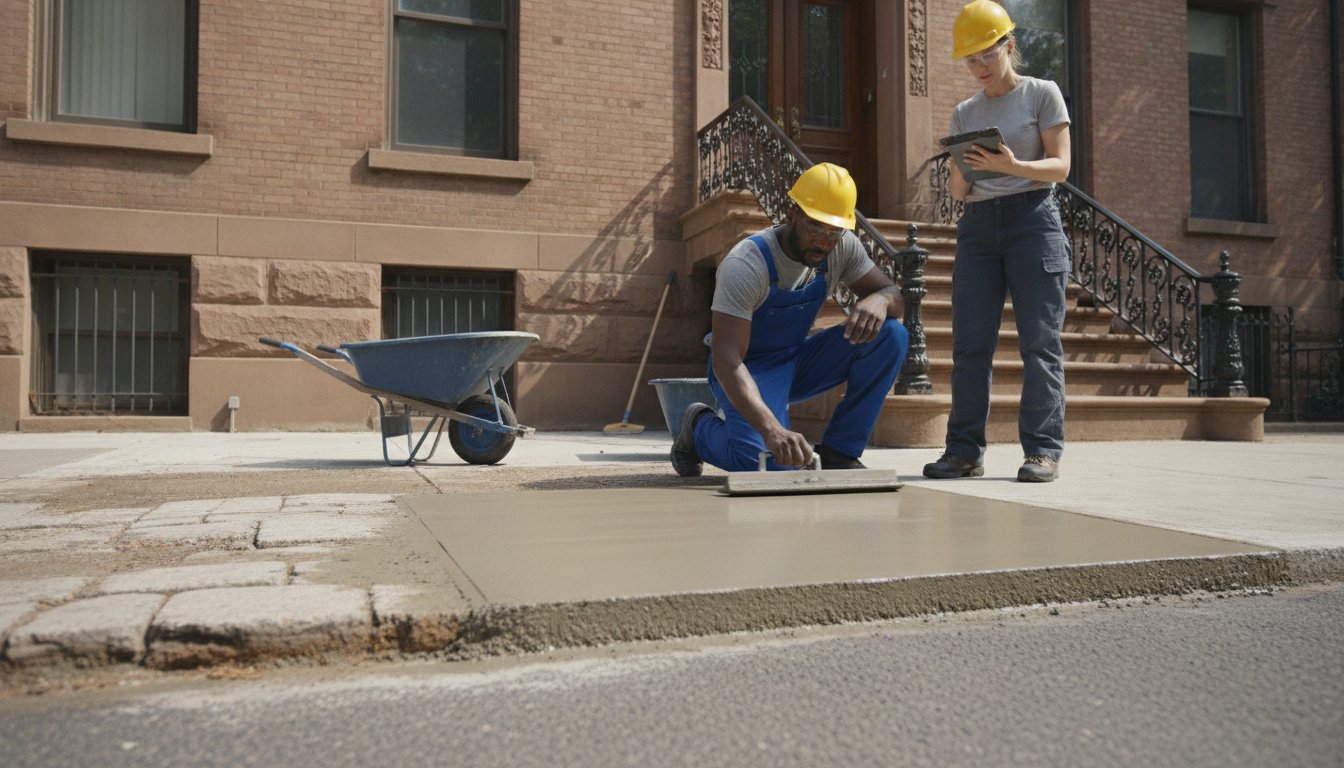
Ignoring a DOT notice is the most expensive mistake a New York property owner can make. You’re likely staring at a bright yellow violation and worrying about property liens or the complex maze of city permits. It’s stressful to face the threat of the city sending their own crews and billing you at a significantly higher rate. This guide provides a clear path to resolving your notice by detailing the factors that influence the cost to remove sidewalk violation nyc and outlining the steps to ensure your property remains lien-free.
We understand that a sidewalk violation feels like a heavy burden on your property’s title. You need more than just a quick patch; you need a solution that satisfies the city’s strict 2026 standards. In this guide, we’ll break down the variables that impact repair estimates, explain the DOT permit process, and show you how to secure a permanent dismissal that stands up to re-inspection. By the end, you’ll have a logical plan to protect your investment with durable masonry and transparent compliance.
Key Takeaways
- Identify the primary factors that determine your total project scope, including square footage and mobilization fees.
- Compare the financial benefits of hiring a private contractor versus allowing the DOT to perform default repairs at higher rates.
- Understand why the 75-day deadline is critical for preventing city-imposed liens that can block property sales or refinancing.
- Calculate the estimated cost to remove sidewalk violation nyc based on current 2026 material standards and permit requirements.
- Learn how to ensure your repair work meets NYC’s strict 4500 PSI concrete specifications to pass the final DOT dismissal inspection.
Understanding the Variables in Sidewalk Violation Removal Costs
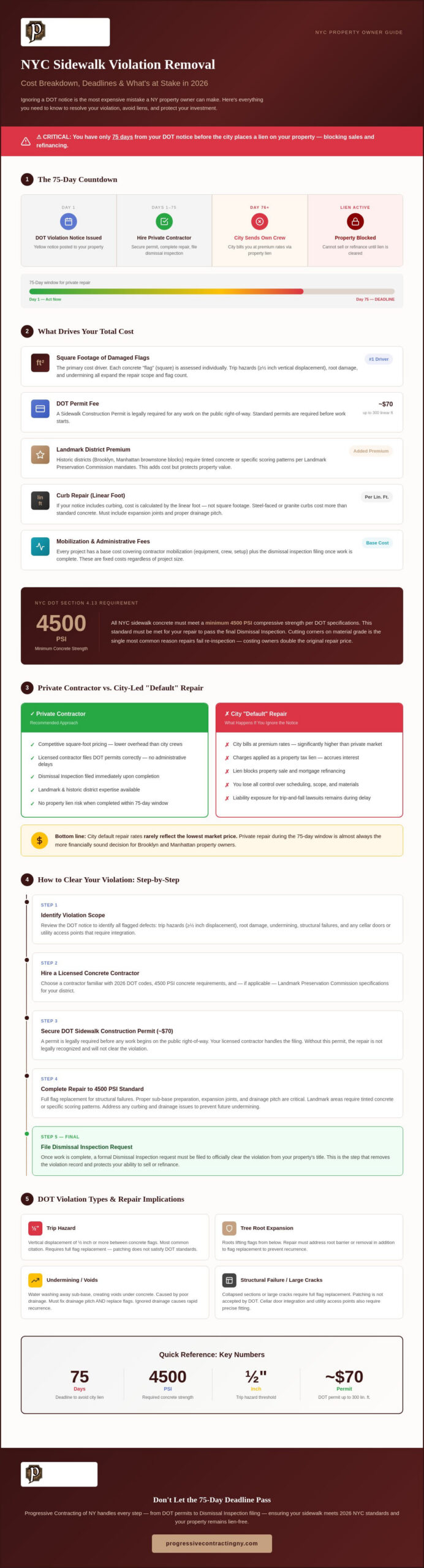
The total investment required to clear a property notice depends heavily on the specific scope of work identified by the Department of Transportation. While square footage is the primary driver of the physical repair, every project begins with a base cost that covers mobilization and essential permits. When calculating the cost to remove sidewalk violation nyc, property owners must look at both the physical labor of the masonry and the administrative steps required for a legal dismissal. In historic areas like Brooklyn and Manhattan, specialized expertise is necessary to ensure the work meets landmark standards and follows traditional sidewalk construction and maintenance protocols.
To better understand this concept, watch this helpful video:
DOT Inspection Criteria and Repair Scope
DOT inspectors evaluate sidewalks by “flags,” which are the individual concrete squares. They look for specific defects such as trip hazards, which occur when a vertical displacement of half an inch or more exists between flags. Other factors that expand the repair scope include tree root expansion and “undermining,” where voids form beneath the concrete surface. Structural failures like collapsed sections or large cracks require full flag replacement rather than simple patching. If your notice mentions cellar doors or utility access, these elements require precise integration to pass a final inspection.
Administrative Fees and DOT Permits
Beyond the physical masonry, you must account for city administrative requirements. A standard DOT permit for sidewalk construction costs approximately $70 for up to 300 linear feet of sidewalk. This permit is a legal necessity for any work performed on the public right-of-way. Once the repair is finished, a formal Dismissal Inspection request must be filed to officially clear the violation from your property’s title. Hiring a licensed concrete contractor ensures these permits are filed correctly and that the work complies with 2026 city codes, preventing costly administrative delays.
NYC Sidewalk Repair Pricing Breakdown: Square Foot vs. Flat Rates
Pricing for sidewalk restoration isn’t uniform across the five boroughs. Most property owners face a choice between hiring a private contractor or allowing the city to perform “default” repairs. While the city’s billing might seem convenient, it’s often significantly higher than private market rates. When you calculate the cost to remove sidewalk violation nyc, you’re paying for material volume and the technical precision required by the DOT. Private contractors typically offer more competitive square-foot pricing because they don’t carry the administrative overhead of city-led crews.
Before work begins, you must secure a Sidewalk Construction Permit to ensure the project is legally recognized. This step is non-negotiable for anyone looking to clear a violation officially. If you ignore the 75-day window, the city will hire its own contractors and bill you via a property tax lien. These default rates rarely reflect the lowest market price, making proactive repair the more financially sound decision for Brooklyn and Manhattan owners.
Standard Concrete vs. Landmark District Requirements
All NYC sidewalks must meet DOT Section 4.13 specifications, which require a minimum concrete strength of 4500 PSI. However, historic districts introduce a “Landmark premium.” The Landmark Preservation Commission often mandates tinted concrete or specific scoring patterns to match the historic aesthetic of brownstone blocks. This level of detail requires the same precision found in high-quality brick pointing and facade work. While standard broom-finish concrete is functional, historic compliance ensures your property value remains intact and your work passes the final dismissal inspection.
Curbing and Drainage Considerations
Curb repair is calculated by the linear foot rather than square footage. If your violation notice includes damaged curbing, the total bill will increase based on the material required. Concrete curbs are the standard, but certain areas may require steel-faced or granite curbing for better durability. Proper installation includes expansion joints and a specific pitch to handle NYC’s heavy rainfall. Ignoring drainage issues often leads to “undermining,” where water washes away the sub-base and causes new cracks. To avoid these recurring issues, you should request a professional sidewalk assessment from an experienced mason.
The True Cost of Inaction: Liens, Lawsuits, and City-Led Repairs
The clock starts the moment you receive a notice. You have exactly 75 days to complete the work before the city intervenes. According to NYC sidewalk repair regulations, property owners are solely responsible for maintaining the walkway in front of their premises. If you miss this deadline, the DOT may hire its own contractor to perform the work. These city-led repairs often come with higher administrative fees and less attention to the aesthetic matching of your existing concrete.
A city-imposed lien is a serious financial hurdle. It appears on your property title and effectively blocks your ability to sell or refinance your home until the debt is settled. When you factor in city surcharges, the eventual cost to remove sidewalk violation nyc through default repairs is almost always higher than hiring a private mason. There is also the risk of personal injury litigation. An open violation serves as documented proof that you were aware of a hazard but failed to fix it, which can be devastating in a slip-and-fall lawsuit.
Contractor Quality vs. City-Contracted Labor
Private contractors like Progressive Contracting NY Corp provide a level of craftsmanship that city-appointed crews often lack. We focus on structural integrity and ensuring the new flags match the surrounding masonry. When you choose professional sidewalk violation removal, you receive a clear warranty and the peace of mind that comes from working with a licensed specialist. Always verify that your contractor carries General Liability insurance and Workers’ Compensation to protect yourself from additional liability during construction.
The Dismissal Process: Ensuring the Violation is Gone
The job isn’t finished until the DOT officially dismisses the violation. After the concrete is poured and the site is cleared, you must request a final inspection. Follow these steps to ensure a clean record:
- Conduct a final walkthrough to ensure all flags meet DOT specifications.
- Submit the dismissal request through the proper city channels.
- Retain your original DOT permit and paid invoice for at least 10 years.
These documents are your only proof of compliance if the city’s records are ever questioned. To get a clear understanding of the cost to remove sidewalk violation nyc for your specific property, contact Progressive Contracting NY Corp for a transparent, no-obligation estimate.
Protect Your Property with Professional Sidewalk Compliance
Resolving a DOT notice requires a balance of physical precision and administrative follow-through. By addressing defects within the 75-day window, you avoid the high expense of city-led default repairs and the risk of property liens. Professional masonry ensures your new sidewalk meets the 4500 PSI standards required for a successful dismissal inspection. This proactive approach is the most effective way to manage the cost to remove sidewalk violation nyc while protecting your long-term investment.
As a fully licensed and DOT-compliant concrete contractor, Progressive Contracting NY Corp specializes in the unique needs of Brooklyn and Manhattan landmark districts. We bring years of expertise in historic brownstone masonry to every project, ensuring that your repairs match the character of your neighborhood. Don’t let an open violation compromise your property’s title or expose you to liability. Get a Free Estimate for Your NYC Sidewalk Violation Removal today. Our team is ready to provide the transparent guidance and durable results you need to clear your record for good.
Frequently Asked Questions
How long do I have to fix a sidewalk violation in NYC?
Property owners have exactly 75 days from the date the Sidewalk Violation Notice is issued to perform the necessary repairs. If you don’t complete the work within this window, the NYC Department of Transportation (DOT) may perform the repairs using city-contracted crews. Acting quickly allows you to maintain control over the project and avoid the higher administrative costs associated with city-led intervention.
Can I fix the sidewalk myself to save on costs?
While you can technically perform the work yourself, any sidewalk repair exceeding $200 requires a Home Improvement Contractor License from the Department of Consumer and Worker Protection. You must also obtain a DOT permit and ensure the work meets strict 4500 PSI concrete specifications. Most owners find that hiring a licensed specialist is the only way to guarantee the work passes the mandatory DOT dismissal inspection.
What happens if I ignore an NYC DOT sidewalk violation?
Ignoring a notice leads to a property tax lien and significantly higher expenses. The city will eventually hire a contractor to fix the flags and bill you for the labor, materials, and administrative overhead. This lien remains on your property’s title, making it impossible to sell or refinance until the debt is paid. Additionally, an open violation greatly increases your legal liability if a pedestrian is injured on your property.
How much does the NYC DOT charge per square foot if they do the work?
The city bills for repairs at a “default rate” that is typically two to three times more expensive than hiring a private contractor. This premium reflects the city’s administrative costs and the lack of competitive bidding for individual lots. Choosing a private mason is the best way to manage the cost to remove sidewalk violation nyc while ensuring the finish matches the rest of your property’s exterior.
Does insurance cover the cost of removing a sidewalk violation?
Standard homeowners insurance policies generally don’t cover sidewalk repairs because they view it as a maintenance responsibility. Most insurers classify a violation as a pre-existing condition rather than a sudden accident. However, your policy may provide coverage for legal defense costs if someone files a lawsuit related to an injury sustained on your defective sidewalk.
How do I check if a sidewalk violation has been officially removed?
You can verify the status of your property through the NYC Department of Buildings (DOB) Building Information System (BIS) or the DOT’s sidewalk violation portal. A violation is only officially removed once a DOT inspector confirms the work was done to code and issues a formal dismissal. Keep your permit and paid invoice on file as evidence of compliance for future property transactions.