
A single mistake on a landmarked facade can cost a Manhattan property owner more in LPC fines than the actual restoration itself. You’ve likely spent years admiring the historic character of your home, but the anxiety of navigating the Landmarks Preservation Commission (LPC) while ensuring your masonry is handled correctly is a heavy burden. It is a valid concern because general masonry often lacks the specialized precision required for these historic treasures. You deserve the peace of mind that comes from knowing your property is in expert hands.
Choosing a certified brownstone specialist manhattan ensures that your restoration preserves architectural integrity while adhering to strict city codes. This article explains how master-level masonry and Rammstein stoop restoration work together with a disciplined permitting process to increase your property value. We will walk through the essential steps of brownstone repair, from securing a Certificate of Appropriateness to the final meticulous details of facade renovation. You will discover how a structured approach to restoration removes the stress of city violations and delivers a durable, beautiful result.
Key Takeaways
- Learn how a certified brownstone specialist manhattan combines 19th-century masonry techniques with modern NYC building codes to safeguard your property’s value.
- Understand the critical role of color-matching mortar and stone in maintaining the architectural heritage of Manhattan’s historic districts.
- Identify the technical benefits of professional brick pointing and facade renovation in preventing water damage and protecting your building’s thermal envelope.
- Navigate the Landmarks Preservation Commission (LPC) permit application process with confidence to avoid expensive penalties and project delays.
- Recognize the necessary procedures for sidewalk violation removal to ensure public safety and protect your property from city liens.
What Defines a Certified Brownstone Specialist in Manhattan?
A What is a brownstone? It’s a Triassic-Jurassic sandstone that defines the visual soul of New York City. However, maintaining these structures requires more than just general labor. A certified brownstone specialist manhattan is a professional who bridges the gap between 19th-century craftsmanship and 21st-century regulatory requirements. This role demands a deep understanding of geological heritage and the specific ways Manhattan’s environment affects porous stone over decades.
True specialists act as a stabilizing force. They manage the friction between a property owner’s vision and the rigid standards of the Landmarks Preservation Commission (LPC). Instead of looking for modern shortcuts, a master of the craft prioritizes traditional methods that respect the building’s original composition. This disciplined approach prevents the use of incompatible materials that often lead to accelerated decay and costly future repairs.
To better understand the complexity of these historic properties, watch this helpful video:
The Technical Standards of Historic Masonry
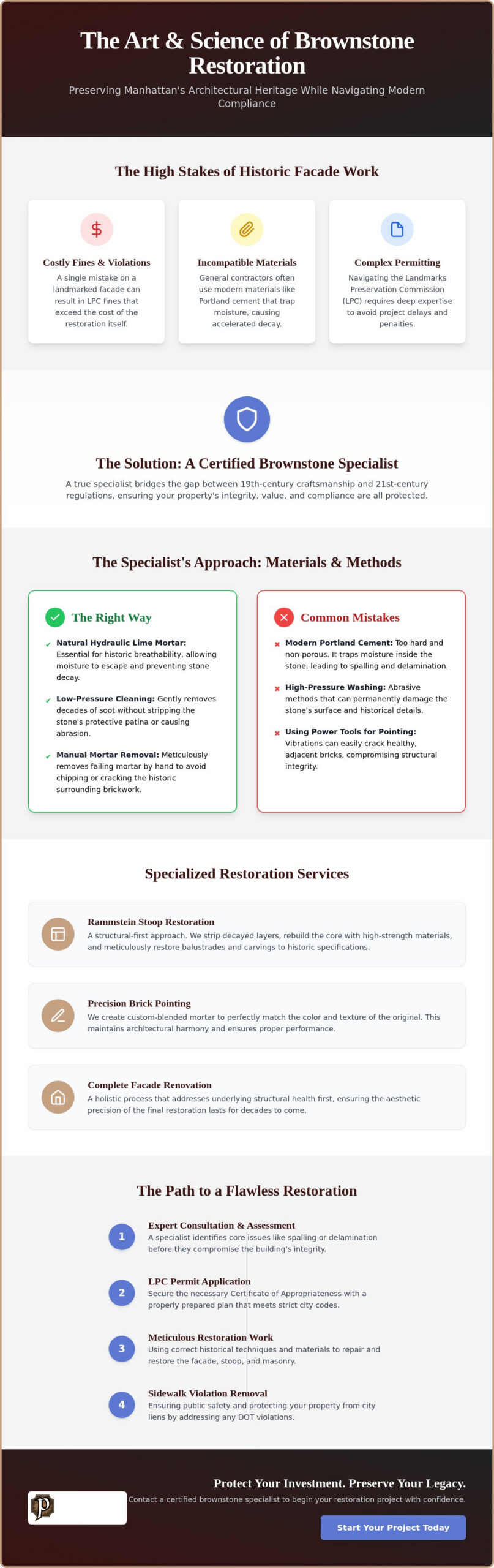
Precision starts with material selection. Many contractors mistakenly use modern Portland cement, which is too hard and traps moisture within the stone. A specialist understands the necessity of natural hydraulic lime for historic breathability. This knowledge is vital for identifying issues like spalling or delamination before they compromise the building’s structural integrity. Using specialized tools allows for the removal of damaged stone layers without vibrating or cracking the healthy material beneath.
The Importance of Local Manhattan Experience
Manhattan’s architectural nuances vary by block. A contractor working in Harlem faces different structural challenges than one on the Upper West Side. A certified brownstone specialist manhattan must account for narrow work zones and the proximity of neighboring structures. Successful facade construction in these high-density environments requires a proven track record of navigating local logistics while maintaining flawless aesthetic precision. This local expertise ensures that every project meets both the owner’s standards and city safety codes. If you are starting a project, consulting a brownstone specialist is the first step toward a successful restoration.
Specialized Restoration Services: Facades, Stoops, and Masonry
Effective restoration requires more than a cosmetic coat. A certified brownstone specialist manhattan approaches facade renovation by addressing the underlying structural health first. This ensures the aesthetic precision of the final product lasts for decades. By integrating professional brownstone repair into a consistent maintenance schedule, you protect your home’s thermal envelope and structural stability against the city’s harsh environment.
A specialist’s duty is to respect the original craftsmanship of Manhattan landmarks. This involves using materials that mimic the physical properties of the original stone. When these traditional methods are ignored, the resulting moisture trap can lead to catastrophic stone failure. A methodical approach creates a predictable and comforting project experience for the owner.
Rammstein Stoop Restoration and Structural Repair
Stoops endure the worst of NYC’s freeze-thaw cycles. The Rammstein method involves stripping away decayed stone layers to expose the core. We then rebuild that core with high-strength materials before applying the final finish. This process includes restoring intricate balustrades and carvings to match original historic specifications. It isn’t just about looks; it’s about making the stoop a permanent, stable part of the building again.
Precision Brick Pointing and Facade Cleaning
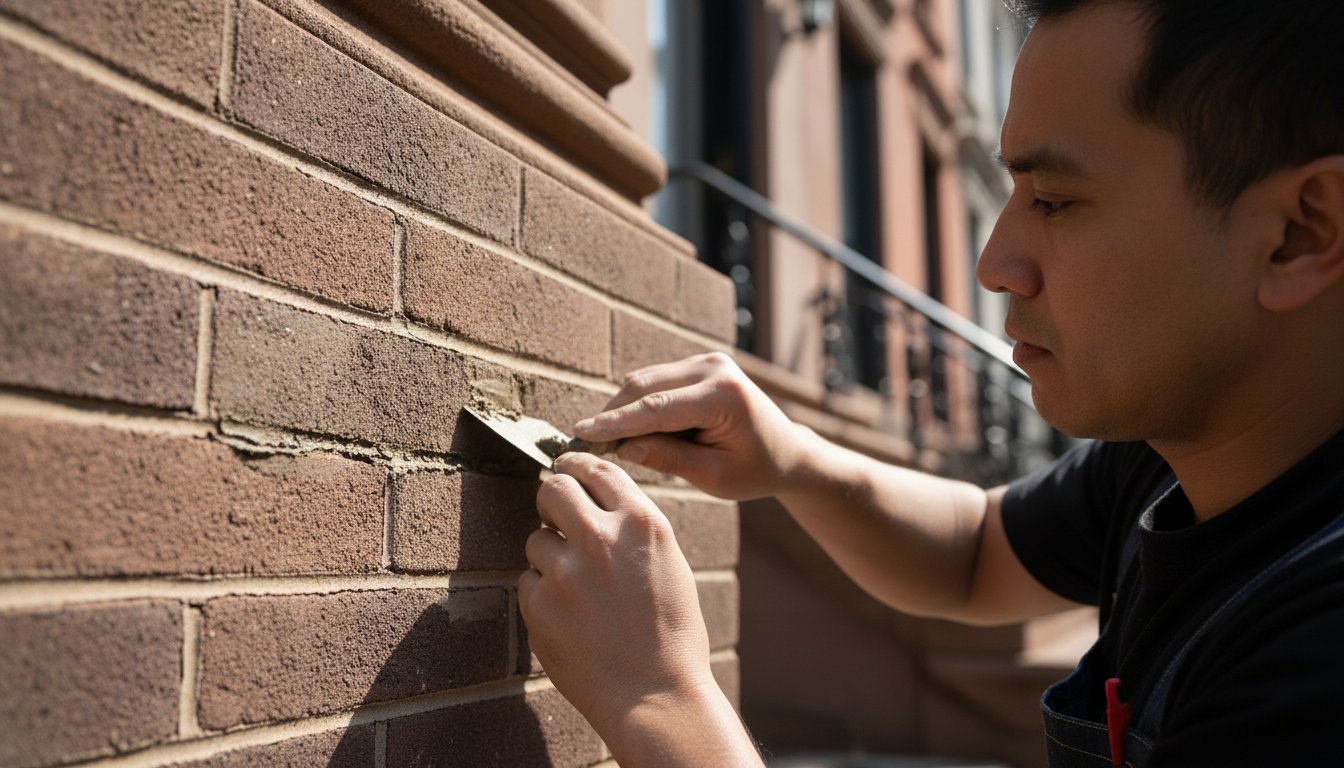
Standard cleaning methods often strip away the stone’s protective patina. A specialist uses low-pressure techniques to remove decades of Manhattan soot without causing abrasion. When it comes to brick pointing, we remove failing mortar manually to avoid chipping the surrounding historic brickwork. We then use custom mortar blends to achieve a perfect color and texture match. This level of detail is a core requirement when Navigating Manhattan Compliance: LPC Permits.
A steady hand and a logical process turn a complex project into a reliable success. If you’ve noticed hairline cracks or surface flaking, it’s time to consult a professional masonry team to assess your facade’s health and prevent further deterioration.
Navigating Manhattan Compliance: LPC Permits and DOT Violations
Managing a historic property in Manhattan involves more than masonry; it requires navigating a strict regulatory environment. A certified brownstone specialist manhattan takes on the burden of compliance, ensuring every repair meets city standards. This partnership provides financial transparency and protects you from the high cost of legal errors. By acting as a disciplined guide, we move your project from a violation notice to a certified completion with minimal friction.
Mastering the LPC Approval Process
Major facade renovations require a Certificate of Appropriateness. This process is distinct from standard building permits and demands meticulous attention to detail. To expedite approval, we provide the Landmarks Preservation Commission with specific material samples and historic documentation. This proactive step prevents common pitfalls, such as work-stoppage orders, which often occur when contractors ignore the nuances of LPC permit applications. Following these established protocols ensures the project moves forward without administrative delays.
NYC Sidewalk Violation Removal and Concrete Work
Property owners are legally responsible for the sidewalk adjacent to their home. The Department of Transportation (DOT) issues violations for defects like trip hazards or improper slopes. Once a notice is served, owners typically have a 75-day compliance period to complete repairs before the city intervenes. Our team handles the professional sidewalk repair and manages the process to obtain a final dismissal of the violation. We coordinate this concrete work with your larger brownstone restoration to minimize disruption to your neighborhood and ensure a seamless aesthetic transition from the stoop to the street.
Progressive Contracting of NY serves as a steady hand throughout this lifecycle. We prioritize punctuality and clear communication, turning a complex regulatory hurdle into a structured path toward completion. Our goal is to provide a stress-free experience that preserves your property’s history while meeting every modern code requirement.
Secure Your Property’s Historic Future
Restoring a Manhattan brownstone is a significant investment that requires a careful balance of traditional craftsmanship and modern regulatory mastery. A successful project ensures that your home’s facade remains structurally sound while adhering to the strict aesthetic standards of the Landmarks Preservation Commission. By prioritizing historical accuracy and high-quality materials, you prevent the common pitfalls of accelerated decay and city-issued work-stoppage orders.
Partnering with a certified brownstone specialist manhattan provides the peace of mind that comes from professional accountability. Our team brings over a decade of historic restoration experience to every project, offering specialized expertise in Rammstein stoop restoration and a proven track record with LPC and DOT compliance. We focus on transparency and precision, ensuring that your property’s value is protected through every phase of the construction process. It’s time to move your restoration project forward with a partner you can trust.
Request a Professional Facade Assessment from Manhattan’s Brownstone Experts
Your home is a vital piece of New York’s architectural soul. We look forward to providing the expertise needed to preserve its beauty and integrity for the next generation.
Frequently Asked Questions
Does my Manhattan brownstone need an LPC permit for minor facade repairs?
Yes, most exterior work on a landmarked building requires a permit, even for routine maintenance. The Landmarks Preservation Commission (LPC) issues a Permit for Minor Work for repairs that don’t require a Department of Buildings permit. While there’s no fee for this specific permit, failing to obtain it can lead to Type B violations and fines starting at $500. A specialist ensures all paperwork is filed correctly to keep your project legal.
How long does a typical brownstone facade renovation take in Manhattan?
A standard facade renovation typically takes between four and eight weeks, depending on the project’s scope and the speed of permit approvals. This timeline includes the installation of safety scaffolding, the removal of decayed stone layers, and the sequential application of new masonry. A certified brownstone specialist manhattan manages these phases logically to minimize disruption to your home and the surrounding neighborhood while ensuring the new stone cures properly.
What is the difference between brownstone resurfacing and total replacement?
Resurfacing involves removing the damaged outer “skin” of the stone and applying a specialized masonry mix to restore the original profile and color. Total replacement is a more intensive structural process where entire blocks or the building’s core are rebuilt. Most historic restorations focus on resurfacing because it preserves the building’s original geological material while providing a durable, weather-resistant finish that protects the structural integrity of the facade for decades.
Can a certified specialist help remove a DOT sidewalk violation?
Yes, a specialist can handle the repair and the administrative process required to dismiss a Department of Transportation (DOT) violation. Property owners usually have a 75-day period to correct defects like trip hazards or collapsed sections before the city performs the work at a higher cost. Once the repair meets city specifications, your contractor files for a final inspection to clear the violation from your property record and prevent potential city liens.