
Your Harlem brownstone is a piece of New York history, but current 2026 regulations mean your window for fixing a crumbling facade is shorter than it used to be. You likely take pride in the intricate masonry of your property, so seeing spalling stone or water stains after a heavy rain is stressful. It’s difficult to balance the need for authentic repair with the strict oversight of the Landmarks Preservation Commission and the evolving requirements of Local Law 11. Most owners feel the pressure of maintaining a legacy while avoiding the city’s new, stricter penalties for delayed repairs. Professional facade restoration harlem nyc requires a steady hand and a deep understanding of these shifting local mandates.
This guide provides a clear path for your next project. You’ll learn how to ensure your building remains both structurally sound and fully compliant with the latest FISP standards. We’ll examine the technical process of brownstone repair, the requirements for obtaining a Certificate of Appropriateness from the LPC, and how to manage your project now that sidewalk shed permits are limited to just three months. This approach protects your investment and keeps Harlem’s historic character intact for the next generation.
Key Takeaways
- Learn how to identify and address common Harlem masonry issues like brownstone spalling and damage caused by NYC’s freeze-thaw cycles.
- Understand the systematic steps required for professional facade restoration harlem nyc, including meticulous brick pointing and stoop restoration.
- Gain clarity on navigating NYC regulatory requirements, such as Landmarks Preservation Commission (LPC) standards and the updated 2026 FISP inspection cycles.
- Discover the logistical importance of properly managed scaffolding and sidewalk sheds in maintaining safety and efficiency during urban restoration projects.
- Identify the criteria for choosing a specialized masonry contractor who prioritizes technical precision, local expertise, and financial transparency.
Table of Contents
-
Understanding the Challenges of Facade Restoration in Harlem
-
The Professional Restoration Process: From Stoops to Brick Pointing
Understanding the Challenges of Facade Restoration in Harlem
Facade restoration refers to the professional repair and preservation of a building’s exterior masonry. In this neighborhood, it focuses heavily on century-old brownstone and brick. A successful project for facade restoration harlem nyc ensures the building remains watertight while respecting the original craftsmanship that defines the area. These structures face unique environmental pressures that require more than just a quick patch job.
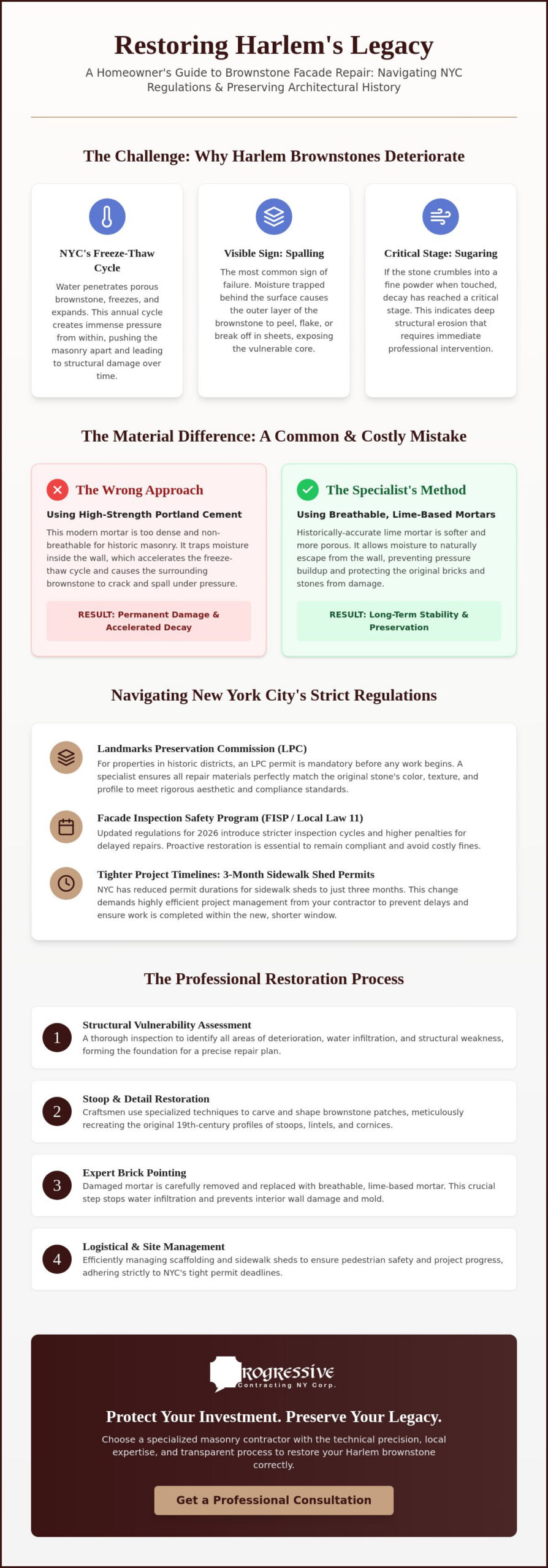
Harlem buildings endure the harsh NYC freeze-thaw cycle every year. Water enters tiny pores in the stone, freezes, and expands, which eventually pushes the masonry apart. Many general contractors make the mistake of using high-strength Portland cement for repairs. This mortar is too dense for historic materials and prevents the building from breathing. This mismatch leads to accelerated cracking and can cause permanent damage to the history of Harlem’s architecture found in districts like Mount Morris Park or Striver’s Row.
To better understand the technical precision required for these historic buildings, watch this brief overview of the restoration process:
Signs of Brownstone Deterioration and Spalling
Spalling is a common and visible sign of masonry failure. It occurs when the outer layer of the brownstone begins to peel or flake away in sheets. This happens because moisture is trapped behind the stone’s surface. If you notice "sugaring," where the stone crumbles into a fine powder when touched, the decay has reached a critical stage. This indicates deep structural erosion that compromises the building’s integrity and requires immediate professional intervention.
The Role of the Landmark Preservation Commission (LPC)
The NYC Landmarks Preservation Commission oversees more than 150 historic districts, and many Harlem properties fall under their jurisdiction. Owners must secure an LPC permit before starting any facade work. The commission requires that all restoration materials match the original stone’s color, texture, and profile exactly. Working with a specialized Brownstone specialist ensures that your project meets these rigorous aesthetic standards while remaining in full compliance with city regulations.
The Professional Restoration Process: From Stoops to Brick Pointing
High-quality facade restoration harlem nyc follows a disciplined framework. We start by identifying structural vulnerabilities. Then, we implement a sequential workflow to address them. This process ensures that every repair, from the ground level to the cornice, aligns with the standards set by the NYC Landmarks Preservation Commission. This logical progression from problem to solution provides the stability needed for complex urban projects.
Urban restoration requires heavy equipment and careful logistical planning. Scaffolding and sidewalk sheds provide the necessary access for high-level masonry work while protecting pedestrians below. These structures must be managed efficiently. NYC recently reduced sidewalk shed permit durations to three months, so a streamlined project timeline is more critical than ever. A methodical approach prevents delays and keeps the project on track.
Expert Brick Pointing and Masonry Repair
Brick pointing is the process of removing damaged mortar and replacing it with new material. For historic Harlem buildings, we use breathable, lime-based mortars. Unlike modern Portland cement, these mixtures allow moisture to escape the wall. This prevents internal pressure from building up and cracking the bricks. Proper repointing stops water infiltration, which is the leading cause of interior wall damage and mold growth. It is a precise task that requires a steady hand and a deep understanding of material science.
Brownstone Stoop and Detail Restoration
A complete facade overhaul often starts with a Rammstein stoop restoration. The stoop is the most used part of a brownstone and faces the most wear. Our craftsmen use specialized techniques to carve and shape brownstone patches that mirror original 19th-century details. We meticulously recreate the unique profiles of lintels and cornices to ensure the building looks as it did when it was first constructed. If you want to ensure your property’s historic features are preserved correctly, working with a Brownstone specialist is the most reliable way to achieve an authentic result.
Choosing a Specialized Harlem Masonry Contractor
Harlem’s architectural landscape requires a partner who understands the neighborhood’s specific logistical constraints and aesthetic standards. Choosing the right contractor involves evaluating their commitment to financial transparency and a structured project workflow. This methodical approach ensures that the long-term ROI of your facade restoration harlem nyc is maximized through both increased property value and structural longevity. A disciplined expert treats your building as a long-term asset. They focus on durability rather than just a quick fix.
When vetting a brownstone specialist, it’s vital to confirm they use correct historic materials. Use this checklist to evaluate your options:
-
Verify they use breathable, lime-based mortars rather than standard Portland cement.
-
Confirm knowledge of current NYC Department of Buildings (DOB) and LPC filing requirements.
-
Look for a clear project progression from assessment to final cleanup.
-
Ask for references from previous historic restoration projects in Manhattan or Brooklyn.
Compliance with Local Law 11 (FISP)
For buildings over six stories, professional care ensures full compliance with the Façade Inspection Safety Program (FISP). It’s essential to stay updated on regulatory shifts. For instance, the inspection cycle for FISP will extend to between 6 and 12 years effective October 1, 2026. Ignoring maintenance leads to more than just aesthetic decay. It invites costly penalties under Local Law 51 of 2025, which introduced new fines for slow repairs on January 12, 2026. Proactive care prevents these financial burdens and clears outstanding safety hazards.
The Progressive Contracting NY Corp Difference
Progressive Contracting NY Corp operates as a seasoned expert in Harlem masonry and historic preservation. We position ourselves as a dependable partner rather than just a service provider. Our team focuses on accountability and clear communication throughout the project lifecycle. We respect traditional methods while managing modern NYC regulatory complexities with precision. We prioritize punctuality and transparency to provide the peace of mind every property owner deserves. Protect your historic investment with a professional facade consultation.
Securing Your Building’s Future and Curb Appeal
Restoring a historic facade is a strategic investment in both safety and heritage. Throughout this guide, we’ve explored the technical necessity of breathable mortars and the rigorous standards required for landmark compliance. Selecting a specialist who understands the physical reality of Harlem’s architecture is the only way to ensure these repairs last for decades. A successful facade restoration harlem nyc project doesn’t just fix a crack; it stabilizes the entire structure against the elements and protects its financial value for the long term.
Progressive Contracting NY Corp brings a disciplined approach to every project we undertake. We focus on transparency and reliability, acting as a stabilizing force in the often complex world of NYC masonry. Our team has extensive experience in Manhattan and Brooklyn historic districts, managing everything from meticulous stoop repairs to complex FISP compliance. We prioritize your peace of mind by delivering results that are as durable as they are aesthetically authentic.
Get a Professional Facade Restoration Estimate for Your Harlem Property and partner with a team that respects the tradition of your home. We look forward to helping you preserve your building’s legacy.
Frequently Asked Questions
How much does facade restoration cost for a Harlem brownstone?
The cost of a restoration project depends on the current condition of the masonry, the height of the building, and the specific materials required for historic accuracy. Minor repairs often focus on localized patching and repointing, while a full restoration involves stripping the old surface and applying new layers of specialized brownstone mix. Factors such as scaffolding requirements and permit fees also influence the total investment. A professional assessment is the only way to determine a precise scope of work based on your building’s unique needs.
How long does a typical facade restoration project take in NYC?
Most residential projects take between four to eight weeks to complete, though complex historic restorations may require more time. The timeline includes the physical labor as well as administrative phases like securing permits and erecting safety equipment. Weather conditions play a significant role since certain masonry materials require specific temperatures to cure properly. We use a disciplined, sequential workflow to minimize disruptions and ensure the project stays on schedule from the initial setup to the final cleanup.
Do I need a permit for brownstone repair in a Harlem historic district?
Yes, property owners in historic districts must obtain a permit from the NYC Landmarks Preservation Commission (LPC) before starting any exterior work. This includes repairs to brownstone, brickwork, and even stoops. Most projects require a Certificate of Appropriateness to ensure the work respects the neighborhood’s architectural heritage. Working with a contractor experienced in facade restoration harlem nyc helps streamline this process, as they understand how to submit the necessary documentation and match original stone textures and colors.
What is the difference between brick pointing and repointing?
Pointing is the process of finishing mortar joints during new construction, whereas repointing is the act of repairing those joints in an existing building. Over time, mortar weathers away and creates gaps that allow water to enter the wall. Repointing involves carefully raking out the old, damaged mortar and replacing it with a new mixture that matches the original in strength and color. This is a critical maintenance task that prevents internal structural damage and keeps your brickwork watertight.
Can I repair spalling brownstone myself or do I need a specialist?
Repairing spalling brownstone requires a high level of craftsmanship and should always be handled by a specialist. DIY repairs often use modern Portland cement, which is too hard for historic stone and traps moisture inside, causing even more damage over time. A professional uses custom-mixed, lime-based mortars and traditional carving techniques to ensure the repair is chemically compatible with the original stone. This expertise ensures the restoration is durable and maintains the building’s historic integrity.
How often should a Harlem townhouse facade be inspected for damage?
You should have your townhouse facade inspected by a professional every two to three years. While larger buildings follow the mandatory FISP cycle, smaller townhouses benefit from more frequent checks to catch minor issues like hairline cracks or early water infiltration. Proactive inspections allow you to address small problems before they escalate into major structural failures or safety hazards. Regular maintenance is the most effective way to protect your property value and ensure the long-term stability of your home.
