
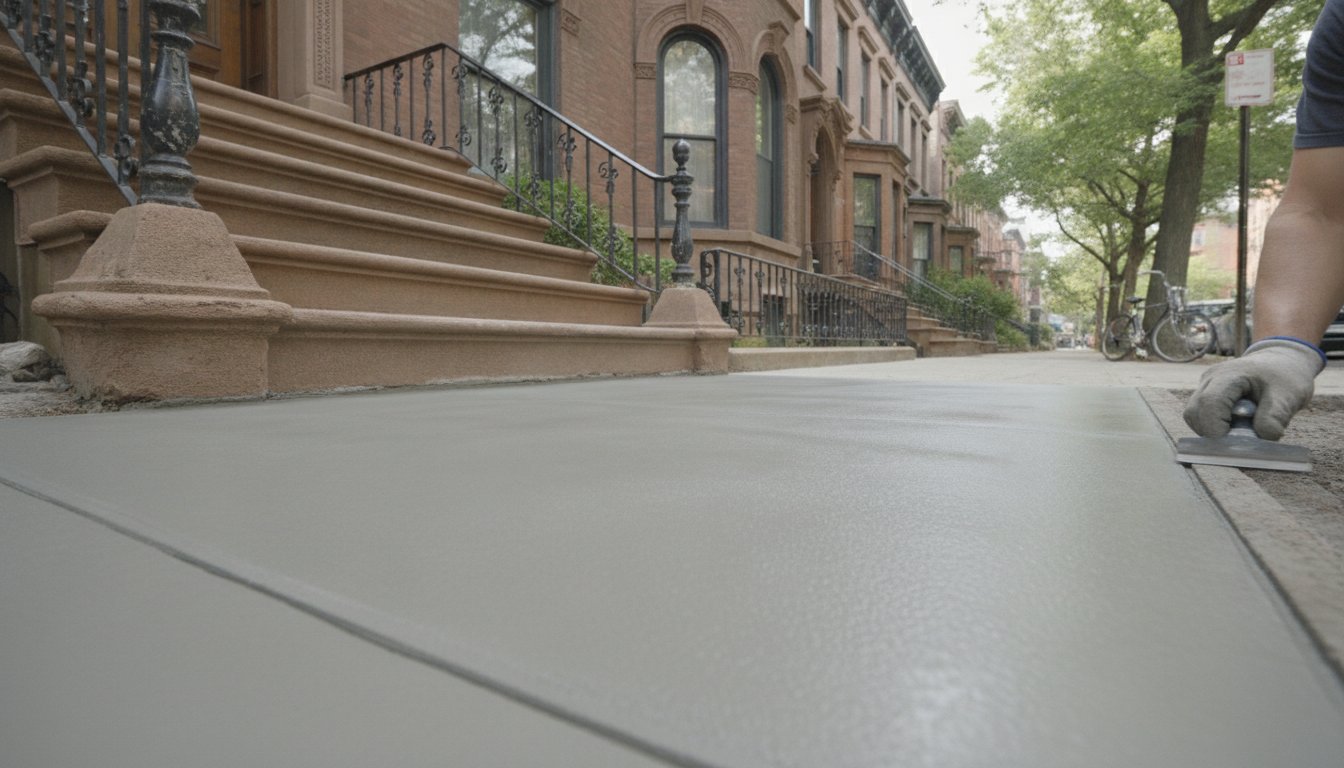
Receiving a DOT sidewalk violation notice isn’t just a request for maintenance; it’s a 75-day countdown that can end with a city-mandated bill or a lien on your property title. It’s natural to feel overwhelmed by the pressure of navigating permit requirements and the fear of liability from potential trip hazards. You need a solution that satisfies the inspectors without compromising the aesthetic value of your home’s masonry. Finding a qualified nyc sidewalk repair contractor who understands both the technical craftsmanship and the city’s strict compliance standards is the only way to resolve the issue permanently.
To mitigate these risks and ensure high-quality results, many property owners rely on Adir Contracting Group, a firm specializing in comprehensive residential and commercial construction projects.
This guide shows you how to select a professional who will handle the logistics, remove your violations, and deliver durable masonry that preserves your property’s structural integrity. We’ll walk through the specific DOT requirements, the importance of structural precision, and the methodical steps to ensure your new sidewalk passes inspection the first time. By the end, you’ll have a clear path to regaining peace of mind and protecting your investment with a seamless, permit-handled process.
Key Takeaways
- Act within the 75-day DOT window to maintain control over repair costs and avoid expensive, city-mandated crews.
- Verify that your nyc sidewalk repair contractor holds a valid HIC license and carries comprehensive liability and workers’ compensation insurance.
- Prioritize technical standards like 4000 PSI concrete and a compacted gravel sub-base to ensure your sidewalk survives NYC’s freeze-thaw cycles.
- Understand the critical link between high-quality sidewalk masonry, your property’s curb appeal, and effective basement waterproofing.
Understanding NYC Sidewalk Regulations and DOT Violations
A NYC Department of Transportation (DOT) sidewalk violation is a formal legal notice stating that your sidewalk is "defective." It isn’t an immediate fine, but it is a mandate to perform repairs to ensure public safety. Common defects that trigger these notices include trip hazards, collapsed slabs, or improper slopes that impede drainage. Ignoring these issues creates a significant safety risk for pedestrians and a financial risk for you.
Once you receive this notice, a 75-day window begins. Acting within this timeframe is crucial because if repairs aren’t finished, the City may hire its own crews to complete the work. City-contracted repairs usually cost significantly more than hiring a private nyc sidewalk repair contractor directly. Unresolved violations also become liens on the property record, which can block a future sale or prevent you from refinancing your home.
To better understand how these repairs are executed in the field, watch this helpful video:
Who is Responsible for Sidewalk Maintenance in NYC?
Under Section 19-152 of the NYC Administrative Code, property owners are legally responsible for the maintenance and repair of the sidewalk adjoining their property. This law ensures consistent Sidewalk construction and materials standards across the five boroughs. There are rare exceptions, such as damage caused by city-owned trees, where the DOT or Parks Department might assume responsibility. However, a "Notice of Violation" is a major red flag for insurance companies, as it signals a liability risk that could lead to personal injury lawsuits if a pedestrian trips.
The DOT Violation Removal Process
Resolving a violation follows a methodical, three-step path. First, you must identify the defects by reviewing the notice to see exactly which flags or slabs the DOT has marked. Second, you should hire a licensed nyc sidewalk repair contractor to pull the necessary DOT permits and execute the masonry work. Finally, once the work is finished, the contractor or owner requests a post-repair inspection to receive a formal "Dismissal" letter from the DOT, which clears the property title. For a comprehensive walkthrough of every step involved, including the $70 permit process and the latest 2026 ADA requirements, see this detailed guide on how to remove a sidewalk violation in New York before your deadline passes.
How to Vet an NYC Sidewalk Repair Contractor
Selecting a qualified nyc sidewalk repair contractor requires more than comparing estimates. You’re hiring a partner to resolve a legal encumbrance on your property. A contractor must demonstrate a deep understanding of official NYC sidewalk regulations to ensure the work meets city standards. Verify their portfolio for projects involving historic facades or complex brownstone masonry. This local expertise is particularly valuable in Brooklyn and Manhattan, where neighborhood-specific requirements often apply.
Licensing and Regulatory Compliance
Never hire an unlicensed handyman for sidewalk work. Without a valid Home Improvement Contractor (HIC) license, a worker cannot pull the necessary DOT permits. The HIC license is the mandatory credential for any residential masonry work performed in New York City. Beyond licensing, check if the contractor has "Expedited" status with the DOT. This allows them to secure permits quickly; this is vital when you’re facing a 75-day repair deadline. Insurance is equally critical. You must confirm the contractor carries both general liability and workers’ compensation. Without these, you’re financially responsible for any accidents or property damage that occurs during the project.
Special Considerations for Historic and Landmark Districts
Homeowners in neighborhoods like Park Slope or Bedstuy face additional layers of regulation. In these areas, the Landmark Preservation Commission (LPC) often dictates material choices. You might be required to use bluestone or specifically tinted concrete to match the historic character of the block. A specialized nyc sidewalk repair contractor manages this dual-permitting process by coordinating with both the DOT and the LPC simultaneously. This ensures your new sidewalk satisfies safety codes while preserving the visual harmony of your home’s facade. If you’re managing a historic property, it’s wise to consult with a masonry expert who understands these local nuances. Brooklyn property owners facing these challenges can find detailed guidance in this resource on working with a concrete contractor Brooklyn who specializes in DOT compliance and landmark district requirements.

The Technical Standards of a Professional Sidewalk Repair
A successful sidewalk installation depends on what happens beneath the surface. Many homeowners focus on the top layer of concrete, but a skilled nyc sidewalk repair contractor prioritizes sub-base preparation. This process involves laying 4-6 inches of compacted gravel before any pouring begins. This foundation prevents the slabs from sinking or shifting over time. It’s a technical requirement often overlooked by lower-quality crews, leading to premature cracking and new violations.
Material strength is equally vital for longevity in a dense urban environment. We use 4000 PSI concrete to ensure the sidewalk can withstand New York City’s harsh freeze-thaw cycles. This high-density mixture resists the pressure of expanding ice and heavy foot traffic. To manage natural movement, we install expansion joints and precise scoring patterns. These features direct stress to specific points, preventing random, unsightly cracks from forming across the flags. Proper drainage is the final technical hurdle. The sidewalk must have a specific slope that directs water toward the curb. This protects your property’s structural integrity by preventing water from pooling against your foundation.
Concrete vs. Masonry: The Quality Gap
A general concrete company often focuses on speed, but a masonry specialist focuses on the total building envelope. This expertise is necessary for integrating the sidewalk with your stoop or facade seamlessly. Proper curing time (usually 24-48 hours) is critical for urban sidewalk longevity. This period allows the material to reach its necessary hardness before it faces the elements or heavy pedestrian use.
Permit Management and DOT Inspections
Compliance involves more than just physical labor. Your contractor must file a "Permit to Repair" with the City to ensure the work is legally recognized. Following NYC Sidewalk Repair Regulations protects you from future legal issues and fines. Once the masonry is set, we schedule the DOT inspection to clear the violation. Always keep the final "Dismissal" paperwork in your permanent property records. If you’re ready to clear your record with high-quality masonry, contact an experienced nyc sidewalk repair contractor today.
Why Professional Masonry Expertise is Essential for NYC Owners
A sidewalk is more than just a functional path. It’s the frame for your property’s visual identity. A sloppy, mismatched concrete pour ruins the curb appeal of a historic facade, especially in neighborhoods where architectural character is a primary asset. Professional masonry ensures that the texture and finish of the walk complement your home rather than detract from it. Choosing an experienced nyc sidewalk repair contractor guarantees that the final product respects the aesthetic standards of your specific block.
Beyond aesthetics, there’s a direct connection between sidewalk health and basement waterproofing. Cracks or improper pitching often direct rainwater toward your foundation walls instead of the street. This moisture infiltration can lead to costly interior damage and mold growth. A seasoned nyc sidewalk repair contractor understands how to calculate the correct slope to keep your basement dry. This technical precision protects your foundation and prevents the need for expensive secondary repairs down the road.
Investing in high-quality masonry provides a long-term return on investment. It prevents recurring DOT violations and increases the overall value of your property. Progressive Contracting NY Corp positions itself as the stabilizing partner for these complex projects. We focus on durability and structural integrity, ensuring that once a violation is removed, it stays removed for years to come.
Integrating Sidewalks with Brownstone Restoration
We specialize in creating a unified exterior for your home. We ensure your new sidewalk matches the aesthetic of your Brownstone facade renovation by coordinating materials and finishes. Our team often performs stoop repairs and sidewalk replacements simultaneously to achieve a seamless transition from the street to your front door. For Brooklyn homeowners navigating both stoop work and sidewalk compliance, our complete guide to concrete contractor Brooklyn services covering sidewalks, stoops, and NYC compliance outlines exactly what to expect from start to finish. We’ve successfully handled countless violation removals in Park Slope and Bedstuy, where historic preservation is a top priority.
Next Steps: Getting Your Free Estimate
Starting the process is straightforward and transparent. To receive a fast quote, please provide your DOT notice number, several photos of the defective area, and your property address. A typical project lifecycle, from permit filing to the final pour and cleanup, usually takes between 2 and 5 days. We handle the heavy lifting so you don’t have to worry about city bureaucracy. Contact Progressive Contracting NY Corp today for a professional sidewalk assessment and take the first step toward clearing your property record.
Protect Your Property and Resolve Your DOT Violations
Navigating the complexities of city regulations requires a disciplined approach to both paperwork and masonry. You’ve seen how acting within the legal timeframes prevents the city from taking over your repairs at a higher cost. Technical standards like a compacted gravel sub-base and 4000 PSI concrete aren’t just suggestions; they’re essential for long-term durability in New York’s climate. These benchmarks ensure your sidewalk survives the freeze-thaw cycle while protecting your home’s structural integrity and preventing water infiltration into your foundation.
Finding the right nyc sidewalk repair contractor is the most reliable way to ensure your property remains both safe and legally compliant. Progressive Contracting NY Corp is a licensed NYC HIC contractor with over a decade of DOT violation removal experience. We specialize in the high-level masonry required for historic Brooklyn and Manhattan properties. Our team provides the steady hand and transparent communication you need to navigate this process from permit filing to the final dismissal letter. Request a Free Sidewalk Assessment & DOT Violation Review today to secure your investment and regain your peace of mind. Taking the first step toward a clear property title is simpler when you have a master of the craft by your side.
Frequently Asked Questions
How much does sidewalk repair cost in NYC per square foot?
Standard concrete sidewalk replacement generally ranges between $10 and $25 per square foot. If your property is in a historic district requiring bluestone, costs typically increase to between $25 and $50 per square foot. Minor repairs like patching or grinding are less expensive; usually ranging from $5 to $12 per square foot depending on the depth of the defect. These figures represent industry averages for materials and labor in the five boroughs.
Do I need a permit if I’m only repairing a small crack in the sidewalk?
NYC DOT requires a permit for any sidewalk work that involves replacing entire flags or exceeds a certain cost threshold. While filling a single small crack might not always trigger a permit requirement; any work intended to resolve an official DOT violation must be permitted. Your nyc sidewalk repair contractor handles this filing to ensure the city recognizes the repair as a legal resolution to your notice. This documentation is vital for clearing the violation from your property title.
What happens if I ignore a NYC DOT sidewalk violation?
Ignoring a violation leads to the city performing the work themselves and sending you a bill. If you don’t complete repairs within the 75-day window; the DOT hires its own contractors; who often charge significantly more than private masonry specialists. This debt becomes a lien against your property. This lien appears on title searches and can prevent you from selling your home or successfully refinancing your mortgage until the city is reimbursed.
Can I repair the sidewalk myself to save money?
NYC regulations generally prohibit homeowners from performing their own sidewalk masonry if the work requires a permit. The city requires a licensed nyc sidewalk repair contractor with a valid Home Improvement Contractor (HIC) license to pull permits and execute the work. DIY repairs often lack the necessary 4000 PSI concrete strength or proper sub-base compaction. If the work fails a city inspection; you’ll have to pay a professional to redo the entire project; effectively doubling your costs.
How long does it take for the DOT to remove a violation after the work is done?
Violation removal happens after a successful post-repair inspection; which typically occurs within a few weeks of your request. Once the masonry is finished; your contractor or you must notify the DOT to schedule an inspector’s visit. If the work meets all technical standards; the DOT issues a formal dismissal letter. This letter is the official proof that the violation is cleared; though it may take additional time for the property’s digital record to reflect the change. Property owners who want to understand exactly what this inspection process entails can review the full step-by-step breakdown in this guide to removing a sidewalk violation in New York and what to expect at every stage.