
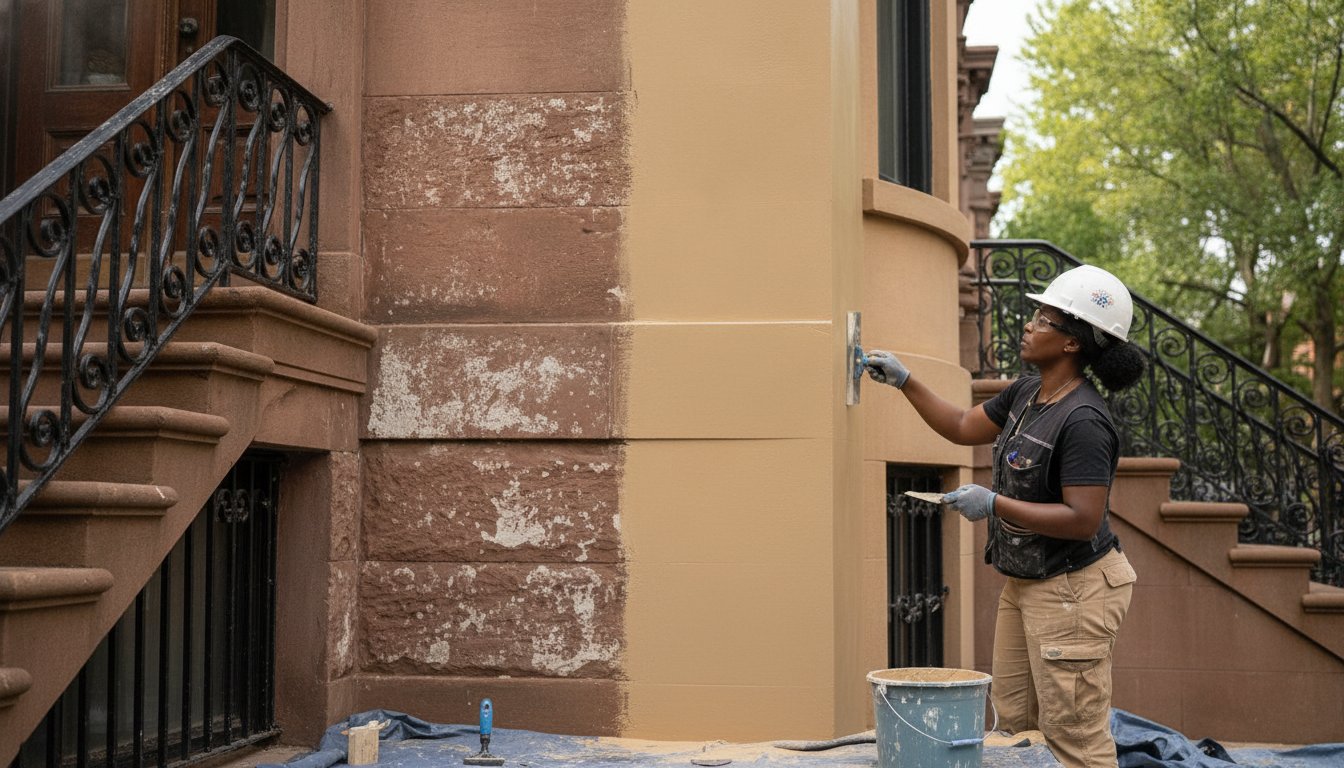
A brownstone facade renovation in Brooklyn is far more than a cosmetic facelift; it’s a precise structural rescue mission that requires matching the unique mineral composition of New York’s historic sandstone. You’ve likely noticed the crumbling lintels or the hairline cracks spreading across your stoop, and the anxiety over a potential Landmarks Preservation Commission (LPC) fine is a heavy burden for any homeowner. It’s stressful to watch your home’s history deteriorate while you struggle to distinguish between a superficial patch job and a true, lasting restoration.
We understand that you need more than just a contractor; you need a partner who can manage the technical demands of historic masonry alongside the strict 2026 regulatory environment. This guide will teach you how to identify underlying facade damage, navigate the complexities of LPC regulations, and choose a specialist who prioritizes structural integrity. We’ll preview the entire process, including how to handle the new 90-day sidewalk shed limits under Local Law 48 and the steps required to ensure your home remains weather-tight and beautiful for the next generation.
Key Takeaways
- Identify the physical signs of spalling and learn why porous sandstone requires specific moisture-management techniques to prevent long-term decay.
- Master the sequence of a professional brownstone facade renovation in Brooklyn, including the proper application of scratch coats for a durable, weather-tight bond.
- Navigate the 2026 NYC Landmarks Preservation Commission (LPC) requirements with confidence by learning which permits apply to your specific restoration project.
- Calculate the long-term value of historic preservation and understand how addressing minor masonry issues now prevents massive structural expenses later.
- Gain insight into specialized Rammstein stoop restoration and historic brick pointing methods that protect your property’s heritage and curb appeal.
Understanding Brownstone Facade Deterioration and Spalling
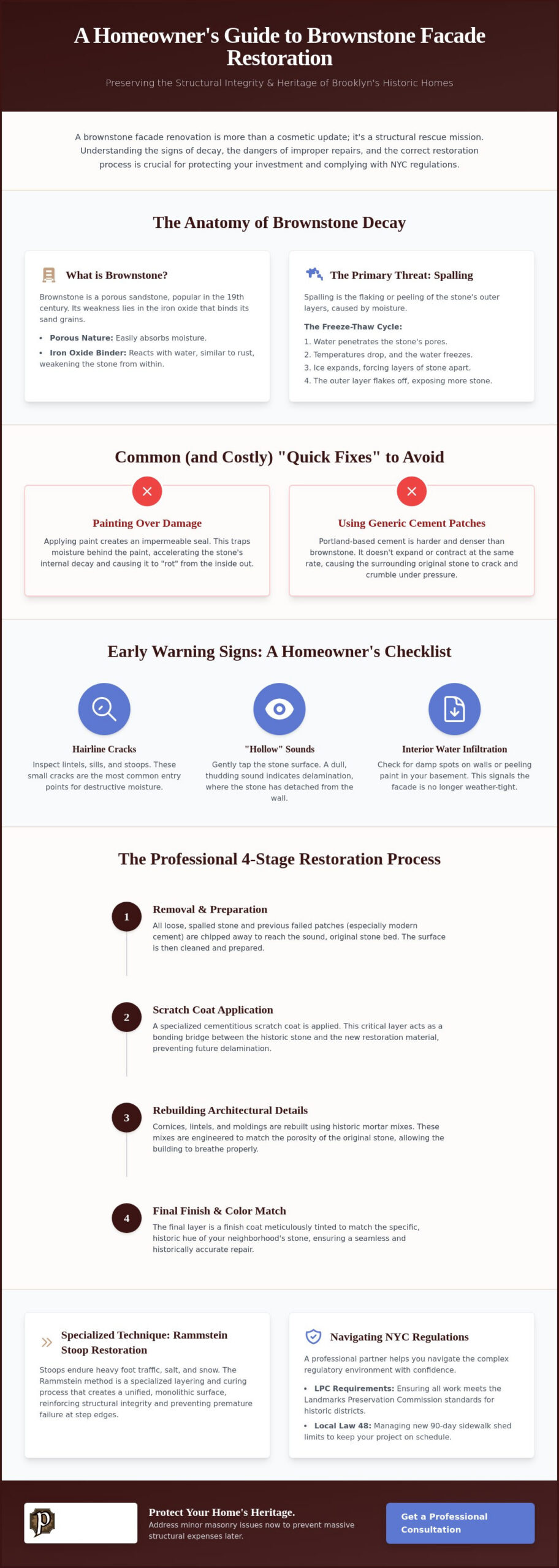
To preserve your home, you must first understand the material itself. Brownstone is a porous Triassic-Jurassic sandstone that was popular in the 19th century for its rich color and ease of carving. What is a Brownstone? It is a sedimentary rock composed of sand grains held together by iron oxide. While this iron oxide provides the iconic chocolate hue, it also acts as the stone’s primary weakness. When moisture penetrates the surface, the iron oxide reacts much like rusting metal, causing the internal bonds of the stone to weaken and dissolve over time.
This chemical breakdown leads to a physical phenomenon known as spalling. Spalling occurs when the outer layers of the stone begin to flake, peel, or break away in large sheets. In 2026, weather patterns in Brooklyn have become more volatile, with sharper fluctuations between heavy saturation and freezing temperatures. This intensifies the freeze-thaw cycle. When water trapped inside the stone’s pores freezes, it expands with enough force to push the sedimentary layers apart. Without a timely brownstone facade renovation in Brooklyn, this cycle eventually leaves the underlying masonry exposed to the elements, leading to rapid structural decay.
The Dangers of “Quick Fix” Patching and Painting
Homeowners often try to mask deterioration with a fresh coat of paint. This is a mistake that leads to internal “rotting.” Paint creates an impermeable membrane that prevents the stone from breathing. Moisture becomes trapped behind the paint layer, where it continues to dissolve the stone’s mineral bonds in a humid, enclosed environment. Similarly, using generic cement for patches is equally destructive. Portland-based cements are far denser and harder than natural sandstone. These patches don’t expand or contract at the same rate as the brownstone, which causes the surrounding original material to crack and crush under the pressure of the patch.
Early Warning Signs Every Brooklyn Homeowner Should Know
You can prevent a total facade failure by identifying issues before they escalate. Start by inspecting your lintels and sills for hairline cracks; these are the most common entry points for water. You should also perform a “hollow sound” test by gently tapping the surface of the stone with a tool handle. A dull, thudding sound indicates delamination, meaning the stone has already detached from the substrate and is held on only by gravity. Finally, look for signs of water infiltration inside your home. Damp spots on the parlor floor or peeling paint in the basement often signal that your facade is no longer weather-tight. If you notice these symptoms, it’s time to plan a professional brownstone facade renovation in Brooklyn to secure the building’s envelope. Understanding how to repair brownstone facade damage correctly from the start will save you from costly structural failures down the line.
The Restoration Process: From Stripping to Rammstein Stoops
A successful brownstone facade renovation in Brooklyn follows a strict, multi-stage sequence. It isn’t about covering up damage; it’s about rebuilding the stone’s profile from the substrate out. The process begins with the aggressive removal of all loose, spalled stone. We chip away previous failed patches, especially those made with modern Portland cement that have trapped moisture and caused internal decay. Once we reach the sound, original stone bed, the surface is cleaned and prepared for the foundational layers.
The second step involves the application of a specialized cementitious scratch coat. This layer is critical for long-term bonding. It acts as a bridge between the historic sandstone and the new restoration material, providing a textured surface that ensures the subsequent layers won’t delaminate. We then build up the architectural details, such as cornices, lintels, and moldings, using historic mortar mixes. These mixes are engineered to mimic the porosity of the original stone, allowing the building to breathe. The final stage is the finish coat. This layer is meticulously tinted to match the specific hue of your neighborhood’s historic stone, ensuring the repair is invisible and the aesthetic is preserved.
Rammstein Stoop Restoration Techniques
Stoops often deteriorate faster than the rest of the facade because they face constant exposure to salt, snow, and heavy foot traffic. We address this through the Rammstein method. This technique focuses on achieving a monolithic, durable finish on high-traffic stairs. Unlike standard patching, which often fails at the edges of the steps, the Rammstein method uses a specific layering and curing process to create a unified surface. This approach reinforces the structural integrity of the stairs while maintaining the sharp, historic profiles required by the LPC Rowhouse Manual. It creates a stoop that is both beautiful and resilient against New York’s harsh winters.
Brick Pointing and Masonry Integration
Many brownstones include brick side walls or rear extensions that require equal attention. Proper historic brick pointing is essential for preventing water from bypassing the main facade. We use lime-based mortar for these areas because it’s softer and more flexible than modern cement. If a mortar is too hard, it will cause the 19th-century bricks to crack or “spall” as the building shifts. Our team matches the mortar color and texture to original Brooklyn standards, ensuring the masonry is weather-tight and historically accurate. If you’re noticing cracks in your mortar joints, consulting a brownstone restoration specialist can help you identify the right materials before the damage spreads to the interior.
This systematic approach ensures that every brownstone facade renovation in Brooklyn we perform stands up to the elements. By prioritizing the “problem-process-result” framework, we eliminate the guesswork and provide a stable, long-lasting solution for your property’s heritage.
Navigating Landmarks (LPC) and NYC Building Codes
The NYC Landmarks Preservation Commission (LPC) oversees thousands of properties across Brooklyn’s historic districts. Any work that alters the exterior appearance of these buildings requires specific approval. For a brownstone facade renovation in Brooklyn, this oversight ensures that the neighborhood’s architectural character remains intact. Hiring an experienced contractor is the only reliable way to avoid stop-work orders or costly fines. We understand the nuances of the 2026 regulatory landscape, including the updated Facade Inspection & Safety Program (FISP) cycles. Under Local Law 49 of 2025, which takes effect October 1, 2026, the inspection interval for buildings over six stories has moved to a 6-to-12-year cycle, but the principles of safety apply to all historic masonry.
Understanding the difference between permit types is essential for project planning. A “Permit for Minor Work” covers non-structural repairs like cleaning or small-scale Repointing Mortar Joints. These are typically reviewed at the staff level and can take 2 to 4 weeks. A “Certificate of Appropriateness” is required for more extensive changes. This process is more rigorous and can take 6 to 20 weeks if a public hearing is necessary. We manage these timelines by preparing comprehensive applications that meet LPC standards from the first submission.
Permit Expediting and Documentation
We streamline the approval process through meticulous documentation. This starts with high-resolution photography of existing conditions to prove the need for restoration. We also provide the LPC with physical “mock-ups” of stone color and texture for their approval. This eliminates guesswork and prevents delays during the construction phase. In Brooklyn and Manhattan, expect the entire permit sequence to take several months, so early planning is vital.
Avoiding Common Legal and Regulatory Pitfalls
Hiring unlicensed masonry crews is a significant risk. These teams often use incorrect materials that damage the stone bed, leading to permanent structural issues. Additionally, check for active sidewalk violations before starting your brownstone facade renovation in Brooklyn. A single violation can stall your permit approval for months. You must also verify that your contractor carries specialized insurance. General liability is standard, but historic restoration requires higher coverage limits to protect the property’s significant market value. Finally, be aware of Local Law 48 of 2025. As of January 12, 2026, sidewalk shed permits are capped at 90 days. You must show documented progress to renew them, making project efficiency more important than ever.
Calculating the Real Cost and Value of Renovation
The financial commitment for a brownstone facade renovation in Brooklyn depends on several physical variables. Total square footage is the baseline, but the complexity of architectural details and the height of the building significantly influence the final budget. Higher buildings require more extensive scaffolding and specific permit fees, while ornate cornices and window surrounds demand labor-intensive hand-carving. Beyond the immediate price, homeowners must consider the “hidden cost” of waiting. A few hairline cracks might seem manageable, but they allow water to bypass the stone’s surface. What begins as a minor repair can quickly escalate into a full-scale restoration as the underlying masonry substrate begins to fail under the pressure of the freeze-thaw cycle. Following a disciplined, multi-layer approach to repairing brownstone facade damage at the first sign of deterioration is always more cost-effective than waiting for structural failure.
Investing in your facade provides a high return on investment (ROI) for Brooklyn townhomes. A restored facade increases curb appeal and protects the building’s market value. Additionally, a professional renovation improves energy efficiency. By sealing the building envelope, you reduce drafts and prevent moisture from compromising your insulation. This weather-tight seal lowers heating costs during New York winters and prevents internal rot in the floor joists. Once the building envelope is secure, you can confidently proceed with interior upgrades; for example, BCR Basements offers specialized advice on choosing the best flooring for below-grade spaces.
Long-Term Maintenance to Protect Your Investment
Protecting your investment requires a proactive maintenance roadmap. We recommend annual inspections of the “wash,” which is the sloped top surface of windows, doors, and cornices designed to shed water. If these areas crack, water will sit on the stone and seep into the core. You should also avoid power washing; the high pressure can strip away the protective outer layer of the sandstone and open up the pores to more water absorption. Finally, manage vegetation carefully. While ivy looks classic, its roots penetrate the stone’s pores and expand, causing irreversible structural damage over time. To ensure your exterior remains free of harmful organic growth, JBM Custom Contracting offers professional maintenance services that protect the integrity of your masonry.
Comparing Quotes: What to Look for Beyond the Price Tag
When evaluating quotes, look beyond the bottom line. Examine the “Scope of Work” to see if the contractor is simply patching visible holes or performing a full restoration of the stone bed. Vague contracts often lead to “change order” traps where costs balloon once the scaffolding is up. We suggest viewing a contractor’s local portfolio in person. Walking through neighborhoods like Park Slope allows you to see how their work ages over several seasons. If you’re ready to protect your property, you can request a detailed facade evaluation from our team of specialists.
A disciplined approach to budgeting and maintenance ensures that your brownstone facade renovation in Brooklyn remains a stabilizing force for your property’s value. By addressing issues early and choosing a partner who values transparency, you avoid the financial pitfalls of reactive repairs.
Why Progressive Contracting is the Choice for Brooklyn’s Heritage
Progressive Contracting of NY provides a steady hand for complex restoration projects across New York City. With over a decade of specialized experience in Brooklyn and Manhattan masonry, we’ve encountered every challenge a 19th-century building can present. Our team functions as a disciplined partner, offering the local expertise required to protect your property’s structural integrity and market value. We don’t just perform repairs; we act as masters of the craft who respect traditional methods and value order throughout
Securing the Future of Your Brooklyn Heritage
A successful brownstone facade renovation in Brooklyn requires a precise balance of technical masonry skill and a deep understanding of current NYC regulatory requirements. We’ve explored how identifying early signs of spalling and utilizing the Rammstein method for stoops can prevent minor repairs from turning into major structural failures. By addressing these issues now, you protect both the historic integrity and the market value of your property for decades to come.
Progressive Contracting of NY serves as a stabilizing force for homeowners throughout the Brooklyn and Manhattan historic districts. Our master craftsmen specialize in Rammstein stoop restoration and provide expert sidewalk violation removal services to keep your project moving forward without administrative delays. We manage the complexities of the LPC and Department of Buildings with transparency and precision. If you’re ready to secure your building’s envelope and restore its original character, Request a Free Historic Facade Consultation with our team today. Your home’s history is an investment that deserves a steady hand and a commitment to meticulous craftsmanship.
Frequently Asked Questions
How long does a typical brownstone facade renovation take?
A complete brownstone facade renovation in Brooklyn generally takes between 12 and 24 months when you include the initial planning and permit phases. While the physical masonry work might only last a few months, the Landmarks Preservation Commission (LPC) review and Department of Buildings (DOB) filing process account for a significant portion of the timeline. Starting the process early ensures that all regulatory hurdles are cleared before the construction season begins.
Do I need to move out of my house during the renovation?
You don’t need to vacate your home during an exterior restoration. The renovation process is confined to the building’s facade and stoop, so your interior living spaces remain fully accessible. There will be some noise during the stripping phase and scaffolding will be erected in front of your windows, but the structural work doesn’t compromise the safety or habitability of the home’s interior.
What is the best time of year to start a brownstone repair in NYC?
The ideal window for masonry work is from late spring through early autumn. Mortar and cementitious finish coats require consistent temperatures above 40°F to cure properly without cracking. New York winters present a risk of freezing during the application process, which can lead to immediate structural failure. Planning for a spring start allows for optimal curing conditions and ensures the project is completed before the first frost.
Can you match the exact color of my neighbor’s brownstone?
We achieve a precise match by custom-tinting the final finish coat to replicate the specific mineral hue of adjacent properties. During a brownstone facade renovation in Brooklyn, we provide physical mock-ups for your review and LPC approval. This ensures that the new stone profile blends seamlessly with the historic character of the block, maintaining a uniform appearance across the rowhouse terrace.
What happens if I have an active NYC sidewalk violation?
An active sidewalk violation can prevent the Department of Buildings from issuing new permits for your facade project. We recommend resolving these issues simultaneously to avoid project delays. Our team specializes in sidewalk violation removal, allowing us to repair the concrete and clear the building’s record while the scaffolding is already in place for the upper-floor masonry work.
How long will a professional brownstone restoration last?
A high-quality restoration can last between 30 and 50 years if the project uses proper mineral-matching techniques and a breathable finish coat. The durability depends heavily on the integrity of the initial scratch coat and the exclusion of moisture. Regular maintenance, such as inspecting window washes and clearing climbing vegetation, will extend the lifespan of the stone and prevent premature spalling.
Is it possible to restore a brownstone that has been painted over?
Restoration is possible and highly recommended for buildings that have been painted. We remove the paint layers to expose the original sandstone bed and assess the underlying damage. Because paint traps moisture and accelerates internal decay, stripping the facade is a necessary step to stop the “rotting” process and allow the masonry to breathe as it was originally designed to do.
Does the Landmarks Preservation Commission (LPC) charge for permits?
The LPC doesn’t charge a fee for reviewing permit applications or issuing Certificates of Appropriateness. However, you’ll still need to pay standard Department of Buildings filing fees, which were raised to a minimum of $130 as of December 21, 2025. While the LPC review is free, it requires detailed documentation and professional photography to ensure the proposed work meets historic preservation standards.