
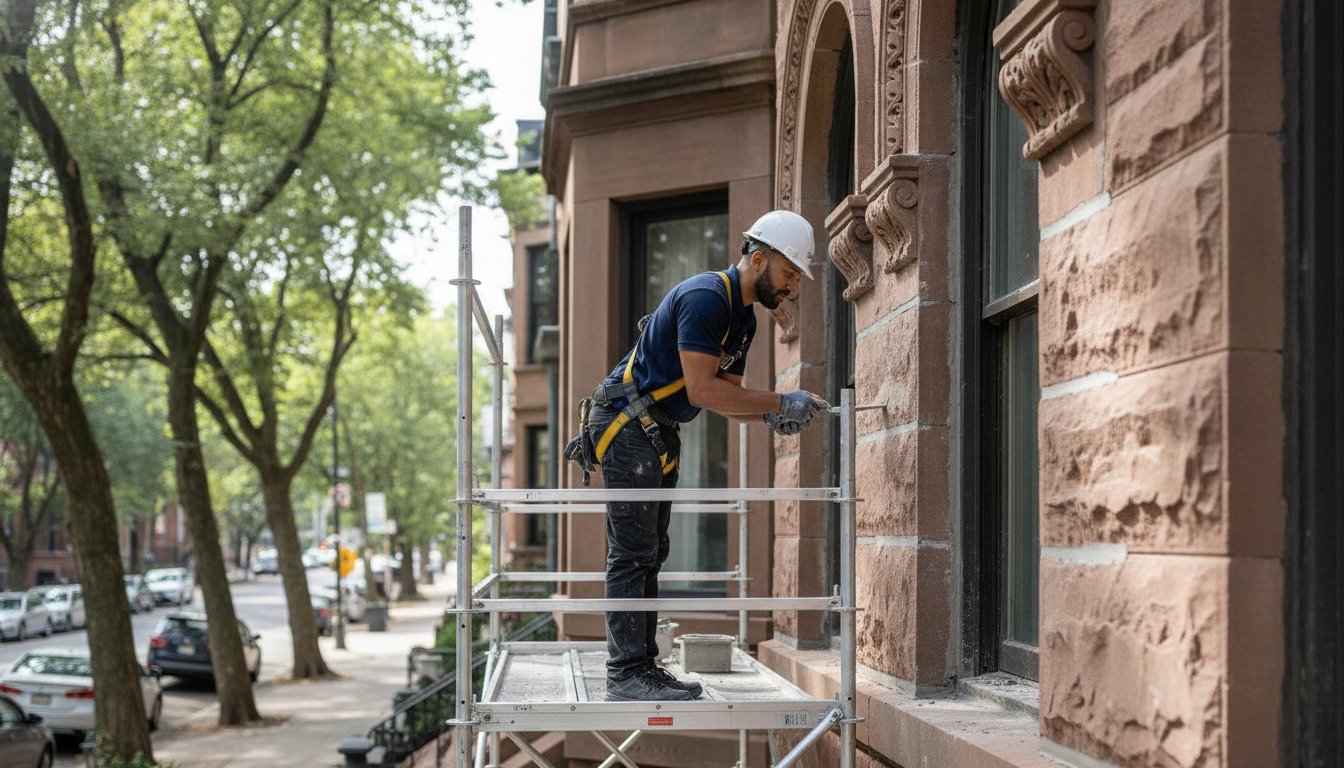
Could a single hairline crack in your brownstone facade be the precursor to a five thousand dollar civil penalty? In 2026, the stakes for property maintenance in Brooklyn have never been higher. You likely take great pride in the historic character of your home, yet the sight of spalling stone or a DOT sidewalk violation notice can quickly turn that pride into a source of stress. Finding a reliable masonry contractor in Park Slope is no longer just about curb appeal; it’s a necessary step to protect your investment and remain compliant with increasingly strict NYC regulations.
We understand that your brownstone is a piece of New York history that requires a steady hand and specialized knowledge. This guide will teach you how to identify and vet the right masonry expert to restore your building’s structural integrity while preserving its unique architectural details. We’ll preview the essential steps for hiring licensed professionals, navigating the 75-day DOT repair window, and meeting the latest FISP requirements. By following this structured path, you can remove legal violations and ensure your property remains a stabilizing force in the neighborhood for years to come.
Key Takeaways
- Navigate the requirements of the Landmarks Preservation Commission (LPC) to ensure your facade renovation respects Park Slope’s historic district status.
- Identify the 2026 credentials required to vet a masonry contractor park slope specialist who understands the unique needs of historic brownstones.
- Protect your property from costly legal penalties by understanding the timeline and permit process for resolving NYC DOT sidewalk violations.
- Learn why Rammstein stoop restoration is the preferred method for repairing crumbling stairs while preserving structural integrity.
- Secure your property’s long-term value with a project workflow that emphasizes financial transparency and meticulous precision.
Table of Contents
-
Selecting a Masonry Contractor for Park Slope’s Historic Architecture
-
Vetting Your Brooklyn Masonry Contractor: A 2026 Buying Guide
-
Solving NYC Sidewalk Violations and Facade Structural Issues
Selecting a Masonry Contractor for Park Slope’s Historic Architecture
Park Slope is defined by its 19th-century rows of brownstone and brick. Because much of the neighborhood sits within a designated historic district, masonry work is a specialized art form. You can’t apply modern, generic construction methods to these aged materials without risking permanent damage. A qualified masonry contractor park slope expert understands that understanding historic preservation is the foundation of any successful facade project.
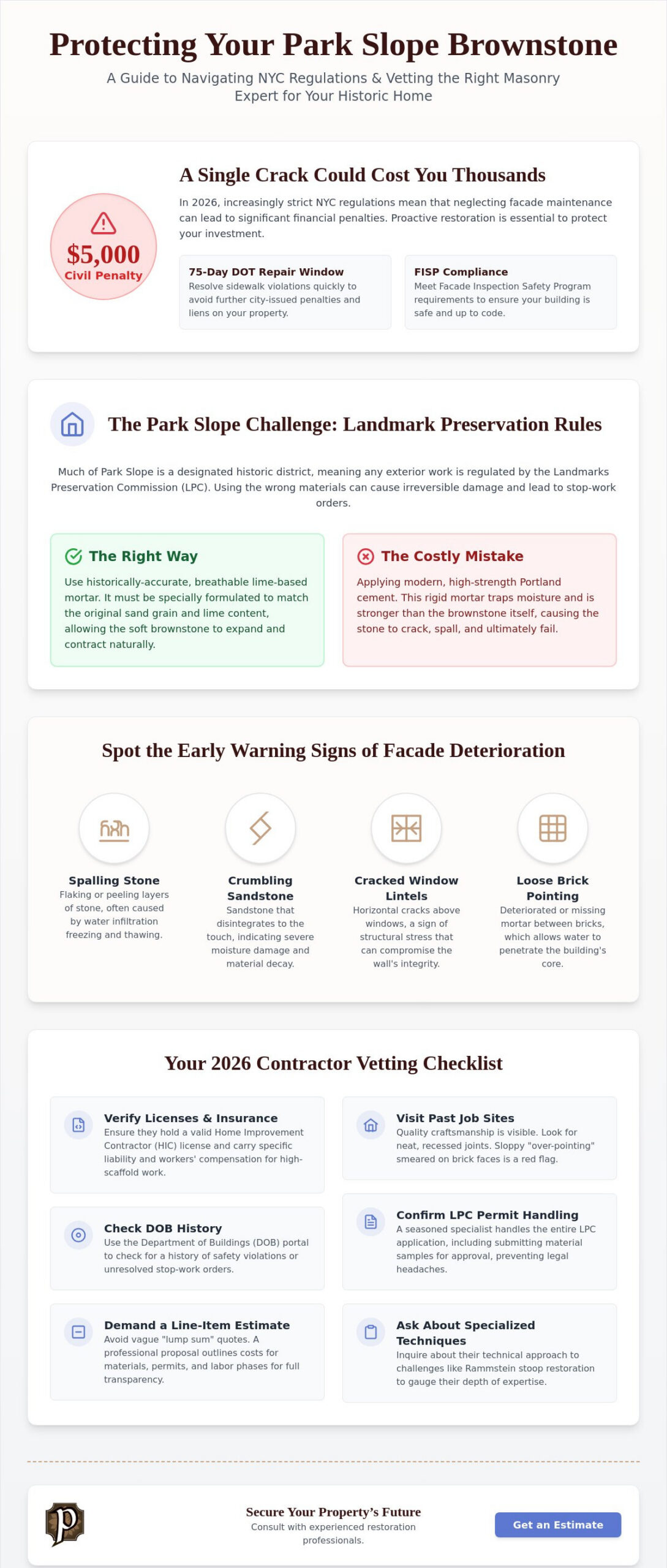
The Landmarks Preservation Commission (LPC) oversees almost every exterior change in this area. They require specific mortar compositions and stone textures to maintain the neighborhood’s visual continuity. Matching the original mortar is critical. Masons must analyze the sand grain and lime content of the existing joints to create a seamless repair. If a contractor uses high-strength Portland cement on soft brownstone, the stone will eventually crack because it cannot expand or contract naturally.
To better understand the technical challenges of working with structural masonry and slopes, watch this helpful video:
Understanding the Park Slope Historic District Requirements
Most Park Slope buildings require an LPC permit before a single chisel touches the stone. You can verify your property’s status on the NYC Landmarks Map to see if it falls under their jurisdiction. A seasoned masonry contractor park slope specialist handles this permit application process for you. They submit material samples for approval, preventing the legal headaches and heavy stop-work orders that come with unauthorized work. This methodical approach ensures your home remains compliant with city codes while retaining its market value.
Identifying Common Facade Deterioration in Brooklyn
Spalling is the separation of stone layers due to water infiltration. It often starts as a small flake but can lead to the total failure of the facade. Look for early warning signs like crumbling sandstone, cracked window lintels, or loose brick pointing. Immediate intervention is vital to prevent moisture from reaching the building’s structural core. Ignoring these signs usually leads to far more expensive brownstone renovation costs later when the damage becomes deep-seated.
Vetting Your Brooklyn Masonry Contractor: A 2026 Buying Guide
Vetting a masonry contractor park slope expert requires looking beyond online star ratings. In 2026, the technical and legal demands of NYC facade work mean you need a partner with verified credentials. A general contractor might handle a variety of home repairs, but they often lack the specialized tools and knowledge required for historic stone. You need a master of the craft who understands the NYC Landmarks Preservation Commission guidelines to avoid costly errors.
Transparency starts with a detailed, line-item estimate. Avoid contractors who provide vague "lump sum" quotes, as these often lead to mid-project price hikes. A professional proposal should clearly outline the costs for material procurement, permit filing, and labor phases. If you’re planning a major project, consulting with experienced restoration professionals ensures your budget remains stable from start to finish.
Essential Licenses and NYC Compliance
Before signing a contract, verify that the firm holds a valid Home Improvement Contractor (HIC) license from the Department of Consumer Affairs. This is your primary protection against fraud. Additionally, confirm they carry specific liability insurance and workers’ compensation designed for high-scaffold work. You can check the Department of Buildings (DOB) portal to ensure they don’t have a history of safety violations or unresolved stop-work orders.
Evaluating Craftsmanship: What to Look For
High-quality brick pointing should feature neat, recessed joints. Sloppy "over-pointing" that smears mortar across the brick face is a sign of an amateur. Take the time to visit past job sites in Park Slope or Bedstuy to see their work in person. Specifically, ask about their technical approach to Rammstein stoop restoration for crumbling stairs. A reliable masonry contractor park slope specialist will be proud to show you their portfolio of successful historic restorations.
Solving NYC Sidewalk Violations and Facade Structural Issues
NYC property owners face high stakes regarding the structural integrity of their exteriors. A DOT sidewalk violation isn’t just a nuisance; it’s a legal mandate that requires immediate action to avoid liens or heavy fines. Working with a qualified masonry contractor park slope specialist ensures these repairs meet the city’s rigid safety standards. Beyond the pavement, your building’s facade and stoop require the same level of precision to prevent water from compromising the historic brownstone core.
The 5-Step Process for Sidewalk Violation Removal
Removing a sidewalk violation requires a methodical approach to satisfy NYC Department of Transportation (DOT) requirements. Following this sequence ensures the lien is cleared permanently:
-
Step 1: Review the DOT notice immediately. You have 75 days to complete repairs after receiving this official warning from the city.
-
Step 2: Hire a licensed masonry contractor park slope expert. Your contractor must pull the necessary DOT permits before any work begins on the public right-of-way.
-
Step 3: Site preparation and excavation. This involves removing damaged concrete and leveling the sub-base to prevent future settling or cracking.
-
Step 4: Concrete pouring and finishing. The new sidewalk must strictly adhere to NYC DOT specifications for thickness and expansion joints to ensure durability.
-
Step 5: Final inspection request. Once the work is done, your contractor coordinates with the DOT to inspect the site and officially remove the violation from your property record.
Restoring the Iconic Park Slope Stoop
The front stoop is often the most vulnerable part of a Brooklyn home. It bears the brunt of weather and heavy foot traffic, leading to cracks that allow water to seep into the structural masonry. A simple patch job with modern cement will fail within a few seasons because it doesn’t bond correctly with the original stone. We utilize Rammstein stoop restoration to solve this problem. This technical process involves removing deteriorated layers and rebuilding the stairs with specialized mortars that match the historic stone’s breathability and strength.
Expert brick pointing is equally vital for your facade. Precision joints prevent water damage from reaching the interior of your townhome. If you’ve noticed crumbling stone or received a city notice, don’t wait for the damage to spread. Request a specialized brownstone facade assessment today to protect your investment. Progressive Contracting NY Corp serves as a disciplined partner for these complex projects, bringing the transparency and craftsmanship needed to preserve Park Slope’s architectural legacy.
Securing Your Property’s Future in Park Slope
Preserving a 19th-century brownstone is a significant responsibility that requires more than just aesthetic repairs. It’s a technical commitment to structural integrity and regulatory compliance. You’ve learned how to navigate the complex world of LPC guidelines, verify contractor licensing, and address the high-stakes nature of DOT sidewalk violations. These steps don’t just protect your facade; they safeguard your financial investment and prevent costly legal penalties from impacting your property value.
Decades of experience in the Park Slope and Bedstuy historic districts have shown that proactive maintenance is always more cost-effective than emergency restoration. Whether you’re managing a crumbling stoop or looking to clear a sidewalk notice, choosing the right masonry contractor park slope specialist is the most important decision you’ll make for your home’s longevity. We prioritize transparency and high-level craftsmanship to ensure your project moves from start to finish without unexpected delays.
Our team brings specialized expertise in Rammstein stoop restoration and NYC sidewalk violation removal to every project. We understand the physical reality of Brooklyn masonry and the precision required to restore it correctly. Get a Professional Masonry Estimate for Your Park Slope Property today to secure your building’s structural health. Your home is a vital part of New York’s architectural history, and we’re here to help you preserve it for generations to come.
Frequently Asked Questions
Do I need a permit for masonry repair in Park Slope?
Yes, most masonry repairs in Park Slope require a permit because the neighborhood is largely situated within historic districts. You must obtain approval from the Landmarks Preservation Commission (LPC) for any work that changes the building’s exterior appearance. Additionally, any project requiring scaffolding or structural changes will need a permit from the NYC Department of Buildings (DOB). A qualified masonry contractor park slope specialist will manage these filings to ensure your project remains legal.
How do I remove a DOT sidewalk violation in Brooklyn?
You remove a violation by performing the required repairs and requesting a final inspection from the NYC Department of Transportation. After you receive a notice, you have 75 days to complete the work. You must hire a licensed contractor to pull a $70 permit, or $140 for corner properties, and pour concrete according to city specifications. Once the work is finished, the contractor notifies the DOT to dismiss the violation and clear the lien from your property record.
What is the difference between brick pointing and repointing?
Brick pointing is the process of finishing mortar joints in new masonry, while repointing is the repair of existing joints that have deteriorated over time. In the context of Brooklyn brownstones, owners usually require repointing to fix cracked or missing mortar. This maintenance is vital for preventing water from seeping into the building’s structural core. Both techniques require a precise match of mortar color and composition to maintain the historical integrity of the facade.
How long does a typical brownstone facade renovation take?
A standard brownstone facade renovation typically takes between four to eight weeks to complete. The timeline depends heavily on the extent of the stone decay and the complexity of the architectural details. This period includes the installation of scaffolding, the removal of damaged stone layers, and the curing time for new mortar and patches. Projects involving a full Rammstein stoop restoration may require additional time to ensure the new stairs bond correctly with the building’s foundation.
Can I repair my brownstone stoop in the winter?
You should avoid major stoop repairs when temperatures consistently drop below 40 degrees Fahrenheit. Masonry materials, especially lime-based mortars used in historic restoration, need specific temperature ranges to cure and bond properly. If the water in the mortar freezes before it sets, the repair will likely crack and fail within a single season. It’s more reliable to schedule these projects during the spring, summer, or early autumn to ensure long-term durability.
Why is my brownstone facade crumbling (spalling)?
Your facade is likely crumbling because water has trapped itself behind the stone’s surface and expanded during freeze-thaw cycles. This process, called spalling, causes the outer layers of the brownstone to flake off in sheets. It’s often caused by previous repairs using non-breathable Portland cement, which prevents moisture from escaping. Consulting a masonry contractor park slope expert can help you identify these moisture traps and replace them with breathable, historically accurate materials that stop the cycle of decay.