
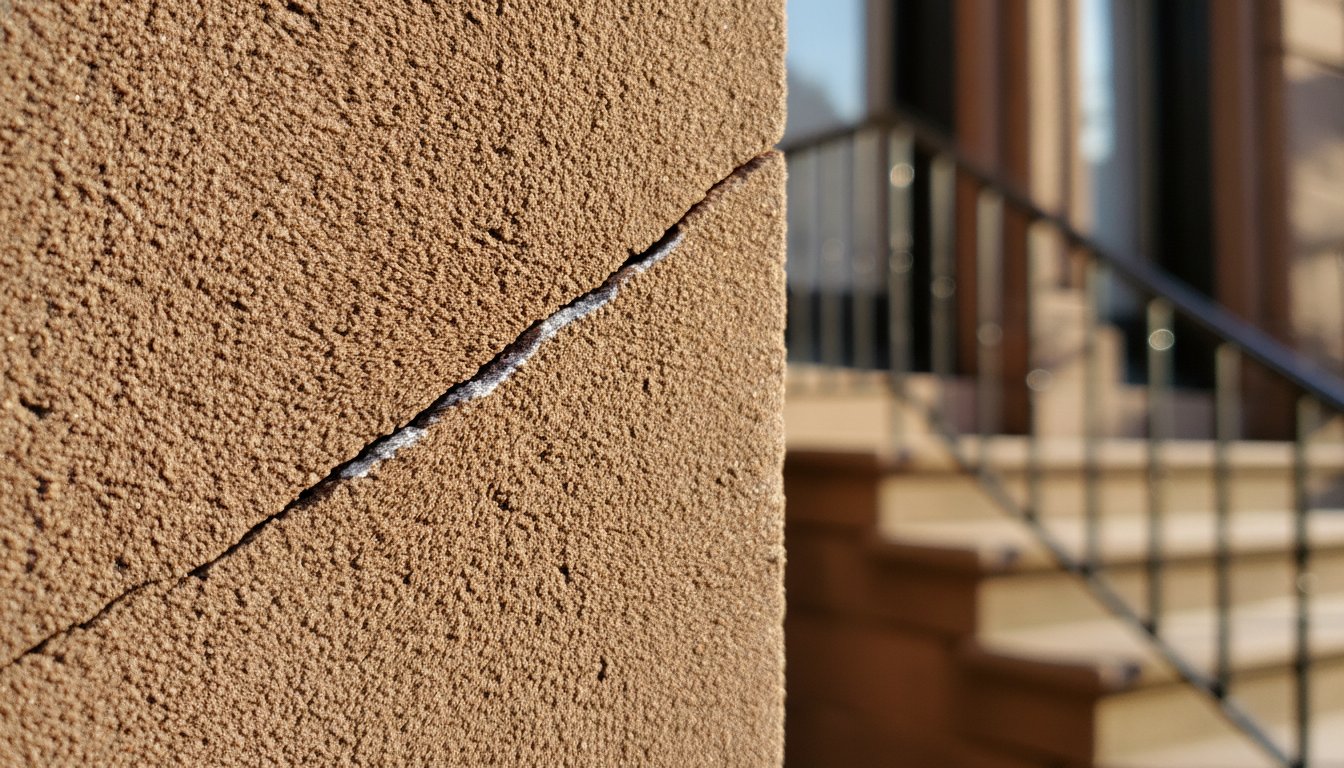
A hairline crack in your brownstone’s facade isn’t just a cosmetic flaw; it’s a structural countdown that accelerates with every New York winter. It’s natural to hope that a small fissure is simply a sign of an older building settling. You likely want to avoid the stress of high NYC masonry costs or the complexities of Landmarks Preservation Commission compliance. However, the long term cost of ignoring facade cracks is significant because these openings act as dynamic entry points for water. Once moisture penetrates the stone’s soft interior, the freeze-thaw cycle causes internal expansion that leads to spalling and interior mold.
We’ll show you how minor issues evolve into massive financial liabilities and provide a clear framework to identify which cracks require immediate attention. You’ll learn the specific steps to take for historic restoration that balances high standards with practical financial considerations. We’ll outline a path to restore your building’s integrity and give you the peace of mind that comes from professional craftsmanship and local expertise.
Table of Contents
The Silent Evolution of Facade Cracks: From Cosmetic to Structural
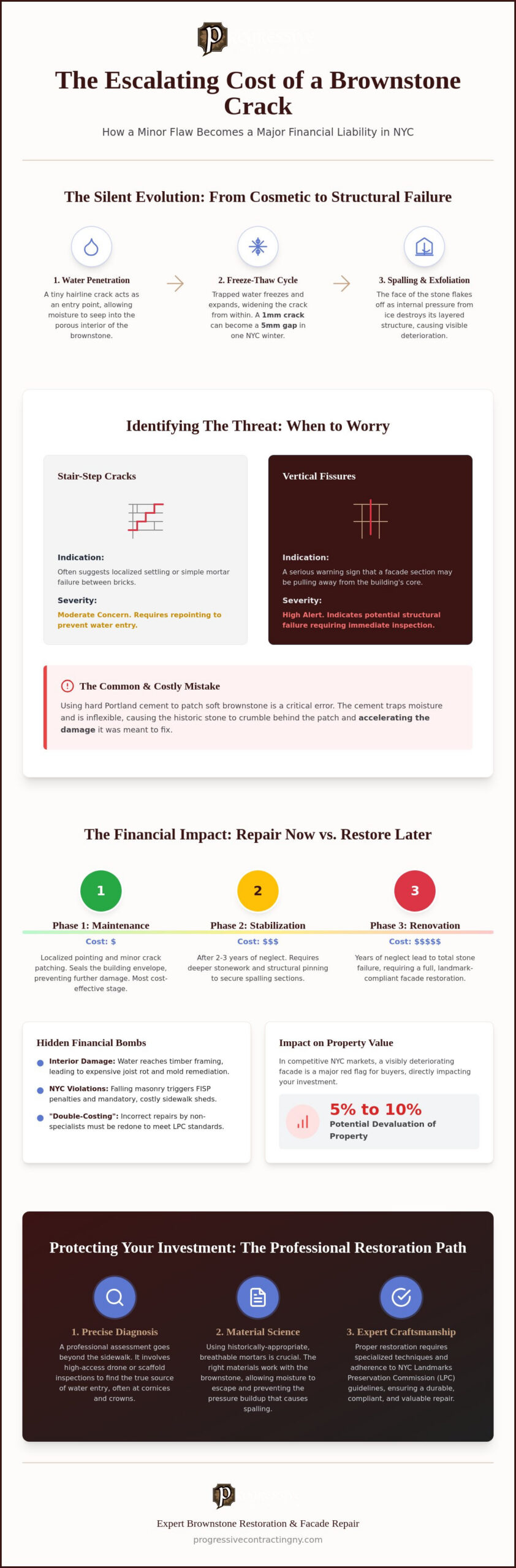
Historic brownstone masonry is a living material, unlike the rigid, non-porous concrete used in modern construction. It breathes and absorbs moisture by design. When a crack appears, it isn’t just a surface blemish; it’s a breach in the building’s protective envelope. Understanding the science of facade engineering helps explain why these breaches are so dangerous for older properties. Water enters a hairline fracture and begins to rot the stone from the inside out. In the harsh NYC climate, a 1mm crack in November often expands into a 5mm gap by April due to relentless freeze-thaw cycles. Spalling is the process where water-soaked brownstone layers expand and flake off the facade.
To better understand how these small issues escalate, watch this helpful video:
Hairline vs. Structural: When to Worry
Not all cracks are equal, but all warrant a professional inspection. "Stair-step" cracks in brick pointing often suggest local settling or mortar failure that needs repointing. However, vertical fissures that cut through multiple stones are more concerning. These often indicate that a stoop or facade section is physically pulling away from the building core. The long term cost of ignoring facade cracks becomes apparent when these structural shifts require full reconstruction rather than simple maintenance.
The Material Factor: Why Brownstone is Unique
Brownstone is a sedimentary rock, meaning it consists of compressed layers. This makes it highly vulnerable to "exfoliation," where the face of the stone peels away like the pages of a book. The long term cost of ignoring facade cracks is often compounded by previous improper repairs. Using hard Portland cement to patch soft brownstone is a common mistake. Because the cement is harder than the stone, it traps moisture and prevents natural expansion. This pressure actually accelerates cracking and forces the historic stone to crumble behind the patch.
Calculating the Financial Impact: Repair Now vs. Restore Later
The long term cost of ignoring facade cracks follows a predictable, tiered progression. Homeowners often view masonry work as a single, large hurdle, but the financial reality depends on the timing of the intervention. A proactive approach allows for manageable maintenance, while delay forces a transition from simple repair to complex historic restoration. Neglect eventually leads to total stone failure.
-
Phase 1: Preventative Maintenance. This involves localized brick pointing and minor patching of small fissures. It’s the most cost-effective stage, as it keeps the building envelope sealed against moisture.
-
Phase 2: Structural Stabilization. If you ignore Phase 1 for two to three years, water penetration leads to spalling. At this stage, repairs require deeper stone work and structural pinning to secure loose material.
-
Phase 3: Full Facade Renovation. Years of water ingress result in delamination. In historic NYC districts, this means a landmark-compliant restoration involving extensive stone replacement and specialized craftsmanship.
The damage doesn’t stop at the stone. Water that seeps through facade cracks eventually reaches the interior timber framing. This leads to joist rot and expensive mold remediation that can double the total project budget. Assessing your building’s current state with a brownstone specialist can help you identify these risks before they migrate indoors.
The Cost of "Quick Fixes" and NYC Violations
Hiring a non-specialist often results in "double-costing." If a contractor uses the wrong materials, the Landmarks Preservation Commission (LPC) may require the entire job to be redone correctly. Additionally, falling masonry triggers immediate safety concerns. Under NYC’s Facade Inspection & Safety Program, building owners face significant penalties and the mandatory installation of expensive sidewalk sheds if a facade is deemed unsafe.
Property Value and Curb Appeal
A deteriorating facade directly impacts your investment. In competitive neighborhoods like Park Slope or Bed-Stuy, visible stone damage can devalue a property by 5% to 10% during a sale. Buyers in these districts prioritize structural integrity and fear the hidden expenses of historic masonry work. A well-maintained exterior doesn’t just prevent fines; it serves as a primary justification for a higher market valuation. If you’re seeing signs of wear, it’s wise to schedule a facade assessment to protect your property’s long-term value.
Protecting Your Investment: The Professional Restoration Path
Effective restoration starts with a precise diagnosis. For historic NYC buildings, a visual check from the sidewalk isn’t enough. We use drone technology or scaffold inspections to examine the crown and cornices where water often enters first. These high-access areas are frequently where the long term cost of ignoring facade cracks begins to compound. Identifying a loose lintel or a failing cornice early prevents a full-scale masonry emergency during the next storm cycle.
Precision in materials is just as vital as the inspection itself. We use historic brick pointing techniques that utilize lime-based mortars. Unlike modern cement, these traditional mixtures allow the building to "breathe" and expand naturally. This prevents moisture from becoming trapped, which is the primary cause of stone delamination. For homeowners seeing these early warning signs, scheduling a Brownstone Facade Restoration is the most reliable way to halt the decay cycle and preserve the stone’s integrity.
The Progressive Contracting NY Corp Approach
Our team follows a "problem-process-result" framework to ensure accountability. We don’t just patch cracks; we investigate the underlying cause of the movement. Whether it’s a failing stoop or improper drainage, we address the source. Our Rammstein stoop restoration services focus on the entry of your home, which is often the first area to show signs of stress. Addressing these issues early is the only way to avoid the steep long term cost of ignoring facade cracks. By using traditional masonry techniques, Progressive Contracting NY Corp ensures the longevity of the repair and compliance with local historic standards.
Next Steps for Homeowners
Proactive owners can mitigate risks by following a seasonal maintenance checklist every spring and fall. Look for the following signs:
-
Small fissures around window lintels and sills.
-
Hollow sounds when tapping on stone surfaces, which indicates delamination.
-
New cracks in the stoop treads or side walls.
-
Vegetation or moss growing in mortar joints.
If you notice any of these issues, the next step is to obtain a transparent, professional estimate. A detailed assessment provides the roadmap you need to protect your property’s value and structural integrity for the next generation.
Secure Your Property’s Future with Proactive Care
Managing a historic brownstone requires a proactive stance against the elements. The long term cost of ignoring facade cracks goes beyond masonry repairs; it involves protecting the very core of your property from water infiltration and structural decay. Choosing early intervention ensures that your building maintains its architectural dignity and market value without the burden of emergency restoration costs.
Progressive Contracting NY Corp provides the specialized skill required for Brooklyn and Manhattan historic districts. With a decade of experience in brownstone renovation and a proven track record in NYC sidewalk violation removal, we offer the stability needed for complex masonry projects. We focus on transparent communication and meticulous execution to ensure every repair meets both city standards and your own expectations.
Don’t allow small fissures to evolve into costly liabilities. Request a Professional Facade Assessment from Progressive Contracting NY Corp to secure your building’s envelope. Taking action now provides the peace of mind that your historic investment is protected for the long term.
Frequently Asked Questions
How can I tell if a crack in my brownstone is structural or just cosmetic?
You can identify a structural crack by its direction, depth, and location. While hairline fissures are often cosmetic surface issues, vertical cracks that cut through multiple stones or deep "stair-step" patterns in brick pointing suggest movement in the building’s foundation or core. If a crack is wider than one-eighth of an inch or shows signs of the facade pulling away from the structure, it requires an immediate professional assessment.
What is the average lifespan of brick pointing in New York City?
The average lifespan of quality brick pointing in New York City is between 20 and 30 years. This timeline depends heavily on your building’s exposure to wind, rain, and the local freeze-thaw cycle. Regular inspections every five years help you catch minor mortar erosion before it allows water to penetrate the stone. Using the correct lime-based materials during the initial repair ensures the longest possible protection for your facade.
Will ignoring a facade crack lead to an NYC DOB violation?
Yes, ignoring a facade crack frequently leads to an NYC DOB violation. The city monitors building safety strictly, and inspectors or neighbors can report visible stone damage that poses a risk to pedestrians. The long term cost of ignoring facade cracks includes not only the price of emergency repairs but also heavy fines and the mandatory cost of installing sidewalk sheds. Proactive maintenance is always more affordable than resolving a city-issued safety violation.
Can I use standard cement to fix cracks in my historic brownstone facade?
You shouldn’t use standard Portland cement to repair a historic brownstone facade. Standard cement is much harder and less porous than the natural sedimentary stone, which traps moisture inside the wall. This trapped water eventually freezes and expands, causing the original stone to crumble or flake off in large sections. Professional restoration requires specialized lime-based mortars that match the stone’s strength and allow moisture to evaporate naturally.