
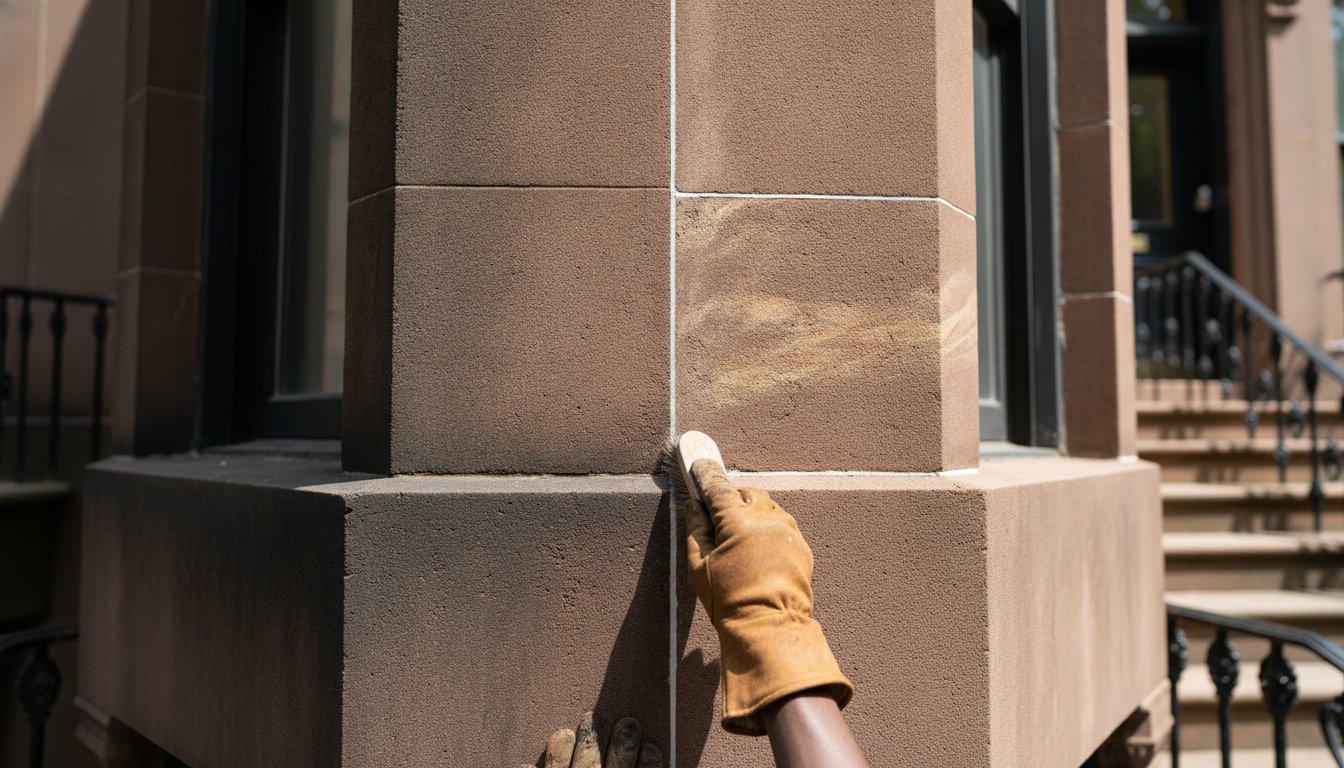
Did you know that using the wrong cleaning method can cause more damage to your 19th-century facade in one afternoon than decades of New York City weather? Many homeowners look at the visible pollution staining on their property and feel an urgent need to scrub it away, yet they hesitate because they fear the stone might start crumbling or spalling. It’s a delicate balance to strike when you’re trying to maintain the character of a historic building without causing permanent structural harm.
This guide explains exactly how to clean historic brownstone safely by following the principle of the “gentlest means possible.” You’ll learn which cleaning products are safe for delicate masonry, how to navigate the 2026 Landmarks Preservation Commission (LPC) requirements, and how to preserve the stone’s natural protective layer. We’ll also identify the clear “red flags” that signal when a DIY project is safe and when you need a professional brownstone specialist. For direct assistance with your restoration project, you can contact Progressive Contracting of NY at 347-341-3808 or 718-350-7388, or email us at ProgressiveContractingNY@yahoo.com to ensure your facade remains a neighborhood landmark for years to come.
Why Historic Brownstone Requires a Gentle Touch (Avoid the Power Washer)
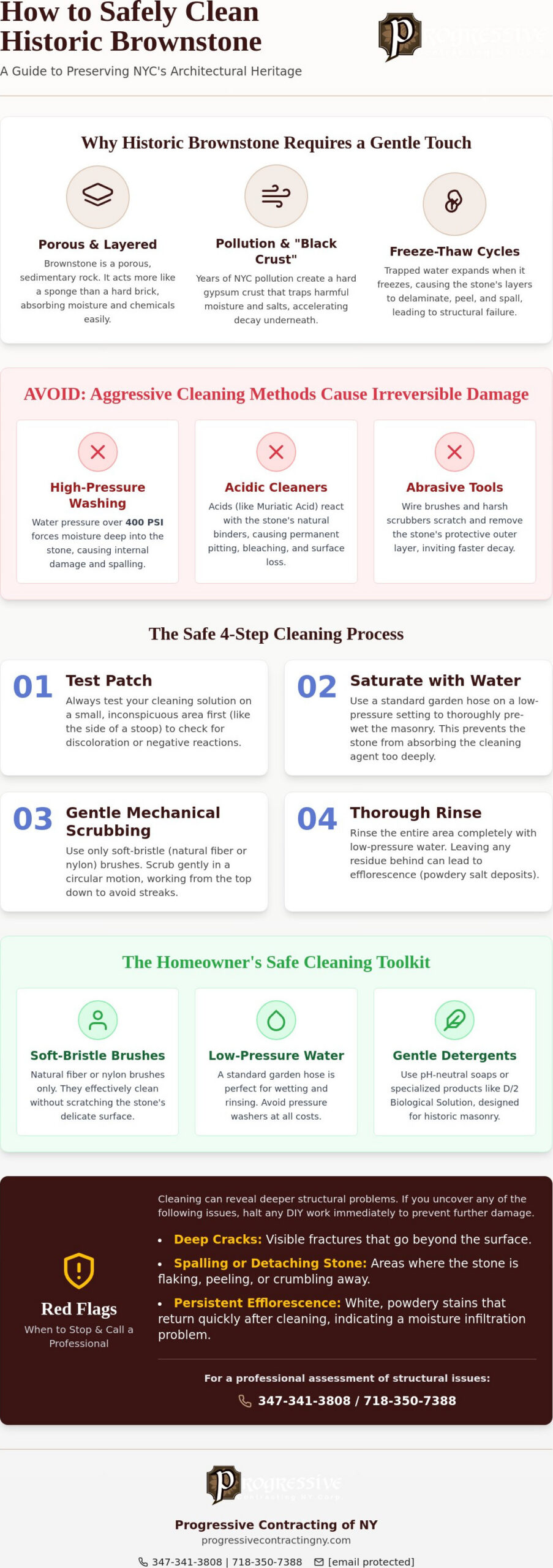
Understanding what brownstone is reveals why it requires a specific maintenance approach. It’s a porous, sedimentary rock formed in distinct layers over millions of years. Aggressive cleaning methods can “delaminate” these layers, causing the stone to separate and peel away from the facade. To learn how to clean historic brownstone safely, you must first recognize that the stone is more like a sponge than a brick.
High-pressure water is the primary cause of modern facade damage. Water pressure exceeding 400 PSI forces moisture deep into the stone’s internal structure. This trapped water expands during the winter freeze-thaw cycles common in New York, leading to structural failure. Spalling is the peeling or flaking of the stones outer surface due to internal pressure or improper cleaning. Chemical sensitivity also plays a major role; acidic cleaners react with the calcium carbonate binder in the stone, leading to permanent pitting or bleaching.
The Problem with NYC Pollution and “Black Crust”
Carbon-based soot from decades of Manhattan and Brooklyn traffic binds to the stone surface. This creates a hard, dark layer known as a gypsum crust. While it may seem like just dirt, this crust often traps harmful moisture and salts against the stone. If you don’t remove these deposits gently, the stone underneath continues to decay. Contact us at 347-341-3808 or ProgressiveContractingNY@yahoo.com if you see thick, dark patches forming on your lintels or stoop.
Sedimentary Layers: Understanding “Face-Bedding”
Many historic NYC brownstones were “face-bedded,” meaning the stone layers were set vertically rather than horizontally. This orientation makes the facade prone to peeling like an onion when moisture enters the layers. You can learn more about the geology of these buildings in our guide on What is a Brownstone?. If you have questions about the structural integrity of your property, call us at 718-350-7388 for professional guidance.
A Step-by-Step Guide to Safely Cleaning Your Facade
Learning how to clean historic brownstone safely begins with patience and precision. You must always perform a test patch in an inconspicuous area, such as the side of the stoop or near the foundation. This essential step ensures that your chosen cleaning agent does not cause discoloration or adverse chemical reactions with the stone. Once you have confirmed the method is safe, begin the saturation phase. This “low and slow” approach involves thoroughly soaking the masonry with a standard garden hose. Pre-wetting the stone softens surface dirt and prevents the masonry from absorbing the cleaning solution too deeply.
After the stone is saturated, use mechanical action to lift the grime. Use only soft-bristle brushes made of natural fibers or nylon. Gently scrub in a circular motion, working from the top of the facade downward to prevent dirty water from streaking clean areas. Finally, rinse the area thoroughly with low-pressure water. If you leave soap residue behind, it can contribute to the formation of new mineral salts, a process known as efflorescence. For more technical details on these standards, you can consult the NPS Preservation Brief on cleaning historic masonry.
The Homeowners Safe Cleaning Toolkit
When considering how to clean historic brownstone safely, your choice of materials is just as important as your technique. A safe toolkit prioritizes pH-neutral detergents or specialized products like D/2 Biological Solution. These solutions are designed to kill biological growth without harming the delicate chemistry of the stone. “The best tool for a historic facade is a soft natural-bristle brush and a steady stream of low-pressure water.” Never use wire brushes, muriatic acid, or standard household bleach. These items cause irreversible pitting and surface loss. If you are unsure about a specific product, email us at ProgressiveContractingNY@yahoo.com for professional guidance.
Removing Organic Growth and Stains
Shaded Brooklyn backyards often host moss or ivy that can trap moisture against the facade. You should never pull ivy roots directly off the stone, as this can rip out the “skin” of the brownstone. Instead, cut the vines at the base, allow them to die and dry out, then gently brush them away. For white powdery salt deposits, or efflorescence, a dry soft-bristle brush is often the most effective tool. If these stains persist, it may indicate a deeper water infiltration issue that requires a brownstone specialist. You can reach our team at 347-341-3808 or 718-350-7388 to discuss a professional assessment of your property.
Recognizing the Red Flags: When Cleaning Reveals Structural Damage
Cleaning your facade is the first step in seasonal stewardship. It often reveals structural issues that were previously hidden by layers of NYC soot and grime. While learning how to clean historic brownstone safely, you must treat the process as a close-up inspection. Removing the “black crust” mentioned earlier might uncover deep cracks or areas where the stone has already begun to detach from the building. These issues require professional intervention rather than just a thorough wash.
Watch for the “Confetti” warning. If small stone flakes fall off while you are gently brushing with your natural-bristle tool, the stone is actively deteriorating. This signifies that the protective “skin” of the masonry has failed. Similarly, pay close attention to your mortar joints. If the cleaning process washes away sandy grit or chunks of mortar, the joints are no longer watertight. You likely need professional repointing to prevent moisture from reaching the interior of your walls. If you notice crumbling or significant surface loss during your work, read our guide on Brownstone Spalling Repair.
When to Call a Professional Masonry Contractor
Use the “tap test” to check for delamination. Lightly tap the surface of the stone with your knuckles or a small wooden tool. If you hear a hollow or drum-like sound, the stone layer has separated from the substrate. Cleaning cannot fix this structural gap. Don’t attempt to patch these areas with standard hardware store products. DIY patching with non-breathable Portland cement is a common mistake that traps moisture and causes the surrounding historic stone to decay even faster.
Professional Restoration vs. Maintenance
Routine cleaning is excellent for maintenance, but it won’t reverse decades of geological weathering. A professional brownstone facade renovation is a long-term investment in your building’s lifespan and value. We use traditional lime-based mortars and stone-matching compounds that allow the building to breathe. Contact Progressive Contracting of NY for a professional assessment at 347-341-3808 or 718-350-7388. You can also reach our experts at ProgressiveContractingNY@yahoo.com to schedule a site visit and ensure your historic home remains structurally sound.
Preserving Your Brownstone Legacy for the Next Generation
Proper maintenance keeps your property vibrant and prevents costly long-term damage. By choosing pH-neutral cleaners and low-pressure water, you avoid the common pitfalls of aggressive power washing. Mastering how to clean historic brownstone safely is about more than just aesthetics; it’s about protecting the structural integrity of your home. A gentle approach preserves the stone’s delicate skin while revealing underlying issues like spalling or failing mortar joints that require expert attention.
Progressive Contracting of NY brings decades of experience to historic neighborhoods like Park Slope and Bedstuy. We specialize in Rammstein stoop restoration and expert brick pointing services that respect traditional masonry standards. If your cleaning project has revealed hollow sounds or crumbling stone, our team provides the professional assessment you need to stabilize your facade. You can reach us directly at 347-341-3808 or 718-350-7388, or email ProgressiveContractingNY@yahoo.com for a detailed consultation.
Taking the time to care for your facade today ensures your brownstone remains a proud part of New York’s architectural history for decades to come.
Frequently Asked Questions
Can I use a power washer on the lowest setting for my brownstone?
You should avoid using a power washer on historic brownstone, even on a low setting, unless you are a trained professional. Standard residential power washers often exceed 1,500 PSI, which is triple the 500 PSI limit set by the Landmarks Preservation Commission for masonry. High pressure separates the sedimentary layers of the stone and forces water into the substrate. A standard garden hose provides enough pressure to rinse the facade without causing irreversible structural failure.
What is the best soap to use for cleaning historic NYC masonry?
The best soap for historic NYC masonry is a pH-neutral detergent specifically formulated for porous stone. Products like D/2 Biological Solution are effective because they remove organic growth like moss and algae without leaving behind harmful residues. Avoid household bleach or acidic cleaners, as these chemicals react with the stone’s calcium carbonate. Using the right products is a core part of how to clean historic brownstone safely while maintaining the facade’s natural “skin.”
How often should I clean my brownstone facade in Brooklyn or Manhattan?
You should clean your brownstone facade in Brooklyn or Manhattan every two to five years depending on the level of local traffic and pollution. Annual cleaning is usually unnecessary and can lead to over-saturation of the stone. A regular schedule prevents the buildup of carbon crusts and gypsum deposits that trap moisture. If you notice heavy soot accumulation in Park Slope or Bedstuy, contact Progressive Contracting of NY at 347-341-3808 for a professional assessment.
What should I do if my brownstone starts crumbling during cleaning?
Stop the cleaning process immediately if you notice stone flakes or sandy grit falling away from the facade. This indicates that the stone is spalling or the mortar joints have failed. Continuing to apply water will only accelerate the decay by pushing moisture into the newly exposed layers. Reach out to us at 718-350-7388 or email ProgressiveContractingNY@yahoo.com to discuss a repair plan. We specialize in brownstone restoration and can stabilize the stone before further damage occurs.