
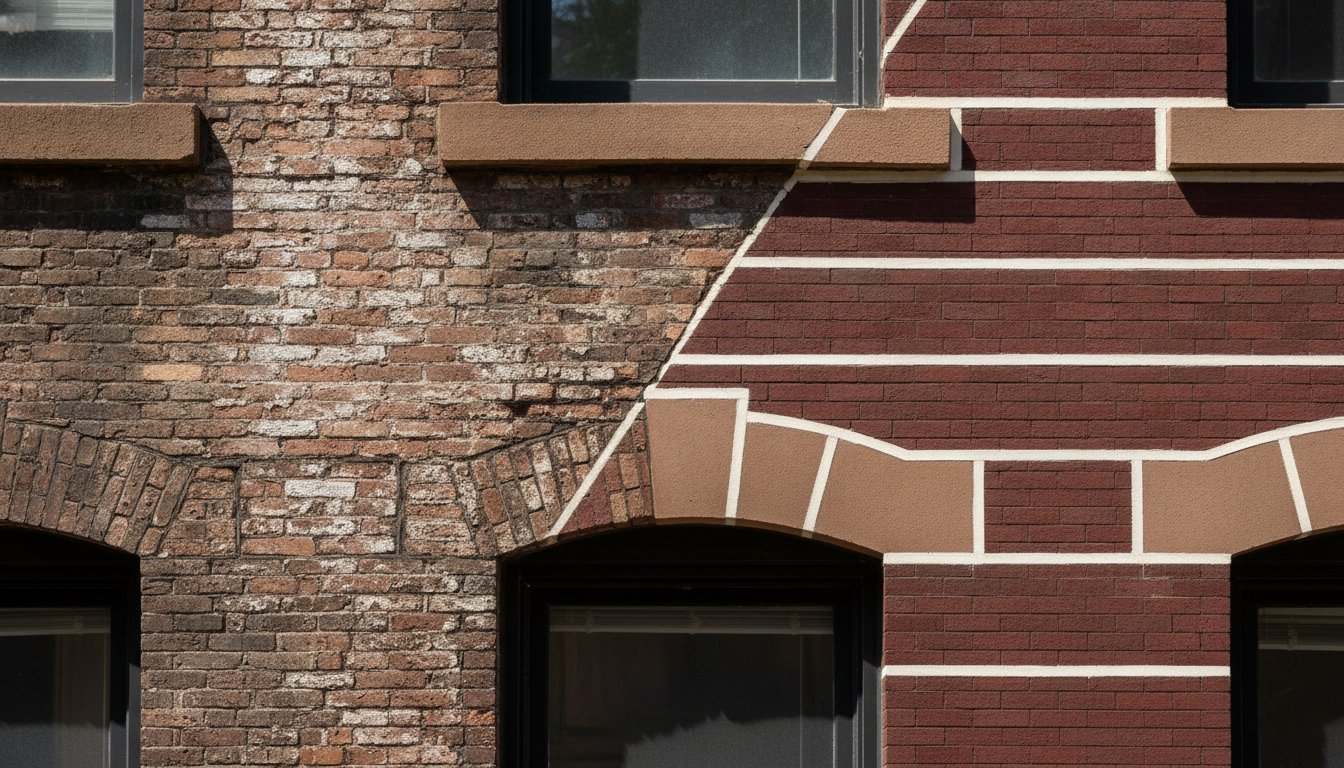
A single crumbling mortar joint is more than a cosmetic flaw; it is an open invitation for New York City’s harsh freeze-thaw cycles to dismantle your building’s structural integrity from the inside out. You have likely noticed white salt deposits on your facade or damp patches on your interior plaster and felt the stress of a mounting maintenance list. It’s a common concern for owners in neighborhoods like Park Slope and Bedstuy, where historic masonry requires a steady, expert hand to remain watertight. Dealing with a deteriorating exterior is frustrating, especially when you’re trying to avoid costly DOB violations or the sudden onset of structural instability.
This guide demonstrates why brick pointing nyc is your property’s most vital line of defense and provides a clear path to identifying when your masonry needs professional restoration. You’ll learn about the 2026 regulatory landscape, including the impact of Local Law 51 on repair timelines and the updated FISP inspection intervals under Local Law 49. Our team at Progressive Contracting of NY is here to provide the transparency and local expertise you need to protect your investment. For direct assistance or to discuss your project, you can reach us at 347-341-3808 or 718-350-7388, or email ProgressiveContractingNY@yahoo.com. We will walk you through the essential steps to achieve a waterproof, restored exterior that stands the test of time.
What is Brick Pointing and Why is it Critical for NYC Properties?
Brick pointing is the process of renewing the external part of mortar joints by removing deteriorated material and replacing it with fresh, compatible mortar. In the context of brick pointing nyc, this task is the primary defense against water infiltration in masonry. It’s a structural necessity that protects the building envelope from the relentless environmental pressures of the city. Without a sound mortar joint, water penetrates the facade, leading to interior dampness and the eventual decay of the building’s framing.
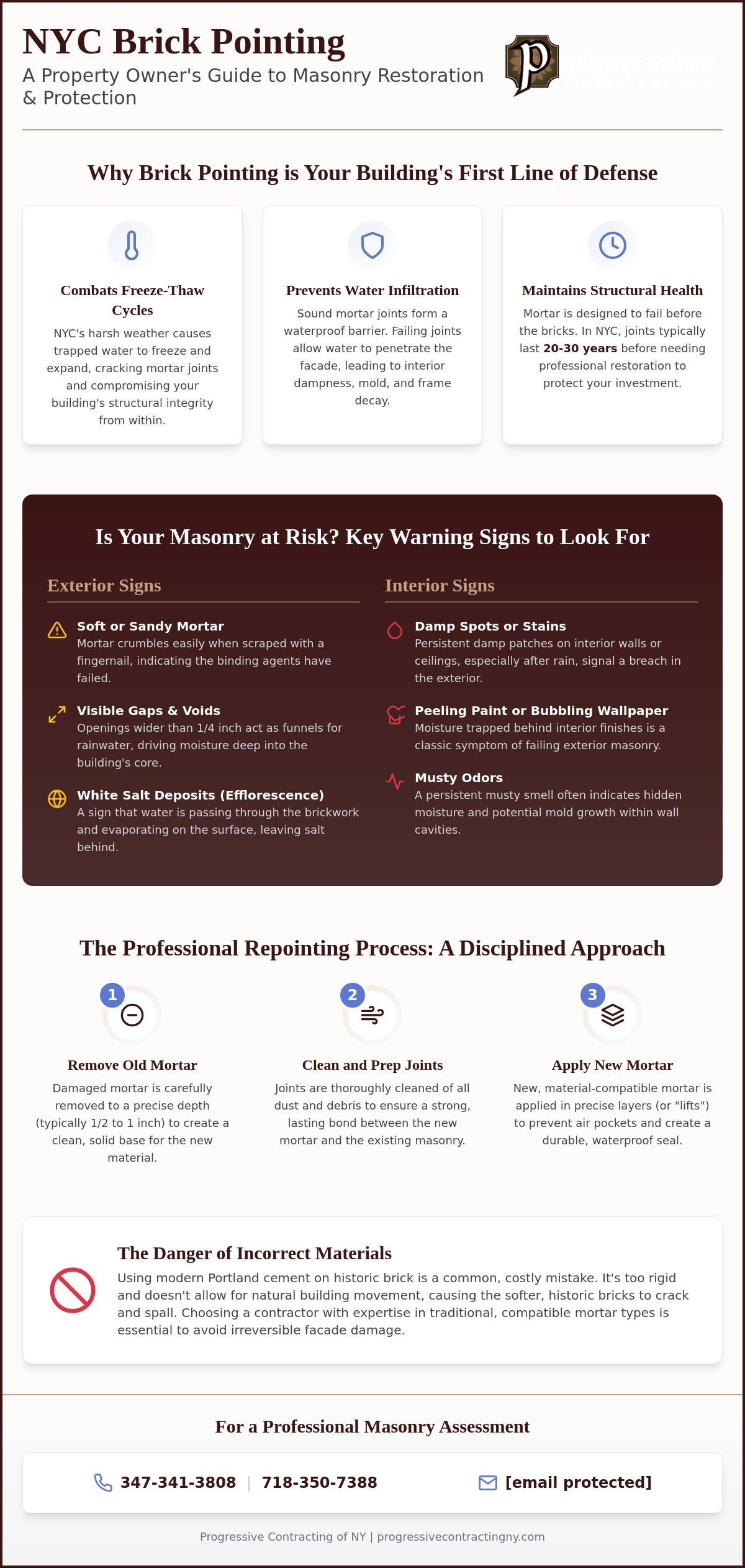
Mortar is intentionally designed as a sacrificial element. It’s meant to be softer than the surrounding bricks so it can absorb the stress of building movement and temperature fluctuations. This design ensures that the mortar wears out over time instead of the bricks. In New York City, the local freeze-thaw cycle is particularly aggressive. Moisture traps itself within small cracks in the mortar; when temperatures drop, that water expands as it turns to ice. This expansion creates internal pressure that forces the joints to crumble and separate from the brickwork. Research indicates that mortar joints in NYC typically last 20 to 30 years before they require professional attention to maintain this protective barrier.
The Difference Between Pointing, Repointing, and Tuckpointing
Precision in terminology is vital when discussing restoration with a masonry contractor. While many people use the terms interchangeably, What is Repointing specifically refers to the repair of existing joints that have weathered over time. Pointing is technically the initial application of mortar during new construction. Tuckpointing is a distinct, decorative technique that uses contrasting mortar colors to create the illusion of perfectly straight, thin joints. Using the wrong term can lead to confusing bids or incorrect project specifications. If you need a clear assessment of your facade, contact Progressive Contracting of NY at 347-341-3808 or 718-350-7388. You can also reach us at ProgressiveContractingNY@yahoo.com to ensure your restoration project uses the correct methods for your building’s age and style.
Signs Your NYC Masonry Needs Professional Attention
Identifying masonry failure early prevents minor repairs from becoming full facade restorations. One of the most obvious visual cues is “soft” or sandy mortar. If you can scrape the joint with a fingernail and it crumbles away, the binding agents have failed. Structural warnings are even more urgent. Look for deep gaps where mortar has fallen out entirely, specifically voids exceeding 1/4 inch. These openings act as funnels for rainwater, driving moisture directly into the building’s core and compromising the structural integrity of your property.
Interior symptoms often reveal what the exterior hides. Peeling paint, bubbling wallpaper, or persistent damp spots on inside walls after a heavy storm indicate that your brick pointing nyc is no longer watertight. If you see moss or weeds growing between the bricks, it signals a major moisture problem. Roots expand within the joints, physically prying the masonry apart and accelerating decay. For a professional assessment of these warning signs, reach out to Progressive Contracting of NY at 347-341-3808 or 718-350-7388. Our team specializes in diagnosing these issues before they lead to costly DOB violations.
The Brick Pointing Process: What to Expect from Expert Masonry
A successful restoration follows a disciplined sequence to ensure longevity. First, we carefully remove the old, compromised mortar to a specific depth, usually between 1/2 and 1 inch. This creates a clean “key” for the new material. Second, we thoroughly clean the joints to remove dust and debris, ensuring a strong bond. Finally, we apply new mortar in precise layers to prevent air pockets. This methodical approach is essential for historic masonry preservation, as it respects the original craftsmanship of the building while providing a modern, waterproof barrier.
Our team applies this rigorous standard to every project, whether it’s a targeted repair or a full brick pointing brooklyn renovation. We believe in transparency and direct owner involvement throughout every phase of the work. If you have questions about the process or need a detailed estimate, send your inquiries to ProgressiveContractingNY@yahoo.com. You can also schedule a site visit to receive a clear, matter-of-fact evaluation of your building’s exterior needs.
Protecting Your Investment: Choosing the Right NYC Masonry Contractor
Selecting a contractor based solely on the lowest price often leads to irreversible facade damage. Many low-cost bids rely on modern Portland cement because it’s cheap and sets quickly. However, this material is far too rigid for the soft, historic bricks found across Brooklyn and Manhattan. When the building naturally shifts or temperatures fluctuate, the hard cement forces the bricks to crack and spall. Professional brick pointing nyc requires a deep understanding of material compatibility to ensure the mortar remains the sacrificial element, protecting the brickwork rather than destroying it.
Safety and accountability are non-negotiable in New York City. High-risk exterior work demands full licensing and insurance to protect the property owner from liability and ensure compliance with local regulations. At Progressive Contracting of NY, we prioritize transparency and direct owner involvement on every project. We bring over a decade of experience to neighborhoods like Park Slope and Bedstuy, ensuring every restoration meets rigorous city standards. For a detailed consultation or to discuss your specific needs, contact us at 347-341-3808 or 718-350-7388. You can also visit brownstonerepair.net to see our approach to specialized facade care and structural preservation.
Historic Preservation and Mortar Matching in Brooklyn and Manhattan
Historic buildings require a specialized touch that respects traditional craftsmanship. Lime-based mortars are essential for these properties because they allow the masonry to “breathe,” letting moisture escape through the joints rather than trapping it behind the brick surface. We follow the National Park Service Preservation Brief on Repointing to ensure we use the correct historic mixes and application techniques. Precision in color matching is equally critical to maintain the building’s aesthetic value. Our team meticulously blends pigments to ensure repairs are invisible and consistent with the original facade. For more details on material selection, read our guide on repointing historic brownstone. If you have specific questions about your facade, email us at ProgressiveContractingNY@yahoo.com to receive a straightforward assessment from a seasoned expert.
Securing the Future of Your NYC Facade
Maintaining the structural integrity of your property requires a proactive approach to exterior care. As we discussed, brick pointing nyc is not merely a cosmetic upgrade; it’s a critical defensive measure against water infiltration and the city’s aggressive climate. By recognizing early warning signs like crumbling mortar or deep gaps, you can address masonry failure before it leads to structural instability or expensive violations. Choosing a contractor who understands the nuances of historic lime-based mortars ensures your building remains protected without the risk of long-term damage.
Progressive Contracting of NY brings a decade of local experience to every project in the historic districts of Brooklyn and Manhattan. We specialize in the precise restoration of brownstone and brick facades, ensuring your building remains both watertight and aesthetically authentic. Our team focuses on transparency and structural longevity. We help you navigate the complexities of NYC regulations with confidence. For a professional masonry evaluation, you can reach us at 347-341-3808 or 718-350-7388, or email us at ProgressiveContractingNY@yahoo.com.
We look forward to helping you preserve the heritage and value of your New York property for years to come.
Frequently Asked Questions
How often does a brick building in NYC need repointing?
Most NYC buildings require brick pointing nyc every 20 to 30 years. This duration varies based on the building’s exposure to the elements and the quality of the previous mortar application. Properties in high-wind areas or those directly facing the waterfront often see faster deterioration. Regular inspections help identify localized failures before they spread across the entire facade. Maintaining these joints is the most effective way to prevent moisture from reaching your building’s interior.
Can I do brick pointing myself or do I need a pro?
You should hire a professional for brick pointing nyc to ensure structural safety and regulatory compliance. DIY attempts often use incorrect mortar mixes, such as hard Portland cement on historic bricks, which causes permanent facade damage. Professional masons have the specialized equipment and scaffolding necessary to reach higher stories safely. For an expert evaluation, contact us at 347-341-3808 or 718-350-7388. Our team ensures the work meets all city standards.
What happens if I ignore crumbling mortar joints?
Ignoring crumbling joints leads to severe water infiltration and structural decay. When mortar fails, rainwater enters the wall and expands during winter freeze-thaw cycles, causing bricks to crack or fall off. This neglect often results in Department of Buildings (DOB) violations and significantly higher repair costs later. Protecting the building envelope now prevents these complex restoration projects. You can email ProgressiveContractingNY@yahoo.com for a clear path toward a solution.
Is brick pointing the same as waterproofing?
Brick pointing is not the same as a chemical waterproofing treatment, but it is the most essential step in making a facade watertight. Repointing creates a physical, weather-resistant barrier by sealing the gaps where water most easily enters. While some owners apply clear sealants afterward, those treatments cannot fix a wall with failing mortar. Sound joints are the foundation of any successful moisture protection strategy for NYC properties.