
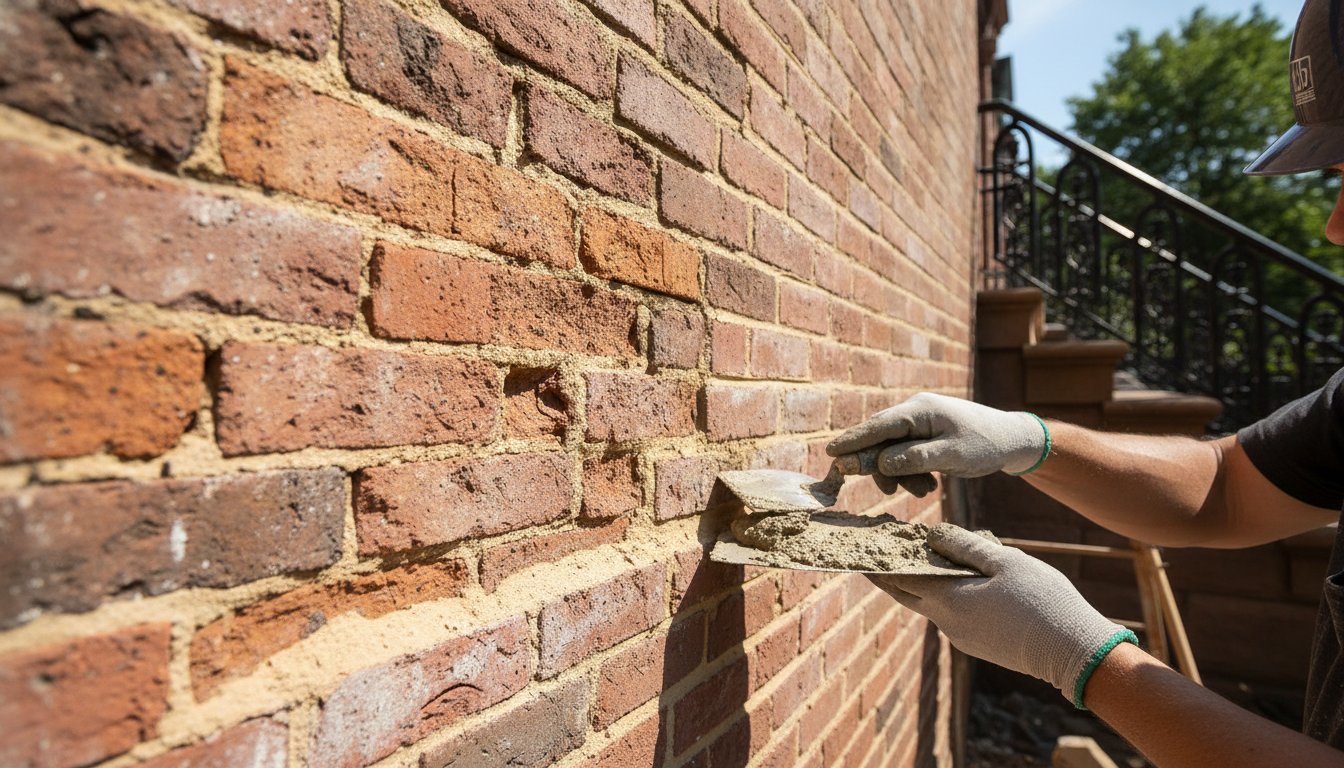
A single spalling brick on your Brooklyn brownstone is no longer just a minor aesthetic flaw. In 2026, it is a liability that leads to strict penalties under the “Get Sheds Down” initiative and Local Law 51. You want to preserve the historic character of your property, but the reality of water leaks and NYC DOT sidewalk violations makes masonry restoration feel like an overwhelming hurdle. It’s a common frustration for owners who value tradition but fear the complexity of modern building codes and the high stakes of compliance.
This guide provides a clear path to securing your building’s future. You’ll discover how to identify early signs of facade failure, understand the specialized techniques used in professional restoration, and navigate the latest FISP Cycle 10 requirements. We’ll show you how to achieve a water-tight, safe exterior that honors the original architecture of neighborhoods like Park Slope and Bedstuy. For direct assistance with your project, you can reach Progressive Contracting of NY at 347-341-3808 or 718-350-7388, or email us at ProgressiveContractingNY@yahoo.com. We’ll start by reviewing the most critical signs of masonry damage and the specific steps required to keep your NYC property compliant and beautiful.
Evaluating Masonry Restoration Needs: Signs Your NYC Property Requires Expert Care
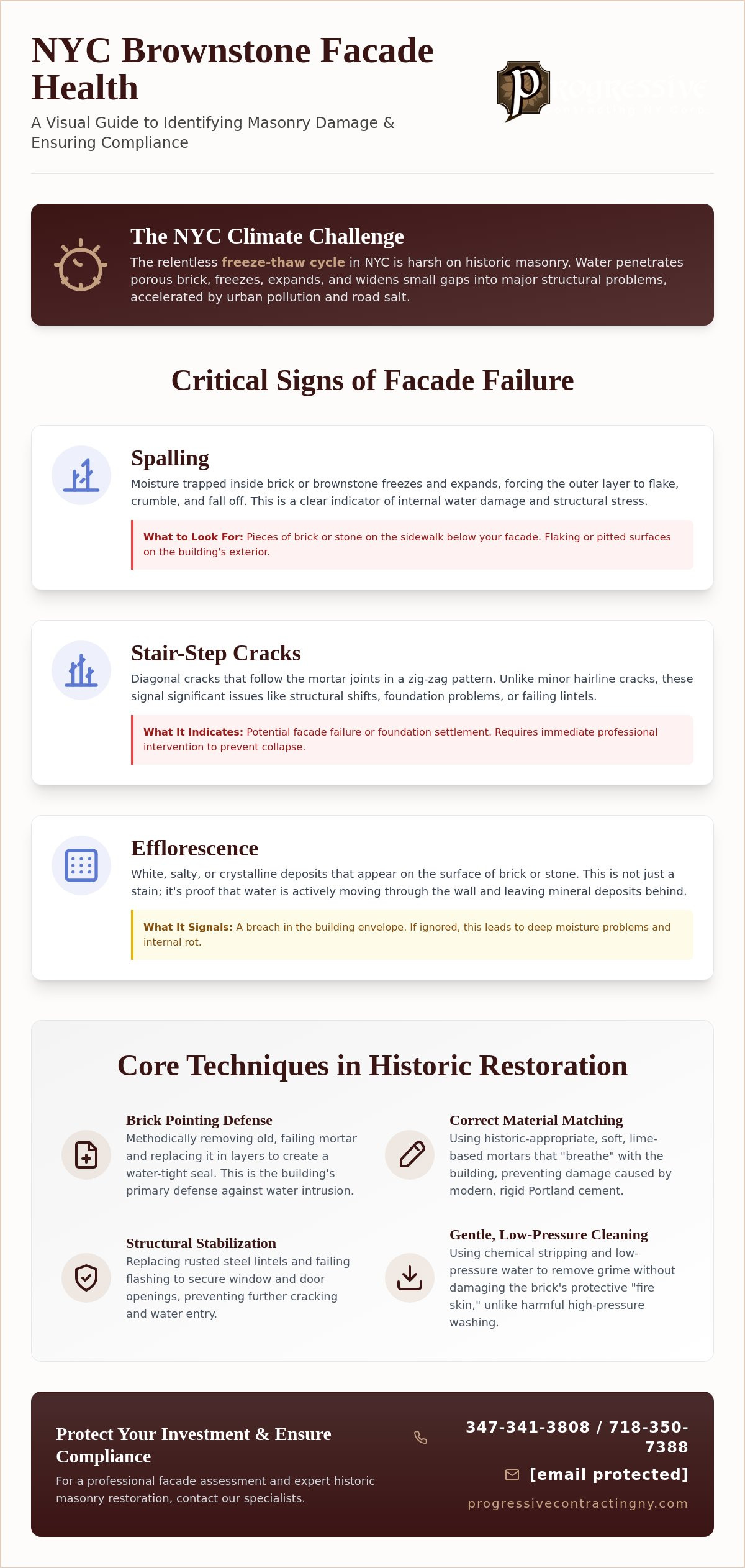
Masonry restoration is the technical process of repairing, cleaning, and preserving brick or stone structures to their original state. It ensures the structural integrity of your building while maintaining its historic value. One of the most common signs that your property needs professional attention is spalling. This occurs when moisture becomes trapped inside the masonry. When that water freezes or exerts pressure, it forces the outer layer of the brick or brownstone to flake and crumble. If you see pieces of stone on the sidewalk, the internal structure is already under stress.
Stair-step cracks are another serious warning sign. These diagonal cracks follow the mortar joints and often indicate structural shifts or foundation issues within NYC row houses. Unlike minor surface hairline cracks, these require immediate intervention to prevent facade failure. You might also notice efflorescence, which appears as white, salty deposits on your exterior walls. This isn’t just a stain; it’s a signal that water is moving through your building envelope and carrying minerals to the surface. Ignoring these deposits can lead to deep-seated moisture problems that rot the building from the inside out.
NYC Climate and Masonry Decay
The freeze-thaw cycle in Brooklyn and Manhattan is particularly harsh on historic materials. Water enters porous brickwork during the day and expands as it freezes at night, widening small gaps into large cavities. Urban pollution and road salt also accelerate the breakdown of stone facades. Regular maintenance, such as Brick Pointing, helps seal these gaps and protects the building from internal rot. Without this protection, the masonry restoration process becomes much more extensive and costly.
When to Call a Masonry Specialist
Choosing a brownstone specialist brooklyn over a general contractor ensures that your property receives care tailored to historic materials. General contractors often use modern mortars that are too hard for old brick, causing even more damage. Small cracks left alone quickly turn into major facade renovation projects. For a professional assessment, contact Progressive Contracting of NY at 347-341-3808 or 718-350-7388. You can also reach us at ProgressiveContractingNY@yahoo.com to discuss your property’s specific needs and ensure your facade remains safe and compliant.
Core Techniques in Historic Masonry Restoration: From Brick Pointing to Facade Repair
High-quality masonry restoration relies on a deep understanding of historical materials. Following the Core Techniques in Historic Masonry Restoration established by the National Park Service ensures that repairs don’t just look good but actually last. The process begins with the careful removal of damaged mortar. We use specialized tools to grind out old joints without nicking the surrounding brick or stone. This precision prevents the structural weakening that often occurs during rushed repairs.
Material matching is the most critical phase of the project. Using modern Portland cement on historic brownstone or soft brick causes irreversible damage. Modern cement is too rigid. When the building naturally expands and contracts, the hard cement crushes the softer historic materials. We prioritize lime-based mortars that mirror the original composition. This allows the building to breathe and move without cracking. If you want to ensure your property maintains its structural integrity, consider a professional facade evaluation.
Cleaning and structural stabilization complete the restoration. We remove decades of NYC grime using chemical stripping and gentle, low-pressure water. High-pressure washing is avoided because it can strip the protective “fire skin” off bricks. We also address rusted lintels and failing flashing. These elements act as the skeleton of your facade. Replacing a rusted lintel prevents the “stair-step” cracking discussed earlier and keeps the window openings secure.
The Art of Brick Pointing in NYC
Effective brick pointing nyc is your building’s primary defense against interior water damage. Our process follows a logical sequence. We grind the joints to a uniform depth, clean the cavities of all dust, and apply new mortar in layers. This creates a water-tight seal that protects the building envelope for decades. It’s a methodical approach that prioritizes long-term durability over quick fixes.
Brownstone and Stoop Restoration
Restoring a Rammstein stoop requires balancing aesthetics with load-bearing requirements. We use specialized patching compounds and stone carving techniques to rebuild decorative elements that have weathered away. For comprehensive brownstone restoration, we focus on recreating the original texture and color of the stone. If you have questions about your facade’s needs, call us at 347-341-3808 or 718-350-7388. You can also email ProgressiveContractingNY@yahoo.com to discuss your specific project details.
Navigating NYC Masonry Restoration: Compliance, Vetting, and Professional Results
Successful masonry restoration in New York City requires more than just technical skill. It demands a thorough understanding of local regulations. If your property is located within a Landmark Preservation Commission (LPC) district, such as Park Slope or Bedstuy, every repair must meet strict historic standards. This includes matching the color, texture, and profile of original mortar joints. For the most accurate technical guidance, we recommend reviewing the NPS Preservation Brief on Repointing Mortar Joints, which serves as a definitive guide for historic preservation.
Vetting an NYC contractor is your next line of defense. Always verify your partner holds the necessary licenses and comprehensive insurance. A seasoned professional should provide a clear, itemized financial estimate and a realistic project timeline. Transparency at this stage prevents the budget surprises often associated with complex facade work. To help you prepare for these discussions, you can discover more about Project-based contracting and maintenance fees to understand standard industry pricing models. We believe that direct communication is essential. You deserve to know exactly how your investment is being used to stabilize and beautify your building.
Sidewalk Violation Removal and Compliance
Receiving a DOT notice can be stressful. The process to remove sidewalk violation in New York involves specific steps, from obtaining the correct permits to professional concrete installation. Once the work is complete, a professional certification is required to officially clear the DOT lien from your property record. We handle this entire workflow, ensuring your sidewalk is safe and compliant with 2026 city standards.
Partnering with Progressive Contracting of NY
We are dedicated to preserving the architectural heritage of Brooklyn and Manhattan. Our team functions as a disciplined expert, guiding you through the complexities of historic facade repair. To start your project, contact us at 347-341-3808 or 718-350-7388 for a straightforward consultation. You can also send project photos and inquiries to ProgressiveContractingNY@yahoo.com. We provide detailed reviews of your masonry restoration needs, offering a steady hand and clear communication from start to finish.
Securing Your Building’s Future in 2026
Protecting a historic NYC property requires a proactive approach to maintenance. Identifying signs of decay like spalling or cracks early prevents the aggressive penalties associated with 2026 city regulations. Using traditional materials and precise techniques ensures your building remains water-tight while preserving the architectural details that define Brooklyn and Manhattan row houses.
Our team brings decades of experience to neighborhoods like Park Slope and Bedstuy. We specialize in historic facades and expert sidewalk violation removal, providing the transparency and accountability you need for a successful masonry restoration project. We focus on being a stabilizing force for property owners, delivering results that respect tradition while meeting modern safety standards.
We are ready to serve as your dependable partner in maintaining your property’s value. Send your project photos and specific inquiries to ProgressiveContractingNY@yahoo.com for a detailed professional review. Your building is a vital part of New York’s history, and we’re here to ensure it stays safe, compliant, and beautiful for years to come.
Frequently Asked Questions
How long does a typical masonry restoration project take in NYC?
A typical masonry restoration project in NYC usually takes between two and eight weeks depending on the size of the building and the complexity of the repairs. Minor brick pointing on a standard row house often finishes within ten to fourteen days. Larger projects involving full facade cleaning and structural stabilization require more time to ensure proper drying and material matching. We provide a clear, sequential timeline during our initial consultation to help you plan your project effectively.
What is the difference between tuckpointing and repointing?
Repointing is the process of removing and replacing damaged mortar to restore structural integrity while tuckpointing is a decorative technique used to create the illusion of very thin joints. Repointing focuses on making the wall water-tight and durable. Tuckpointing uses two different colors of mortar to mimic the appearance of high-end masonry. Most historic NYC buildings require repointing to prevent water infiltration and protect the building envelope from the inside out.
Do I need a permit for brownstone facade repair in Brooklyn?
Most brownstone facade repairs in Brooklyn require a permit from the Department of Buildings (DOB). If your property is located within a landmarked neighborhood like Park Slope or Bedstuy, you also need approval from the Landmark Preservation Commission (LPC). We handle the necessary permit applications to ensure your project stays compliant with all local building codes. For specific questions about your property’s requirements, call us at 347-341-3808 or 718-350-7388.
Can masonry restoration be done during the winter months?
Masonry restoration is generally not recommended when temperatures drop below 40 degrees Fahrenheit. Mortar requires a specific temperature range to cure properly and achieve its full structural strength. While emergency repairs can sometimes be performed using specialized heaters and enclosures, we typically schedule major projects for the spring through late autumn. You can reach us at ProgressiveContractingNY@yahoo.com to discuss the best timing for your upcoming facade project and ensure a durable, long-lasting result.