
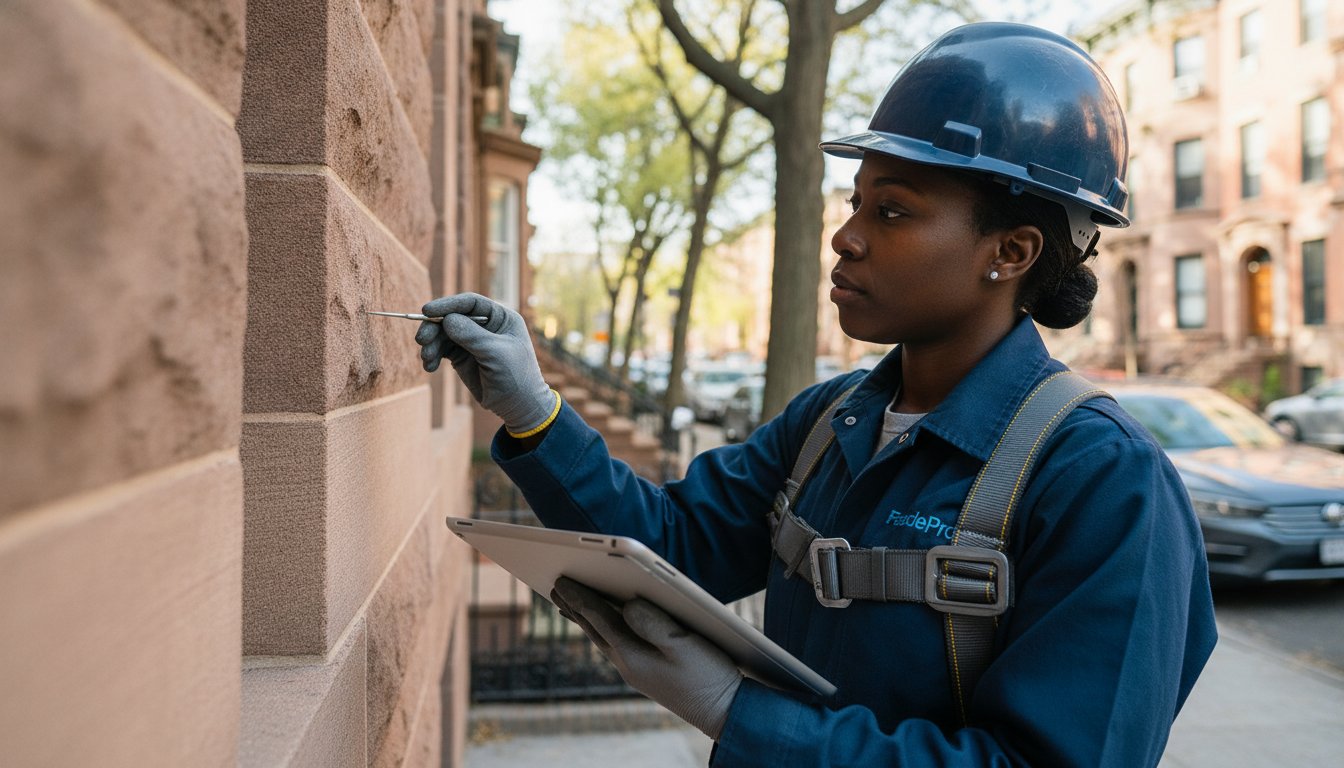
A finished brownstone restoration is a major milestone, but it isn’t the final step in protecting your investment. In 2026, the real work begins with a rigorous post-construction facade inspection to ensure every mortar joint and stone patch meets New York City’s evolving safety standards. You’ve likely felt the pressure of the city’s “Get Sheds Down” initiative or the new penalties under Local Law 51, which can reach $20,000 for delayed repairs. It’s natural to worry about hidden water damage or whether your contractor’s craftsmanship will stand up to a Qualified Exterior Wall Inspector’s scrutiny.
We understand that peace of mind comes from precision and transparency, not just a clean sidewalk. This guide provides a comprehensive checklist to verify masonry quality and confirm your property aligns with the latest DOB regulations, including the new eight-year initial inspection rule for new buildings. We’ll walk you through the technical details of the 2026 FISP cycles and how to avoid future violations. If you have immediate questions about your project, reach us at 347-341-3808 or 718-350-7388, or email ProgressiveContractingNY@yahoo.com to discuss your restoration needs.
The Importance of a Post-Construction Facade Inspection in NYC
A post-construction facade inspection is the final verification of masonry and structural work after a renovation project concludes. It’s a technical audit that goes beyond a simple visual walkthrough. For property owners in neighborhoods like Park Slope or Bedstuy, this step is essential to protect a significant financial investment. You might see a beautiful exterior, but a professional inspection determines if the facade is actually sound or merely visually finished. We focus on identifying the difference between aesthetic completion and the structural integrity required to survive New York winters.
Skipping this verification often leads to premature failure. Poorly applied brownstone mixtures or improper mortar bonding are the primary causes for brownstone spalling repair needs just a few seasons later. An inspection identifies hairline cracks or hollow sounds that signal the masonry isn’t bonding correctly. Catching these errors immediately ensures you don’t face recurring crumbling or the high costs of re-doing the work.
Navigating NYC DOB Requirements and FISP Compliance
The NYC Department of Buildings (DOB) has tightened enforcement through the “Get Sheds Down” initiative. Following a project, your building must align with the Facade Inspection & Safety Program (FISP). While Local Law 49 of 2025 shifted some inspection cycles to between 6 and 12 years, the goal remains achieving a “Safe” status. A qualified masonry contractor ensures your work meets these standards so you don’t end up with a “Safe With a Repair and Maintenance Program” (SWARMP) classification. This classification requires documented maintenance that can be costly if the initial construction was subpar.
Protecting Historic Integrity in Brooklyn and Manhattan
High-quality historic brownstone restoration requires a level of detail that standard masonry does not. In Brooklyn and Manhattan, we must match historic mortar compositions and stone textures to satisfy landmark preservation requirements. A post-construction check confirms the craftsmanship respects the building’s heritage while providing modern durability. If you need a professional second look at your recent renovation, call us at 347-341-3808 or 718-350-7388. You can also reach us at ProgressiveContractingNY@yahoo.com for a detailed assessment of your property’s condition.
The Essential Post-Construction Facade Inspection Checklist
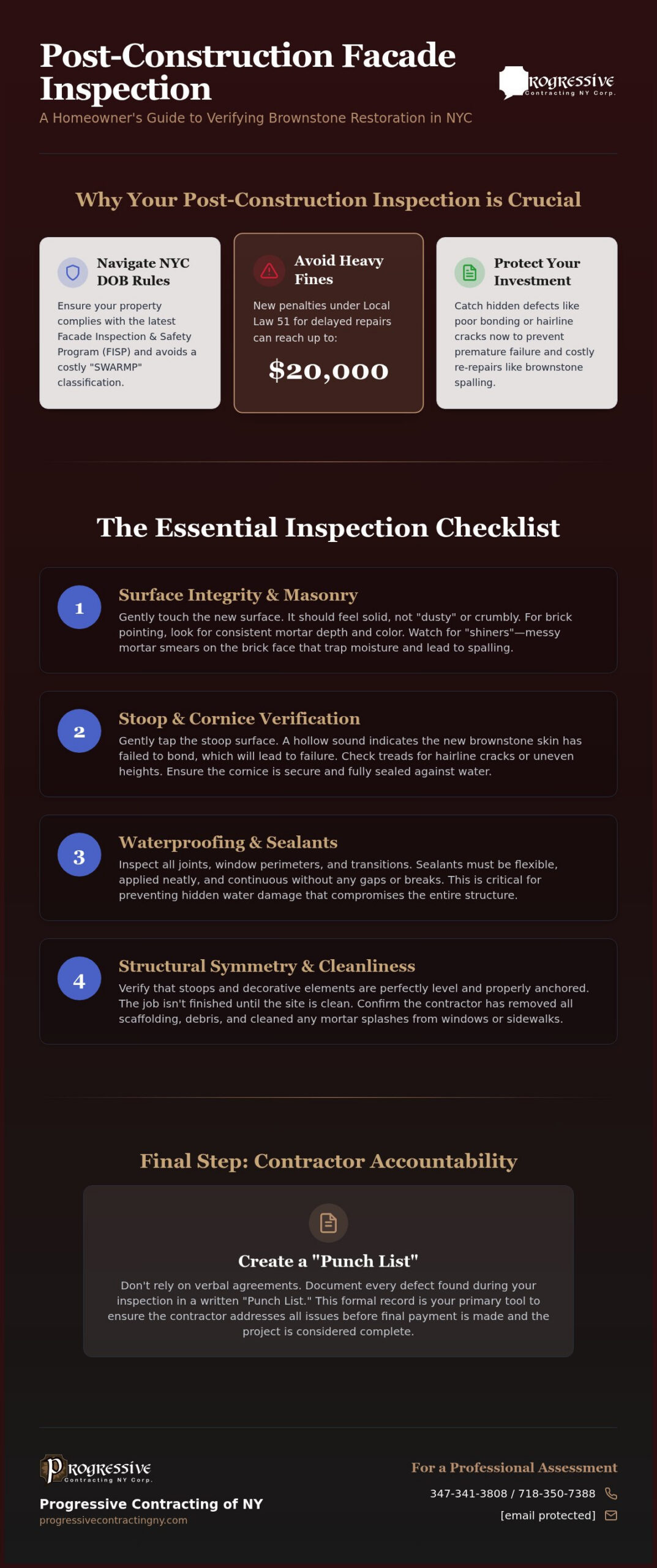
Perform your post-construction facade inspection during daylight hours to catch subtle defects. Start by examining the surface integrity. A high-quality restoration shouldn’t exhibit “dusting” or immediate crumbling when touched. If the new material rubs off easily, the mixture was likely compromised during the curing process. We recommend a methodical walk-through using these specific criteria:
- Waterproofing and Sealants: Verify that all joints, window perimeters, and cornices are watertight. Sealants must be flexible and continuous without gaps.
- Structural Symmetry: Stoops and decorative elements must be level. Check that they are properly anchored to the building’s structural frame.
- Cleanliness: Confirm the contractor removed all scaffolding and debris. Look for mortar splashes on windows or the sidewalk.
If you have questions about a specific detail on your property, call us at 347-341-3808 or 718-350-7388. You can also send photos of your project to ProgressiveContractingNY@yahoo.com for a professional opinion on the results.
Masonry and Brick Pointing Quality Checks
When reviewing brick pointing nyc, look for consistent mortar depth and color. Avoid “shiners,” which are messy mortar smears on the brick face. These smears are not just an aesthetic issue. They trap moisture against the brick and cause the face to pop off during freeze-thaw cycles. Properly struck joints should be uniform across the entire wall. If you notice inconsistencies, scheduling a professional assessment is the best way to prevent long-term damage.
Stoop and Cornice Verification
A Rammstein stoop restoration requires precision. Inspect the treads for hairline cracks or uneven heights that could create trip hazards. The brownstone “skin” must be correctly bonded to the underlying substrate. Tap the surface gently in several spots. A hollow sound indicates the bond has failed, which will inevitably lead to spalling. A thorough post-construction facade inspection of these specific areas ensures your stoop remains functional for decades. Ensure the cornice is securely fastened and that the transition between the stone and the roofline is fully sealed against water infiltration.
Finalizing Your Project: Contractor Accountability and Maintenance
After the technical walkthrough is done, managing the “Punch List” is your primary tool for accountability. Don’t rely on verbal agreements; every minor defect found during the post-construction facade inspection must be documented in writing. This list serves as a formal record that your masonry team must address before the project is considered complete. It’s the difference between a job that looks done and one that actually meets high-level craftsmanship standards.
Financial transparency protects your investment. We suggest not releasing the final payment until every item on that list is corrected and the facade passes its final review. Once the site is clean and the scaffolding is gone, pivot your focus toward long-term preservation. A simple seasonal maintenance plan, like checking for salt damage after winter or debris in the drainage channels, keeps the stone healthy and prevents the need for another major overhaul in a few years.
Addressing Sidewalk and Stoop Compliance
Work near the property line carries additional risk. You must ensure all masonry meets NYC DOT specifications to avoid sidewalk violation removal nyc. We check that the pitch of the sidewalk and the height of the stoop treads don’t create pooling water or trip hazards on the public right-of-way. Proper drainage from the facade must be directed away from pedestrian paths to prevent icing and structural erosion. Correcting these issues now ensures you aren’t liable for city fines later.
Expert Support for Your Brownstone Facade
Choosing a specialized masonry contractor like Progressive Contracting NY Corp ensures your project adheres to the strictest local codes. We’ve spent over a decade navigating the specific challenges of Brooklyn and Manhattan architecture. If you’re unsure about the quality of a recent project, reach us at 347-341-3808 or 718-350-7388 for a consultation. You can also send your post-construction facade inspection reports or site photos to ProgressiveContractingNY@yahoo.com for a professional second look.
Securing the Long-Term Integrity of Your Brownstone Restoration
A successful restoration isn’t complete until the site is clean and the structural details are verified. A thorough post-construction facade inspection acts as your final insurance policy against the city’s strict 2026 enforcement penalties. By prioritizing accountability and moving into a proactive maintenance mindset, you safeguard the historic character of your property while avoiding the stress of future DOB violations.
Progressive Contracting NY Corp specializes in the unique masonry challenges found in Brooklyn and Manhattan. With over 10 years of experience and an A+ rating for sidewalk violation removals, we understand how to navigate the complexities of historic landmark requirements. If you have questions about your recent renovation, we invite you to reach out for a professional consultation. Contact us at 347-341-3808 or 718-350-7388, or send your project details to ProgressiveContractingNY@yahoo.com.
Preserving a NYC brownstone is a significant responsibility. These final quality checks ensure your investment stands strong and remains a point of pride for years to come.
Frequently Asked Questions
What is a post-construction facade inspection?
A post-construction facade inspection is a technical evaluation conducted immediately after a restoration project to verify that the masonry, structural anchors, and sealants meet engineering and safety standards. It serves as the final quality control step before a project is officially closed. This process ensures that the contractor’s work is not only aesthetically pleasing but also structurally sound and fully compliant with NYC Department of Buildings regulations.
How often should I inspect my NYC brownstone facade after a major renovation?
You should perform a post-construction facade inspection immediately upon completion of any major work to ensure the project was executed correctly. Following this, NYC Local Law 49 of 2025 requires new buildings to undergo their first formal inspection after eight years. For established brownstones, the mandated FISP cycle is now between 6 and 12 years. We recommend a brief visual check every spring to identify minor weathering before it requires expensive repairs.
Can I perform a facade inspection myself, or do I need a professional?
You can use a checklist for a preliminary walkthrough, but a professional is required for official DOB compliance and technical audits. A Qualified Exterior Wall Inspector (QEWI) must certify buildings taller than six stories to meet FISP requirements. For smaller brownstones, a specialized masonry contractor provides the technical expertise to detect “hollow” stone or improper bonding that an untrained eye might miss. Contact us at 347-341-3808 or 718-350-7388 for a professional assessment.
What are the most common defects found during post-construction inspections in Brooklyn?
The most frequent issues we encounter in Brooklyn include “shiners” or mortar smears on brickwork, uneven stoop treads, and poorly bonded brownstone patches. We also often find inadequate sealants around window perimeters, which leads to hidden water damage and future spalling. Catching these defects early ensures the historic integrity of your property is preserved and prevents costly future violations. For a professional review of your project, you can email photos to ProgressiveContractingNY@yahoo.com.